

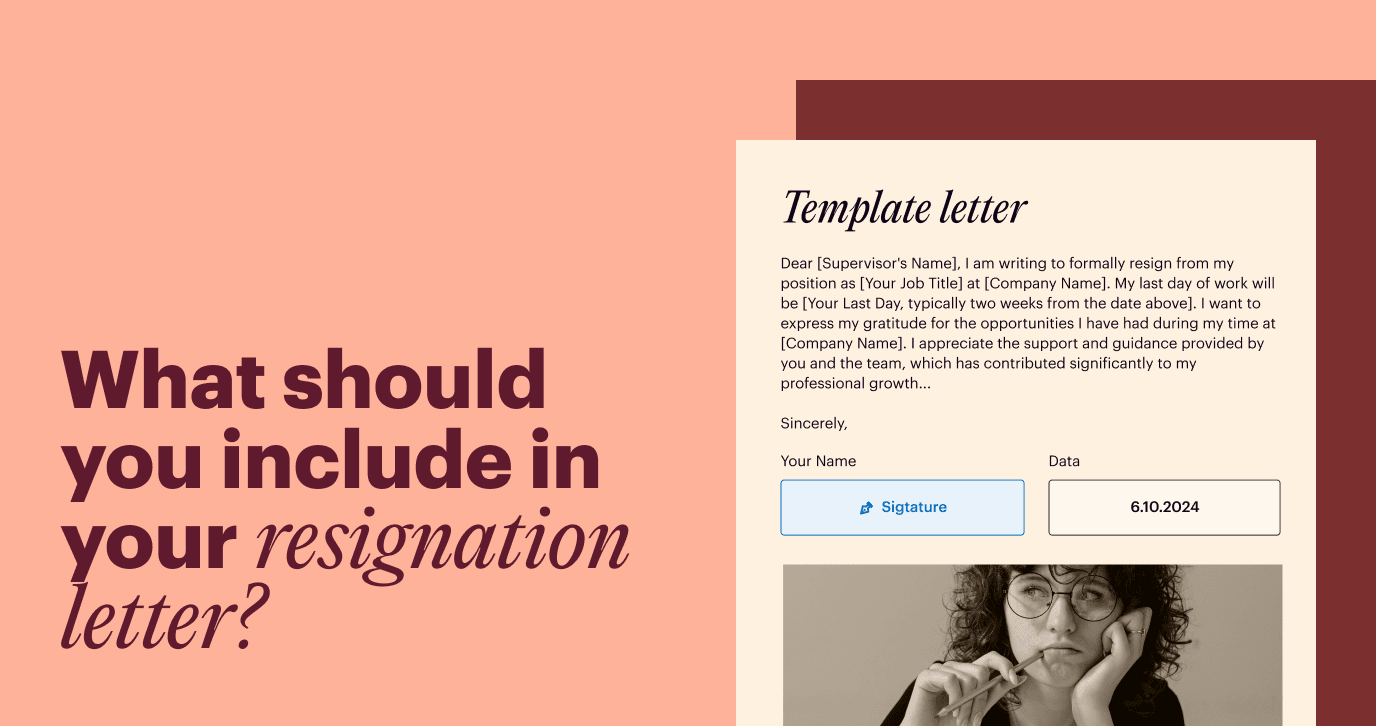
Some conversations can be hard to have, and resigning from your job is one of them. You may be leaving for a new opportunity, personal reasons, or because the role is a wrong fit. No matter the reason, writing a formal resignation letter can be an uncomfortable part of the process. However, a well-crafted resignation letter ensures a smooth transition and maintains professionalism.
In this article, we’ll explore what to include and avoid in a resignation letter, plus show you templates and examples to help you get it right.
What is a resignation letter?
A resignation letter is a formal document that serves as a notification to your employer that you’ll be leaving your current job. It is likely that your HR department will keep your resignation letter as an official record of your departure. Your resignation letter should include important details such as your last working day and how you will assist during the transition.
Handing over a resignation letter is a professional way to let your employer know about your decision and give them time to find a replacement and redistribute your tasks.
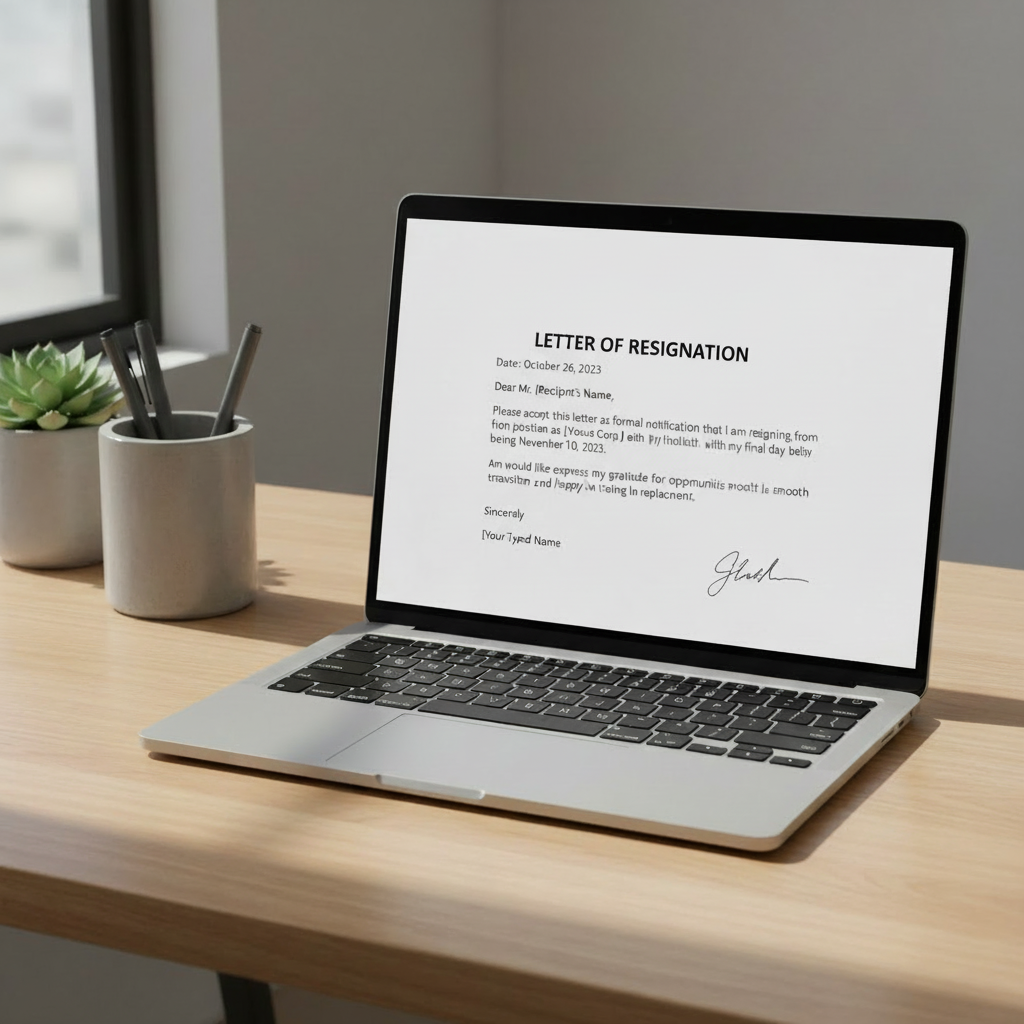
Resignation letter example
Your resignation letter may look something like this:
[Date] [Recipient Information]Dear [Supervisor’s Name],
I am writing to formally resign from my position as [Your Job Title] at [Company Name]. My last day of work will be [Your Last Day, typically two weeks from the date above].
I want to express my gratitude for the opportunities I have had during my time at [Company Name]. I appreciate the support and guidance provided by both you and the team, which has contributed significantly to my professional growth.
I am committed to ensuring a smooth transition and will do everything I can to hand over my responsibilities effectively. Please let me know how I can assist during this period.
Thank you once again for everything. I hope to stay in touch and wish you and the company continued success.
Sincerely,
[Your Signature (handwritten, electronic, or with wet ink] [Your Name]
Why is a resignation letter important?
A resignation letter is an essential part of leaving a job professionally and respectfully. It not only provides a formal record of your intention to depart but also ensures clarity and reduces the potential for misunderstandings during the transition. Writing a clear, polite resignation letter helps maintain positive relationships with your employer and colleagues, which can be valuable for future networking opportunities.
Reasons for sending a resignation letter
- Establishing a clear record: A resignation letter documents the date of notice and your intended last day, ensuring there is no confusion about your departure timeline.
- Demonstrating professionalism: Submitting a formal letter shows respect for your employer and reflects your commitment to a smooth and organized transition.
- Maintaining relationships: A well-worded letter helps preserve goodwill, which may be beneficial for references or future opportunities.
- Clarifying responsibilities: It provides an opportunity to outline how you will assist in handing over duties, showing your dedication to supporting the team during the transition.
- Showing gratitude: Including a note of thanks helps leave a positive impression and highlights your appreciation for the opportunity to work with the organization.
What should you include in your resignation letter?
Your resignation letter does not need to be long or overly wordy, and there’s no need to over-explain your situation. However, you do want to make sure to include the following information:
- Date and recipient’s information. Like any formal letter, you’ll want to include the date at the top of the resignation letter page, followed by the recipient’s name, title, and company address. This is important mainly for record-keeping purposes.
- Statement of resignation. Jump right into the purpose of your letter – to inform your employer that you are resigning. State it early and clearly. Something like “I am writing to formally resign from my position as [Your Job Title] at [Company Name]”, is straightforward and efficient.
- Reason for resignation (optional). You don’t technically owe anyone any explanation, but you might choose to briefly mention the reason for your resignation. If you do choose to explain, keep it short and sweet. For example, if you’re leaving for a new opportunity, you might say, “I have accepted a new position that puts me on track to meet my long-term career goals.”
- Gratitude and appreciation. Resigning from a job does not mean you have to burn any bridges. Maintain professionalism and goodwill by expressing gratitude for the opportunities you’ve had in your current role. Be specific and acknowledge any support you’ve received from a supervisor, colleagues, or even a mentor.
- Offer assistance. You never know when you’ll cross paths with your colleagues in the future, so you’ll want to leave a lasting impression. A great way to do this is by offering assistance for a smooth handover of your job responsibilities. This may include creating transition documents, finishing important projects, and helping to train your replacement. Offering assistance is considerate and respectful.
- Closing and signature. Finish your resignation letter formally and on a positive note with a polite closing, such as “Sincerely” or “Best regards”, followed by your signature (whether drawn electronically or by hand) and your typed name. Feel free to leave your contact information as well.
Before you hand in your resignation letter, it’s best to speak with your boss in person. This gesture shows professionalism and respect, allowing them to hear the news directly from you. Immediate departure is not a good idea; it’s standard practice to provide at least two weeks’ (sometimes four weeks) notice, which gives your employer time to prepare for your departure. By leaving on good terms, you ensure a smooth transition and maintain good relationships that can lead to positive references in the future.
What should you not include in your resignation letter?
There’s no need to overthink your resignation letter, but you’ll want to avoid some common mistakes. Doing so will ensure that you leave your job on good terms. Avoid the following in your resignation letter:
- Negative comments. You’ll want your resignation letter to be positive and professional. This is not the place to make negative comments about the company, your supervisor, your colleagues, or your experience gained in the team. Someone from your HR department will likely ask you for an exit interview where you’ll have an opportunity to address your concerns.
- Very detailed reasons for leaving. Your resignation letter should be short, not an elaborate explanation for why you’re leaving. You don’t need to go into detail about personal circumstances or conflicts that influenced your decision. Keep it simple and short.
- Future career decisions. Focus on your current role and your departure plan. Don’t use your resignation letter as an explanation for your future plans.
- Emotional language. While resigning from a job can be an emotional experience, try to keep your resignation letter free from emotional language. A calm, professional tone should dictate the feeling of your letter, even if you are leaving under difficult circumstances.
- Inappropriate language. Remember, a resignation letter is a professional, formal letter. Inappropriate language or jokes would not serve you well here. When in doubt, leave it out.
- Casting blame. Regardless of the circumstances under which you are leaving your job, do not use your resignation letter as an opportunity to blame your employer or colleagues for your decision to leave. Again, you will likely have an exit interview where you can discuss any legitimate grievances. Focus your resignation letter on when you’ll be leaving and how you’ll assist in the transition.
What is a good resignation letter example?
As you get ready for the next step in your career, it may be a challenge to come up with the right words for your resignation letter. To help you get started, here are some resignation letter templates tailored to specific resignation scenarios. Feel free to adapt them as needed.
General resignation letter example
Dear [Manager’s Name],
I am writing to formally resign from my position as [Your Job Title] at [Company Name]. My last day of work will be [Your Last Day, typically two weeks from the date above].
I want to express my gratitude for the opportunities I have had during my time at [Company Name]. I appreciate the support and guidance provided by you and the team, which has contributed significantly to my professional growth.
I am committed to ensuring a smooth transition and will do everything I can to hand over my responsibilities effectively. Please let me know how I can assist during this period.
Thank you once again for everything. I hope to stay in touch and wish you and the company continued success.
Sincerely,
[Your Signature (if submitting a hard copy)] [Your Name]
New job opportunity resignation letter
Dear [Supervisor’s Name],
After much consideration, I have decided to resign from my position as [Your Job Title] at [Company Name], effective [Your Last Day]. I have accepted a new role that aligns closely with my long-term career goals.
I want to express my gratitude for the support and guidance I’ve received during my time here. It has been a pleasure working with you and the team.
Please let me know how I can assist in making the transition as smooth as possible. I’m happy to help in any way I can.
Sincerely,
[Your Name]
Immediate notice resignation letter
Dear [Supervisor’s Name],
I regret to inform you that I must resign from my position as [Your Job Title] at [Company Name], effective immediately. This decision was not made lightly, but due to unforeseen circumstances, I am unable to continue in my role.
Please know that, regardless of my decision, I am grateful for the opportunities I’ve had at [Company] and for the guidance I’ve received from you and the team.
I apologize for the short notice and any inconvenience this may cause. I am willing to help with the transition in any way I can during this time.
Thank you for your understanding.
Sincerely,
[Your Name]
Misalignment Resignation Letter
Dear [Supervisor’s Name],
I am writing to formally resign from my position as [Your Job Title] at [Company Name], effective [Your Last Day]. After careful consideration, I have realized that my career goals and the direction of the company are no longer aligned.
I want to thank you for the opportunities and support you’ve provided during my time here. It has been a valuable experience that I will remember fondly.
I am committed to ensuring a smooth transition and am available to help in any way I can.
Sincerely,
[Your Name]
Here are two hypothetical resignation letters for reference:
Dear Ms. Smith,
I am writing to formally resign from my position as Marketing Coordinator at XYZ Corp., effective two weeks from today, on September 15th, 2024. I have accepted a new position that offers opportunities for growth and aligns closely with my long-term career goals.
I have greatly enjoyed my time at XYZ Corp. and am thankful for the professional development and support I have received.
Please let me know what I can do to ensure a smooth transition. I’m happy to help train my replacement and will provide a transition plan as needed.
Thank you again for the opportunity to be part of such a wonderful team.
Sincerely,
Jane Doe
Dear Mr. Jackson,
I am writing to formally resign from my position as Project Manager at DEF Industries, effective September 20th, 2024. My family and I are relocating to another state, which necessitates this decision.
Working at DEF Industries has been such a valuable part of my professional journey and I am so grateful for the opportunities and experiences I’ve had here. I will always remember this as a critical step in my career.
Please let me know how I can assist in making this transition as seamless as possible. I am committed to helping in any way necessary.
Thank you for your understanding.
Sincerely,
John Doe
How to eSign and send a resignation letter with SignNow
SignNow makes it easy to prepare, sign, and securely send your letters of resignation. Discover how you can accomplish that in just minutes with our easy-to-use, intuitive tools.
How to eSign a basic letter of resignation: Step-by-step guide
1. Log in to your SignNow account. If you are a new user, create an account and sign up for a 7-day free trial to see our platform in action.
2. Upload a file. In the dashboard, click +Create > Document to upload a quitting job letter from your device, cloud storage, or secure URL. You can also search for pre-designed resignation letter samples in SignNow’s Forms Library.
3. Open the document in the editor. Click Me (Fill Out Now) in the left sidebar to complete blank fields in your form. Click on the corresponding feature (Text, Check, My Full Name, My Initials, or My Email) to fill out the required information.
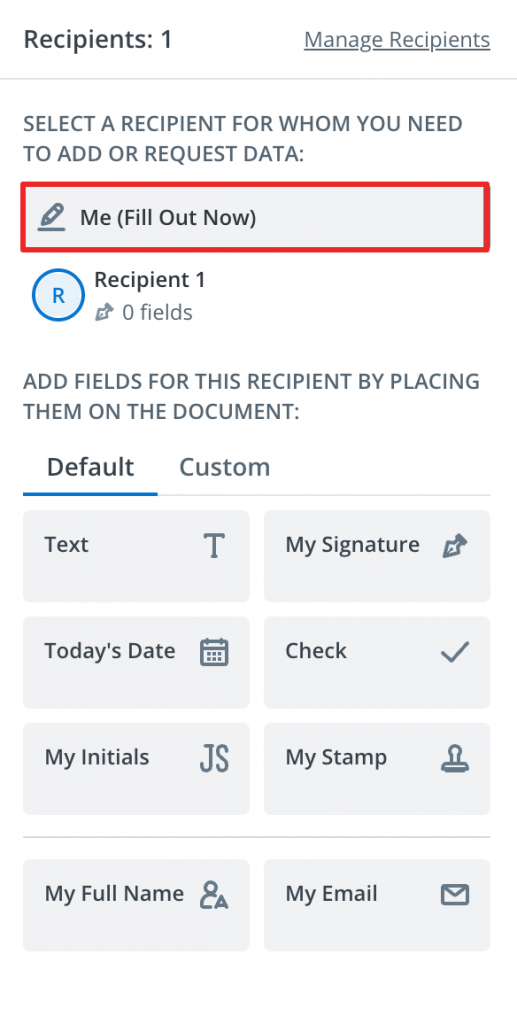
4. When everything is ready, add the current date and sign the document. To add an eSignature to your resignation letter, click My Signature and drop the cursor where you need to sign.
5. Click Add New Signature and select your preferred signing method:
- Type your full name and customize your signature look by clicking Change style.
- Draw your signature,
- Upload an image of your handwritten signature in JPG, GIF, or PNG format (up to 4MB).
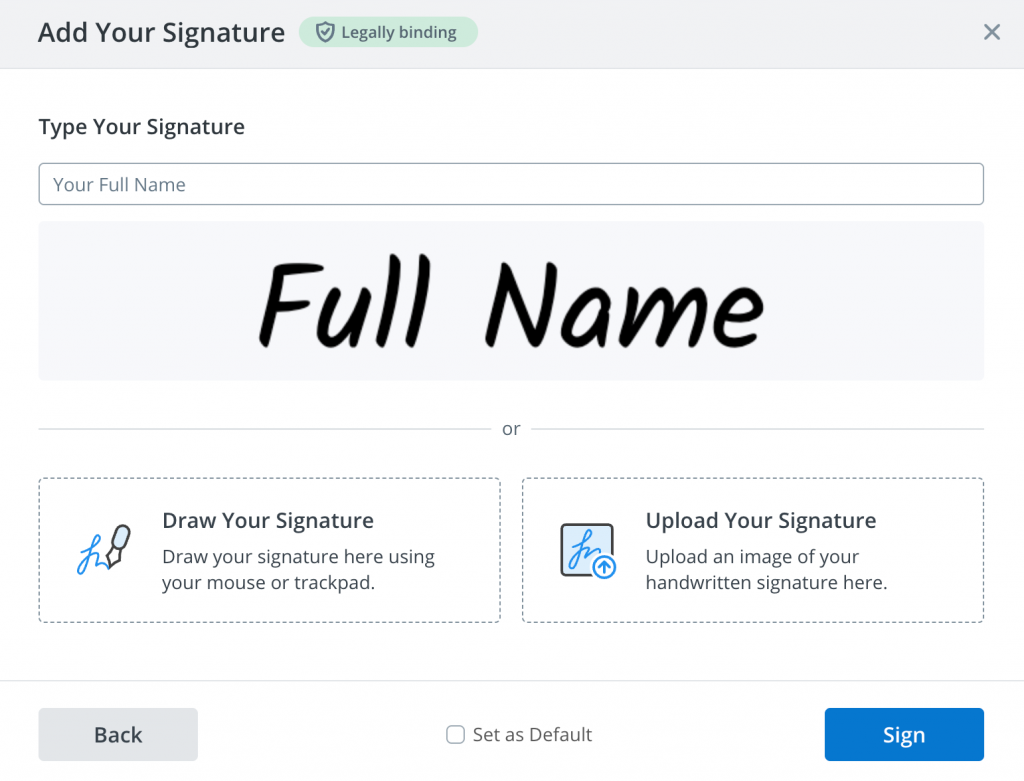
Once created, click Sign. You can also set your electronic signature as a default one for all future documents if needed.
6. Click Save and Close if you plan to return to your document later, or click Continue to proceed to file-sending options.
This is a fast and straightforward way to prepare a professionally looking resignation or quitting a job letter. Remember to proofread your letter and check for any typos or missing information before sending it to your employer.
How to send your simple letter of resignation (example)
In SignNow, you have several options to send letters of resignation to your employer:
- Send Invite to sign your document with you (the form should also contain fields for other parties to fill out and sign) or a Freeform Invite if the letter doesn’t contain fields for others to fill out. To do so, click Continue after you complete your letter. Provide recipients’ emails, customize a message, and click Send when ready. You can also schedule your document to send on a specific date and time.
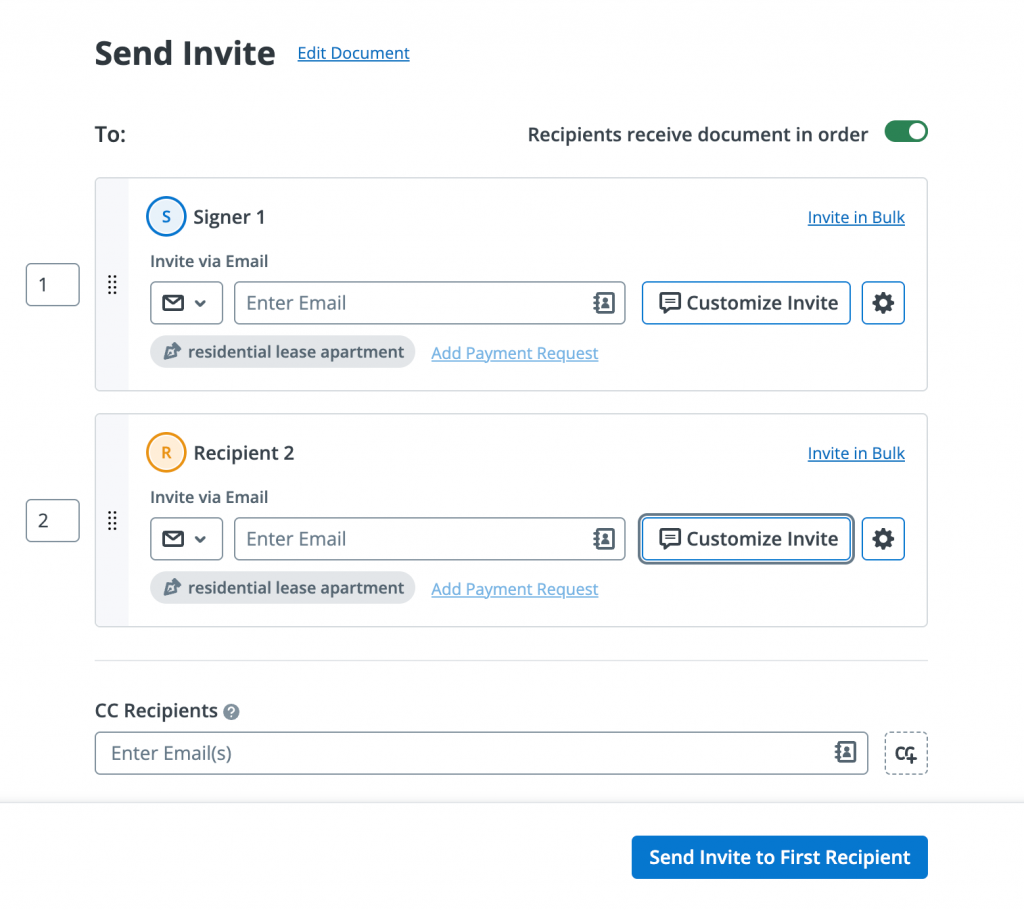
- Share a completed resignation letter from the dashboard. Click the menu button next to the document name, then select from the list: Share (send an email to your employer) or Send via Fax.
- Send your letter via a secure link. Click Create Invite Link next to your document, then copy the link or get a QR code to share your document with all your recipients.
With SignNow, sending your resignation letter is quick, secure, and customizable, ensuring a seamless delivery to your employer.
Final thoughts
Leaving a job can be challenging, but with the right approach, you can make the transition as smooth as possible for both yourself and your employer.
In the paperless and digital age, tools like SignNow can help you sign and send electronic resignation letters securely and seamlessly.
With powerful eSignature capabilities, you can sign and send your resignation letters from anywhere you are, on any device, in minutes. SignNow eSignatures are legally binding, and your data is protected by advanced security measures, ensuring you’ll have a no-stress experience.
Want to try sending your resignation letter with SignNow? Start a free trial now.