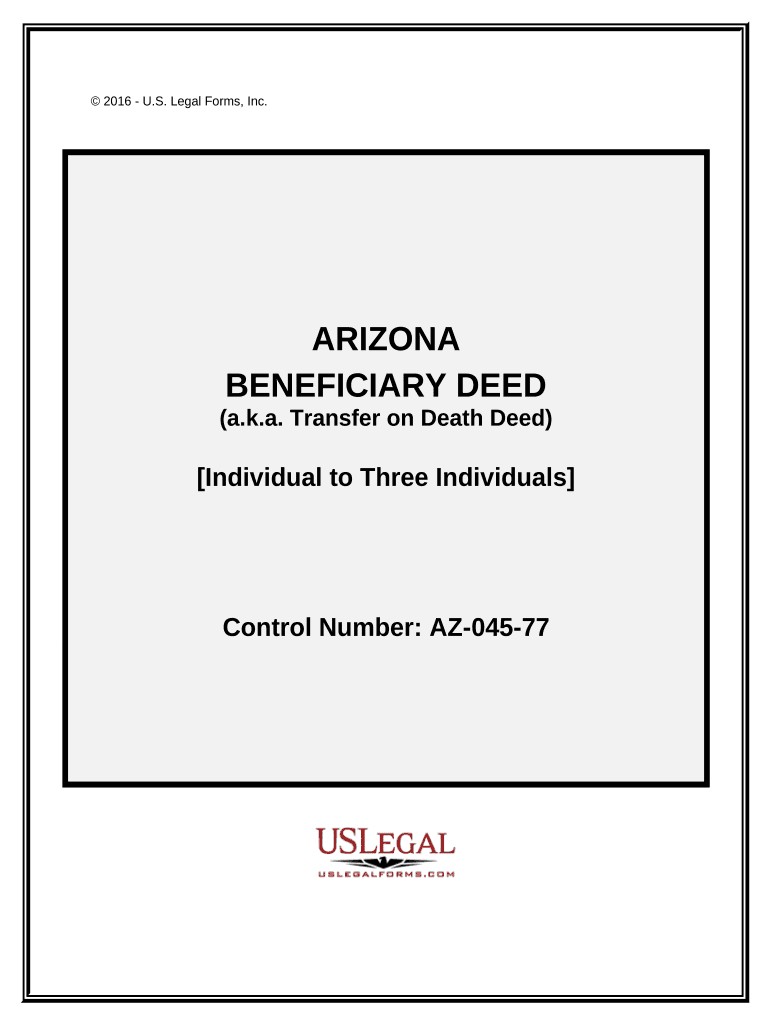
Death Transfer Deed Form


What is the Death Transfer Deed
The death transfer deed, also known as a transfer on death (TOD) deed, is a legal document that allows an individual to designate a beneficiary who will receive their property upon their death without the need for probate. This type of deed is particularly useful for property owners who wish to ensure a smooth transition of ownership while avoiding the complexities of the probate process. In the United States, the laws governing TOD deeds can vary by state, making it essential to understand the specific regulations applicable in your jurisdiction.
How to use the Death Transfer Deed
To utilize a death transfer deed effectively, the property owner must complete the deed form, specifying the beneficiary's name and the property details. Once the form is filled out, it must be signed and notarized to ensure its legal validity. After notarization, the deed should be recorded with the appropriate county office where the property is located. This recording is crucial, as it publicly establishes the beneficiary's rights to the property upon the owner's death. It is advisable to consult with a legal professional to ensure compliance with state-specific requirements and to address any potential implications for estate planning.
Steps to complete the Death Transfer Deed
Completing a death transfer deed involves several key steps:
- Obtain the appropriate death transfer deed form, which can usually be found through state or county websites.
- Fill out the form with accurate information, including the property description and beneficiary details.
- Sign the deed in the presence of a notary public to validate the document.
- Record the completed deed with the county recorder's office to ensure it is legally recognized.
- Keep a copy of the recorded deed for your records and inform the beneficiary of its existence.
Legal use of the Death Transfer Deed
The legal use of a death transfer deed is governed by state laws, which dictate how the deed must be executed and recorded. For the deed to be effective, it must comply with statutory requirements, including proper notarization and recording. By following these legal guidelines, property owners can ensure that their wishes regarding property transfer are honored upon their passing. It is important to note that a death transfer deed can be revoked or amended at any time before the owner's death, providing flexibility in estate planning.
Key elements of the Death Transfer Deed
Several key elements must be included in a death transfer deed to ensure its validity:
- Grantor Information: The name and address of the property owner.
- Beneficiary Information: The name and address of the individual designated to receive the property.
- Property Description: A clear and accurate description of the property being transferred.
- Signature and Notarization: The grantor's signature must be notarized to validate the deed.
- Recording Information: The deed must be recorded with the appropriate county office to take effect.
State-specific rules for the Death Transfer Deed
Each state in the U.S. has its own rules and regulations regarding the use of death transfer deeds. These rules can affect the format of the deed, the requirements for notarization, and the process for recording the deed. Some states may have specific forms that must be used, while others may allow more flexibility. It is essential for property owners to familiarize themselves with their state's laws to ensure compliance and to avoid any potential legal issues in the future.
Quick guide on how to complete death transfer deed
Prepare Death Transfer Deed seamlessly on any gadget
Web-based document management has become increasingly favored by businesses and individuals alike. It serves as an ideal eco-friendly substitute for traditional printed and signed documents, allowing you to access the necessary form and securely store it online. airSlate SignNow equips you with all the resources required to create, modify, and eSign your documents swiftly without delays. Handle Death Transfer Deed on any gadget with airSlate SignNow Android or iOS applications and simplify any document-related task today.
How to modify and eSign Death Transfer Deed effortlessly
- Locate Death Transfer Deed and click Get Form to begin.
- Make use of the tools we provide to complete your form.
- Emphasize important sections of your documents or obscure sensitive information with tools that airSlate SignNow specifically provides for that purpose.
- Generate your eSignature with the Sign tool, which takes mere seconds and holds the same legal significance as a conventional wet ink signature.
- Verify the information and click on the Done button to save your changes.
- Select your preferred method of delivering your form, via email, text message (SMS), or invitation link, or download it to your computer.
Eliminate concerns about lost or mislaid documents, tedious form searches, or mistakes that necessitate printing new document copies. airSlate SignNow fulfills all your document management needs in just a few clicks from any device of your choice. Modify and eSign Death Transfer Deed and maintain effective communication at every stage of your form preparation process with airSlate SignNow.
Create this form in 5 minutes or less
Create this form in 5 minutes!
People also ask
-
What is a transfer beneficiary deed?
A transfer beneficiary deed is a legal document that allows property owners to transfer their real estate to designated beneficiaries upon their death, avoiding probate. This method simplifies the transfer process and ensures that your assets are handled according to your wishes. Using airSlate SignNow, you can easily create and manage your transfer beneficiary deeds.
-
How can airSlate SignNow help me with my transfer beneficiary deed?
airSlate SignNow offers an intuitive platform for creating, signing, and managing your transfer beneficiary deed. With our electronic signature capabilities and document templates, you can streamline the process and ensure your deed is legally binding. Additionally, our user-friendly interface makes it easy for everyone to understand and utilize.
-
Is there a cost associated with using airSlate SignNow for transfer beneficiary deeds?
Yes, airSlate SignNow operates on a subscription-based pricing model. You'll find that our plans are cost-effective and designed to cater to different needs, ensuring you get value for your investment while managing your transfer beneficiary deed. We also offer a free trial for you to explore our features before committing.
-
What features does airSlate SignNow offer for creating a transfer beneficiary deed?
airSlate SignNow provides robust features for creating a transfer beneficiary deed, including customizable templates, e-signatures, and secure document storage. You can easily fill out your document, set up signers, and track the progress of your deed. Our platform ensures compliance with all legal requirements, giving you peace of mind.
-
How secure is my information when using airSlate SignNow for transfer beneficiary deeds?
Your security is a top priority at airSlate SignNow. We implement industry-standard encryption and security measures to protect your sensitive information when creating and managing your transfer beneficiary deed. Additionally, all documents are stored securely in the cloud, ensuring they are accessible only to authorized users.
-
Can I integrate airSlate SignNow with other tools for managing my transfer beneficiary deed?
Absolutely! airSlate SignNow integrates seamlessly with a variety of tools, such as CRM systems and document management solutions. This connectivity allows you to streamline your workflow and manage your transfer beneficiary deed more efficiently within your existing processes. Check our integrations page for a comprehensive list.
-
What are the benefits of using airSlate SignNow for my transfer beneficiary deed?
Using airSlate SignNow for your transfer beneficiary deed offers numerous benefits, including convenience, cost savings, and efficiency. You can complete and sign documents from anywhere, at any time, eliminating the need for physical paperwork. Furthermore, our service reduces legal fees and speeds up the transfer process, making estate planning simpler.
Get more for Death Transfer Deed
Find out other Death Transfer Deed
- Help Me With eSign Virginia Rental agreement contract
- eSign Alaska Rental lease agreement Now
- How To eSign Colorado Rental lease agreement
- How Can I eSign Colorado Rental lease agreement
- Can I eSign Connecticut Rental lease agreement
- eSign New Hampshire Rental lease agreement Later
- Can I eSign North Carolina Rental lease agreement
- How Do I eSign Pennsylvania Rental lease agreement
- How To eSign South Carolina Rental lease agreement
- eSign Texas Rental lease agreement Mobile
- eSign Utah Rental agreement lease Easy
- How Can I eSign North Dakota Rental lease agreement forms
- eSign Rhode Island Rental lease agreement forms Now
- eSign Georgia Rental lease agreement template Simple
- Can I eSign Wyoming Rental lease agreement forms
- eSign New Hampshire Rental lease agreement template Online
- eSign Utah Rental lease contract Free
- eSign Tennessee Rental lease agreement template Online
- eSign Tennessee Rental lease agreement template Myself
- eSign West Virginia Rental lease agreement template Safe