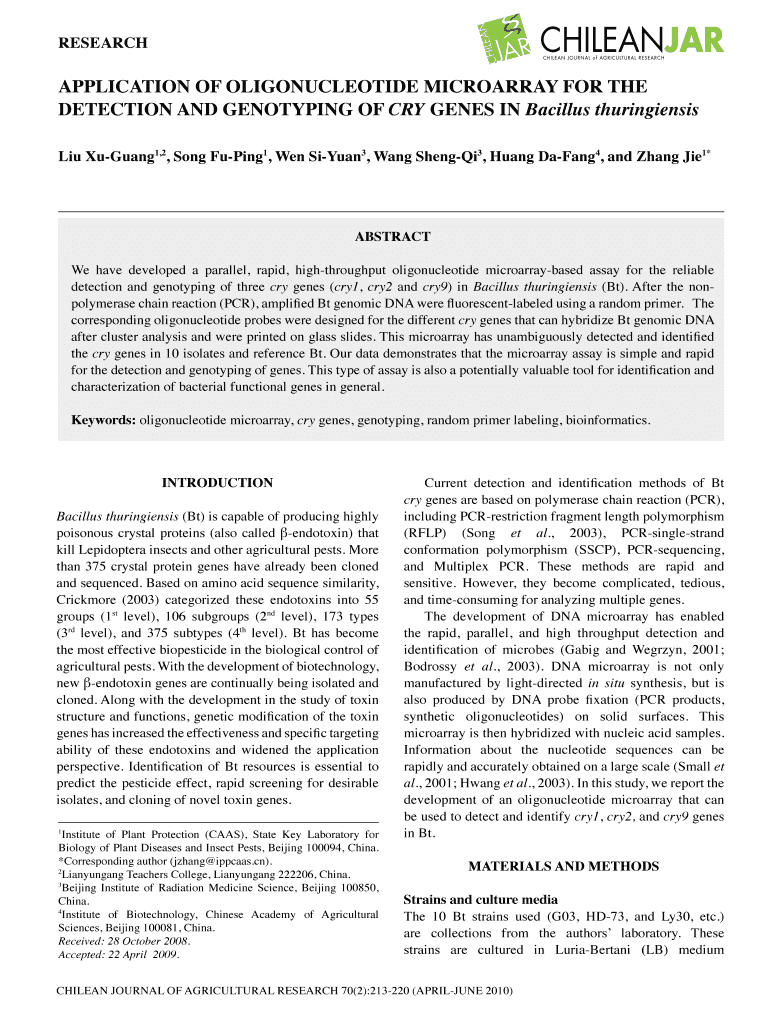
Application of Oligonucleotide Microarray for the Detection and Genotyping of Cry Genes in Bacillus Thuringiensis Form


Understanding the Application of Oligonucleotide Microarray for Genotyping
The application of oligonucleotide microarray for the detection and genotyping of cry genes in Bacillus thuringiensis plays a crucial role in biotechnology and agricultural research. This method allows for the simultaneous analysis of thousands of genetic variants, enabling researchers to identify specific genes associated with traits such as pest resistance. The technology utilizes a grid of DNA probes, each designed to bind to a complementary DNA sequence, facilitating the detection of specific genetic markers.
Steps to Complete the Application of Oligonucleotide Microarray
Completing the application of oligonucleotide microarray for genotyping involves several key steps:
- Sample Collection: Gather the necessary biological samples, ensuring they are collected and stored properly to maintain integrity.
- DNA Extraction: Isolate DNA from the collected samples using standard extraction protocols.
- Labeling: Label the extracted DNA with fluorescent dyes to enable detection during the microarray analysis.
- Hybridization: Apply the labeled DNA to the microarray, allowing it to hybridize with the complementary probes on the array.
- Scanning: Use a laser scanner to detect the fluorescence signals, which indicate the presence of specific genetic sequences.
- Data Analysis: Analyze the scanned data using specialized software to interpret the results and identify the genotypes present in the samples.
Legal Considerations for the Application of Oligonucleotide Microarray
When utilizing the application of oligonucleotide microarray for genotyping, it is essential to adhere to legal regulations governing genetic research. Compliance with federal and state laws, including those related to genetic privacy and ethical considerations, is critical. Institutions must ensure that all necessary permits and approvals are obtained before conducting research involving genetic material. Additionally, researchers should be aware of guidelines set forth by regulatory bodies to protect the rights and privacy of individuals whose samples are used.
Key Elements of the Application Process
The application process for utilizing oligonucleotide microarray technology involves several key elements that ensure accuracy and compliance:
- Documentation: Maintain thorough records of all procedures, including sample collection, processing, and analysis.
- Quality Control: Implement quality control measures at each stage of the process to ensure reliable results.
- Ethical Approval: Obtain ethical approval from relevant review boards, particularly when human or animal samples are involved.
- Data Security: Ensure that all data collected is stored securely and in compliance with applicable privacy laws.
Obtaining the Oligonucleotide Microarray Application
To obtain the application of oligonucleotide microarray for genotyping, researchers typically follow these steps:
- Research Institutions: Collaborate with research institutions that have the necessary equipment and expertise in microarray technology.
- Vendor Selection: Choose a reputable vendor that provides high-quality microarray services and support.
- Training: Participate in training sessions offered by the vendor to understand the operational aspects of the microarray platform.
- Funding and Grants: Seek funding opportunities or grants that support research projects utilizing advanced genetic technologies.
Examples of Applications in Research
The application of oligonucleotide microarray for genotyping has been utilized in various research fields, including:
- Agricultural Biotechnology: Identifying pest resistance genes in crops to enhance yield and sustainability.
- Medical Research: Studying genetic predispositions to diseases, enabling personalized medicine approaches.
- Environmental Studies: Monitoring genetic diversity in populations of endangered species to inform conservation efforts.
Quick guide on how to complete application of oligonucleotide microarray for the detection and genotyping of cry genes in bacillus thuringiensis form
Complete Application Of Oligonucleotide Microarray For The Detection And Genotyping Of Cry Genes In Bacillus Thuringiensis Form effortlessly on any device
Online document management has become increasingly popular among organizations and individuals. It serves as an excellent eco-friendly alternative to traditional printed and signed documents, as you can easily obtain the necessary form and securely store it online. airSlate SignNow equips you with all the tools required to create, edit, and eSign your documents swiftly without delays. Handle Application Of Oligonucleotide Microarray For The Detection And Genotyping Of Cry Genes In Bacillus Thuringiensis Form on any device with airSlate SignNow's Android or iOS applications and simplify any document-related process today.
How to edit and eSign Application Of Oligonucleotide Microarray For The Detection And Genotyping Of Cry Genes In Bacillus Thuringiensis Form without hassle
- Locate Application Of Oligonucleotide Microarray For The Detection And Genotyping Of Cry Genes In Bacillus Thuringiensis Form and then click Get Form to get started.
- Utilize the tools we offer to fill out your form.
- Emphasize important sections of your documents or obscure sensitive information with tools specifically provided by airSlate SignNow for that purpose.
- Generate your eSignature with the Sign tool, which takes mere seconds and holds the same legal validity as a conventional handwritten signature.
- Review the information and then click on the Done button to save your modifications.
- Select your preferred method of delivering your form, whether by email, SMS, invitation link, or download it to your computer.
Eliminate the worries of lost or misplaced documents, tedious form searches, or errors that require new document copies to be printed. airSlate SignNow meets your document management needs in just a few clicks from any device of your choice. Edit and eSign Application Of Oligonucleotide Microarray For The Detection And Genotyping Of Cry Genes In Bacillus Thuringiensis Form and ensure seamless communication at any stage of the form preparation process with airSlate SignNow.
Create this form in 5 minutes or less
Create this form in 5 minutes!
How to create an eSignature for the application of oligonucleotide microarray for the detection and genotyping of cry genes in bacillus thuringiensis form
How to make an electronic signature for the Application Of Oligonucleotide Microarray For The Detection And Genotyping Of Cry Genes In Bacillus Thuringiensis Form in the online mode
How to generate an electronic signature for the Application Of Oligonucleotide Microarray For The Detection And Genotyping Of Cry Genes In Bacillus Thuringiensis Form in Chrome
How to make an electronic signature for signing the Application Of Oligonucleotide Microarray For The Detection And Genotyping Of Cry Genes In Bacillus Thuringiensis Form in Gmail
How to create an electronic signature for the Application Of Oligonucleotide Microarray For The Detection And Genotyping Of Cry Genes In Bacillus Thuringiensis Form straight from your smart phone
How to generate an eSignature for the Application Of Oligonucleotide Microarray For The Detection And Genotyping Of Cry Genes In Bacillus Thuringiensis Form on iOS
How to make an eSignature for the Application Of Oligonucleotide Microarray For The Detection And Genotyping Of Cry Genes In Bacillus Thuringiensis Form on Android devices
People also ask
-
What is microarray genotyping and how does it work?
Microarray genotyping is a high-throughput method used to analyze genetic variations across multiple genes in an individual’s genome. It utilizes DNA chips that can simultaneously assess thousands of genetic markers, allowing researchers and clinicians to understand genetic predispositions and expressions efficiently.
-
What are the benefits of using microarray genotyping for genetic research?
Microarray genotyping offers signNow benefits including the ability to process large numbers of samples swiftly and its accuracy in detecting genetic variations. This technology enables researchers to identify genetic associations with diseases and traits, facilitating advancements in personalized medicine and genetics.
-
How much does microarray genotyping typically cost?
The cost of microarray genotyping can vary based on the platform and services chosen, but it generally ranges from a few hundred to several thousand dollars per sample. Factors influencing the price include the complexity of the analysis and the volume of samples being processed.
-
Can microarray genotyping be integrated with other technologies?
Yes, microarray genotyping can be effectively integrated with various technologies, such as next-generation sequencing and bioinformatics tools. This integration enhances data analysis capabilities, allowing for more comprehensive insights into genetic information.
-
What features should I look for in a microarray genotyping service?
When selecting a microarray genotyping service, consider features such as high throughput capabilities, a wide range of genetic markers, data analysis support, and robust customer service. These features ensure accurate and efficient processing of genetic data, which is essential for research and clinical applications.
-
How does microarray genotyping contribute to personalized medicine?
Microarray genotyping plays a crucial role in personalized medicine by enabling tailored treatment approaches based on an individual's genetic makeup. By identifying specific genetic variations linked to diseases or drug responses, healthcare providers can design more effective treatment plans for patients.
-
Is microarray genotyping suitable for clinical diagnostics?
Yes, microarray genotyping is gaining acceptance in clinical diagnostics, particularly for certain genetic disorders and cancer profiling. It provides a comprehensive view of genetic alterations that can inform diagnosis and treatment decisions effectively.
Get more for Application Of Oligonucleotide Microarray For The Detection And Genotyping Of Cry Genes In Bacillus Thuringiensis Form
- Procedural manual for foreign investment in nepal form
- Sakhawat centre scholarship form
- Animalfriendswestmoreland form
- Application form 1 contact information 2 personal lba lba inpa gov
- Commercial driver certification tier of operation wisconsin department of transportation wisdot mv3230 3 clear form print
- Va form 21 4140
- W 8ben e form
- Month to month lease agreement 695027915 form
Find out other Application Of Oligonucleotide Microarray For The Detection And Genotyping Of Cry Genes In Bacillus Thuringiensis Form
- How To Sign Arizona Non-Profit Cease And Desist Letter
- Can I Sign Arkansas Non-Profit LLC Operating Agreement
- Sign Arkansas Non-Profit LLC Operating Agreement Free
- Sign California Non-Profit Living Will Easy
- Sign California Non-Profit IOU Myself
- Sign California Non-Profit Lease Agreement Template Free
- Sign Maryland Life Sciences Residential Lease Agreement Later
- Sign Delaware Non-Profit Warranty Deed Fast
- Sign Florida Non-Profit LLC Operating Agreement Free
- Sign Florida Non-Profit Cease And Desist Letter Simple
- Sign Florida Non-Profit Affidavit Of Heirship Online
- Sign Hawaii Non-Profit Limited Power Of Attorney Myself
- Sign Hawaii Non-Profit Limited Power Of Attorney Free
- Sign Idaho Non-Profit Lease Agreement Template Safe
- Help Me With Sign Illinois Non-Profit Business Plan Template
- Sign Maryland Non-Profit Business Plan Template Fast
- How To Sign Nevada Life Sciences LLC Operating Agreement
- Sign Montana Non-Profit Warranty Deed Mobile
- Sign Nebraska Non-Profit Residential Lease Agreement Easy
- Sign Nevada Non-Profit LLC Operating Agreement Free