
Signature forgery: Detection & prevention guide 2026


Signature forgery remains a significant threat to individuals and businesses, jeopardizing financial security and trust. Understanding how to identify and prevent forged signatures can save you from potential fraud and losses.
- Signature forgery is a criminal offense that involves creating a false signature or altering a signed document with the intent to commit fraud.
- Relying on physical documents and handwritten signatures increases your risk of falling victim to identity theft and unauthorized transactions.
- You can detect forged signatures by looking for signs of hesitation, unnatural pen lifts, or by using digital signature verification tools.
- Secure electronic signatures offer advanced security technologies, including detailed audit trails and identity verification, to prevent signature forgery.
- Using an ESIGN and eIDAS-compliant platform like SignNow helps businesses maintain document integrity and avoid the serious legal consequences of signature fraud.
Introduction to signature forgery
Securing agreements used to mean locking physical documents in a filing cabinet. Today, businesses manage approvals across emails, mobile devices, and complex digital workflows. As the way we sign changes, the methods used to replicate signatures also evolve. Organizations face increasing pressure to verify every person’s signature accurately to prevent financial loss.
Understanding signature forgery is critical for protecting your sensitive documents and financial transactions. Fraudsters constantly look for vulnerabilities in poorly managed workflows to commit fraud. Whether you handle HR paperwork, vendor agreements, or high-value sales contracts, you need reliable ways to secure your legal instruments.
This guide explains the mechanics of signature fraud in 2026. You will learn what signature forgery is, how to spot a fake signature, and how modern digital tools can secure your operations. We will also explore actionable steps to protect your business from fraudulent transactions using secure electronic signatures.
What is signature forgery?
You might be asking, exactly what is signature forgery? Signature forgery occurs when an individual creates a false signature or alters an existing original document to deceive others. This act is a severe criminal offense designed for financial gain or to bypass required authorizations. It involves imitating someone’s signature to make a forged document appear legally valid.
In the past, forging a signature mostly involved manipulating handwritten signatures on paper. A criminal would practice a model signature or use a blank sheet to practice imitating the strokes. Today, the definition has expanded to include electronic signature forgery. Bad actors use electronic image editing software or unauthorized access to copy digital signatures and apply them to fraudulent contracts.
The primary goal of forging someone’s signature is to make the victim or a third party believe the disputed signature is an original signature. When someone succeeds in this, it often leads to identity theft and unauthorized transactions. To combat this, local law enforcement agencies and forensic handwriting experts study the specific signature styles and warning signs associated with fake signatures.
Common types of forged signatures
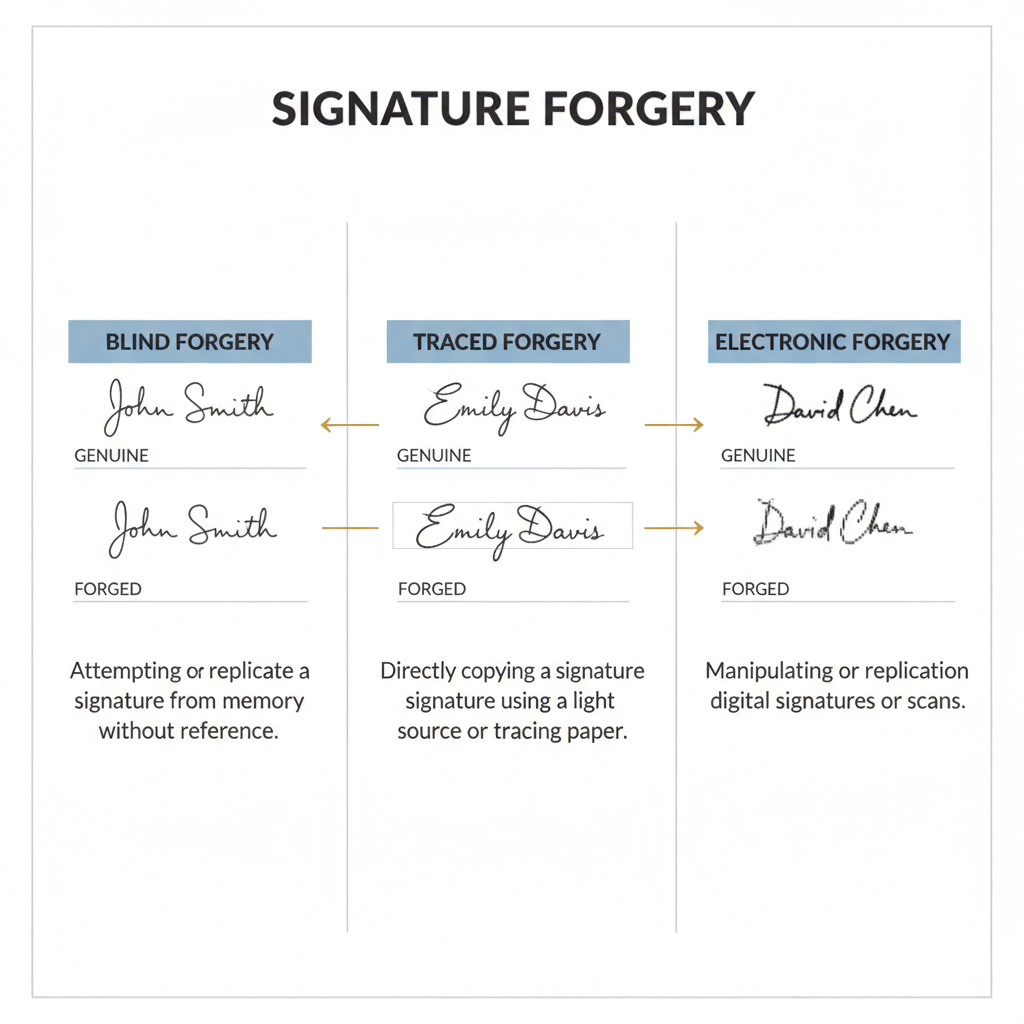
Understanding the different types of signature forgeries helps you implement better document security. Fraudsters use various methods depending on their resources and the target document. Here are the most frequent variations you might encounter in a business environment.
Blind forgery
Blind forgery occurs when the forger lacks a genuine signature to serve as a model. They simply write the victim’s name in their own handwriting, hoping no one will check the original signature on file. This is the easiest type of fake signature to detect because it looks nothing like the person’s actual signature styles.
Simulated and traced forgery
A simulated forgery occurs when the attacker practices a genuine signature until they can generate realistic signatures. A traced forgery involves placing a blank sheet over an original document and tracing its lines. While traced forgery might look accurate at first glance, a forensic document examiner can usually spot the slow, unnatural pen strokes.
Electronic and digital forgery
Electronic forgery takes place in digital environments. Attackers might use signature-forgery apps or electronic image-editing software to lift an image of a genuine signature and paste it onto other legal instruments. They may also steal login credentials to bypass digital signature verification, which is why handling sensitive documents requires advanced security technologies.
Real-world examples of signature forgery
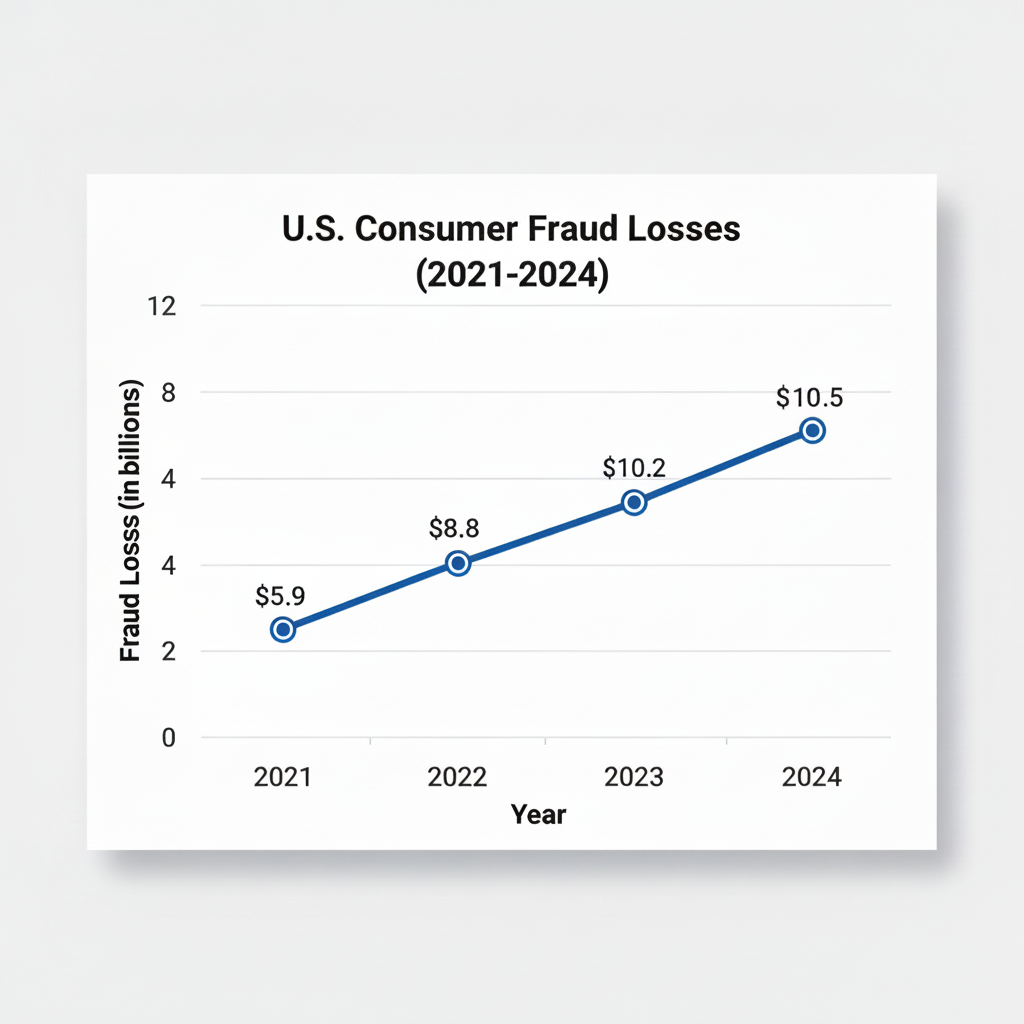
Real-world examples of signature forgery often highlight the vulnerabilities in everyday business workflows. One common scenario involves check fraud. Fraudsters steal checks from the mail, alter the payee information, and use a forged signature to deposit the funds, leading to massive financial loss.
Another frequent example occurs within internal corporate operations. An employee might forge a manager’s signature on an expense report or a procurement form to authorize fraudulent transactions. Because the employee understands the internal processes, they know exactly how to bypass basic law enforcement measures and internal checks.
Real estate and legal agreements also attract signature fraud. Criminals may forge a homeowner’s signature on a property deed to illegally transfer ownership. These fraudulent contracts create a nightmare of legal proceedings for the actual owner, requiring forensic handwriting experts and a qualified document examiner to prove the signature is indeed a questioned signature.
Business consequences of signature forgery
The business consequences of signature forgery extend far beyond the immediate financial loss. When a company accepts a forged document, they expose themselves to serious legal consequences. Victims of identity theft may hold the business liable for failing to handle sensitive documents securely, resulting in costly legal repercussions.
Operational disruption is another major consequence. If you suspect signature forgery on a legal document, you must freeze the associated workflow. Your team will spend hours or even weeks working with local law enforcement agencies to resolve the disputed signature, slowing down legitimate financial transactions.
Finally, signature fraud severely damages your brand’s reputation. Clients and partners expect you to maintain document integrity and protect their data. If unauthorized transactions slip through your defenses, you lose the trust of your stakeholders, which can be much harder to recover than the stolen funds.
How to detect a forged signature
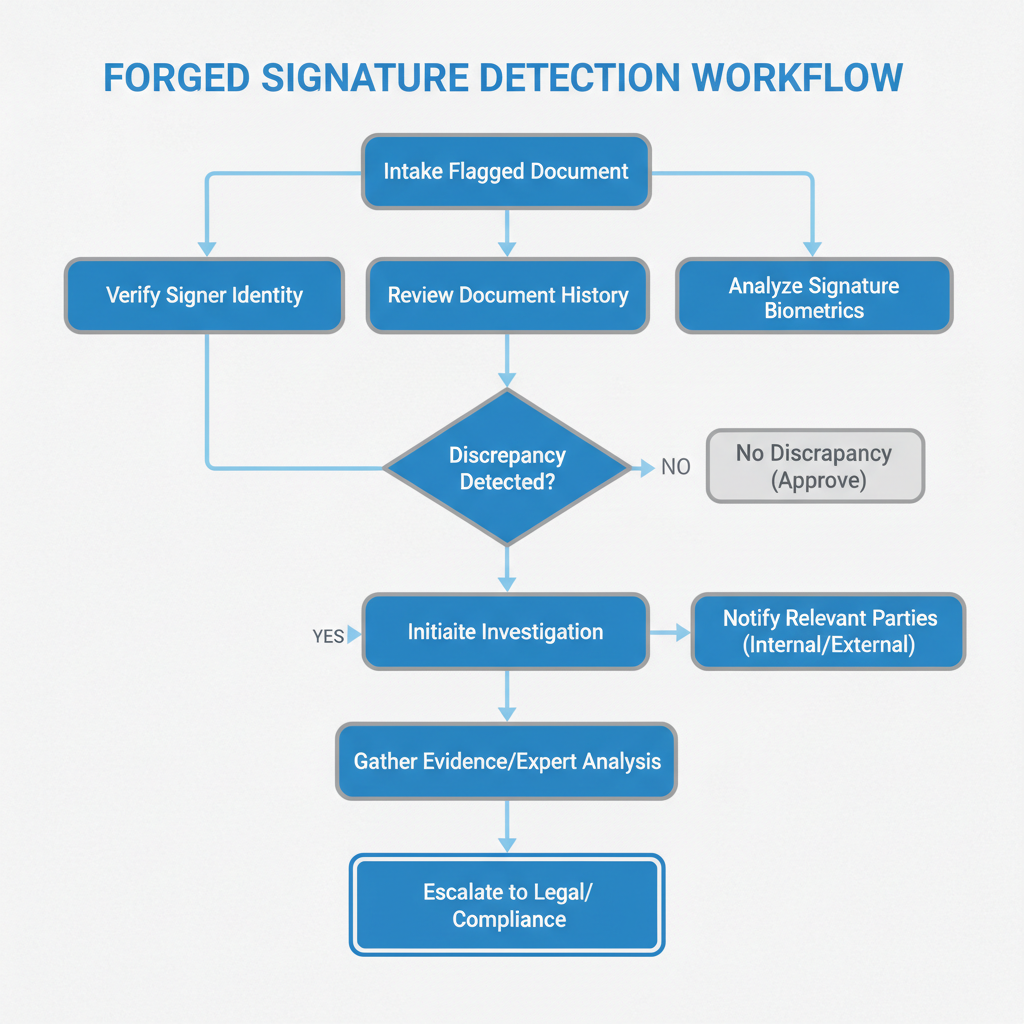
Knowing how to detect a forged signature is your first line of defense against document fraud. Visual inspection is still relevant for physical documents. Look for warning signs like unnatural pen lifts, hesitation marks, or varying pen pressure, which often indicate a traced forgery or someone slowly imitating someone’s signature.
For electronic documents, you must look beyond the visual representation of the signature. You need to verify the digital signature verification data. Check the document’s audit trail to see if the IP address, timestamp, or email address matches the expected signer. Discrepancies in this digital footprint are strong indicators of electronic signature forgery.
When dealing with a highly sensitive questioned signature, do not rely on guesswork. Escalate the issue to a forensic document examiner or legal counsel. These professionals use optical character recognition, digital tools, and specialized training to evaluate whether the signed document contains a genuine signature or a clever reproduction.
How to prevent signature forgery in 2026
To prevent signature forgery today, businesses must move away from easily manipulated physical documents. Adopting advanced security technologies is the most effective way to secure document storage and ensure document integrity. Secure electronic signatures provide layers of authentication that handwritten signatures simply cannot match.
Implement role-based access and identity verification for all legal documents. By requiring users to authenticate their identity via passwords, SMS codes, or single sign-on (SSO) before they can view a blank sheet or sign, you drastically reduce the chance of unauthorized transactions. This digital signature verification makes it incredibly difficult for someone to copy digital signatures.
Finally, standardize your workflow using a dedicated eSignature platform. Platforms that generate realistic signatures visually while backing them up with comprehensive, legally valid audit trails are essential. This approach ensures you have undeniable proof of who signed what, and when, keeping you compliant and protected from signature fraud.
Comparing physical and digital document security
| Feature | Physical documents | Digital documents (with secure eSignature) |
| Authentication | Relies on visual matching or notary presence. | Uses passwords, SMS, or identity verification tools. |
| Audit trail | Non-existent once the document leaves your hands. | Tracks timestamps, IP addresses, and document history. |
| Tamper evidence | Difficult to prove if pages are swapped. | Cryptographic seals break if the document is altered. |
| Storage | Vulnerable to physical theft, loss, or damage. | Encrypted, secure document storage in the cloud. |
How SignNow simplifies secure eSignature workflows
SignNow helps businesses eliminate the risks associated with manual paperwork. By transitioning to SignNow, you replace vulnerable physical documents with highly secure, legally valid electronic signatures. The platform is designed to make document security accessible and straightforward for teams of all sizes.
SignNow complies with stringent industry standards, including the ESIGN Act and eIDAS. When a user signs a document, the platform captures a detailed, court-admissible audit trail. This history logs the signer’s IP address, the time of signature, and device information, providing strong digital signature verification that deters fraud.
Furthermore, SignNow allows you to set up advanced authentication methods. This ensures that even if an email is intercepted, the attacker cannot access the file, effectively preventing electronic signature forgery before it happens.
Disclaimer: The information contained in this blog post is provided for general informational purposes only and does not constitute formal legal advice.
Final thoughts
Understanding what signature forgery is and how it impacts your business is the first step toward better document security. Criminals will continue to exploit weaknesses in physical paperwork and unverified emails to commit fraud. By educating your team on how to detect a forged signature, you can prevent serious legal consequences.
Modern business requires modern security. Transitioning away from vulnerable handwritten signatures protects you from identity theft and unauthorized transactions. Standardizing your approval workflows with advanced security technologies is no longer just an option; it is a necessity for maintaining document integrity.
Stop leaving your sensitive documents exposed to risk. Protect your business, your clients, and your reputation by upgrading your signing process today. Start your free trial of SignNow to experience secure, legally binding electronic signatures and keep your workflows safe from forgery.
Glossary
- Audit trail: A secure, chronological log of all activities related to a specific document. It records data such as who opened the file, the time it was signed, and the IP address used, providing critical evidence to detect forged signatures.
- Digital signature: A digital signature is a specific type of electronic signature that uses cryptographic technology to secure a document. It creates a tamper-evident seal that ensures the document’s integrity remains intact from the moment it is signed.
- ESIGN Act: The Electronic Signatures in Global and National Commerce (ESIGN) Act is a United States federal law passed in 2000. It grants electronic signatures and records the same legal weight as handwritten signatures and physical documents in commerce.
- Forensic document examiner: A forensic document examiner is a highly trained professional who analyzes physical and digital documents to determine their authenticity. They look for warning signs of traced forgery, alterations, and other types of signature forgeries.
FAQ
1. What is the difference between an electronic signature and a digital signature?
An electronic signature is a broad term for any electronic process indicating acceptance of an agreement. A digital signature is a highly secure subset of electronic signatures that uses cryptography to verify the signer’s identity. Digital signatures securely bind the signature to the document, making it tamper-evident.
2. Can electronic signatures be forged?
Yes, electronic signature forgery can occur if a system has weak security controls. Fraudsters might use stolen credentials or electronic image editing software to apply a fake signature. However, using secure platforms with identity verification makes forging an electronic signature much harder than forging a handwritten one.
3. How do forensic experts detect a forged signature?
Experts use various digital tools and physical examination techniques to analyze a questioned signature. They look for unnatural pen pressure, hesitation, or signs of a trace over fraud. In digital formats, they examine the cryptographic data and audit trails to verify the origin.
4. Are digital signatures legally binding?
Yes, digital signatures are legally binding in most industrialized nations. Regulations like the ESIGN Act in the US and eIDAS in Europe ensure that electronically signed documents hold the same weight as paper ones. You must ensure your eSignature provider complies with these specific legal frameworks.
5. What should I do if I suspect signature forgery?
If you suspect signature forgery, immediately halt any related financial transactions or legal proceedings. Preserve the original document and all associated digital access logs to maintain document integrity. Escalate the issue to your legal team or a local law enforcement agency for proper investigation.
6. How does SignNow protect against signature fraud?
SignNow uses advanced security technologies to protect your documents from unauthorized access. The platform features two-factor authentication, document encryption, and detailed court-admissible audit trails. These features work together to verify signer identity and prevent malicious actors from altering your legal agreements.
- Introduction to signature forgery
- What is signature forgery?
- Common types of forged signatures
- Real-world examples of signature forgery
- Business consequences of signature forgery
- How to detect a forged signature
- How to prevent signature forgery in 2026
- How SignNow simplifies secure eSignature workflows
- Final thoughts