

As businesses increasingly rely on digital workflows, electronic signature verification has become a cornerstone of secure and efficient operations:
- Electronic signature verification has evolved beyond a legal formality to become a fundamental business control.
- In 2026, the main risk is not paper inefficiency but fraud, tampering, and signer disputes.
- For senior managers, inadequate verification processes create significant legal vulnerabilities and operational inefficiencies.
- The goal is a balanced approach: simple for routine documents, stronger for sensitive or regulated ones.
In this guide, we’ll explore why verification matters now, what it entails, and how to choose the right level of verification for your workflows. We’ll also highlight how SignNow stands out as a solution for SMBs and mid-market teams looking to balance cost, speed, and security.
Disclaimer: This article is for informational purposes only and does not constitute legal or professional advice. For guidance on electronic signature verification tailored to your specific needs, please consult a qualified legal professional.
Why verification matters
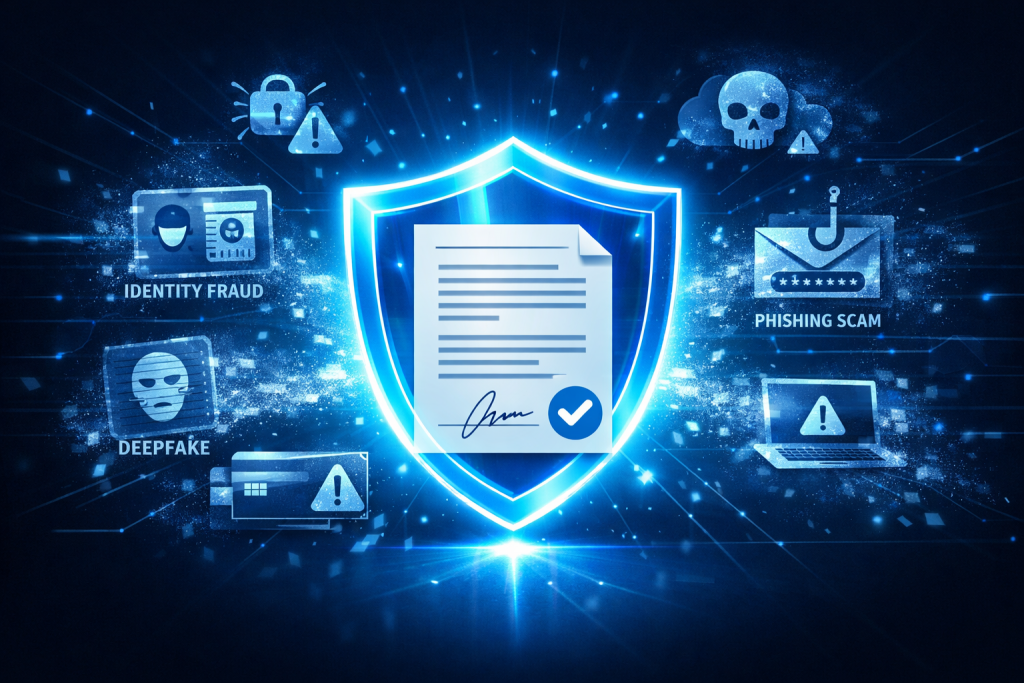
The fraud landscape has changed dramatically, outpacing many document workflows. According to Entrust’s 2025 Identity Fraud Report, digital document forgeries rose by 244% year over year. Deepfake attempts occurred every five minutes in 2024, and deepfakes accounted for 40% of biometric fraud. These trends are particularly concerning for industries like lending and traditional banking, which are among the most targeted sectors.
For businesses relying solely on email-based verification, these statistics are a wake-up call. Convenience alone is no longer sufficient control. Experian’s 2025 U.S. Identity and Fraud Report highlights the delicate balance businesses must strike between stronger identity controls and lower user friction. Overly aggressive verification can deter users and reduce completion rates, while weak verification can lead to downstream losses, chargebacks, and disputes.
The Takeaway: Verification is no longer optional: it’s a necessity. Businesses must adopt a risk-based approach to ensure that their verification processes are both effective and user-friendly.
What electronic signature verification actually means
Electronic signature verification is often misunderstood as synonymous with the act of signing. In reality, they are distinct. The signature is the action; verification is the evidence package surrounding it. This includes:
- How the signer was identified or authenticated.
- What the signer was shown.
- What action they took.
- Whether the document was altered after signing.
- What records exist to prove the sequence.
Key elements of strong verification with SignNow
A robust electronic signature verification process ensures that every step of the signing journey is secure, transparent, and defensible. Let’s consider how the verification items work in SignNow.
The signer’s intent to sign
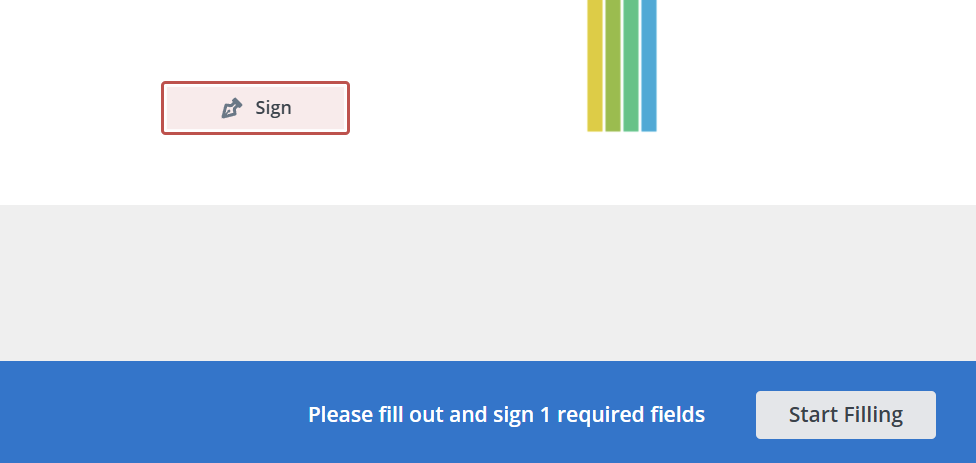
SignNow captures the signer’s intent through a clear and user-friendly interface. Before signing, users are presented with the document and prompted to initiate the document signing process with the Start Filling option. The platform ensures that signing is deliberate by requiring explicit actions, such as clicking a Sign button or drawing a signature.
The signer’s identity and link to the action
SignNow offers multiple authentication methods to verify the signer’s identity, including password protection, SMS codes, and phone-call verification. These options ensure that the person signing is the intended recipient, reducing the risk of impersonation or unauthorized access.
The integrity of the signed record
Once a document is signed, SignNow locks the record to prevent tampering. The platform generates a unique document ID and applies a tamper-evident seal, ensuring that any changes made post-signature are immediately detectable.
Evidence of the transaction
SignNow’s comprehensive audit trail captures every action taken during the signing process. This includes timestamps, IP addresses, user identities, and event types, providing a detailed record for compliance, audits, or dispute resolution.
The U.S. legal framework in 2026
The legal foundation for electronic signatures in the U.S. remains strong. The ESIGN Act

However, certain workflows require additional compliance measures:
- FDA-regulated environments: Must adhere to 21 CFR Part 11, which ensures electronic records and signatures are trustworthy and reliable.
- Notarized transactions: May require remote online notarization (RON) controls, with updated standards like MISMO’s RON Standards V2 expected in 2026.
For more details on the legal requirements for verifying a signer’s identity and intent to sign, please see our previous blog post.
The Takeaway: Legal compliance is not just about using the right software; it’s about ensuring that your processes capture agreement, intent, and record integrity reliably.
How to choose the right verification level
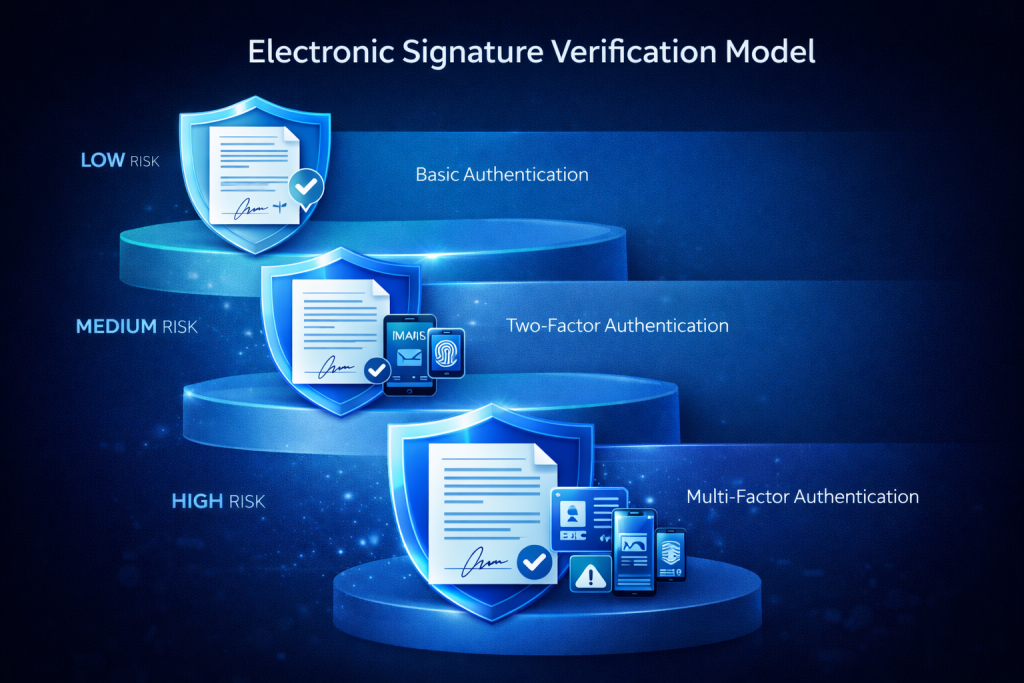
A one-size-fits-all approach doesn’t work for electronic signature verification. Instead, businesses should adopt a tiered approach based on risk:
Low-risk workflows
Examples: Internal acknowledgments, routine vendor forms, standard NDAs.
Recommended Controls: Email delivery with an audit trail capturing timestamps, IP addresses, and event history.
Medium-risk workflows
Examples: HR onboarding, customer agreements, insurance forms.
Recommended Controls: Add an authentication factor like a password, SMS, or phone-call verification. SignNow supports all three, making it an ideal choice for SMBs and mid-market teams.
High-risk or regulated workflows
Examples: Lending, healthcare, clinical research.
Recommended Controls: Stronger identity proofing, stricter retention policies, and compliance with regulations like 21 CFR Part 11 or RON standards.
A process proportional to the document’s risk level in SignNow
SignNow allows businesses to tailor their verification processes to the document’s risk level. For routine transactions, basic authentication and an audit trail may suffice. For high-risk workflows, SignNow supports advanced controls, such as multi-factor authentication and integration with remote online notarization (RON) services.
By aligning with NIST’s SP 800-63-4 framework, SignNow separates identity proofing from authentication, ensuring that each step of the verification process is both secure and efficient. Whether it’s a simple NDA or a high-stakes lending agreement, SignNow provides the tools needed to match verification rigor to document risk.
How the verification workflow should work
A strong verification workflow should be operationally simple, even if the underlying policy is complex. Here’s a step-by-step guide:
- Classify the Document: Differentiate between low-risk and high-risk workflows.
- Choose the Right Authentication: Match the authentication method to the document’s risk level.
- Preserve Evidence: Capture invite details, user actions, timestamps, IP addresses, and consent language.
- Monitor Exceptions: Identify anomalies like bounced emails or mismatched phone numbers.
- Archive the Evidence: Ensure the full audit trail is retained for future reference.
What to look for in an electronic signature verification service
When evaluating electronic signature verification services, it’s essential to focus on four key dimensions:
Legal defensibility
A reliable platform should provide clear audit trails and robust evidence retention to ensure compliance and support dispute resolution. SignNow excels in this area by offering detailed audit logs that capture timestamps, IP addresses, user identities, and event types. These logs create a transparent and defensible record of every transaction, ensuring legal compliance and peace of mind.
Identity controls
Strong identity verification is critical to prevent fraud and unauthorized access. SignNow offers multiple authentication options, including password protection, SMS codes, and phone-call verification. These flexible methods allow businesses to tailor their verification processes to match the risk level of each document, ensuring secure and reliable signer authentication.
Workflow scale
A scalable solution should streamline operations with features like templates, bulk sending, and integrations with existing tools. SignNow supports reusable templates for frequently used documents, bulk sending for high-volume workflows, and seamless integrations with platforms like Salesforce, NetSuite, and Microsoft 365. These features reduce manual effort, improve efficiency, and keep verification workflows embedded within your existing systems.
Cost discipline
Transparent pricing and scalability are crucial, especially for SMBs and mid-market teams. SignNow stands out with its straightforward pricing model, offering plans starting at $8 per user per month and unlimited user seats for enterprise customers. This ensures that businesses can scale their e-signature processes without incurring unpredictable costs, making it an ideal choice for teams balancing security with budget constraints.
Case studies: How companies have found success with SignNow’s eSignature implementation
SignNow empowers organizations across industries to streamline workflows, strengthen compliance, and reduce costs. To illustrate its value, let’s explore three real-world case studies from clinical research, public health, and insurance software.
1. Clinical research: Ora, Inc.
Ora adopted SignNow to meet its 21 CFR Part 11 compliance requirements, saving 50% on costs while streamlining HR and regulated workflows.
2. Public health: Southern Nevada Health District
SignNow enabled the rapid deployment of quarantine disclosures, reducing operational pressure during high-volume periods.
3. Insurance software: NowCerts
NowCerts integrated SignNow’s API into its CRM, automating record storage and improving workflow efficiency.
You can read more SignNow customer stories at our dedicated page.
Conclusion
Electronic signature verification is a basic requirement for businesses across industries. By adopting a risk-based approach and leveraging a secure eSignature solution, businesses can streamline their workflows, enhance security, and build trust with their stakeholders.
Ready to transform your document processes? Start your journey with SignNow today and experience the perfect balance of simplicity, security, and scalability.
FAQ
What is the difference between electronic signatures and electronic signature verification?
Electronic signatures are the act of signing a document digitally, while electronic signature verification is the process of proving the authenticity and integrity of that signature. Verification includes steps like confirming the signer’s identity, capturing their intent, and preserving an audit trail. Together, they ensure the signed document is secure, valid, and legally defensible.
How can businesses reduce friction in electronic signature workflows?
To minimize friction, businesses should use platforms like SignNow that offer flexible authentication options and intuitive interfaces. Features like reusable templates, bulk sending, and mobile-friendly signing make the process faster and more user-friendly. Balancing security with convenience is key to maintaining high completion rates.
What industries benefit most from advanced electronic signature verification?
Industries like healthcare, finance, legal, and regulated sectors benefit significantly from advanced verification due to their high compliance and security requirements. For example, lending agreements, clinical research, and notarized transactions often require multi-factor authentication and detailed audit trails. Platforms like SignNow cater to these needs with features designed for high-assurance workflows.
How does electronic signature verification improve compliance?
Verification ensures that every step of the signing process is documented and secure, meeting legal and regulatory standards. By capturing detailed audit trails and using authentication methods, businesses can demonstrate compliance during audits or disputes. This reduces legal risks and builds trust with stakeholders.
What makes SignNow a strong choice for SMBs and mid-market teams?
SignNow offers a unique combination of affordability, scalability, and robust features tailored to smaller teams. With transparent pricing, unlimited user seats, and integrations with popular tools, it’s designed to grow with your business. Its flexible authentication options and detailed audit trails make it a secure, yet cost-effective solution.
- Why verification matters
- What electronic signature verification actually means
- Key elements of strong verification with SignNow
- The U.S. legal framework in 2026
- How to choose the right verification level
- How the verification workflow should work
- What to look for in an electronic signature verification service
- Case studies: How companies have found success with SignNow’s eSignature implementation
- Conclusion
- FAQ