What is a forged signature? Legality, consequences, and how to protect yourself

Quick answer: A forged signature is a signature written, copied, or applied in another person’s name without their authority, with the intent that someone will accept it as genuine. Forging a signature is a criminal offense in the US and the UK, and a forged signature generally does not bind the person whose name was used.
This guide covers the legal side of the problem: what the term means, why the law treats it so seriously, how it is charged, and what happens civilly. For handwriting comparison and detection methods, signNow’s signature forgery detection guide goes deeper.
TL;DR
- A forged signature is someone else’s name signed or applied without authority, intended to be accepted as real.
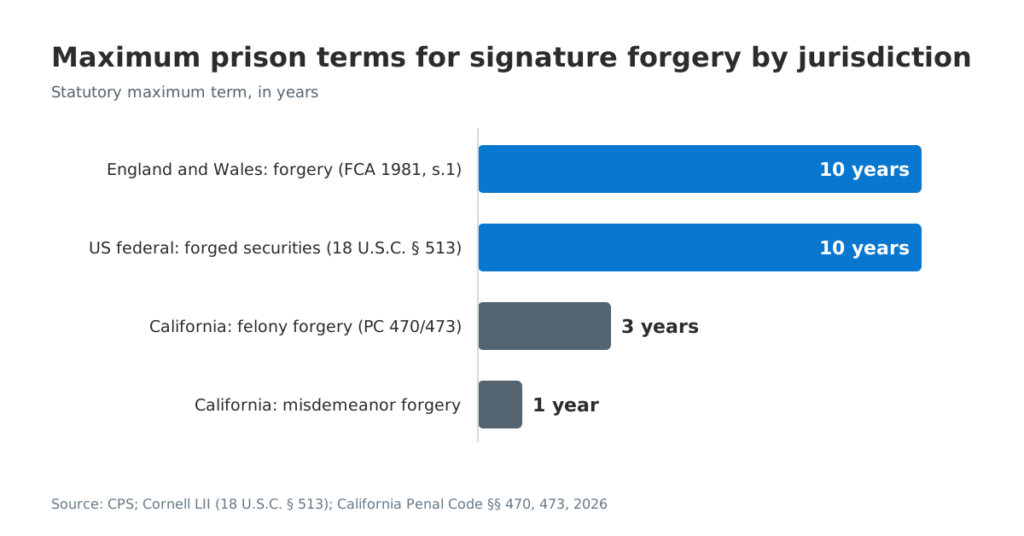
- In England and Wales, forgery under the Forgery and Counterfeiting Act 1981 carries up to 10 years in prison.
- In the US, forgery is mainly a state crime; federal law adds up to 10 years for forged securities such as checks issued by organizations.
- Civilly, a forged signature is generally ineffective against the person whose name was used (UCC § 3-403).
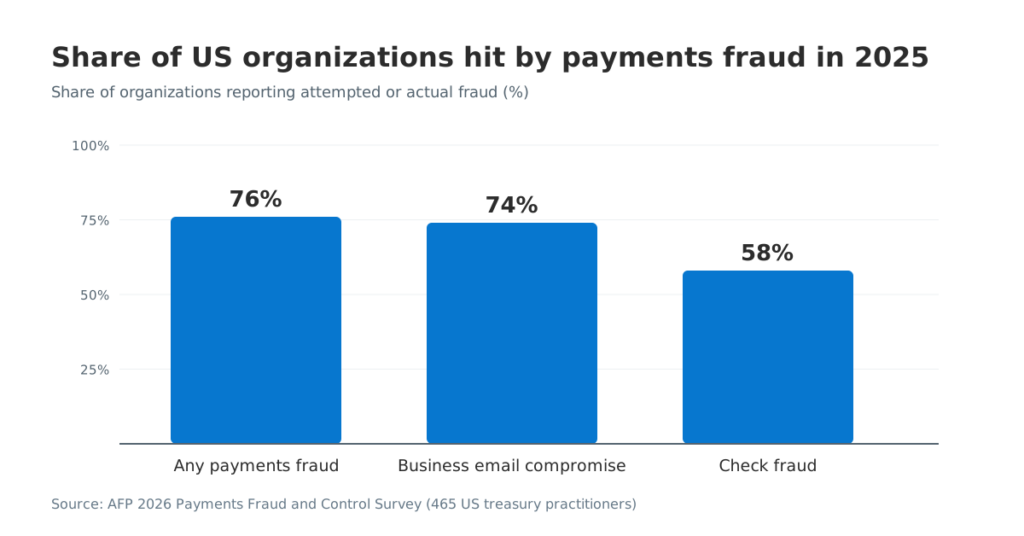
- Checks remain the most-targeted payment method: 58% of US organizations reported check fraud in the 2026 AFP survey.
- Signer authentication and an audit trail make electronic signatures harder to forge and easier to dispute.
What does forged signature mean?
A forged signature is a signature that the named person did not make or authorize, created or used to deceive someone into treating a document as genuine.
Three elements show up in almost every legal definition:
- No authority. The named person did not sign and did not authorize anyone to sign for them.
- Intent to deceive or defraud. The person signing wants the document to be relied on as authentic.
- A document with legal or financial effect. Checks, contracts, deeds, wills, loan applications, tax forms, and consent forms are typical targets.
English law frames this through the idea of a “false instrument.” Under the Forgery and Counterfeiting Act 1981, a document is false when it tells a lie about itself, for example by claiming to be signed by someone who never signed it. A document that is genuinely signed but contains false statements is a different problem (fraud or misrepresentation), not forgery.
These terms overlap, and the difference often decides which law applies.
| Term | What happened | Example |
| Forged signature | Someone signs another person’s name to deceive | An employee signs the owner’s name on a company check |
| Unauthorized signature | Someone signs beyond the authority they were given | An agent signs a contract the principal never approved |
| Altered document | A genuine signature stays, but the terms change | The amount on a signed check is raised after signing |
The usual methods are freehand imitation, tracing, skilled forgery, writing the name with no attempt to copy its style, and using a pasted image of a real signature from a scan or PDF on a new document.
Why is forging a signature illegal?
Forging a signature is illegal because a signature is the main way the law records consent and verifies a person’s identity, and forgery takes rights or property from someone who never agreed to give them up.
Why it matters: contracts, bank payments, property transfers, and government filings all work on the assumption that a signature means the named person agreed. When that assumption fails, the harm spreads beyond one victim:
- The named person can lose money, property, or legal rights.
- Banks and counterparties that relied on the signature carry losses and disputes.
- Courts and registries lose confidence in documents they rely on as evidence.
A common misconception is that forgery is harmless if the forger planned to repay the money or assumed the named person “would have agreed.” It may be used to commit fraud or obtain financial gain. Most statutes look at the intent to have the document accepted as genuine. Genuine prior permission is different: an assistant signing with documented authority acts as an agent, not a forger.
Is forging a signature illegal? Signature forgery as a criminal offense
Yes. Forging a signature is a criminal offense in the US and the UK, and under the legal system in each place, penalties vary; depending on the document and the amount involved, it can be charged as a felony.
The table below shows how a few jurisdictions treat it. Penalties are statutory maximums or ranges, not typical sentences, and they can change by jurisdiction and by the document involved.
| Jurisdiction | Law | How it is classified | Maximum penalty |
| England and Wales | Forgery and Counterfeiting Act 1981, s.1 | Criminal offense (maximum applies on indictment) | 10 years’ imprisonment, a fine, or both |
| US (federal) | 18 U.S.C. § 513 | Forged securities of states and organizations, including checks | Up to 10 years’ imprisonment, a fine, or both |
| Spain | Spanish Penal Code | Forgery of official documents | 3–6 years’ imprisonment |
| California | Penal Code §§ 470 and 473 | “Wobbler”: misdemeanor or felony | Misdemeanor up to 1 year in county jail; felony up to 3 years. Checks of $950 or less: misdemeanor only |
| Texas | Penal Code § 32.21 | Class A misdemeanor by default; state jail felony for wills, deeds, checks, and contracts | Grade rises with value, up to a first-degree felony at $300,000 or more |
Federal jurisdiction can apply when the document involved includes federal documents, government documents, or interstate commerce.
This summary is general information, not legal advice, and criminal convictions may also include fines and restitution. Forgery statutes are amended often, so check the current text or ask a criminal defense attorney or solicitor about a specific case.
Felony or misdemeanor?
Whether a signature forgery criminal offense is charged as a felony usually depends on three factors:
- The type of document. Wills, deeds, checks, contracts, and government documents tend to sit at the felony end, and legal documents such as wills, deeds, and contracts often increase the seriousness of the charge.
- The value involved. Texas, for example, grades forgery committed to obtain property by the value of that property.
- The victim. Some states increase the grade when the victim is elderly; Texas raises the offense one category in that case.
Charges that often come with forgery
Prosecutors rarely charge forgery alone. Using a forged document (uttering), fraud, identity theft, theft, and, where a bank is involved, federal bank fraud can be added to the same facts, each with its own penalty.
Civil consequences of a forged signature
Apart from criminal charges, a forged signature usually has no binding effect on the person whose name was used, and the forger can be sued for the losses it causes.
In the US, UCC § 3-403 states that “an unauthorized signature is ineffective except as the signature of the unauthorized signer.” In practice, this means:
- The named person is generally not bound by a contract or check carrying a forged signature.
- The forger is bound, because the signature operates as the forger’s own.
- Ratification can change the outcome. If the named person accepts the benefit of the document after learning of the forgery, they may lose the ability to reject it.
- Banks carry part of the risk. Under the UCC’s properly payable rule (§ 4-401), a bank that pays a check with a forged drawer’s signature generally cannot charge it to the customer, but account agreements and state law set reporting deadlines, so report suspected forgery promptly and in writing.
Victims can also sue the forger for fraud or conversion, separately from any criminal case.
How common is signature fraud?
Signature fraud remains common because paper checks and signed documents, including business contracts, are still part of everyday business payments.
The 2026 AFP Payments Fraud and Control Survey found that 76% of US organizations experienced attempted or actual payments fraud in 2025, and that checks were the most-targeted method, reported by 58% of organizations. Business email compromise affected 74%.
Forged signatures are a direct part of this picture. A FinCEN analysis of mail theft-related check fraud reviewed 15,417 reports from 841 financial institutions covering more than $688 million in suspicious activity. Of the stolen checks, 20% were fraudulently signed and deposited, 44% were altered, and 26% were used as templates for counterfeits.
Inside organizations, the ACFE Occupational Fraud 2024 report analyzed 1,921 cases across 138 countries with more than $3.1 billion in losses; check and payment tampering is one of the schemes it tracks.
What to do if someone forged your signature
If you suspect a forged signature, act quickly, keep a written record of every step, and avoid anything that could look like approving the document.
- Get a copy of the document carrying the signature.
- Collect genuine samples of your signature from around the same date. A questioned signature is usually compared against multiple genuine samples.
- Notify the party that relied on it. Contact the bank, lender, landlord, or company in writing, state that you did not sign, and ask what forms they need. Banks often ask for an affidavit of forgery.
- Do not ratify. Avoid paying, using, or accepting benefits from the document until the dispute is settled.
- File a police report. A report number supports bank claims and any later court case.
- Check your wider exposure. Review bank statements, credit reports, and online accounts for other activity in your name, and place a fraud alert if identity theft is involved.
- Get legal advice. A lawyer (or a solicitor in the UK) can assess civil claims and, if needed, arrange for forensic document examiners or forensic handwriting experts to use scientific methods and forensic analysis on the original document, including pressure and movement, line quality and flow, and signs like unnatural pen lifts or pressure differences.
Two common scenarios:
- Finance: an accounts payable clerk spots a cleared check to an unknown vendor bearing the controller’s signature. The company reports it to the bank in writing, freezes the check stock, and attaches the bank’s check image to the police report.
- Real estate: a homeowner finds a recorded deed they never signed. A real estate attorney can ask a court to declare the forged deed void.
How to protect your signature from forgery
The most effective protection is to reduce how often a bare signature is the only proof of consent, help prevent signature forgery, and keep a record that shows who signed, when, and how they were verified.
Practical steps for paper documents:
- Store blank checks and signed originals securely, and shred old documents carrying your signature.
- Review bank and card statements as soon as they arrive.
- Avoid emailing scans of your signature where a signing platform would work.
Electronically, a signature image alone is no stronger than ink, and a wet signature is usually checked by eye while a digital signature can be verified with metadata and certificates. What makes an electronic signature legally binding and defensible under the ESIGN Act and UETA in the US or eIDAS in the EU is the evidence around it: who accessed the document, how they proved their identity, and whether anything changed after signing, with encryption and cryptographic algorithms helping protect document integrity.
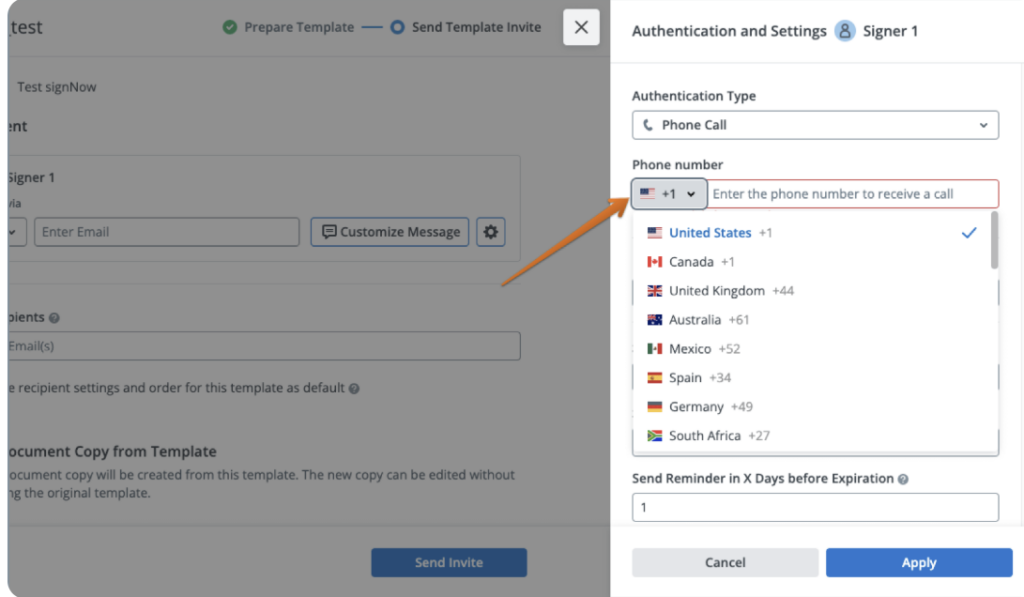
signNow addresses both points. With two-factor signer authentication, the sender can require each signer to pass a check before opening the document, and biometric authentication can also verify a person’s identity by analyzing unique traits when a workflow uses it:
1. Open the document and select Invite to Sign.
2. In the invite window, click the gear icon to open Advanced Settings.
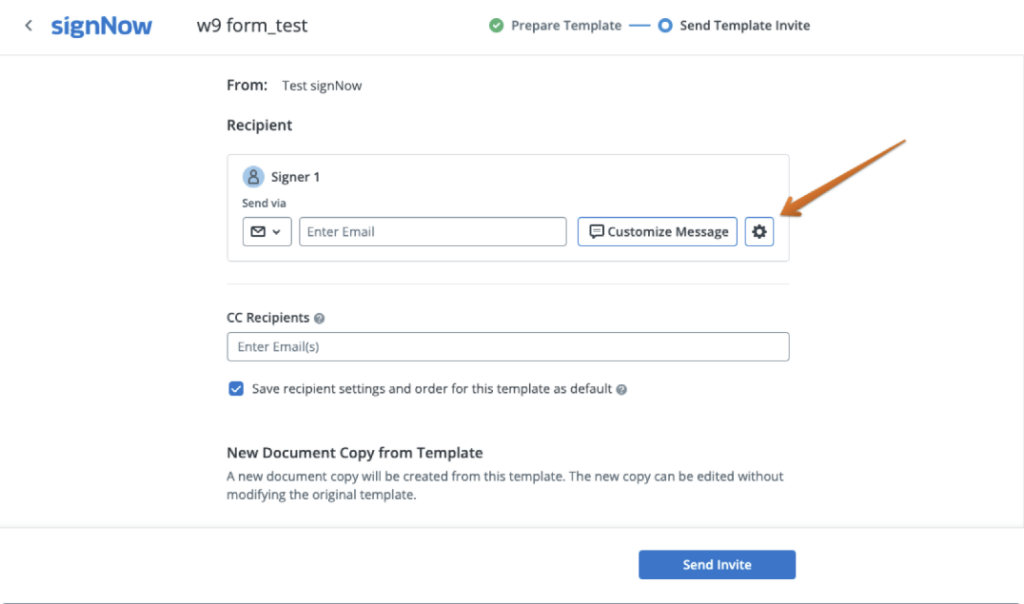
3. For each signer, choose Password, Text message (SMS), or Phone call.
4. For SMS or phone call, select the signer’s country and enter their phone number. For a password, create one and share it with the signer through a separate channel.
5. Click Apply, enter the signer’s email address, and send the invite.
Every completed document also carries a tamper-proof eSignature audit trail that records signer names, timestamps, IP addresses, the authentication method used, and a document hash that indicates whether the file changed after signing. If someone later claims a signature was forged, this document history gives stronger proof of authenticity through a clear record of each event. The audit trail is included in the Business plan, priced at $8 per user per month billed annually on the signNow pricing plans page.
Organizations in regulated fields often choose a platform for this evidence and its security and compliance controls, and some also look to blockchain technology as another tamper-resistant way to store signature data. As Lucija Hrvat, Course Coordinator at Instituto Italiano di Fotografia, put it: “We can recommend SignNow not only because of compliance, but also because it is easy to use for us and for all the applicants.”
Disclaimer: The information contained in this blog post is provided for general informational purposes only and does not constitute formal legal advice.
Final thoughts
Protecting your signature starts with controlling access to your documents and keeping clear records of consent. A signature alone tells only part of the story—knowing who accessed and signed a document helps you address questions about its authenticity.
SignNow combines signer authentication with a detailed audit trail to help businesses manage signing securely and maintain records of document activity. Use these tools to strengthen your signing process and support accountability.
Start using SignNow to send documents for signature and track every step.
Glossary
- Forgery: making or altering a document, including a signature, so it appears genuine, with intent to deceive.
- Document forgery: falsifying or altering documents, including signatures, so they appear genuine for fraud.
- False instrument: under English law, a document that tells a lie about itself, such as who signed it.
- Uttering: knowingly using or passing a forged document as genuine.
- Ratification: approving an unauthorized signature after the fact, which can make it binding.
- Wobbler: a California offense that can be charged as either a misdemeanor or a felony.
- Signer authentication: an identity check, such as a password, SMS code, or phone call, required before a signer can open a document.
- Electronic signature forgery: misuse of signature images, credentials, or insecure workflows that can make an e-signature unreliable.
- Audit trail: a time-stamped record of actions on a document, including views, signatures, IP addresses, and authentication.
FAQ
1. Is it forgery if you sign someone’s name with their permission?
Generally no. Signing with genuine authority makes you an agent, not a forger. If you have that authority, sign your own name on the other person’s behalf rather than writing their name, which is safer in legal documents because it reduces later disputes about authorization. Written authorization or a power of attorney avoids disputes later.
2. Can you go to jail for forging a signature?
Yes. Maximum terms include 10 years in England and Wales, 10 years under 18 U.S.C. § 513 for forged securities, and 3 years for felony forgery in California, but penalties vary by state, country, and whether the case is in state or federal court.
3. How do you prove a signature is forged?
Typical evidence includes genuine samples, a forensic document examiner’s comparison, and bank or platform records. For electronic documents, the audit trail (IP address, timestamps, authentication method) carries significant weight. Examiners also look for warning signs such as shaky lines, uniform pressure, inconsistent pen pressure, and unnatural pen lifts. Microscopic analysis and digital tools, including optical character recognition, can help detect irregularities in a questioned signature.
4. Is a forged contract legally binding?
Not against the person whose signature was forged. Under UCC § 3-403, an unauthorized signature is ineffective except as the signature of the person who actually signed, unless the named person later ratifies it.
5. Can I sue someone for forging my signature?
Yes. Civil claims such as fraud or conversion can recover losses, alongside or after any prosecution. If you suspect forgery, consult legal professionals promptly, especially in a disputed will or other high-value legal dispute.
6. Are electronic signatures harder to forge?
They are when the platform verifies the signer and keeps a tamper-evident audit trail, unlike a true digital-signing workflow where a pasted signature image is easier to forge. Audit trails and identity checks also create a more traceable record for a signed document.
Sources
- AFP 2026 Payments Fraud and Control Survey, Association for Financial Professionals, 2026
- Mail theft-related check fraud analysis, FinCEN, 2024
- Occupational Fraud 2024: A Report to the Nations, ACFE, 2024
- 18 U.S.C. § 513, Cornell Legal Information Institute
- UCC § 3-403 Unauthorized signature, Cornell Legal Information Institute
- Texas Penal Code § 32.21 Forgery
- California Penal Code 470 forgery
- What does forged signature mean?
- Why is forging a signature illegal?
- Is forging a signature illegal? Signature forgery as a criminal offense
- Civil consequences of a forged signature
- How common is signature fraud?
- What to do if someone forged your signature
- How to protect your signature from forgery
- Final thoughts
- Glossary
- FAQ
- Sources