Job offer letter template: what to include and how to send it for signing

A job offer letter is a formal document that closes the interview process. It is also one of the shortest documents in a hiring file. It is one of the easiest to get wrong. It carries a pay figure that several states regulate. It holds a contingency clause governed by federal credit reporting rules. Its wording can turn an at-will hire into something a court reads as a promise. This guide gives a brief overview of employment offer letters. It includes a standard job offer letter template you can copy. It covers the parts that carry legal weight. It also shows a way to send the letter so acceptance is dated and how to use SignNow’s job offer letter template to simplify the process.
TL;DR
- A job offer letter records title, start date, pay, reporting line, and conditions. It is not an employment contract.
- Keep the at-will statement and the contingencies in separate paragraphs, so neither gets buried.
- State pay in the period you actually pay it, and match any range in the job posting.
- Colorado, California, New York, and Washington all require pay ranges in job postings.
- A background check condition triggers FCRA steps, including a stand-alone notice and pre-adverse action copies.
- Promises about duration, guaranteed raises, or review dates can weaken the at-will presumption.
- Acceptance starts the Form I-9 clock, so send the letter early and record the signing date.
- SignNow lets you add candidate fields, send the offer for eSignature, and keep an audit trail.
What a job offer letter is, and what it is not
An employment offer letter turns a job opportunity into a written offer. It does a different job from an employment contract.
What the letter records
An offer letter records the terms on which an employer is prepared to hire someone. It states the key employment terms: title, start date, pay, reporting line, and the conditions attached. These are the terms of employment the candidate can rely on. It is not an employment agreement.
DLA Piper describes offer letters as short documents. They carry “very basic terms and conditions of employment”. Employment agreements run longer. They cover confidentiality, non-solicitation, equity, and termination.
Why enforceability matters
The difference is enforceability. An employment agreement is a legally binding contract. An offer letter typically sits on top of at-will employment. So a letter that promises a first year can read like a term. So can a guaranteed bonus or a review schedule. Language like that can create a legally enforceable promise.
Treat the letter as an offer to a prospective employee, not a guarantee of employment.
What to include in a job offer letter
The core employment details of an offer are consistent across employers.
The core elements
A good letter lists these position details and employment terms:
- Job title, department, and the person the role reports to, with their manager’s title
- A brief description of primary duties, or a pointer to the job description
- Anticipated start date, and whether it is firm or moves with the contingencies below
- Classification: full-time or part-time, exempt or non-exempt
- Base pay, stated in the period you will actually pay it, such as an annual salary or hourly rate, with the payment schedule
- Variable pay, with the bonus, commission, or equity plan, such as stock options, named as a separate document
- Benefits information at a summary level, with eligibility dates rather than plan details
- Workplace location and work schedule, including work hours and any remote or hybrid arrangement
- Contingencies: background check, drug screening, references, work authorization
- An at-will statement, where at-will applies
- An offer expiration date and a signature block for both sides
Optional additions
Add relocation assistance or sign-on terms where they apply. Add any day-one agreement, such as one on intellectual property rights.
Exempt or non-exempt status comes from the Fair Labor Standards Act. A full-time employee in a full-time position can be either. Describe the compensation structure plainly. Name health insurance, retirement, and paid time off as key benefits. Say how pay arrives, such as direct deposit.
Keep job responsibilities general. Specific responsibilities and job duties belong in the job descriptions, not the letter.
Keep every item short, and point to plan documents for more detail.
A job offer letter template you can copy
Copy this formal letter into your own file. Treat it as one of your job offer templates.
Copy the template
Replace the bracketed text. The template covers all the essentials. Keep the contingency and at-will paragraphs separate. That way, neither gets buried in the compensation section.
[Date]
Dear [Candidate name],
On behalf of [Company name], I am pleased to offer you the position of [Job title] in the [Department] team, reporting to [Manager name, title].
Start date: [Date], subject to the conditions set out below.
Classification: [Full-time / Part-time], [Exempt / Non-exempt].
Location: [Office address / remote / hybrid, with the expected schedule].
Compensation. Your base pay will be [$X per year / $X per hour], paid [weekly/biweekly/semi-monthly], subject to standard withholding. [Name any bonus, commission, or equity plan document that governs.]
Benefits. You will be eligible for [medical, dental, vision, retirement, paid time off] beginning [date or waiting period]. Plan documents govern.
Conditions. This offer is contingent on [a background check/drug screening/satisfactory references] and on your establishing your authorization to work in the United States.
Employment relationship. Your employment with [Company name] is at will. Either you or the company may end it at any time, with or without cause and with or without notice. Nothing here is a promise of employment for any fixed period. This letter is not an employment contract, and may be changed only in writing signed by [title of authorized signer].
Please confirm your acceptance by signing below and returning this letter by [date]. If we have not heard from you by then, this offer expires.
Sincerely,
[Name, title]
Accepted: ______________________ Date: ______________
[Candidate name]
Two paragraphs there do the heavy lifting: the conditions and the at-will language.
Pay transparency: the pay line is regulated
The starting salary in the letter must match what the candidate already saw.
Why the number must match
Several states require a pay range in the job posting itself. So the number in the letter has to match what the candidate already saw. Four states were checked for this article. They are not the only ones with disclosure rules.
Pay range disclosure in job postings: four states checked
| State | Which employers it applies to | What the job posting must disclose |
|---|---|---|
| Colorado | All employers, public or private, that employ at least one person in Colorado. No employee-count threshold. | The compensation to be offered, the benefits to be offered, and how and when to apply. |
| California | Employers with 15 or more employees, for any role that may ever be filled in California, in person or remotely. | The pay scale, defined as a good faith estimate of the salary or hourly wage range the employer reasonably expects to pay upon hire, placed in the posting itself. |
| New York | Businesses with four or more employees. | A compensation range and a job description. Commission-based positions must be identified as such. |
| Washington | Employers with 15 or more employees. | A wage scale or salary range, a general description of all benefits, and a general description of other compensation. |
Source: Colorado Department of Labor and Employment (INFO #9A, Transparency in Pay and Job Opportunities, EPEWA Part 2, 2024); California Department of Industrial Relations, Labor Commissioner’s Office (California Equal Pay Act FAQ, Labor Code 432.3); New York State Department of Labor (Pay Transparency, Labor Law 194-B); Washington State Department of Labor and Industries (Equal Pay and Opportunities Act). Agency guidance as published, all four pages fetched 20 September 2026. Four states checked; not an exhaustive national list.
What each state requires
Colorado reaches furthest. The Department of Labor and Employment says the Equal Pay for Equal Work Act covers “all ’employers,’ public or private, that employ at least one person in Colorado”. There is no size threshold. Every posting must state “the compensation to be offered, the benefits to be offered, and how and when to apply.”
California defines what a range means. Labor Code section 432.3 applies to employers with 15 or more employees. They publish the pay scale in the job posting. The Labor Commissioner’s Office calls it “a good faith estimate of the salary or hourly wage range that an employer reasonably expects to pay for a position upon hire.” New York applies its compensation range requirement to businesses with four or more employees. Washington asks employers of 15 or more for a wage scale or salary range. It also asks for a description of benefits and other compensation.
If the posting carried a range, the offer needs to land inside it.
Conditional offers and the background check sequence
Before you formally offer the role, plan the notices that must follow in order.
The FCRA sequence
“Contingent on a background check” is one line in the template. In practice, it is a sequence of obligations. The Federal Trade Commission (FTC) sets out what the Fair Credit Reporting Act requires. It does so in a specific order. It applies when an employer uses a consumer report in a hiring decision.
Before the report is ordered, the employer gives written notice. It says background information may be used in employment decisions. The FTC is explicit that this notice must be “in a stand-alone format” rather than folded into the application form. Written permission follows, then a certification to the reporting company.
The step employers most often miss comes next. Before taking adverse action based on the report, the employer gives the candidate two things. One is a copy of the report. The other is “A Summary of Your Rights Under the Fair Credit Reporting Act”. That gives the person “an opportunity to review the report and explain any negative information.” Only then does the adverse action notice follow. It names the reporting company. It sets out the right to dispute the report. It also covers a free copy within 60 days.
Medical questions after the offer
The conditional offer also changes what an employer may ask medically. Equal Employment Opportunity Commission guidance on disability-related inquiries and medical examinations is clear. Both are barred before a conditional offer. They are permitted afterwards “as long as it does so for all entering employees in the same job category.” A physical or medical questionnaire, therefore, belongs after the letter goes out.
The offer becomes final only on successful completion of each check.
At-will wording that can cost you the presumption
At-will is the default, but the wording of your letter can undo it.
What the default says
At-will employment is the default in 49 states. Most offers are made on an at-will basis. Either side may terminate employment at any time for any lawful reason. The National Conference of State Legislatures describes it as an arrangement where an employer “can terminate an employee at any time for any reason, except an illegal one, or for no reason without incurring legal liability.” The presumption is strong but not unbreakable. It usually breaks through the wording the employer chose.
At-will employment and its common law exceptions
| Measure | Jurisdictions |
|---|---|
| States where at-will employment is the default presumption | 49 |
| States requiring good cause by statute | 1 (Montana, Wrongful Discharge From Employment Act, 1987) |
| Jurisdictions recognizing the implied contract exception | 41 states and the District of Columbia |
Source: National Conference of State Legislatures, At-Will Employment Overview, page fetched 20 September 2026. Counts are the NCSL’s own; the implied contract exception arises from oral assurances or promises in employer documents.
How wording breaks the presumption
The NCSL records the implied contract exception in 41 states and the District of Columbia. It arises from oral assurances by a supervisor or promises in employer documents. A verbal offer carries the same risk, so confirm it in a written offer.
Courts generally treat “long-term,” “lifetime,” or “permanent” employment language as aspirational. A specific written commitment is different. So pair an annual pay figure with the pay period. Skip probationary periods described as ending in secure employment. Skip lists of the only grounds for ending employment. Skip guaranteed review dates. Keep the at-will sentence in its own paragraph.
Plain wording is the best way to keep the at-will presumption intact.
What acceptance unlocks: Form I-9 and E-Verify
Acceptance of what you officially offer starts a federal clock, so the signature date matters.
Form I-9 timing
The signature on the offer letter starts the federal onboarding clock. The clock runs only on accepted offers. The USCIS Handbook for Employers M-274 states that an employer “may not ask an individual who has not accepted a job offer to complete Section 1” of Form I-9. It may be completed before the start date. But only once the offer has been extended and accepted.
Fixed deadlines
From there, the deadlines are fixed. Section 1 is completed by the first day the employee starts work for pay. Section 2 follows within three business days of the date employment begins. For a hire lasting fewer than three days, it is due by the first day.
Employers enrolled in E-Verify work to the same rhythm. The user manual states that cases must be created “no later than the third business day after the employee starts work for pay.” An offer that sits unsigned for a week compresses all of that into day one.
Send the letter early so accepted offers come back before day one.
If you have to withdraw an offer
How you withdraw depends on why the offer is changing.
When a condition fails
Where a stated condition failed, follow the FCRA sequence above. Where the reason has nothing to do with a stated condition, the exposure is different.
Promissory estoppel
Cornell Law School’s Legal Information Institute describes promissory estoppel. It is a doctrine that “allows a promisee to recover damages when they reasonably and detrimentally relied on a promise, and the promisor could have reasonably foreseen that reliance.” A candidate who resigned a job or moved cities on the strength of a written offer is the fact pattern it was built for. Whether it applies to a withdrawn offer is decided case by case under state law.
A template can only do three things. It can keep the offer conditional in writing. It can keep the at-will language intact. It can put an expiry date on it.
A conditional, dated offer is easier to withdraw cleanly.
How to eSign and send a job offer letter with SignNow
SignNow lets you prepare, sign, and send a job offer letter in a few minutes.
Pick and set up the template
Start with a template so the letter’s structure is ready before you add the candidate’s details.
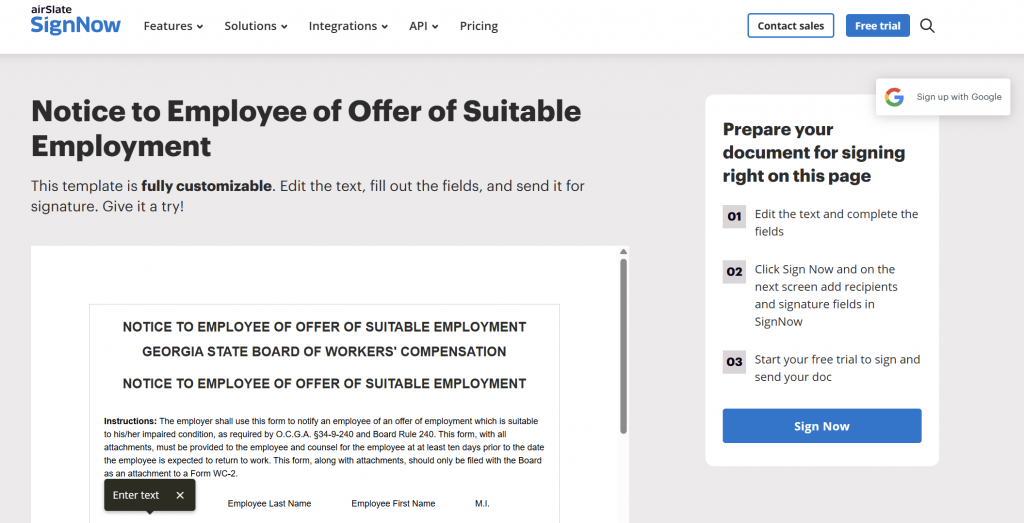
- Visit SignNow’s offer letter templates page. It lists ready-made offer and employment forms you can edit online.
- Choose the template that matches your hiring case, and click View template to open it, then click Sign Now. The template opens in the SignNow editor, ready for your company name, job title, start date, and pay details.
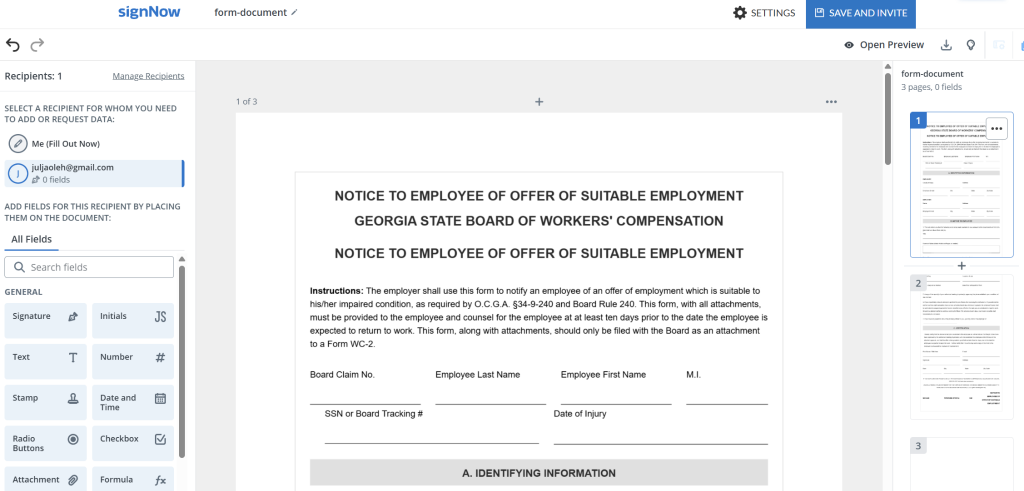
- Add your recipient’s email. Enter the candidate’s email address so the letter goes straight to them. Add the hiring manager or an HR representative if they need to review or sign, and assign their recipient roles. Typically, the hiring manager is Approver, the candidate is Signer, and HR is CC.
- Add fields for your recipient. Place a Signature field where the candidate accepts the offer. Add Date and Time for the acceptance date and Full Name for the printed name. Put Initials next to the at-will paragraph. Add a Checkbox so the candidate confirms the conditions, such as the background check. Mark each field as required.
3. Log in and send the offer
Once the letter is set up, you only need an account to send it.
- Sign up for SignNow’s 7-day free trial, or log in to your account. No credit card is required for the trial.
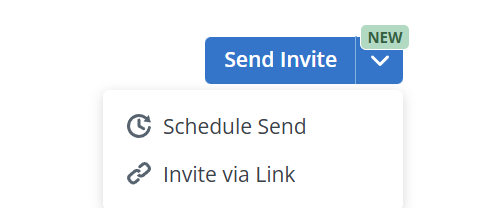
- Access the document on your dashboard and send it for signature. Customize the email message, and schedule the send if needed. Set the invite to expire on the offer expiration date written in the letter. Invites expire after 30 days by default, and you can extend that to 180 days.
With SignNow, sending a job offer letter is quick, secure, and customizable. Because the I-9 clock depends on when acceptance happened, that moment needs a record. SignNow keeps an audit trail for every document. A certificate of completion and a document history sit behind the acceptance date. To learn more about eSignature audit trail, visit our dedicated blog.
SignNow’s structured templates give every new hire the same signed, dated flow.
Final thoughts
A job offer letter does three things at once. It sells the role. It states terms the candidate can rely on. It opens the compliance sequence that follows acceptance. Most of the work is in the wording. The rest is in getting it back signed and dated before the start date. Build the version your company uses once, then reuse it.
Candidates often hold competitive offers. A prompt, clear letter supports your job offer acceptance rate. Start from SignNow’s offer letter templates and send your first letter.
A clear, fast, signed letter serves both sides of the hiring process.
Glossary
- At-will employment. The default in 49 US states. Either side may end the relationship at any time for any lawful reason.
- Conditional offer. An offer that takes effect only if stated conditions are met. Under the ADA, it is the point at which medical inquiries are permitted.
- Adverse action. A decision not to hire based in whole or part on a consumer report. The FCRA requires notice before it and after it.
- Pay scale. A good faith estimate of the wage range an employer expects to pay upon hire. Defined in California Labor Code section 432.3.
- Form I-9. The federal employment eligibility verification form for new employees. It cannot be started before a candidate accepts an offer.
- Promissory estoppel. A doctrine that allows damages for reasonable, detrimental reliance on a promise.
FAQ
What are red flags in an offer letter?
Pay described only as “competitive”. Benefits stated in absolutes rather than by reference to plan documents. Contingencies implied rather than written. A guaranteed review date. No at-will language where at-will applies.
Is a verbal offer binding?
It can create risk. The NCSL records oral assurances as one route to the implied contract exception. Follow every verbal offer with a written one soon after. State that the written letter is the full offer.
Can a candidate negotiate after receiving the letter?
Yes, until they sign. Treat each change as a new version. Update the letter and set a new expiry date. Ask the candidate to sign and return the revised copy. Do not rely on an email exchange alone.
Do independent contractors get an offer letter?
Usually not. An offer letter is for employees. Independent contractors typically sign a services agreement that sets deliverables, fees, and term. Confirm how the person should be classified before you pick the document.
Can I send the same offer letter to every new hire?
Reuse the structure, not the details. Rewrite pay, location, classification, and contingencies for each hire. Match each letter to the pay range in that role’s posting. Check the rules of the state where the person will work.
Sources
- Background Checks: What Employers Need to Know, US Federal Trade Commission
- Enforcement Guidance on Disability-Related Inquiries and Medical Examinations, US Equal Employment Opportunity Commission
- At-Will Employment Overview, National Conference of State Legislatures
- Handbook for Employers M-274, US Citizenship and Immigration Services
- E-Verify User Manual, 2.2 Create A Case, US Department of Homeland Security
- Equal Pay Transparency, Colorado Department of Labor and Employment
- California Equal Pay Act FAQ, California Department of Industrial Relations
- Pay Transparency, New York State Department of Labor
- Equal Pay and Opportunities Act, Washington State Department of Labor and Industries
- Promissory Estoppel, Cornell Law School Legal Information Institute
- What a job offer letter is, and what it is not
- What to include in a job offer letter
- A job offer letter template you can copy
- Pay transparency: the pay line is regulated
- Conditional offers and the background check sequence
- At-will wording that can cost you the presumption
- What acceptance unlocks: Form I-9 and E-Verify
- If you have to withdraw an offer
- How to eSign and send a job offer letter with SignNow
- Final thoughts
- Glossary
- FAQ
- Sources