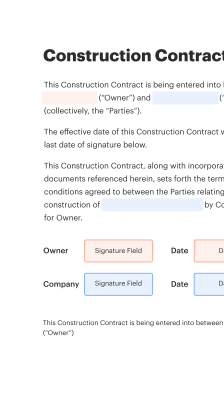
Electronic Signature on Microsoft with SignNow

Get rid of paper and improve digital document management for more productivity and unlimited opportunities. Experience the perfect way of running your business with airSlate SignNow.

Award-winning eSignature solution

What electronic signature on microsoft means for documents

An electronic signature on Microsoft refers to applying a legally binding signature to documents within Microsoft environments such as Word, Outlook, SharePoint, or Teams using a digital signing service. This process typically replaces paper signatures by capturing signer intent, associating that intent with the document, and storing an auditable record. Implementations vary from simple image-based signatures to platform-integrated eSignature workflows that manage identity verification, signature fields, and signature certificates while preserving document integrity and metadata for compliance and long-term retrieval.

Why use electronic signature on Microsoft in your workflows

Using electronic signature on Microsoft reduces manual handling, speeds approvals, and keeps documents linked to Microsoft applications and storage while preserving legal validity when implemented correctly.

Why use electronic signature on Microsoft in your workflows

Common hurdles when adopting electronic signature on Microsoft

  • Integrating with legacy Microsoft environments can require configuration and identity mapping across directories.
  • Maintaining chain-of-custody for documents needs consistent audit logging and immutable records.
  • Ensuring signer authentication meets industry or regulatory standards may add complexity to workflows.
  • Training staff and updating processes is necessary to avoid inconsistent usage and signature errors.

Representative user roles for Microsoft-integrated eSignatures

IT Administrator

Responsible for configuring the eSignature integration with Microsoft Azure AD or on-premises Active Directory, setting authentication policies, and enforcing security controls. The administrator manages provisioning, applies conditional access rules, and monitors audit logs to ensure consistency with the organization's identity and access management practices.

Legal Counsel

Reviews and approves signature workflows and clause handling to ensure documents signed within Microsoft environments comply with ESIGN, UETA, and internal legal standards. Counsel defines retention, recordkeeping, and notarization needs and advises on verification levels required for high-risk agreements.

Teams and roles that commonly use electronic signature on Microsoft

Legal, HR, finance, sales, and IT groups often coordinate when deploying electronic signature on Microsoft to align legal, operational, and technical requirements.

  • Legal teams handling contracts, NDAs, and compliance reviews across Microsoft document stores.
  • HR teams managing offer letters, onboarding forms and personnel records within Microsoft systems.
  • Sales and procurement teams routing proposals and purchase agreements through Microsoft-integrated processes.

Successful use typically involves cross-functional policies so signers, approvers, and administrators understand responsibilities for compliance and document retention.

Additional useful features for Microsoft-based electronic signature workflows

Beyond core capabilities, these features improve automation, scale, and administrative control for enterprise use within Microsoft platforms.

Bulk Send

Send the same document to multiple recipients in a single operation, mapping unique recipient data to fields to accelerate mass agreements and reduce manual sending overhead.

Conditional Routing

Automatically change signing order or add approvers based on field values or role responses, enabling dynamic workflows without manual intervention.

Embedded Signing

Allow signers to complete signatures inside custom Microsoft applications or portals for a seamless user experience and consistent branding.

Role-based Templates

Create templates tied to organizational roles so documents automatically assign fields and permissions according to job functions and approval chains.

Advanced Reporting

Generate compliance and usage reports to monitor signature velocity, outstanding requests, and policy adherence across Microsoft tenants.

Mobile Support

Provide responsive signing experiences on phones and tablets to ensure approvers can complete signatures regardless of device.

be ready to get more

Choose a better solution

Core capabilities to look for when adding electronic signature on Microsoft

Select features that integrate tightly with Microsoft tools, ensure compliance, and simplify signer experience to minimize disruption and maintain secure records.

Microsoft app integration

Built-in connectors for Word, Outlook, SharePoint, and Teams enable sending and tracking signatures from familiar interfaces while preserving metadata and storage locations within the Microsoft ecosystem.

Template management

Centralized templates let teams predefine signature fields, roles, and workflows to reduce repetitive formatting work and ensure consistency across documents and departments.

Authentication options

Support for email verification, SMS codes, knowledge-based authentication, and Azure AD single sign-on provides scalable assurance levels matched to document risk and regulatory needs.

Audit and compliance

Comprehensive audit logs, tamper-evident seals, and certificate-based evidence support compliance with ESIGN and UETA and provide defensible records for legal or regulatory review.

How electronic signature on Microsoft typically works

The process links document preparation, signer authentication, signature capture, and secure storage to create a complete, auditable transaction within Microsoft environments.

  • Document ingestion: Upload or open the document in Microsoft apps.
  • Signer verification: Authenticate signers using configured methods.
  • Signature capture: Apply signatures and required fields.
  • Completion and storage: Finalize and store with audit trail.
Collect signatures
24x
faster
Reduce costs by
$30
per document
Save up to
40h
per employee / month

Quick setup steps to send an electronic signature on Microsoft

Follow these essential steps to prepare and send a document for electronic signature within Microsoft applications, focusing on identity, fields, and storage.

  • 01
    Prepare document: Open file in Word or SharePoint and confirm content.
  • 02
    Add recipient: Specify signer emails and roles.
  • 03
    Place signature fields: Insert signature, date, and initial fields.
  • 04
    Send and track: Dispatch and monitor status until completed.

Managing audit trails for electronic signature on Microsoft

A clear audit trail documents who signed, when, and how; maintain these records to support compliance, dispute resolution, and internal controls.

01

Capture timestamp:

Record precise UTC times
02

Record signer identity:

Store authenticated user identifiers
03

Log IP addresses:

Include signer IP data
04

Document versioning:

Preserve pre- and post-sign copies
05

Tamper-evidence:

Apply digital seals
06

Exportability:

Allow audit export in standard formats
be ready to get more

Why choose airSlate SignNow

  • Free 7-day trial. Choose the plan you need and try it risk-free.
  • Honest pricing for full-featured plans. airSlate SignNow offers subscription plans with no overages or hidden fees at renewal.
  • Enterprise-grade security. airSlate SignNow helps you comply with global security standards.
illustrations signature

Typical workflow settings for Microsoft-integrated electronic signature

This table lists common configuration points to align eSignature behavior with organizational policies when integrated into Microsoft environments.

Workflow Automation Setting Name Header Configuration
Signer Authentication Method (Required Options) Azure AD SSO
Reminder Frequency and Scheduling Options 48 hours
Document Expiration and Auto-Close Policy 30 days
Routing Order and Sequential Approvals Sequential
Document Retention and Archival Settings 365 days

Supported platforms and requirements for electronic signature on Microsoft

Common deployments work with Microsoft 365 services including Word, Outlook, Teams, and SharePoint, and typically require a modern browser or approved desktop clients.

  • Windows and macOS: Supported browsers
  • iOS and Android: Mobile app or browser
  • Microsoft 365 tenant: Azure AD integration

Ensure that your Microsoft environment meets minimum security baselines, that devices run supported OS versions, and that administrators configure identity and access management settings before rolling out electronic signatures at scale.

Security measures for electronic signature on Microsoft

Encryption in transit: TLS 1.2+ for data
Encryption at rest: AES-256 or equivalent
Multi-factor authentication: MFA via Azure AD
Access control: Role-based permissions
Audit logging: Immutable event records
Data isolation: Tenant separation

Practical examples of electronic signature on Microsoft in industries

These short case outlines show how Microsoft-integrated eSignature workflows streamline common processes across sectors while maintaining legal and security requirements.

Healthcare consent forms

A health clinic integrates eSignatures into Microsoft SharePoint for intake forms

  • Use of identity verification and secure storage
  • Reduces in-person paperwork and speeds patient processing

Resulting in improved record accuracy and audit readiness with HIPAA controls in place.

Sales contract approvals

A sales team uses eSignatures within Outlook and Teams to route proposals

  • Prebuilt templates and role-based approvals
  • Faster turnaround and fewer version conflicts

Leading to shorter sales cycles and clearer contractual records.

Best practices for secure and compliant electronic signature on Microsoft

Adopt consistent policies and technical controls that balance usability with legal and security requirements when implementing electronic signatures tied to Microsoft environments.

Define signer authentication levels by document risk
Classify documents and require stronger authentication for high-value or regulated agreements, using Azure AD, MFA, or certificate-based methods to reduce fraud and meet compliance.
Maintain an immutable audit trail and version history
Ensure every transaction records timestamps, IP addresses, and user actions and preserves original document versions to support dispute resolution and regulatory audits.
Align retention policies with legal requirements
Coordinate document retention and disposal schedules with legal counsel to meet ESIGN/UETA obligations, HIPAA or FERPA storage rules, and internal records management practices.
Train users and enforce consistent workflows
Provide clear guidance on when to use electronic signatures, required fields, and acceptable verification methods to reduce errors and ensure organization-wide adherence to policies.

FAQs and troubleshooting for electronic signature on Microsoft

This section answers common questions and provides troubleshooting guidance for issues encountered when using electronic signatures inside Microsoft applications.

Feature comparison for electronic signature on Microsoft

Compare essential capabilities relevant to integrating with Microsoft applications and supporting enterprise compliance and authentication needs.

Comparison Criteria and Products signNow (Recommended) DocuSign Adobe Sign
Microsoft 365 integration
Azure AD single sign-on
Bulk Send support
HIPAA-ready features Configured Add-on Configured
be ready to get more

Get legally-binding signatures now!

Risks and potential penalties for improper eSignature use

Contract invalidation: Lost enforceability
Regulatory fines: Financial penalties
Data breaches: Privacy violations
Operational delays: Process interruptions
Litigation exposure: Increased legal risk
Reputational harm: Trust erosion

Pricing and package overview for Microsoft eSignature integrations

High-level pricing structures vary by vendor; listed below are common entry points and commercial models for Microsoft-integrated electronic signature offerings.

Vendor / Package signNow (Recommended) DocuSign Adobe Sign HelloSign PandaDoc
Free or trial availability Free tier and trial available 30-day trial available 14-day trial available Free tier with limits 14-day trial available
Individual pricing starting point Starting at $8/user/month billed annually Starting at $10/user/month Starting at $14.99/user/month Starting at $15/user/month Starting at $19/user/month
Business / team plans Team plans with admin features Business plans with advanced workflows Teams and enterprise plans available Business plans with templates Business and enterprise tiers
Enterprise offerings and add-ons Custom enterprise with SSO and API Enterprise with advanced compliance Enterprise with large-scale APIs Enterprise API available Enterprise with advanced automation
Included integrations with Microsoft Native connectors for Word, Outlook, Teams Office 365 connectors Microsoft connectors and integrations Microsoft integrations available Integrations via connectors

Simplify complicated workflows

Create, perform, and control workflows of any difficulty, electronically from virtually anywhere. Scalable electronic signature features enable you to exchange contracts with the right users the proper order and define roles for every signee. Stream document workflows faster and easier than ever before.

Automate document flow

Improve intricate signing processes with airSlate SignNow�s highly effective tools to boost your business. Manage your automated signature workflows to make sure they're operating at top performance with fast notices and alerts.

Enhance in team communication

Get teammates together in a protected, shared workspace. Manage paperwork, use form templates and notices to produce more effective cross-organization interaction. Relieve your employees from having to spend time on repeated actions to enable them to concentrate on valuable, business-crucial activities.

Integrate into your existing framework

Manage your tasks with best-in-class integration. Collect Salesforce, Microsoft Teams, and SharePoint all in one business thread. Link up your applications to a single system for endless possibilities and higher efficiency.

Stay compliant with market-leading data protection

Feel confident knowing that your data is protected by the most recent in encryption security. airSlate SignNow is GDPR and eIDAS compliant and gives you visibility into your eSigning process with court-admissible audit trails. Configure user access permissions and roles to manage who has access to what.


walmart logo
exonMobil logo
apple logo
comcast logo
facebook logo
FedEx logo
be ready to get more

Get legally-binding signatures now!