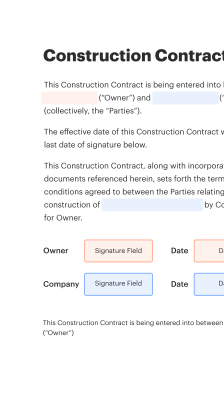
Enviar Correo Electrónico a Mí Mismo Con airSlate SignNow

Elimine el papel y automatice la gestión de documentos digitales para una mayor productividad y posibilidades infinitas. Firme cualquier cosa desde la comodidad de su hogar, de forma rápida y con muchas funciones. Explore la mejor estrategia para hacer negocios con airSlate SignNow.

Solución de firma electrónica galardonada

What it Means to Make a Self Email

Making a self email refers to sending a document or form to your own email address so you can review, sign, and store it as the document originator. This workflow is commonly used to complete agreements when the sender also needs to sign, to validate document layout before sending to others, or to create a signed copy for records. Using a secure eSignature platform ensures the message, document, and signature metadata are preserved and auditable under U.S. e-signature law frameworks.

Legal validity when you make self email

Self-sending documents for signature remains legally enforceable in the United States when conducted under ESIGN and UETA; the sender’s intent, consent, and a reliable audit trail are essential elements for validity.

Legal validity when you make self email

Common challenges when creating self emails

  • Incorrect recipient setup can create duplicate signing steps and confusion in the audit trail.
  • Failing to apply required authentication increases risk for later signature disputes or noncompliance.
  • Missing or inconsistent document fields can lead to incomplete records and additional administrative time.
  • Improper storage or retention practices may violate institutional policies like HIPAA or FERPA.

Roles involved in self-email signing

Account Administrator

Account Administrators manage account-wide settings for self-email workflows including authentication levels, retention rules, and audit log access. They configure templates, set role-based permissions, and ensure system settings align with organizational compliance requirements.

Signing User

Signing Users send documents to their own address to complete signatures, confirm form layouts, and create a verified copy. They follow prescribed authentication steps and retain signed documents according to organizational retention policies.

Typical users who make self emails

Individuals and small teams commonly use self-email workflows to sign forms quickly and keep a verified copy for internal records.

  • Solo professionals sending contracts to themselves for immediate signature and archival.
  • HR teams testing onboarding templates before distributing to employees across locations.
  • Legal and compliance staff verifying audit trails and signature evidence before external distribution.

Larger organizations also use self-sent signatures for testing templates and capturing the originator’s signature while maintaining compliance and traceability.

prepárate para obtener más

Elige una mejor solución

Tools that support self-email signing

Select platform features simplify the creation, signing, and retention of self-sent documents while supporting compliance and audit requirements.

Template management

Reusable templates let you standardize documents for self-signing, reducing setup time and ensuring consistent fields and placement across repeated self-email workflows.

Authentication options

Flexible signer verification methods such as email, SMS, or knowledge-based checks provide appropriate assurance levels for self-sent signatures and help meet organizational policy or regulatory needs.

Audit trail

Detailed, tamper-evident logs record every action and timestamp during a self-email transaction, preserving evidence of intent and steps for legal or compliance review.

Secure storage

Encrypted long-term storage and configurable retention settings keep signed self-email documents accessible while aligning with records management and privacy requirements.

How make self email workflows operate

A self-email workflow creates a closed signing loop where sender and signer are the same person, preserving intent and creating an auditable transaction record.

  • Initiate: Sender uploads and addresses the envelope to self.
  • Authenticate: System applies chosen signer authentication.
  • Sign: User signs within secure session or email link.
  • Record: Platform stores signed document and audit trail.
Recoger firmas
24x
más rápido
Reduce los costos en
$30
por documento
Guardar hasta
40h
por empleado / mes

Step-by-step: Make a self email and sign

Follow these basic steps to send a document to yourself, complete the signature, and keep a verifiable signed copy.

  • 01
    Upload document: Add the PDF or form to the eSignature workspace.
  • 02
    Assign signer: Enter your own email as the recipient and set role.
  • 03
    Add fields: Place signature, date, and required fields.
  • 04
    Send and sign: Open the received email, complete authentication, and apply signature.
prepárate para obtener más

Por qué elegir airSlate SignNow

  • Prueba gratuita de 7 días. Elige el plan que necesitas y pruébalo sin riesgos.
  • Precios honestos para planes completos. airSlate SignNow ofrece planes de suscripción sin cargos adicionales ni tarifas ocultas al renovar.
  • Seguridad de nivel empresarial. airSlate SignNow te ayuda a cumplir con los estándares de seguridad globales.
illustrations signature

Configuring a self-email workflow

Set these workflow parameters to standardize how users create and manage self-email signing transactions within your account.

Feature Value
Default signer authentication level Email only
Automatic reminder frequency 48 hours
Retention policy for signed copies 7 years
Document watermarking option Enabled
Audit trail export format PDF

Device and platform considerations for make self email

Self-email signing works across modern desktop browsers, mobile browsers, and native mobile apps, but specific features and authentication methods may vary by platform.

  • Desktop browsers: Latest Chrome, Edge, Safari
  • Mobile devices: iOS and Android apps
  • Offline signing: Limited support offline

Test templates and authentication flows on each target device and platform before broad use to ensure consistent signing experience and retention behavior across user environments.

Security controls for self-email workflows

Transport encryption: TLS-encrypted transmission
At-rest protection: AES-256 encryption
Access controls: Role-based permissions
Authentication options: Multi-factor support
Audit logging: Immutable activity logs
Data residency: Configurable storage regions

Industry examples of making self emails

Practical scenarios show how self-email workflows streamline single-signer processes while preserving compliance and auditability.

Real Estate Closing

An agent sends closing documents to their own email to sign as the listing agent and review formatting

  • Uses embedded signature fields and a time-stamped audit trail
  • Ensures the file is stored with evidence of signing

Resulting in a complete, auditable closing packet ready for client delivery.

HR Onboarding

A recruiter sends an offer letter to themselves to confirm template accuracy before distribution

  • Checks dynamic fields and signature placements
  • Confirms authentication and retention settings match policy

Leading to consistent, compliant onboarding packets delivered to new hires.

Best practices for secure and accurate self emails

Adopting consistent controls and verification reduces risk when sending documents to yourself for signature and storage.

Use strong authentication for self-sent documents
Require multi-factor or SMS authentication for self-email signers when documents contain sensitive information or when the signed record will serve as primary evidence of agreement.
Standardize templates and fields
Maintain approved templates with locked fields and predefined signature blocks to prevent accidental omission of required data and to ensure consistent auditability across self-email transactions.
Retain complete audit records
Store the signed document alongside its full audit trail and metadata to support ESIGN and UETA compliance, disputes, and internal recordkeeping requirements.
Review access and retention policies
Configure access controls and retention periods to meet organizational rules, HIPAA or FERPA constraints, and relevant state or federal recordkeeping obligations.

FAQs About making a self email

Answers to common questions help troubleshoot issues and clarify compliance, authentication, and storage practices for self-sent signatures.

Quick comparison of self-email capabilities

Compare essential features and compliance indicators across common eSignature providers to evaluate support for self-email signing in U.S. contexts.

Feature Security and Compliance Criteria signNow (Recommended) DocuSign Adobe Sign
ESIGN and UETA Legal Compliance Status
Bulk Send or Mass Self-Send Capability
API integration type REST API REST API REST API
Mobile app availability
prepárate para obtener más

¡Obtenga firmas legalmente vinculantes ahora!

Regulatory and operational risks

Noncompliance fines: Civil penalties
Breach exposure: Data loss
Contract disputes: Invalid signatures
Privacy violations: HIPAA penalties
Operational delays: Workflow rework
Reputational harm: Trust erosion

Simplifique flujos de trabajo complejos

Cree, ejecute y gestione flujos de trabajo de cualquier complejidad, electrónicamente desde prácticamente cualquier lugar. Las capacidades escalables de firma electrónica le permiten compartir documentos con las personas adecuadas en el orden correcto y definir roles para cada destinatario. Ejecute flujos de trabajo de documentos más rápido y más fácil que nunca.

Automatice la gestión de documentos

Optimice procesos complejos de firma con las potentes funciones de airSlate SignNow para mejorar su negocio. Controle sus flujos de trabajo de firma electrónica automatizados para garantizar que funcionen a máxima eficiencia con notificaciones y recordatorios instantáneos.

Optimice en colaboración en equipo

Reúna a los equipos en un entorno seguro y compartido. Gestione documentos, utilice plantillas de formularios y notificaciones para crear una colaboración más eficiente entre organizaciones. Libere a sus empleados de actividades repetitivas para que puedan centrarse en tareas valiosas y críticas para el negocio.

Integre en sus sistemas existentes

Ejecute sus proyectos con integración líder en la industria. Recoja Salesforce, Microsoft Teams y SharePoint en un solo flujo de negocio. Conecte su software a un sistema único para posibilidades infinitas y mayor productividad.

Manténgase en cumplimiento con la mejor seguridad de datos

Sienta seguridad sabiendo que sus datos permanecen seguros con la encriptación más reciente. airSlate SignNow está certificado por GDPR y eIDAS y le proporciona conocimiento sobre su proceso de firma electrónica con registros de auditoría admisibles en tribunales. Configure permisos y derechos de acceso de usuario para gestionar quién tiene acceso a qué.


walmart logo
exonMobil logo
apple logo
comcast logo
facebook logo
FedEx logo
esté listo para obtener más

¡Obtenga ahora firmas vinculantes desde el punto de vista jurídico!