Plantillas
Permiten aplicar campos y texto estándar a grupos completos, reduciendo configuración manual y garantizando que todos los documentos compartan estructura y cláusulas aprobadas por legal.




Agrupar documentos mejora la eficiencia operativa, facilita el cumplimiento y reduce el trabajo manual en procesos repetitivos, especialmente en equipos que gestionan muchos formularios y contratos.

Como administradora de operaciones, Ana organiza grupos por proceso (contratos, NDAs, onboarding) para aplicar plantillas y permisos uniformes; esto reduce tiempo de envío y facilita reportes mensuales de estado.
Mark, abogado interno, crea grupos por expediente y controla versiones y firmas necesarias, asegurando que cada documento cumpla con cláusulas contractuales y requisitos regulatorios antes de la ejecución.
Equipos que manejan volúmenes altos de contratos, formularios recurrentes o expedientes agrupados encuentran más valor al organizar documentos por grupos.
La agrupación favorece la coherencia documental y acelera auditorías internas, manteniendo control de accesos y trazabilidad en cada lote.
Permiten aplicar campos y texto estándar a grupos completos, reduciendo configuración manual y garantizando que todos los documentos compartan estructura y cláusulas aprobadas por legal.
Configura accesos diferenciados para administradores, revisores y firmantes, limitando acciones sensibles y manteniendo segregación de funciones.
Facilitan la clasificación, búsqueda y filtrado de grupos basados en atributos específicos como cliente, tipo de contrato o fecha.
Soporta el envío simultáneo de un paquete a múltiples destinatarios, manteniendo seguimiento individualizado de estado y firmas.
Reglas y flujos que crean, actualizan o archivan grupos en respuesta a eventos o integraciones externas.
Paneles y exportaciones que muestran estados por grupo, tiempos de respuesta y actividad de usuarios para control interno.
Sincroniza versiones de documentos y convierte borradores directamente en grupos; permite mantener metadatos y plantillas actualizadas para envío y firma sin exportaciones manuales.
Vincula grupos a registros de clientes para enviar paquetes contractuales automáticamente desde oportunidades o cuentas, conservando historial y estado de firma en el CRM.
Permite importar y respaldar carpetas enteras como grupos, manteniendo estructura y facilitando el acceso por equipos con controles de acceso sincronizados.
Automatiza la creación de grupos desde eventos externos, como formularios completados o contratos aprobados, enlazando procesos sin intervención manual.

| Valor predeterminado corto | Unidad temporal por defecto |
|---|---|
| Frecuencia de recordatorios | 48 horas |
| Regla de archivado automático | 30 días tras cierre |
| Activador de creación | Formulario enviado |
| Notificación por evento | Email y webhook |
Organize documents groups es accesible desde navegadores modernos y aplicaciones móviles, con funciones principales disponibles en entornos web y apps.
En escritorio se suele disponer de la funcionalidad completa (configuración avanzada, importaciones masivas y generación de reportes), mientras que en móvil la experiencia prioriza firma y verificación rápida con acceso a grupos y notificaciones.
Una agencia agrupa documentos por propiedad para centralizar contratos y certificaciones
Resultando en cierres más rápidos y menos disputas posteriores gracias a control de versiones y permisos claros.
Una universidad crea grupos por admisión para reunir formularios y autorizaciones de padres
Leading to expedientes completos listos para auditoría y seguimiento administrativo más ágil.
| Criteria | signNow (Recommended) | DocuSign |
|---|---|---|
| Creación de grupos | Sí | Sí |
| Permisos por rol | Avanzado | Avanzado |
| Integraciones nativas | Google/CRM | CRM principal |
| Automatización | Workflows / API | Workflows |
Reúna documentos y verifique metadatos.
Correo electrónico, enlace público o integración CRM.
Defina secuencia o firma paralela.
Correo y recordatorios automáticos.
Firmantes completan desde navegador.
Compatibilidad con dispositivos iOS/Android.
Revisión de firmas y metadatos.
Mover a retención o eliminar según política.
7 años
Diario
Anual
90 días tras expiración
Congelar grupos según retención legal
| Plan | signNow (Recommended) | DocuSign | Adobe Sign | Dropbox Sign | PandaDoc |
|---|---|---|---|---|---|
| Nombre del plan básico | Business | Personal | Individual | Professional | Essentials |
| Precio mensual aproximado | $8/mes | $10/mes | $9.99/mes | $15/mes | $19/mes |
| Límite de usuarios | Por usuario | Por usuario | Por usuario | Por usuario | Por usuario |
| Bulk Send | Incluido | Añadido | Incluido | Incluido | Añadido |
| Acceso API | Incluido | Complemento de pago | Incluido | Complemento | Incluido |
La función de Grupos de Documentos de airSlate SignNow ha sido desarrollada para aquellos casos comerciales en los que un remitente tiene varios documentos que necesitan ser entregados y firmados electrónicamente en un lote. Los Grupos de Documentos permiten al remitente minimizar el tiempo requerido para preparar y entregar los documentos en un grupo.
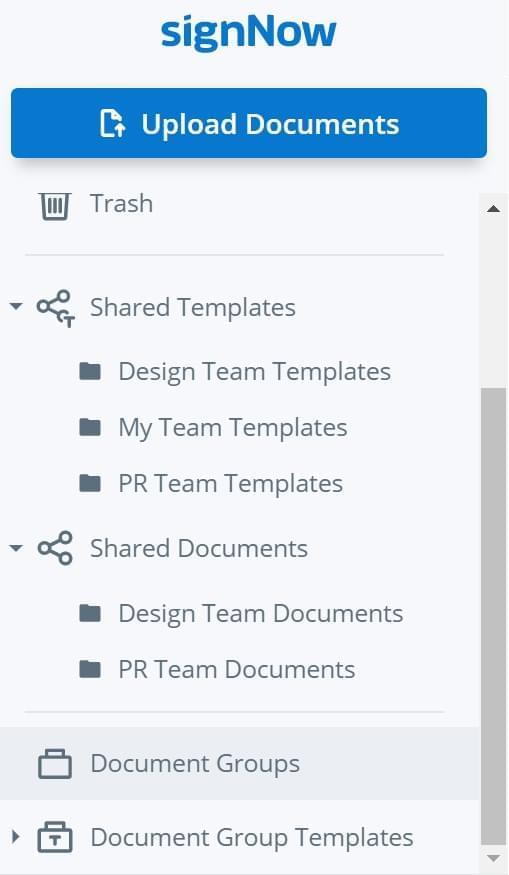
La carpeta de Grupos de Documentos se encuentra en el menú de la izquierda de tu cuenta de airSlate SignNow, justo debajo de las carpetas compartidas del equipo.
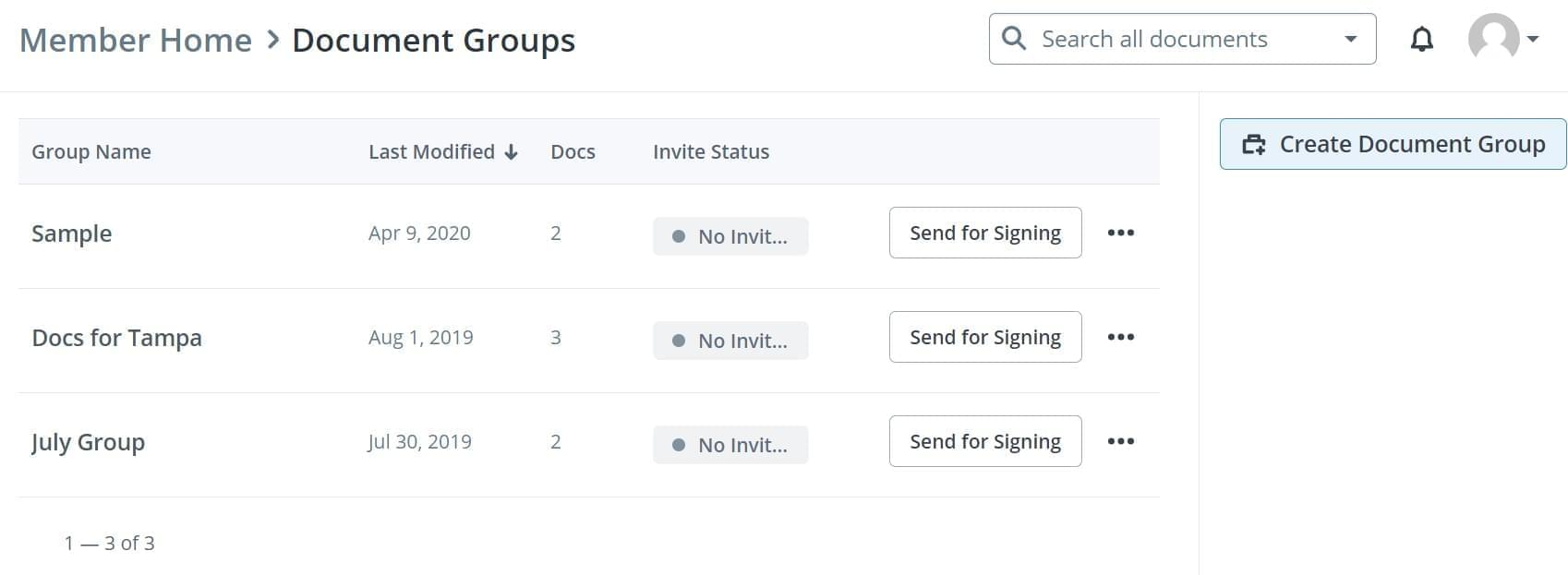
Dentro de la carpeta de Grupos de Documentos, verás la lista de grupos existentes (si los hay). Haz clic en Crear Grupo de Documentos para configurar uno nuevo.
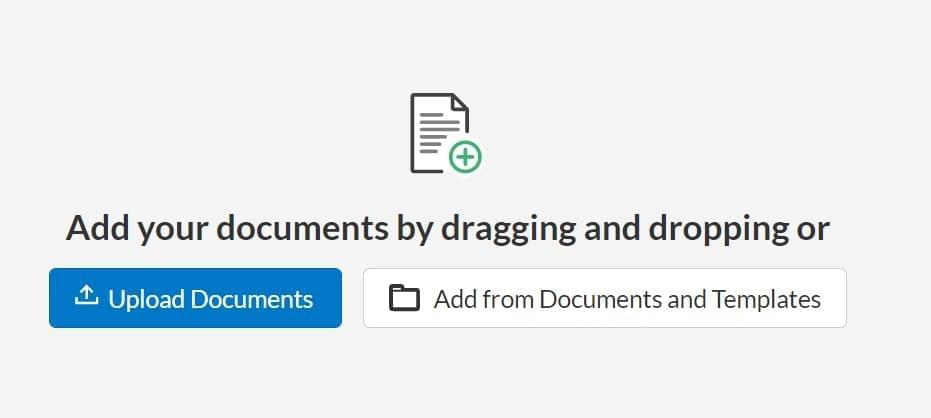
Para formar un nuevo Grupo de Documentos, puedes usar los documentos/plantillas que ya tienes en tu cuenta de airSlate SignNow o subir otros nuevos desde tu computadora.
Una vez que los documentos están cargados, puedes nombrar el nuevo Grupo de Documentos. Haz clic en el icono de marca de verificación azul cuando tu nombre esté listo. Si acabas de subir tus documentos y aún no contienen campos rellenables, añádelos usando el editor de airSlate SignNow con su herramienta de arrastrar y soltar.
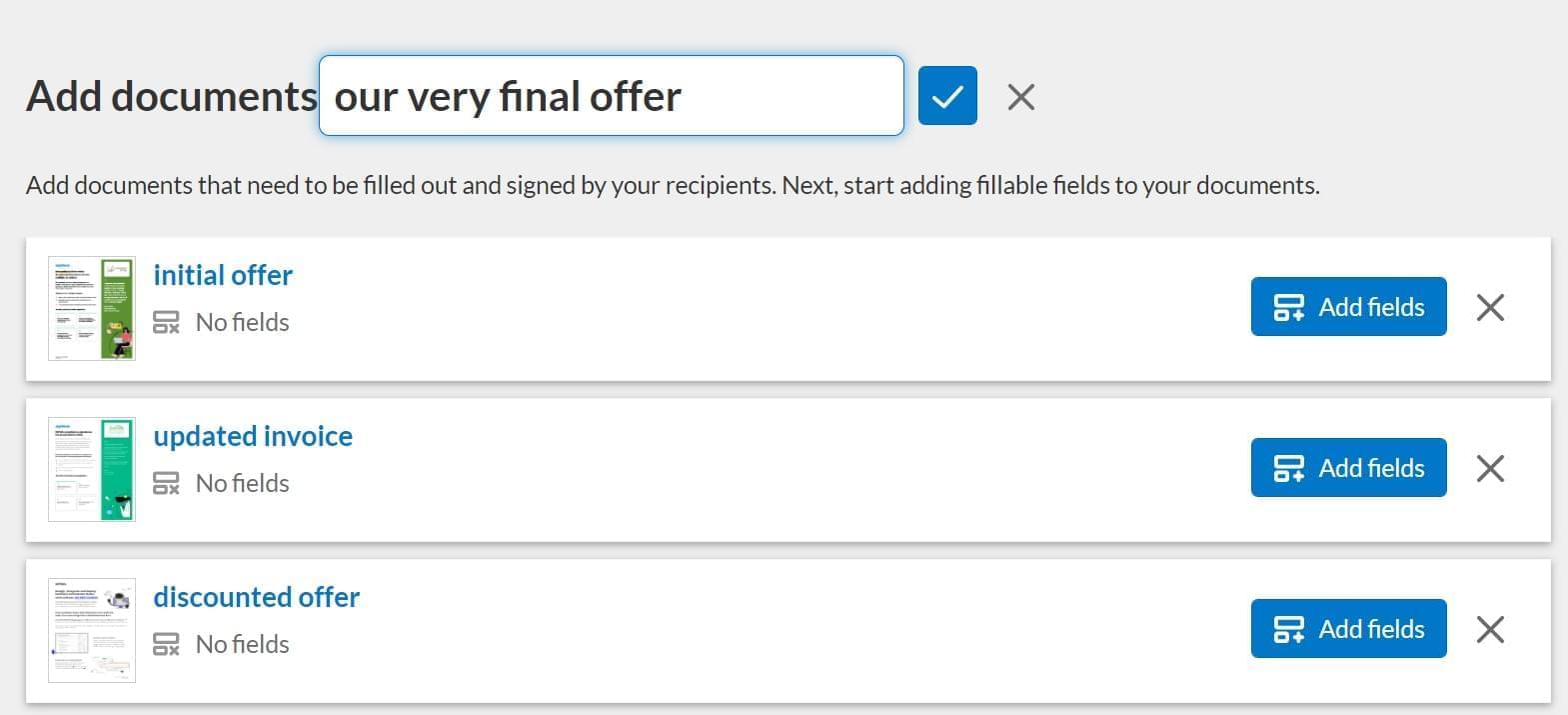
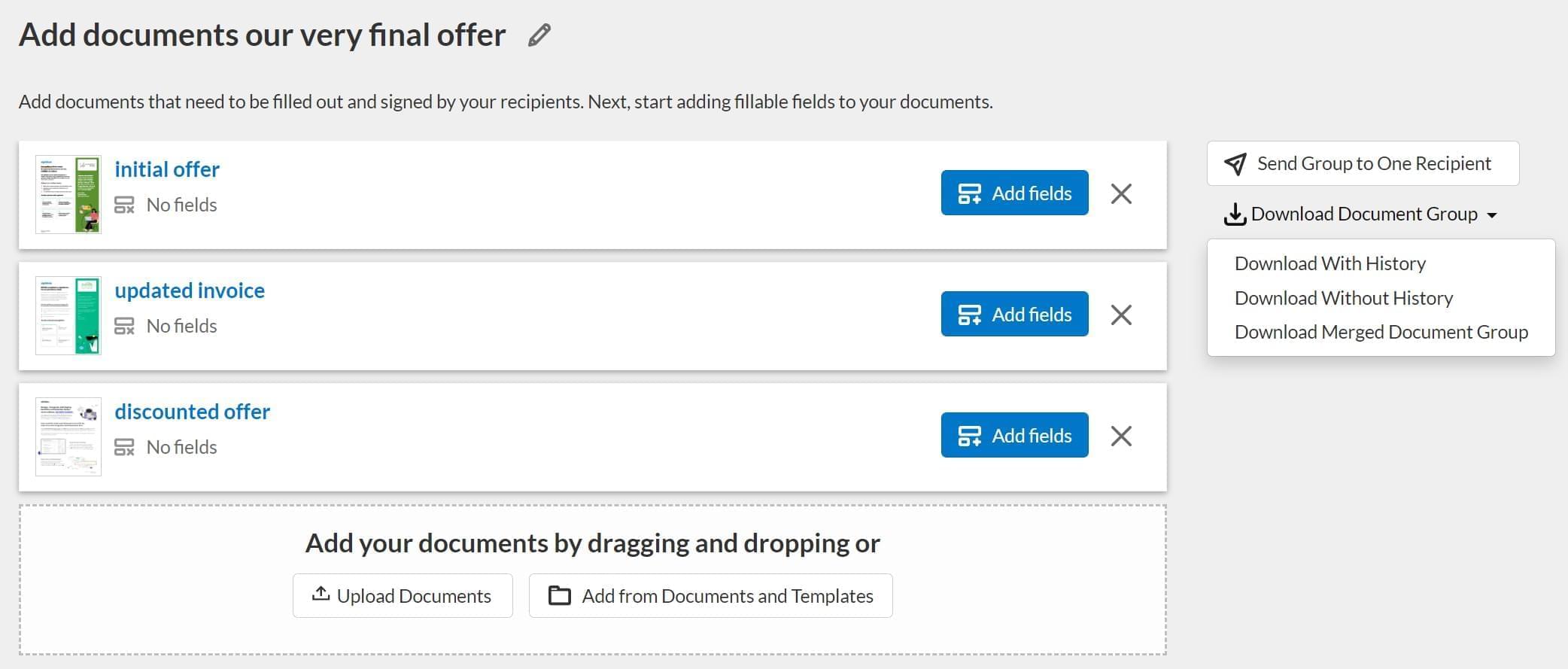
El proceso de gestionar Grupos de Documentos en airSlate SignNow es muy flexible. Puedes renombrar un grupo en cualquier momento (haz clic en el pequeño icono de lápiz cerca del nombre). Puedes agregar más documentos desde otras carpetas de airSlate SignNow o desde tu dispositivo. Puedes descargar el Grupo de Documentos — como archivos separados o como un archivo combinado, con o sin el registro de auditoría. Finalmente, puedes enviar el Grupo de Documentos a tu(s) destinatario(s).