Carga múltiple
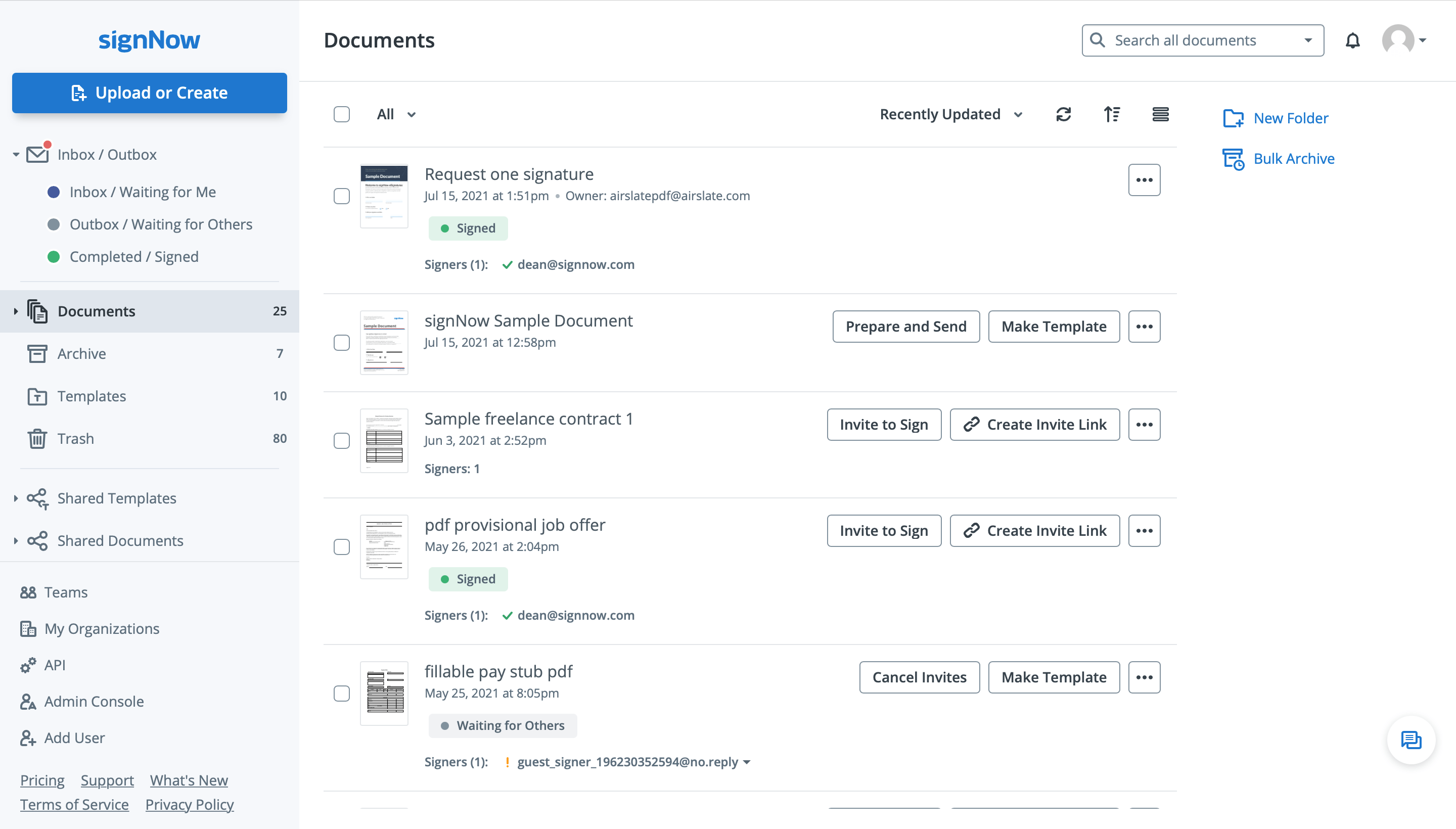
Permite importar varios documentos a la vez y empaquetarlos en un envío único, simplificando procesos de contratos y formularios compuestos para múltiples firmantes.




El uso de firmas electrónicas cumple estándares legales en EE. UU. bajo ESIGN y UETA, ofreciendo prueba y reconocimiento judicial cuando se aplican controles de autenticación y registros de auditoría adecuados.

Responsable de configurar la cuenta, gestionar permisos y supervisar políticas de retención. Administra plantillas, controla integraciones con sistemas empresariales y revisa registros de auditoría para garantizar cumplimiento interno.
Persona que recibe la solicitud de firma, autenticándose según el método requerido. Completa campos obligatorios, aplica su firma electrónica y recibe copia final con registro de auditoría para sus archivos personales.
Empresas, organizaciones y profesionales de diversos sectores emplean firmas electrónicas para formalizar acuerdos y simplificar trámites.
El uso se extiende desde pequeñas empresas hasta departamentos corporativos, donde la trazabilidad, cumplimiento y velocidad de ciclo son criterios decisivos para adoptar procesos de firma digital.
Permite importar varios documentos a la vez y empaquetarlos en un envío único, simplificando procesos de contratos y formularios compuestos para múltiples firmantes.
Guarde configuraciones recurrentes de campos, destinatarios y mensajes para reutilizar en procesos repetitivos y reducir el tiempo de preparación.
Defina secuencias de firma en las que cada destinatario actúa en orden, lo que asegura revisiones y aprobaciones controladas antes de la siguiente firma.
Incluye métodos de verificación como SMS, correo electrónico, contraseña o autenticación de dos factores para verificar la identidad de firmantes.
Registro completo de eventos con marcas de tiempo, IP y acciones, útil para evidenciar integridad y cumplimiento legal.
Conexiones con servicios de almacenamiento y CRM para automatizar importación, exportación y seguimiento de documentos firmados.
Permite iniciar un envío directamente desde un documento activo, conservar formato y metadatos, y mapear campos sin descargar archivos intermedios para mantener flujo de trabajo integrado.
Sincroniza datos de contactos y plantillas con sistemas CRM para rellenar automáticamente campos de contrato y registrar actividades de firma en el historial del cliente.
Guarda documentos firmados automáticamente en carpetas designadas, simplificando gestión de versiones y cumplimiento de políticas de retención en la nube.
Proporciona endpoints para crear envíos, obtener estados y descargar documentos firmados, permitiendo automatizar procesos y conectar aplicaciones empresariales.
| Setting Name | Configuration |
|---|---|
| Reminder Frequency | 48 hours |
| Expiration Period | 30 days |
| Sequential Routing | Enabled |
| Auto-archive Signed | Yes |
Revise los requisitos mínimos de plataforma antes de enviar documento para signing and sign para asegurar compatibilidad y experiencia consistente.
En dispositivos móviles utilice la app o el navegador moderno; asegúrese de tener conexión segura, autenticación activa y permisos para acceso a archivos y notificaciones para supervisar el estado y recibir confirmaciones al completar firmas.
Un agente comparte contratos de compraventa con varios compradores y obtiene firmas secuenciales on-line en un solo envío
Resulting in cierres más ágiles y registros claros para auditoría y cumplimiento.
Un consultorio envía formularios de consentimiento a pacientes antes de citas o procedimientos
Leading to cumplimiento normativo y documentación médica completada antes del servicio.
| Criteria | Column Name 1 | Column Name 2 | Column Name 3 |
|---|---|---|---|
| Proveedor | signNow (Recommended) | DocuSign | Adobe Sign |
| Firma por correo | |||
| Plantillas reutilizables | |||
| Autenticación avanzada | SMS/Certificados | SMS/Phone | Certificates |
7 years
5 years
Daily off-site
Annual audit
Secure delete
| Criteria | Column Name 1 | Column Name 2 | Column Name 3 | Column Name 4 | Column Name 5 |
|---|---|---|---|---|---|
| Modelo de precios | signNow (Recommended) | DocuSign | Adobe Sign | Dropbox Sign | OneSpan Sign |
| Plan gratuito | Limited free tier | Free trial only | Free trial | Limited free tier | No free tier |
| Precio por usuario | Desde bajo costo mensual | Desde medio-alto | Usuario por licencia | Moderado | Enterprise pricing |
| Descuentos por volumen | Sí, a negociar | Sí, contratos empresariales | Sí, packs | Sí, acuerdos | Sí, volumen grande |
| Orientado a | Pymes y equipos | Grandes empresas | Empresas creativas | Equipos colaborativos | Instituciones financieras |
| Métodos de pago | Tarjeta y factura | Tarjeta y factura | Tarjeta y factura | Tarjeta | Contrato y factura |
airSlate SignNow facilita la firma electrónica de contratos, acuerdos y formularios en cualquier dispositivo. Además, te permite enviar documentos para firma electrónica a otras partes y rastrear el estado de tu solicitud en tiempo real.
Comienza subiendo tu documento a airSlate SignNow. Pasa el cursor sobre el botón Subir o Crear en el panel de control de airSlate SignNow y selecciona Subir Documentos.
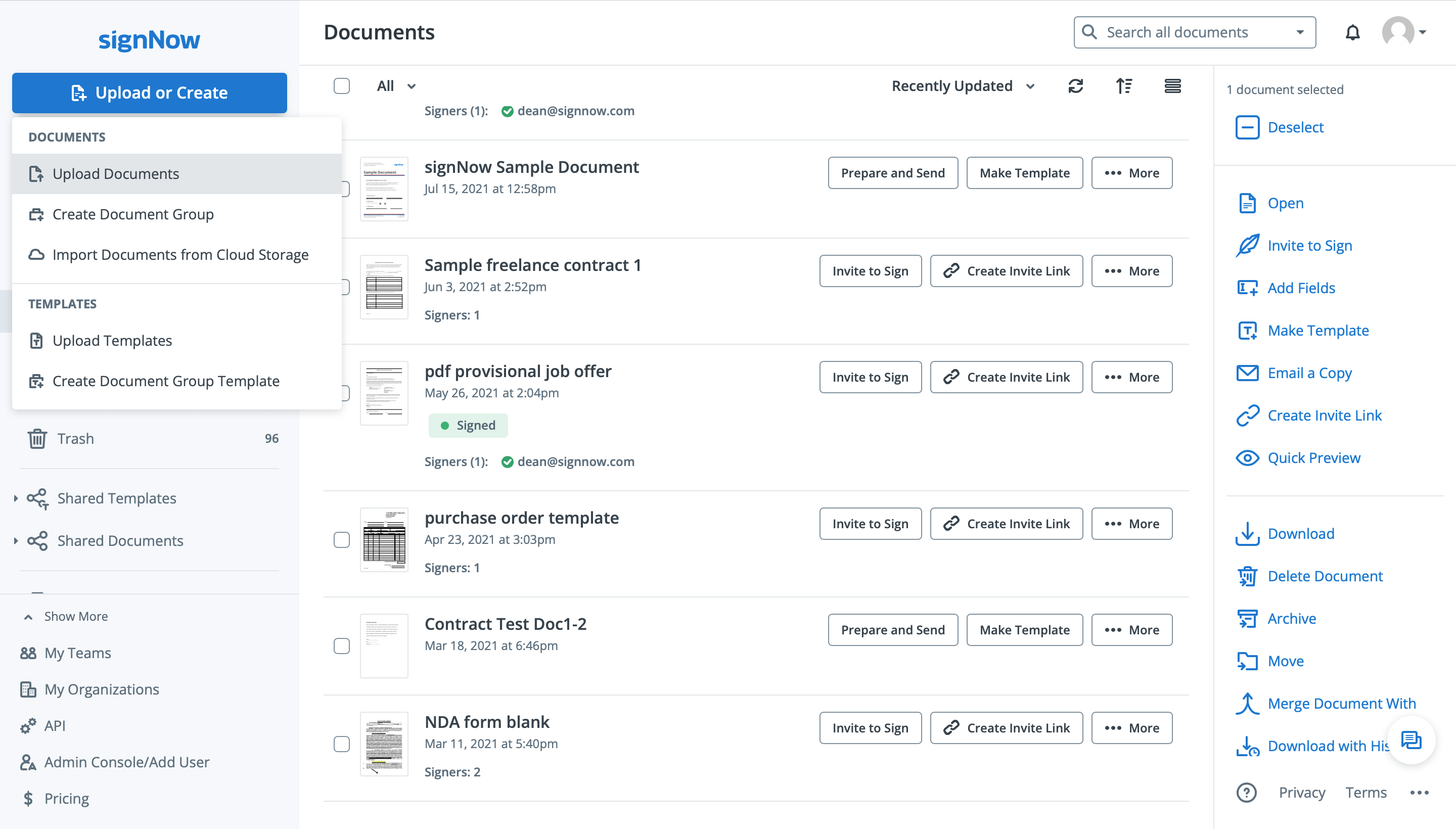
Abre el documento subido en el editor y selecciona Mi Firma en la barra de herramientas a la izquierda. Haz clic en cualquier parte del documento para colocar tu firma.
Nota: Si usas airSlate SignNow por primera vez, deberás crear tu firma escribiéndola, dibujándola o subiendo su imagen.
Mueve la firma por la página y ajusta su tamaño usando arrastrar y soltar.
Haz clic en Guardar y Cerrar para guardar los cambios y volver al panel principal. Desde allí, puedes descargar tu archivo o enviarlo a otra persona.
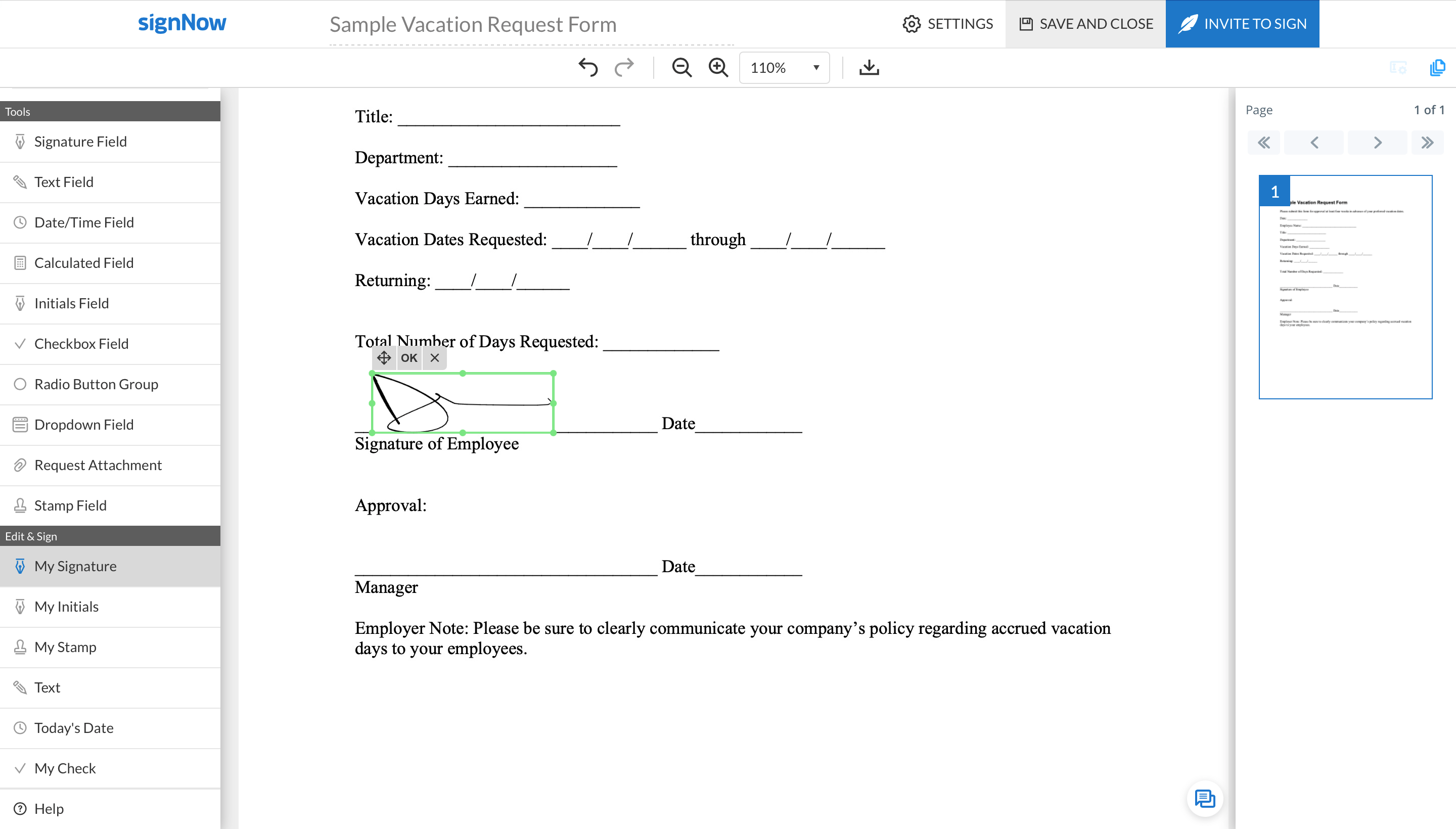
Sube tu documento a airSlate SignNow y haz clic en Preparar y Enviar.
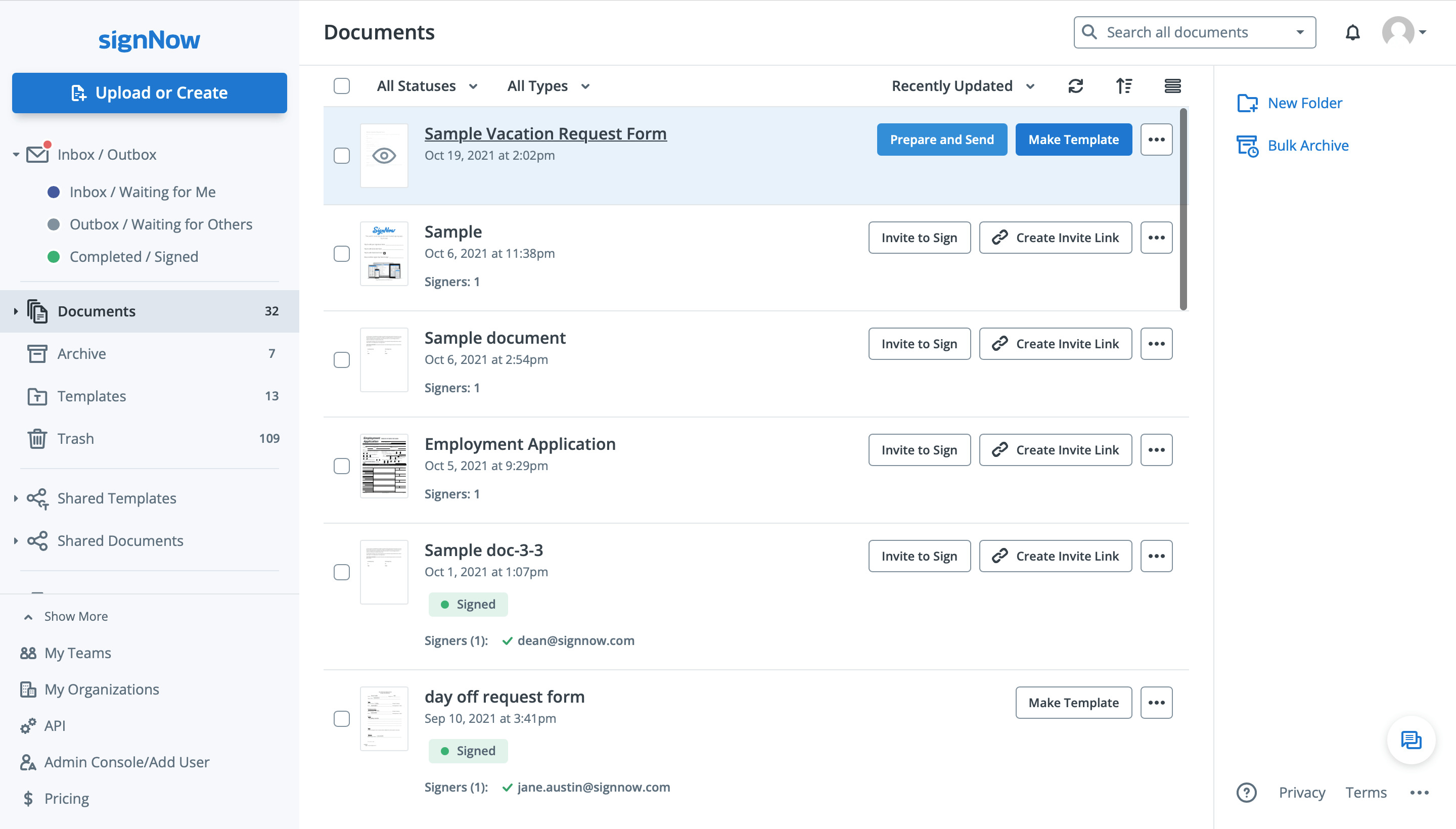
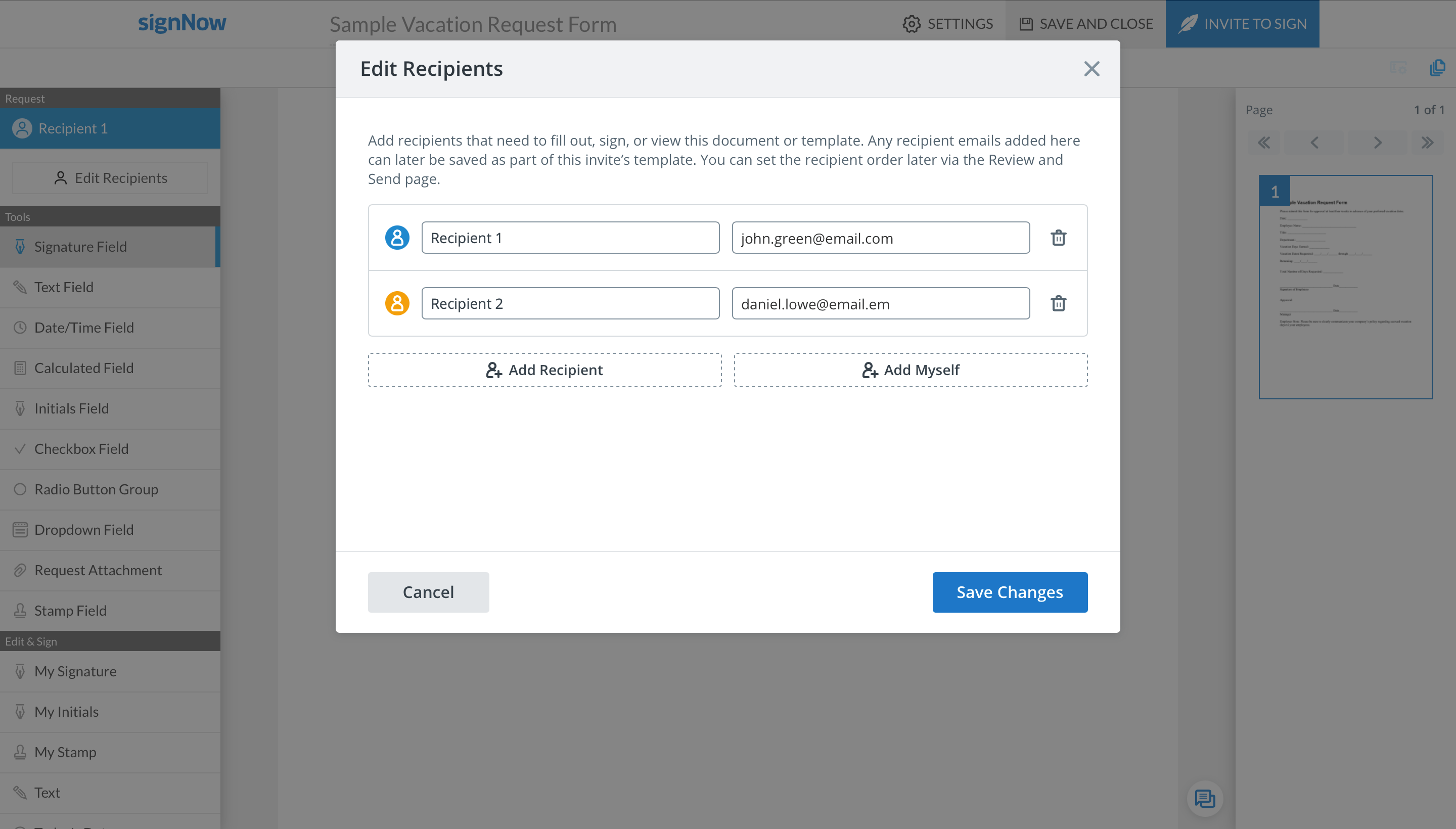
El documento se abre en el editor. Haz clic en Editar destinatarios y añade tantos firmantes como necesites.
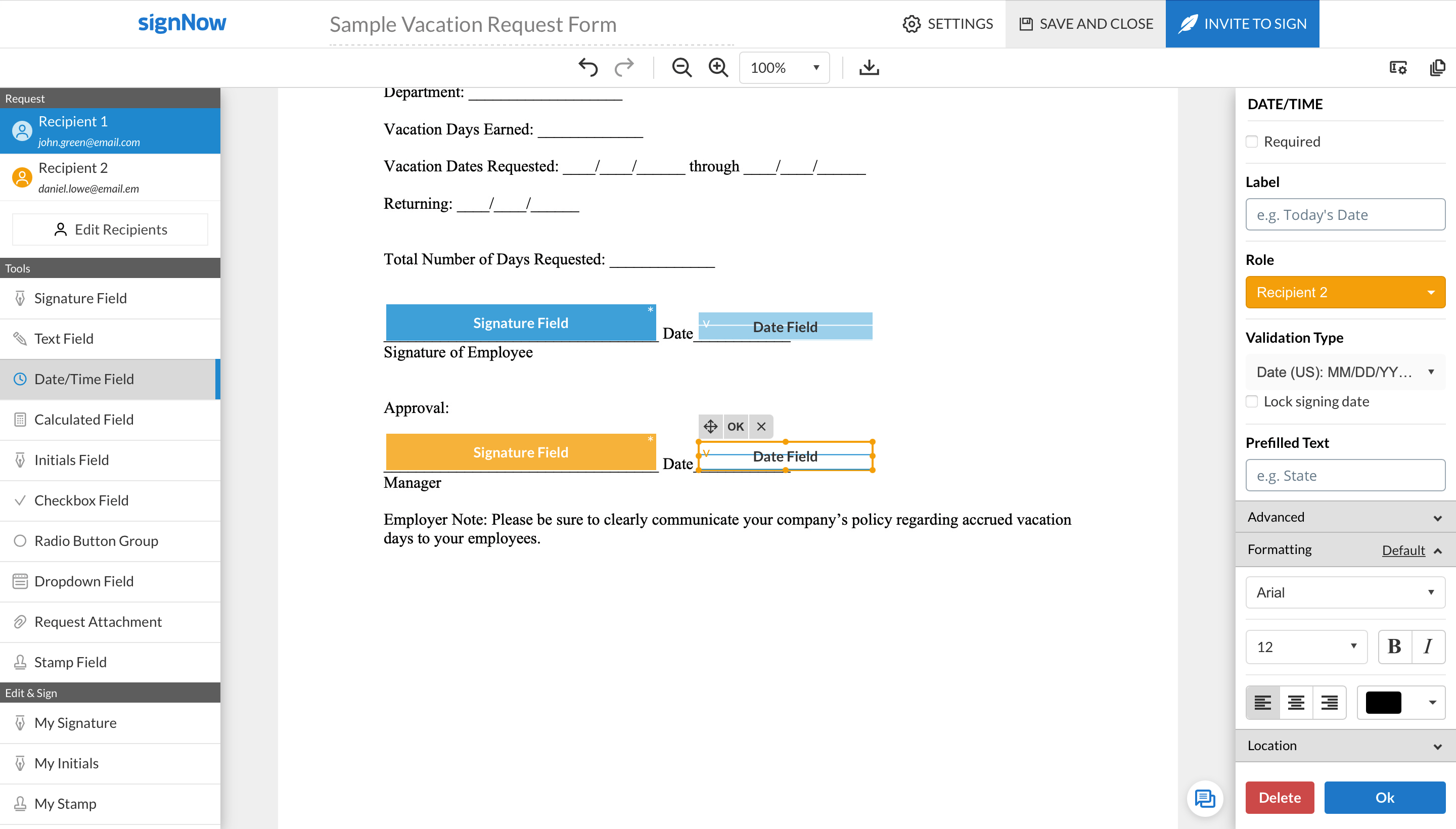
Arrastra y suelta campos rellenables en el documento desde la barra lateral izquierda y ajusta su tamaño y posición. Luego, haz clic en Invitar a Firmar.
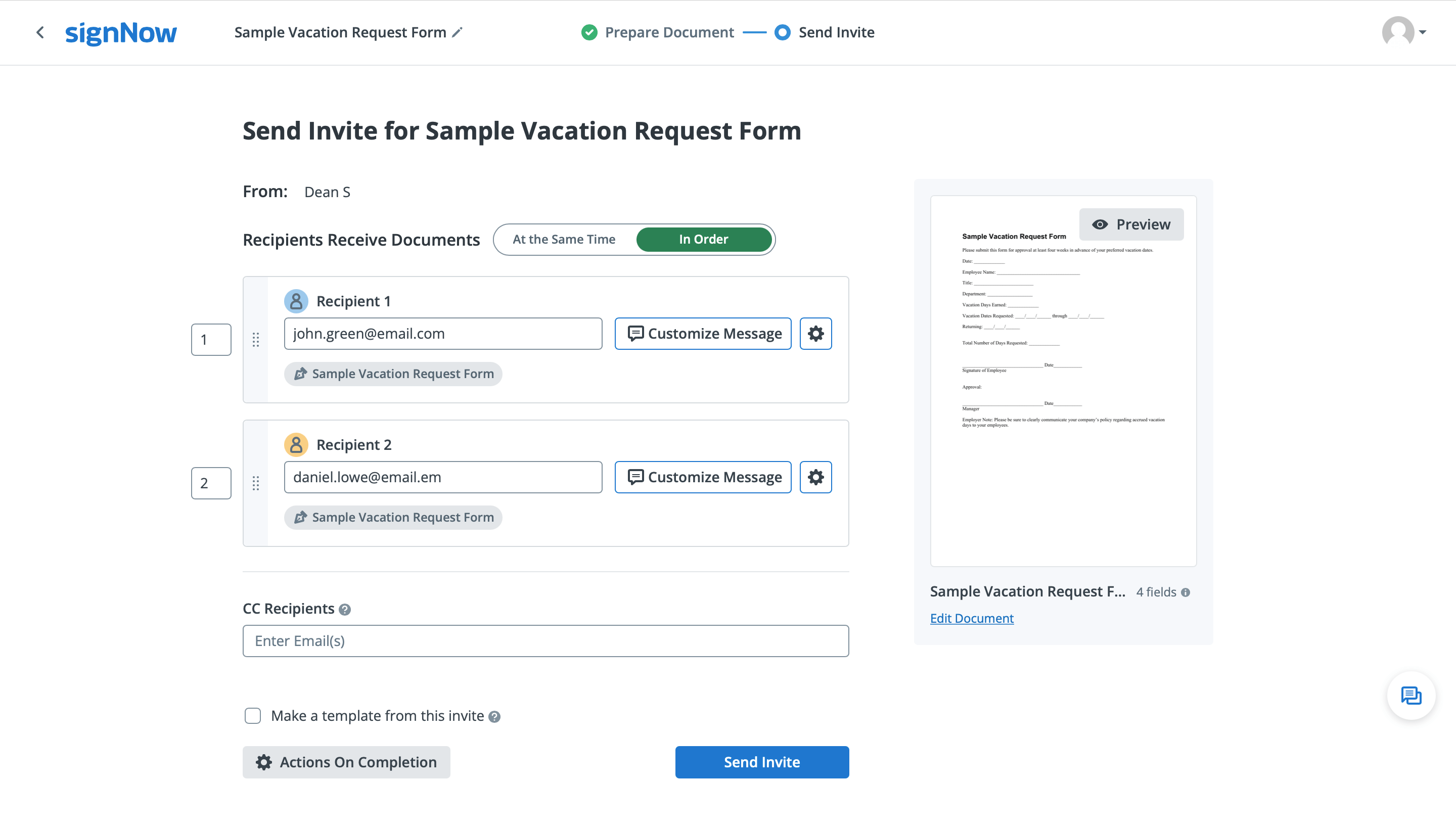
Opcional: Establece un orden de firma y añade destinatarios en copia. Personaliza el asunto y el mensaje del correo electrónico (el botón Personalizar mensaje), y configura recordatorios para los firmantes y un método de verificación (el icono engranaje).
Haz clic en Enviar invitación para completar el proceso.
Puedes rastrear el estado de tus documentos en el panel de control de airSlate SignNow.