Configurar La Autenticación De Llamadas Telefónicas
Configurar La Autenticación De Llamadas Telefónicas
Configurar la autenticación de llamadas telefónicas es esencial para la seguridad. signNow ofrece una solución de firma electrónica segura y conforme a las normativas.
Qué es set phone call authentication y cómo funciona en firmas electrónicas
set phone call authentication es un método de verificación que utiliza llamadas telefónicas para confirmar la identidad del firmante antes de completar una transacción electrónica. Durante el proceso, la plataforma realiza una llamada automatizada al número registrado, solicita un PIN o confirma datos y registra el evento en el expediente de auditoría. Este método complementa otros niveles de autenticación y resulta útil cuando se requiere verificación de segundo factor sin depender exclusivamente de SMS o aplicaciones de autenticación.
Por qué considerar set phone call authentication en su flujo de firma
set phone call authentication reduce el riesgo de suplantación telefónica y aumenta la confianza en transacciones sensibles al añadir una verificación activa dirigida al número del firmante.
Retos comunes al implementar autenticación por llamada
Números de teléfono cambiantes de firmantes causan fallos en la verificación y requieren procesos de actualización claros.
Usuarios en zonas con mala cobertura pueden recibir llamadas interrumpidas o perder el PIN necesario para verificar.
Configuraciones de bloqueo de llamadas o identidades privadas impiden que la llamada automatizada llegue correctamente.
Regulaciones internacionales sobre telecomunicaciones pueden limitar el uso de llamadas en transacciones transfronterizas.
Perfiles de usuario que se benefician del set phone call authentication
Gerente de Contratos
Responsable de revisar y autorizar acuerdos comerciales complejos; utiliza autenticación por llamada para garantizar que las firmas provienen de contactos verificados, reduciendo disputas posteriores y facilitando el cumplimiento interno y externo.
Responsable de Recursos Humanos
Gestiona acuerdos de empleo y documentos confidenciales; utiliza llamadas de verificación para autenticar la identidad del candidato en procesos de incorporación remota y mantener registros auditables.
Quién utiliza set phone call authentication en entornos reales
Empresas y equipos legales, recursos humanos y financieros suelen escoger la autenticación por llamada para contratos donde se requiere verificación activa del firmante.
Departamentos legales que gestionan contratos críticos y requieren pruebas de verificación adicionales.
Equipos de recursos humanos en procesos de incorporación con verificación telefónica de identidad.
Instituciones financieras para autorizaciones en operaciones que exigen doble factor fuera de SMS.
En organizaciones con políticas de cumplimiento, la autenticación por llamada suele integrarse como parte de un esquema de identidad multifactor para registros auditable.
prepárese para obtener más ventajas
Elija una solución mejor
Integraciones y herramientas que facilitan set phone call authentication
Integrar la autenticación por llamada con herramientas empresariales mejora la precisión y acelera la aceptación por parte de usuarios habituales.
Google Workspace
Sincroniza contactos y documentos; la integración permite iniciar verificaciones por llamada desde documentos compartidos y mantener metadatos de auditoría junto al archivo original.
CRM empresarial
Automatiza el envío de contratos con verificación telefónica usando datos de contacto del CRM, manteniendo el historial de interacciones y facilitando auditorías comerciales.
Almacenamiento en la nube
Dropbox y similares almacenan copias firmadas y registros de llamadas, centralizando el archivo y simplificando políticas de retención y recuperación.
Sistemas de identidad
Integraciones con directorios y proveedores de identidad permiten validar números autorizados y alinear la verificación por llamada con políticas de acceso corporativas.
Cómo funciona técnicamente el set phone call authentication
Este diagrama lógico describe los pasos que siguen la plataforma y el firmante durante una verificación por llamada.
Inicio de solicitud: Emisor inicia verificación desde la plataforma
Llamada automática: Sistema realiza llamada al número verificado
Ingreso de PIN: Firmante introduce PIN recibido
Registro completado: Evento queda registrado en auditoría
Recoge firmas
24x
más rápido
Reduce los costos en
$30
por documento
Ahorra hasta
40h
por empleado / mes
Guía rápida: configurar set phone call authentication paso a paso
Siga estos pasos básicos para activar y probar la autenticación por llamada en su flujo de firma electrónica.
01
Seleccionar método: Elegir 'Autenticación por llamada' en ajustes
02
Ingresar número: Validar número del destinatario
03
Configurar PIN: Determinar longitud y expiración
04
Probar flujo: Enviar prueba y revisar auditoría
prepárese para obtener más ventajas
Por qué elegir airSlate SignNow
Versión de prueba gratuita de 7 días. Elija el plan que necesita y pruébelo sin riesgos.
Precios honestos para planes completos. airSlate SignNow ofrece planes de suscripción sin sobrecargos ni comisiones ocultas al renovar.
Seguridad de grado empresarial. airSlate SignNow le ayuda a cumplir con los estándares de seguridad globales.
Configuración recomendada de flujo para set phone call authentication
Ajuste estas configuraciones iniciales para equilibrar seguridad y experiencia del usuario al usar verificación por llamada.
Función
Valor
Método de autenticación por llamada
PIN temporal
Duración del PIN
5 minutos
Número de reintentos permitidos
3 intentos
Timeout de llamada
45 segundos
Requisitos de plataforma para usar set phone call authentication
La autenticación por llamada requiere soporte de la plataforma para iniciar llamadas, recibir códigos y registrar eventos de auditoría en entornos web y móviles.
Sistemas operativos:iOS, Android, Windows
Navegadores compatibles:Chrome, Edge, Safari
Conectividad mínima:Red móvil o internet estable
Asegúrese de que los usuarios mantengan números actualizados y que la plataforma tenga políticas de reintento, tiempos de espera y registro completo para cumplir con requisitos operativos y de auditoría.
Controles de seguridad asociados con la autenticación por llamada
Verificación por llamada:Llamada automatizada confirmada
PIN temporal:Código único por sesión
Registro de auditoría:Entrada con marca de tiempo
Encriptación TLS:Protege datos en tránsito
Política de retención:Archivos seguros almacenados
Control de acceso:Permisos basados en roles
Casos de uso: set phone call authentication en la práctica
A continuación se presentan dos ejemplos que muestran cómo la verificación por llamada puede integrarse en procesos de firma electrónica con resultados medibles.
Contratos financieros
Una aseguradora solicita confirmación telefónica antes de activar pólizas para clientes remotos.
Verificación por llamada al número registrado.
Reduce fraudes y aceleraciones de pago.
Resultando en mayor confianza operativa y reducción de disputas contractuales después de la firma.
Incorporación de empleados
Un departamento de RR. HH. usa llamadas para validar identidad durante la firma de contratos laborales remotos.
Llamada con PIN temporal al candidato.
Mejora la integridad del proceso de incorporación.
Resultando en expedientes auditable y menor riesgo de identidad falsa en contrataciones.
Buenas prácticas para una implementación segura y precisa
Adoptar procedimientos estandarizados reduce errores y mejora la trazabilidad cuando se usa autenticación por llamada.
Documentar políticas de verificación telefónica
Definir criterios claros para cuándo usar llamadas, cómo registrar números y cómo manejar excepciones garantiza coherencia operativa y evidencia para auditorías y cumplimiento.
Validar y normalizar números de teléfono
Aplicar formatos internacionales y verificar propiedad antes del envío reduce fallos en la entrega de llamadas y mejora la tasa de éxito de verificación.
Combinar con otros factores
Usar autenticación por llamada como parte de un esquema multifactor (por ejemplo, contraseña y llamada) aumenta la resistencia a la suplantación y mejora la defensa frente a ataques.
Registrar metadatos completos
Incluir marca de tiempo, dirección IP de la solicitud y resultado de la llamada en el registro facilita la respuesta a disputas y demuestra cumplimiento con ESIGN y UETA.
Verifique primero el formato del número y su prefijo internacional. Confirme que el destinatario no tenga bloqueo de llamadas desconocidas y que el operador soporte llamadas automatizadas. Si persiste el problema, active un método alternativo de verificación y registre el incidente para análisis.
La autenticación por llamada puede apoyar la intención de firmar y la verificación de identidad bajo ESIGN y UETA cuando va acompañada de registros de auditoría completos. Revise políticas internas y documentación para asegurarse de que la evidencia satisface requisitos legales.
La plataforma debe almacenar metadatos: número marcado, marca de tiempo, resultado de la llamada y código PIN utilizado. Mantener registros inmutables facilita la defensabilidad en caso de disputas o auditorías regulatorias.
Configure formatos E.164 y valide la capacidad del proveedor de llamadas para ese país. Considere costos de telecomunicaciones y restricciones locales antes de habilitar llamadas internacionales.
Sí; combinar llamada con contraseña o token incrementa seguridad. Documente el flujo y especifique qué factor es vinculante legalmente para cada tipo de transacción.
Proporcionar instrucciones claras en pantalla, mensajes de voz concisos y opciones de reintento reduce fallos. Ofrecer métodos alternativos y un centro de soporte mejora la tasa de verificación exitosa.
Comparativa de soporte telefónico entre proveedores de firma electrónica
Comparativa breve de capacidades de autenticación telefónica entre plataformas reconocidas en EE. UU.
Riesgos y sanciones potenciales relacionados con autenticación telefónica
Fallo de verificación:Operación no válida
Pérdida de registro:Prueba incompleta
Incumplimiento de privacidad:Multas regulatorias
Interpolación de llamadas:Suplantación posible
Dependencia de operador:Limitaciones técnicas
Reclamaciones legales:Litigios costosos
Comparativa simplificada de precios y cobertura de autenticación telefónica
Resumen de planes y disponibilidad de autenticación por llamada en proveedores populares; los precios son aproximados y varían según configuración y volumen.
Criterio
signNow (Recommended)
DocuSign
Adobe Sign
Dropbox Sign
PandaDoc
Precio inicial (por usuario/mes)
Desde $8/mes
Desde $10/mes
Desde $9.99/mes
Desde $8/mes
Desde $19/mes
Plan gratuito disponible
No
No
No
Sí (limitado)
Sí (limitado)
Soporte empresarial
Incluido en corporativo
Plans Enterprise
Empresas y teams
Enterprise disponible
Enterprise disponible
Autenticación telefónica incluida
Sí (según plan)
Sí (según plan)
Sí (según plan)
Limitada
Limitada
Período de prueba
7-30 días según promoción
30 días trial
14-30 días trial
14 días
14 días
Cómo configurar la autenticación por llamada telefónica con airSlate SignNow
Asegúrate de que tus documentos sean firmados solo por partes autorizadas. Con la autenticación por llamada telefónica, tus destinatarios podrán firmar tus documentos solo después de recibir una llamada automática a su número.
Personaliza la invitación a tu firmante
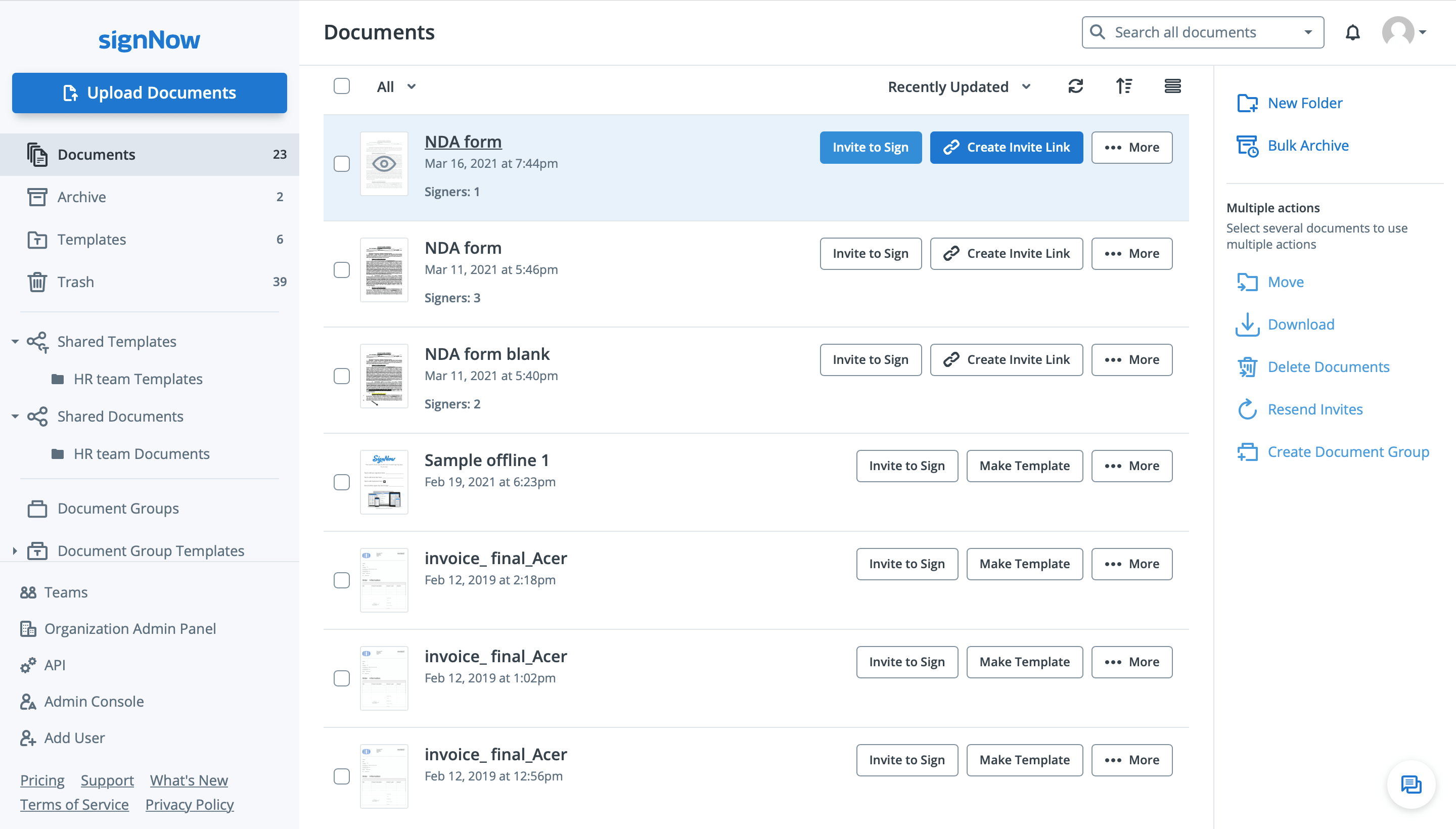
Haz clic en Invitar a Firmar junto a un documento que necesitas enviar para firma electrónica.
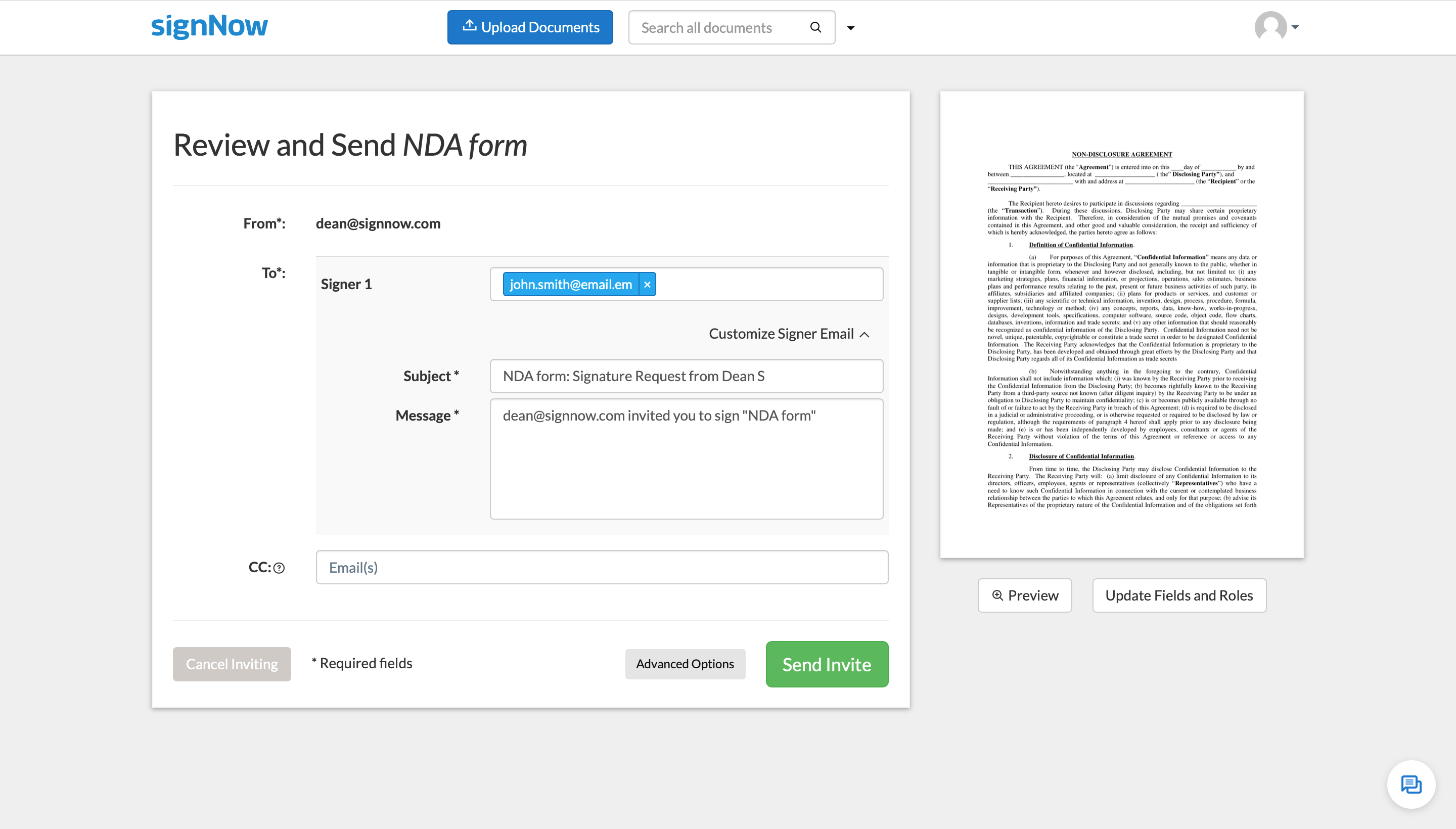
Ingresa la dirección de correo electrónico de tu firmante y personaliza un asunto y mensaje de invitación. Agrega destinatarios en copia (CC) si necesitas que otras partes reciban copias firmadas de tu documento. Luego, haz clic en Opciones Avanzadas.
Configura autenticación de dos factores
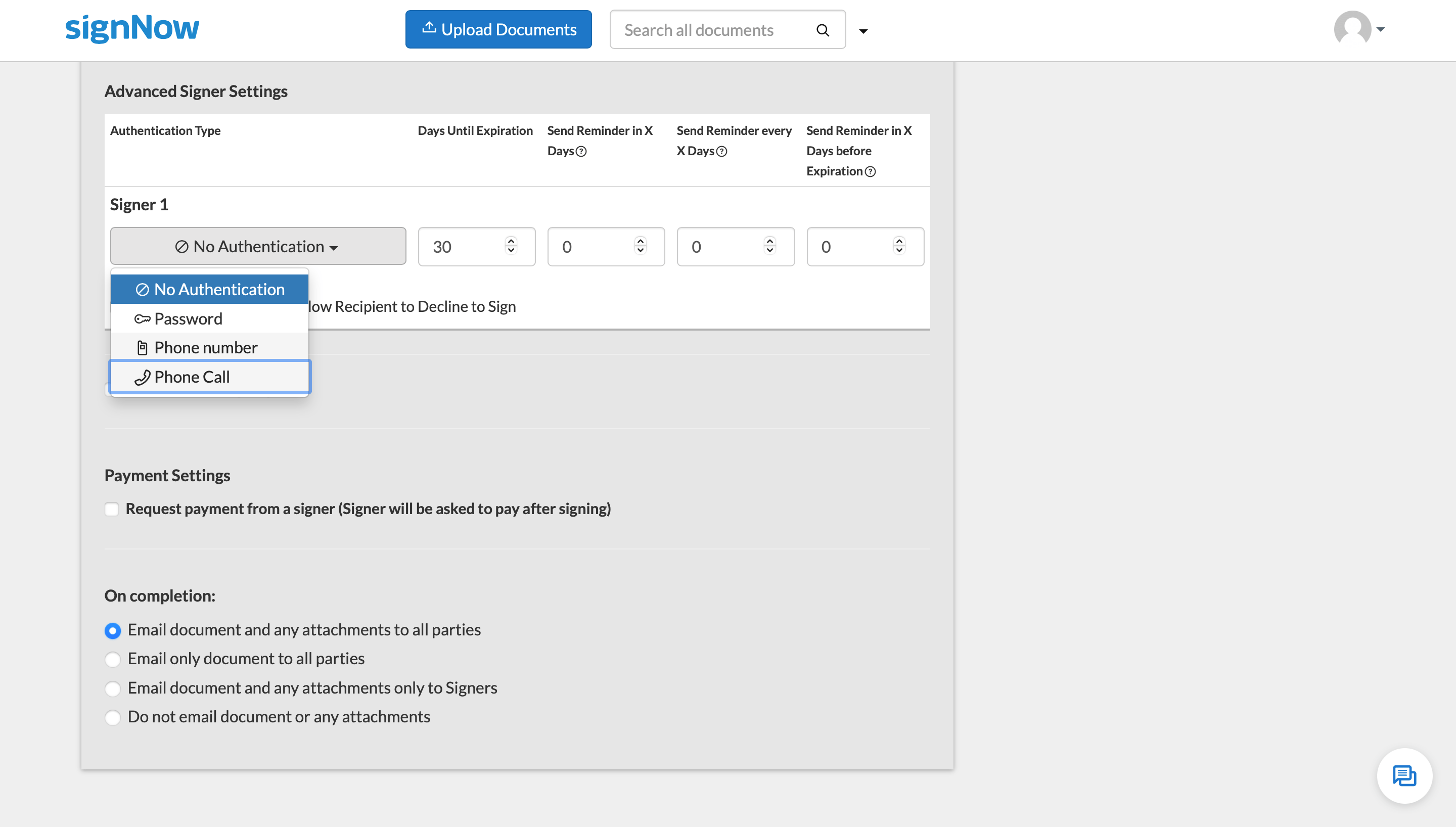
En la sección Configuraciones Avanzadas del Firmante, haz clic en el desplegable Sin Autenticación y selecciona Llamada Telefónica.
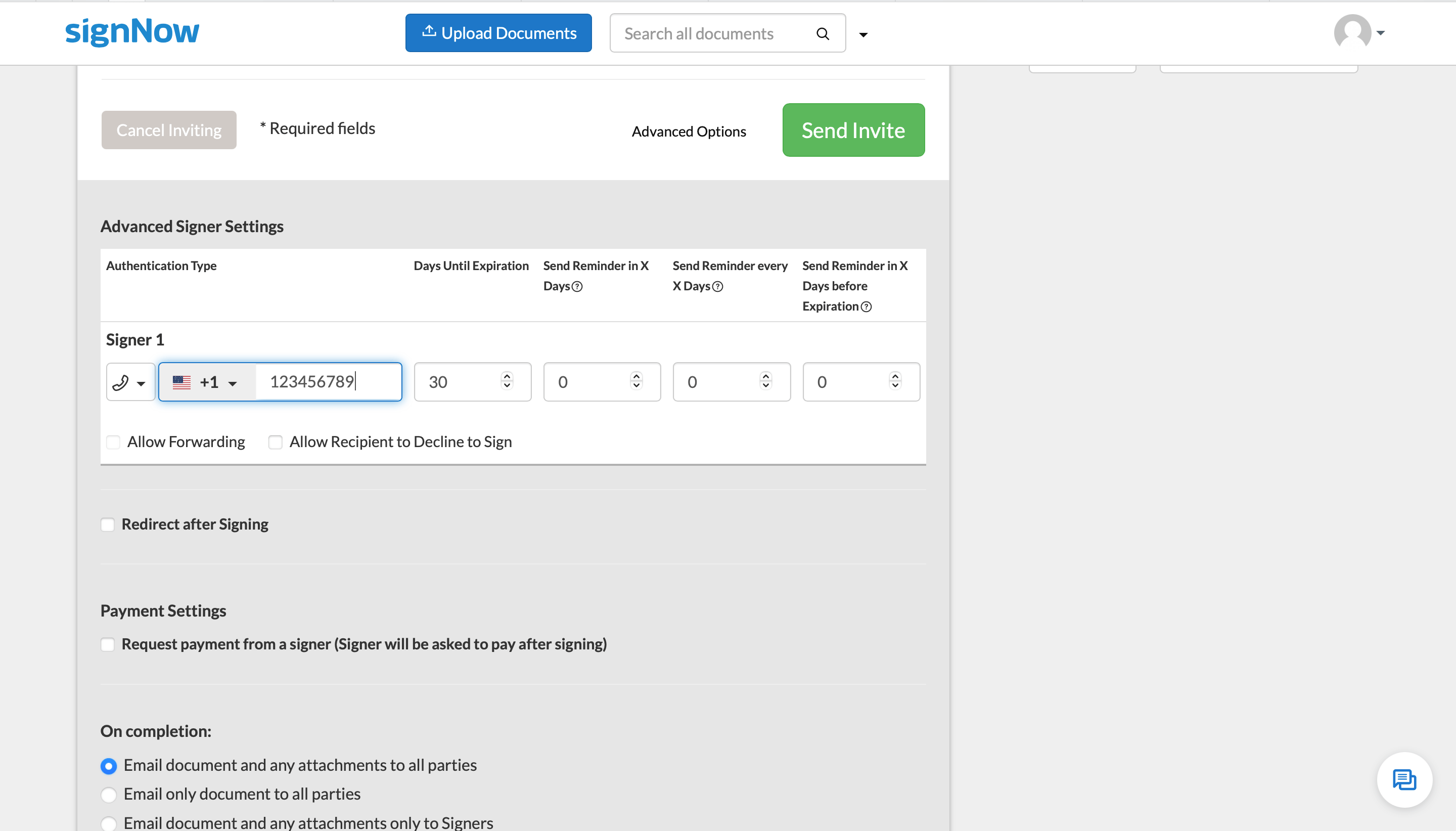
Ingresa el número de teléfono de tu firmante y establece la fecha de expiración del documento. También puedes programar recordatorios para asegurarte de que tu documento se firme a tiempo. Una vez terminado, haz clic en Enviar Invitación para enviar tu solicitud de firma.
Utilizamos cookies para mejorar la seguridad, personalizar la experiencia del usuario, potenciar nuestras actividades de marketing (incluida la colaboración con socios terceros o 3rd\u00a0party) y para otros usos comerciales. Haz clic\u00a0aquí\u00a0para leer nuestra Política\u00a0de cookies. Al hacer clic en “Aceptar“ aceptas el uso de cookies. ... Leer másLeer menos