Expresiones regulares
Permiten definir validaciones complejas para adaptarse a formatos nacionales y escenarios específicos de naming.




Establecer requisitos de nombre del firmante mejora la precisión de la identidad, reduce fraudes y asegura trazabilidad en procesos firmados electrónicamente.

El administrador de la plataforma configura políticas y plantillas que aplican las reglas de validación de nombres a nivel de cuenta. También gestiona permisos, revisa registros de auditoría y ajusta patrones para alinearlos con requisitos legales y operativos.
El firmante introduce su nombre conforme a las reglas definidas; puede recibir guías en pantalla o correos con formato requerido. El firmante es responsable de proporcionar datos coincidentes con registros oficiales para validar la identidad.
Empresas y equipos que procesan contratos sensibles y documentos regulatorios establecen requisitos de nombre para reducir riesgos operativos.
Estas reglas benefician tanto a organizaciones pequeñas como a corporaciones, mejorando control y cumplimiento en las firmas electrónicas.
Permiten definir validaciones complejas para adaptarse a formatos nacionales y escenarios específicos de naming.
Soporte para aceptar nombres preaprobados desde directorios o bases de datos de clientes autorizados.
Opciones para tolerar pequeñas variaciones manteniendo un umbral de confianza aceptable para el negocio.
Activación de reglas distintas según tipo de documento o rol del firmante para mayor granularidad.
Captura y almacenamiento del valor ingresado junto con metadatos de validación y marca temporal.
Exposición de parámetros de validación para integraciones programáticas y automatización en flujos externos.
Permite exigir que el nombre ingresado coincida exactamente con el nombre registrado del usuario o con un valor predefinido en la plantilla, reduciendo ambigüedades en la identificación.
Soporta expresiones regulares y máscaras para validar formatos específicos, por ejemplo nombres con apellidos múltiples, prefijos o códigos locales, en distintos mercados.
Convierte variantes de entrada en un formato estándar (elimina acentos, ajusta mayúsculas) para mejorar la tasa de coincidencias y reducir rechazos por formato.
Vincula la validación con fuentes externas como directorios corporativos o SSO para comparar el nombre ingresado con datos autorizados.
| Feature | Configuration |
|---|---|
| Name Validation Pattern | ^[A-Za-zÀ-ÿ\s\.\-]{2,100}$ |
| Enforcement Level | Strict match |
| Reminder Frequency | 48 hours |
| Template Assignment | Per department |
Las reglas de nombre deben funcionar en web, móvil y tablet, y dependerán de soporte de navegador y versiones de la app para interfaz y validación.
Mantenga las aplicaciones y navegadores actualizados y pruebe patrones en cada plataforma para asegurar comportamiento consistente y experiencia homogénea para los firmantes.
Una agencia implementó reglas de formato para nombres completos
Resulting in procesos de cierre de ventas más rápidos y completos.
Un banco aplicó coincidencia con registros KYC internos
Leading to cumplimiento más consistente con auditorías internas y reguladoras.
| Criteria | Vendor | Name rules | Max length |
|---|---|---|---|
| signNow (Recommended eSignature solution for US compliance) | Exact-match enforcement | 200 chars | |
| DocuSign (Enterprise eSignature provider US markets) | Normalization and patterns | 200 chars | |
| Adobe Acrobat Sign (Widely used eSignature platform) | Regex and basic matching | 150 chars | |
| Dropbox Sign (HelloSign familiar alternative) | Partial | Formatting checks only | 120 chars |
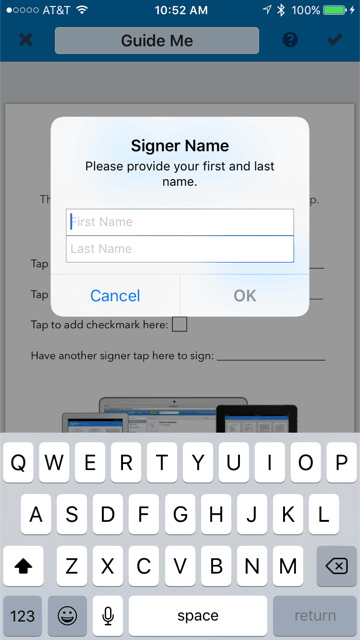
Con la aplicación de iOS de airSlate SignNow, se requiere que el firmante proporcione su nombre y apellido antes de acceder a un documento y firmar los campos necesarios (por favor, vea la captura de pantalla).
Primero, abra el documento que le fue enviado por el remitente. Luego, se le indicará que ingrese su nombre y apellido para acceder al documento y comenzar a firmar. Comuníquese con el remitente su nombre y apellido completos, para evitar errores de ortografía. Después de ingresar su nombre y apellido correctos, haga clic en “OK” y comience a firmar el documento.