Ajouter Des Champs Calculés à Un Document Pour eSignature

Calculez automatiquement les valeurs à partir de champs de texte et de menus déroulants en ajoutant des champs calculés à votre document. Une fois qu'un destinataire remplit les champs requis, la valeur est ajoutée automatiquement.

Solution eSignature primée

What it means to add calculated fields

Adding calculated fields refers to inserting form fields that automatically compute values from other fields using arithmetic, conditional logic, or simple formulas inside a document. In eSignature workflows, calculated fields reduce manual data entry, maintain numeric accuracy, and keep totals and taxes consistent across line items. For organizations using signNow and other eSignature platforms, calculated fields are applied to invoices, contracts, order forms, and expense reports to derive sums, rates, and conditional outputs without external spreadsheets. Proper setup ensures results update in real time and appear in the final signed document.

Why add calculated fields to forms

Calculated fields eliminate repetitive manual calculations, reduce errors, and accelerate form completion while keeping document data consistent across pages and line items.

Why add calculated fields to forms

Common challenges when adding calculated fields

  • Incorrect field references can produce wrong totals and be hard to trace in complex forms.
  • Inconsistent numeric formats or currencies cause display errors and mismatch across merged documents.
  • Conditional calculations require careful testing to avoid logical gaps or unexpected zero values.
  • Mobile input differences and browser rounding can alter results unless formats are constrained.

Typical user roles for calculated fields

Form Admin

Form Admins design templates, set field types, and apply formulas across documents. They test calculations against sample records, maintain version control, and coordinate with legal or compliance teams to ensure computed values meet regulatory or internal audit requirements.

Finance Manager

Finance Managers verify formulas, ensure currency and rounding settings match accounting rules, and approve templates used for billing or expense reporting. They also reconcile automated outputs with accounting ledgers and adjust templates for tax or policy changes.

Who typically uses calculated fields

Calculated fields are useful across teams that prepare numeric or conditional documents and need accuracy without spreadsheets.

  • Finance teams preparing invoices, expense reports, and reconciliations with automatic totals and tax calculations.
  • Sales operations creating quotes and proposals that compute line totals, discounts, and final prices.
  • HR and benefits teams calculating prorated amounts, leave accruals, and conditional compensation fields.

Use cases commonly include finance, sales, procurement, and HR where automated sums, taxes, prorations, and conditional totals save time and reduce reconciliation work.

Additional calculated field features to evaluate

Beyond basic arithmetic, evaluate platforms for conditional logic, templates, integration options, and export fidelity when you add calculated fields to business documents.

Conditional logic

Show or hide fields and change formulas based on user input or other field values to support tiered pricing, exception handling, and dynamic forms.

Template versioning

Maintain versions of templates with calculations so you can track rule changes, revert to prior logic, and provide audit history for compliance and dispute resolution.

Cross-document formulas

Support calculations that reference fields across sections or merged documents when producing multi-page contracts or bundled invoices to ensure consistency.

Locale and currency handling

Automatically format numbers and perform conversions based on locale or currency settings to avoid misinterpretation in international transactions.

Export fidelity

Ensure computed values are embedded into final signed PDFs and included in exported CSV or JSON payloads for accounting and CRM systems.

Developer extensibility

APIs and webhooks should expose computed field values and template metadata so developers can validate, store, or augment results in external systems.

soyez prêt à en obtenir plus

Choisissez une meilleure solution

Key capabilities to look for when you add calculated fields

When choosing how to add calculated fields, evaluate formula flexibility, formatting options, real-time updates, and integration with document data sources to ensure accurate outputs across workflows.

Formula flexibility

Support for arithmetic, conditional expressions, and chained references is essential. Look for platforms that allow nested logic and simple functions to express discounts, tax calculations, and prorations without external scripts.

Formatting controls

Field-level control over currency, decimal precision, and rounding rules prevents display inconsistencies. It also ensures printed and archived PDFs match accounting records and regulatory formatting requirements.

Real-time recalculation

Calculated fields should update instantly as users enter or edit source values, providing immediate feedback and reducing data entry errors during form completion on web and mobile interfaces.

Data persistence

Computed results must be rendered into the final signed document and included in audit logs, export files, and integrations so downstream systems receive consistent, validated values.

How adding calculated fields works in practice

Calculated fields reference other fields and execute predefined expressions. They update dynamically as users enter values and persist computed results in the final executed document.

  • Reference inputs: Point formulas at other field IDs.
  • Formula engine: Evaluate arithmetic and logical operators.
  • Auto-update: Recalculate when source values change.
  • Finalize output: Include computed values in signed PDF.
Collecter les signatures
24x
plus rapide
Réduire les coûts de
$30
par document
Économisez jusqu'à
40h
par employé / mois

Step-by-step: add calculated fields to a document

Follow these core steps to add calculated fields that compute values automatically. Test each step on sample data before publishing templates for production use.

  • 01
    Prepare fields: Create input fields for numbers and variables.
  • 02
    Define formula: Enter arithmetic or conditional expressions.
  • 03
    Set formats: Apply currency and rounding rules.
  • 04
    Validate: Test with representative values and edge cases.
soyez prêt à en obtenir plus

Pourquoi choisir airSlate SignNow

  • Essai gratuit de 7 jours. Choisissez le forfait dont vous avez besoin et essayez-le sans risque.
  • Tarification honnête pour des forfaits complets. airSlate SignNow propose des abonnements sans frais supplémentaires ni frais cachés lors du renouvellement.
  • Sécurité de niveau entreprise. airSlate SignNow vous aide à respecter les normes de sécurité mondiales.
illustrations signature

Configuring workflow settings for calculated fields

Before deploying templates with calculated fields, configure reminders, permissions, and data retention so calculated outputs are secure and reproducible.

Setting Name Configuration
Default reminder frequency 48 hours
Template editing permissions Admins only
Audit trail retention period 7 years
Currency and locale defaults USD / en-US
Webhook and export settings Enable JSON export

Supported devices and platform requirements

Calculated fields work across modern web browsers and native mobile apps but require browser support for JavaScript-based formula evaluation and standard numeric input handling.

  • Desktop browsers: Chrome, Edge, Safari
  • Mobile platforms: iOS and Android
  • Integration needs: REST API availability

For reliable behavior, use up-to-date browsers on desktop and recent versions of mobile operating systems. Confirm the eSignature provider’s app supports formula evaluation offline and that exported PDFs capture computed values for archival and downstream integrations.

Security and data controls for calculated fields

Field-level access: Restrict edit rights
Encryption at rest: Protect stored values
Encryption in transit: Secure data transfer
Audit logging: Track formula changes
Role-based permissions: Limit configuration edits
Data validation: Prevent invalid inputs

Real-world examples of calculated fields

Two brief case studies show how adding calculated fields streamlines recurring document tasks and reduces manual reconciliation.

Billing invoice

A mid-sized reseller used line-item formulas for quantity and unit price to auto-calculate subtotals and discounts

  • formula fields linked to each line item
  • reduced invoice errors and shortened billing cycles

Resulting in faster collections and fewer customer disputes.

Employee reimbursement

An HR team added calculated fields to expense forms to compute mileage, per diem, and tax withholdings

  • fields used conditional logic for expense categories
  • improved policy compliance and simplified audits

Leading to cleaner accounting entries and less time spent reconciling claims.

Best practices when you add calculated fields

Follow these practical guidelines to avoid errors, ensure compliance, and maintain templates that remain accurate as business rules change over time.

Use clear field naming conventions and consistent identifiers
Assign descriptive names and stable IDs to source and target fields to make formulas readable and maintainable. Avoid ambiguous labels and document each formula’s purpose in template notes or internal documentation for future reviewers.
Standardize numeric formats, currencies, and rounding across templates
Define default currency, decimal precision, and rounding rules early. Ensure templates handling multiple currencies convert values consistently or flag mismatches so computed totals remain auditable and consistent with accounting systems.
Test formulas with typical, boundary, and invalid inputs
Create a test suite of sample documents that exercise normal values, zeros, negatives, and unusually large numbers. Include tests for conditional branches and missing fields to confirm the formula engine handles all scenarios predictably.
Limit editable access and maintain versioned templates
Restrict formula editing to administrators and keep version history for templates. When business rules change, publish a new template version and log approvals to maintain traceability and audit readiness.

FAQs and troubleshooting when you add calculated fields

Common questions about calculation setup, formatting, and errors are addressed here to help you diagnose issues and maintain reliable templates over time.

Feature availability: add calculated fields comparison

This comparison shows availability and a brief technical detail for calculated fields and related capabilities across leading eSignature platforms.

Electronic signature platform feature comparison signNow (Recommended) DocuSign Adobe Sign
Add Calculated Fields Limited
Calculated field complexity Basic formulas Advanced formulas Basic formulas
Bulk Send
API access REST API REST API REST API
soyez prêt à en obtenir plus

Obtenez des signatures juridiquement contraignantes dès maintenant !

Risks and compliance considerations

Calculation errors: Financial discrepancies
Incorrect rounding: Reporting mismatches
Unauthorized changes: Policy violations
Data exposure: Regulatory risk
Audit gaps: Insufficient logs
Noncompliance: Contract disputes

Pricing and plan highlights for platforms that add calculated fields

High-level plan and feature comparisons can help you assess initial cost and where advanced features such as calculated fields, API access, and HIPAA support are included or require add-ons.

Plan examples signNow (Recommended) DocuSign Adobe Sign Dropbox Sign PandaDoc
Entry-level plan name Free or Individual Personal Individual Free Free
Starting monthly price $8 per user $10 per user $14.99 per user $15 per user $19 per user
API availability in plan Available on Business plans Available on Business Pro Available on Business Available on Advanced Available on Business
HIPAA compliance option Available with BAA Available with Healthcare eSig Available with BAA Available with BAA Available with BAA
Bulk send capability Included or available Add-on for some tiers Included Included Add-on

Comment ajouter un champ calculé à un document avec airSlate SignNow

airSlate SignNow vous permet de calculer automatiquement des valeurs à partir de champs de texte et de menus déroulants en fonction de formules prédéfinies. Une fois qu'un utilisateur remplit les champs de saisie, la valeur calculée remplira automatiquement le champ de résultat.

Ajouter un champ de texte de saisie

Ouvrez votre document dans l'éditeur airSlate SignNow et ajoutez des champs de texte modifiables là où c'est nécessaire.

Pour insérer un champ de texte, sélectionnez Champ de texte dans la barre d'outils à gauche et cliquez n'importe où sur le document pour placer le champ. Ensuite, ajustez sa taille et son positionnement, puis cliquez sur OK.
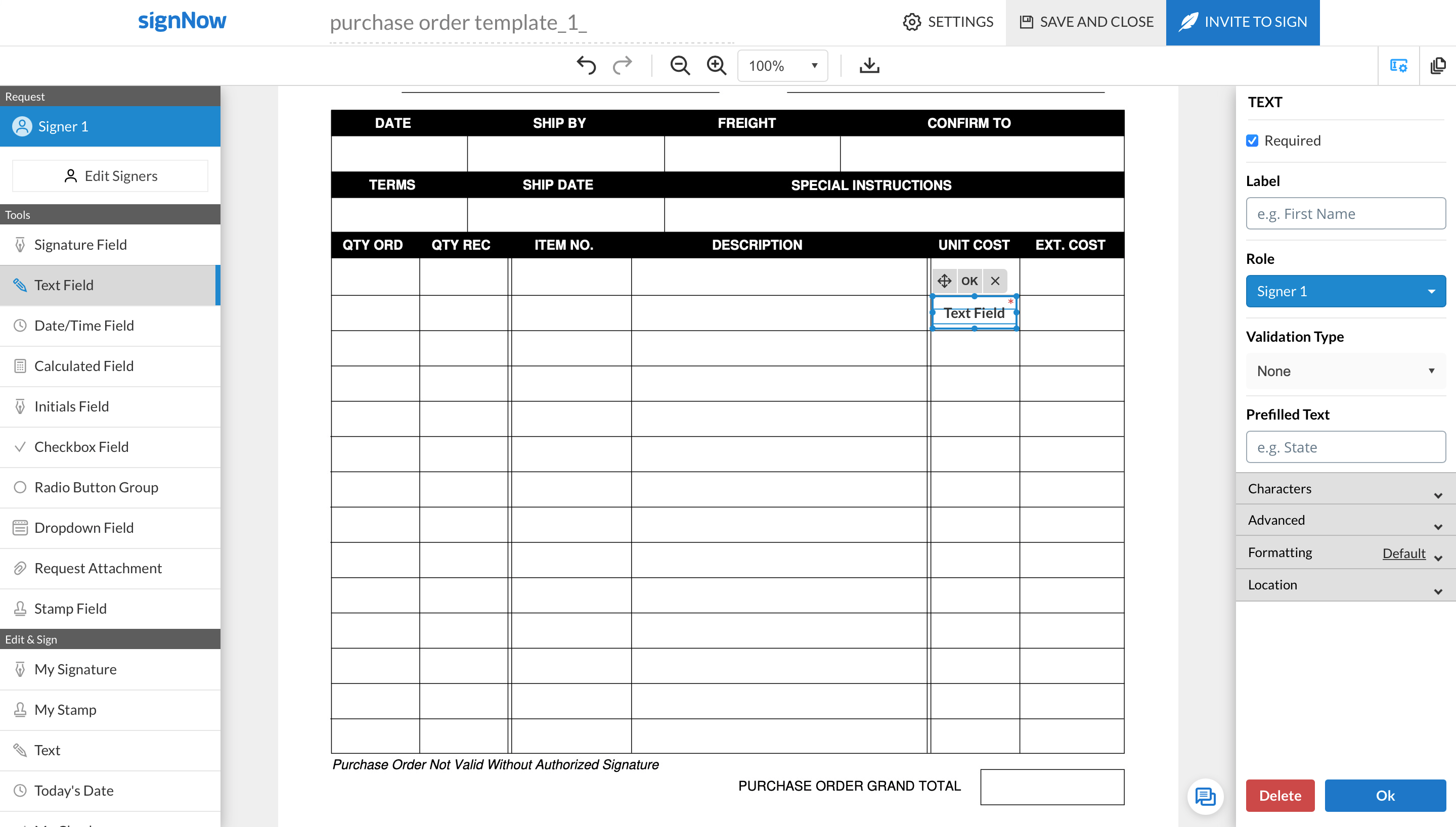
illustration-guides-remplissage

Dans le menu déroulant Type de validation, choisissez le format de données applicable à votre champ. Veuillez noter que vous ne pouvez choisir que des validateurs de format marqués d'une icône de calculatrice pour vos champs de saisie.
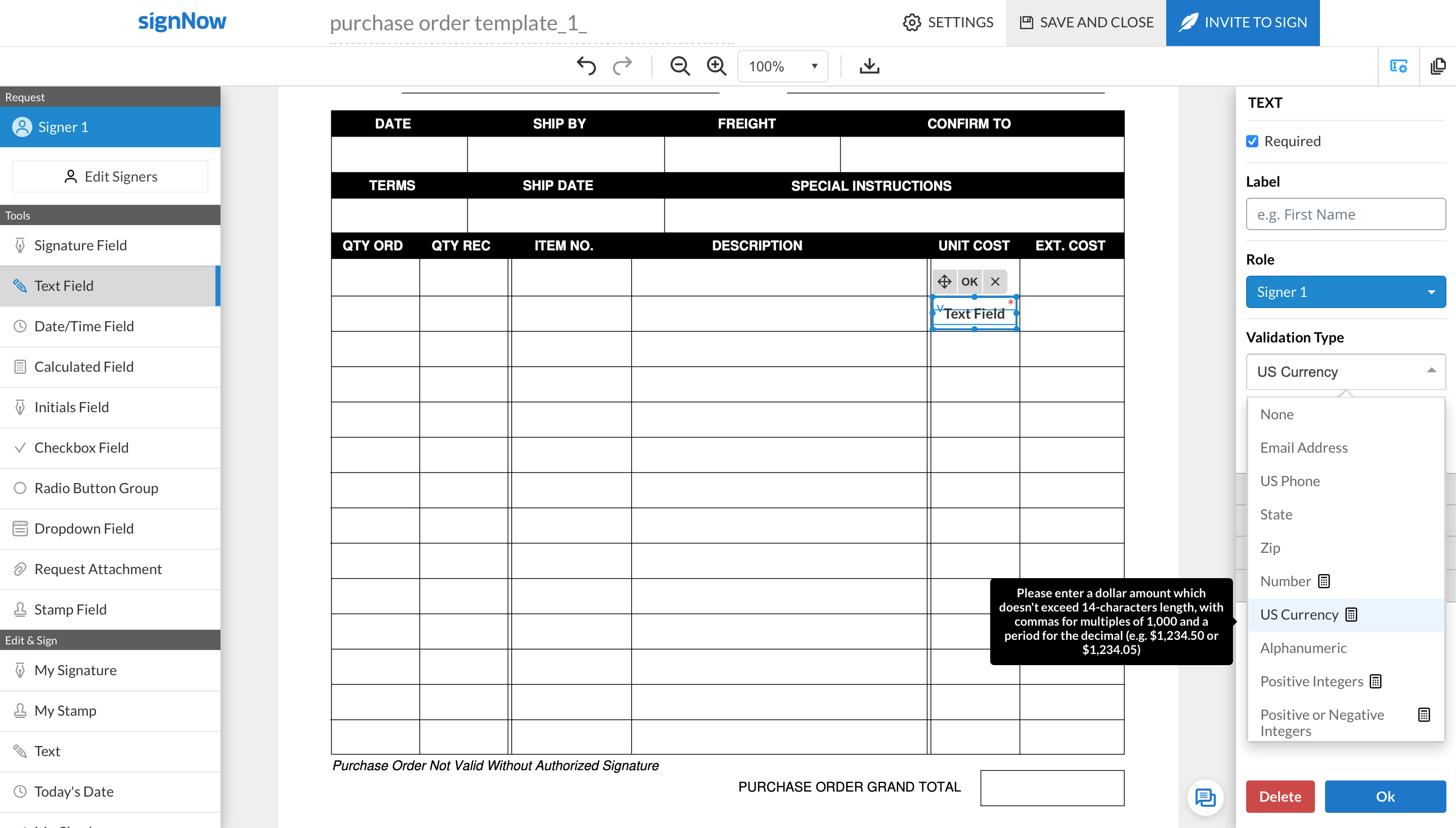
illustration-guides-remplissage

Dans la zone Étiquette, entrez le nom de votre champ de texte. Ensuite, ouvrez le menu déroulant Avancé et tapez un Nom de champ unique (il s'agit d'un identifiant de champ unique qui sera utilisé dans la formule).
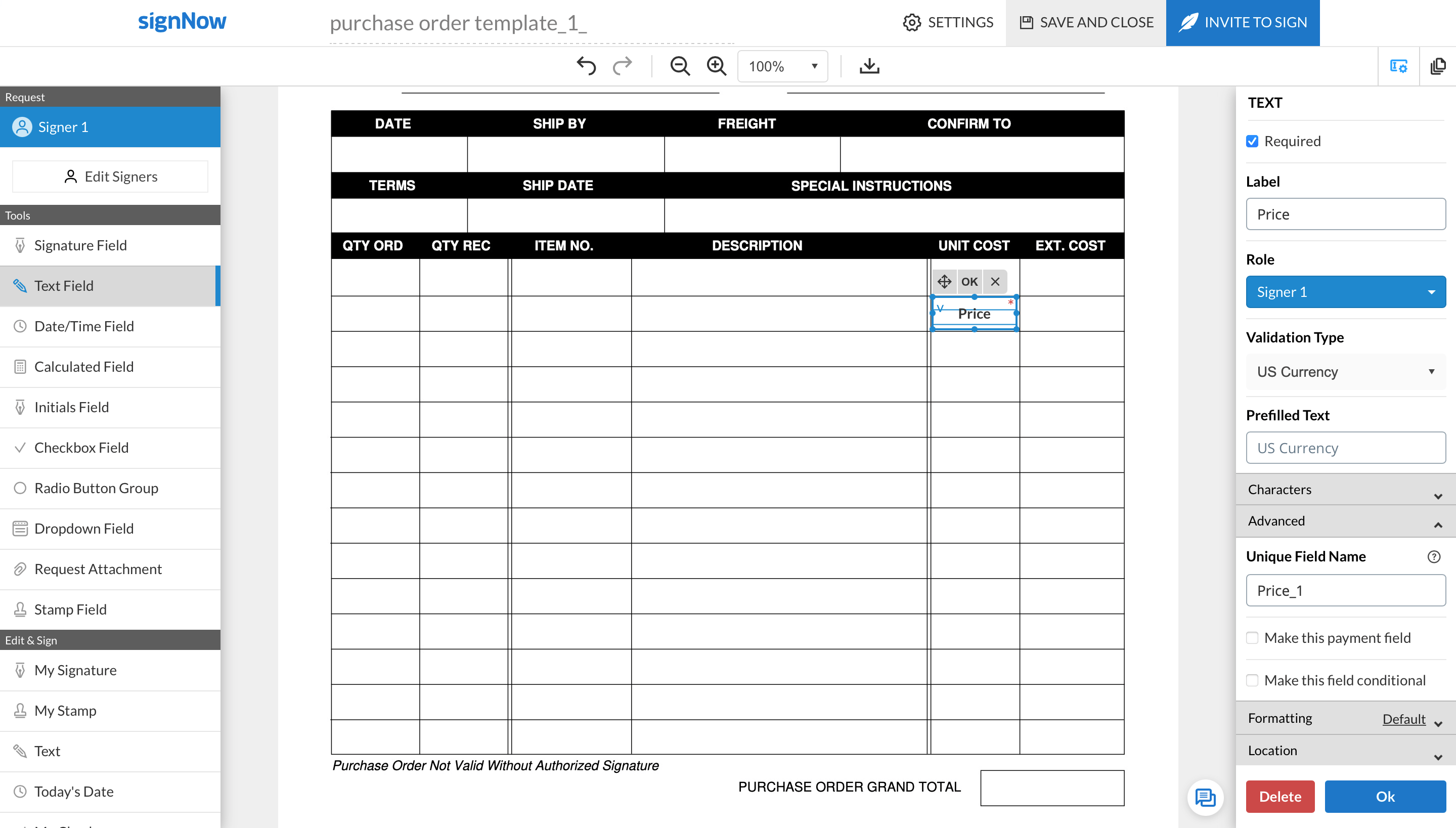
illustration-guides-remplissage

Ajouter un champ déroulant de saisie

Personnalisez vos champs déroulants de la même manière. Ajoutez les valeurs que vous souhaitez voir apparaître dans votre menu déroulant dans la zone Choix de réponse (pour passer à la ligne suivante, appuyez sur ENTRÉE). Notez que vous ne pouvez ajouter que des nombres si vous utilisez un menu déroulant comme champ de saisie.

De plus, assurez-vous que la case Ajouter l'option "Autre" reste décochée.

Entrez le nom du menu déroulant dans le champ Étiquette. Enfin, allez dans Avancé > Nom de champ unique et donnez à votre menu déroulant un ID unique.
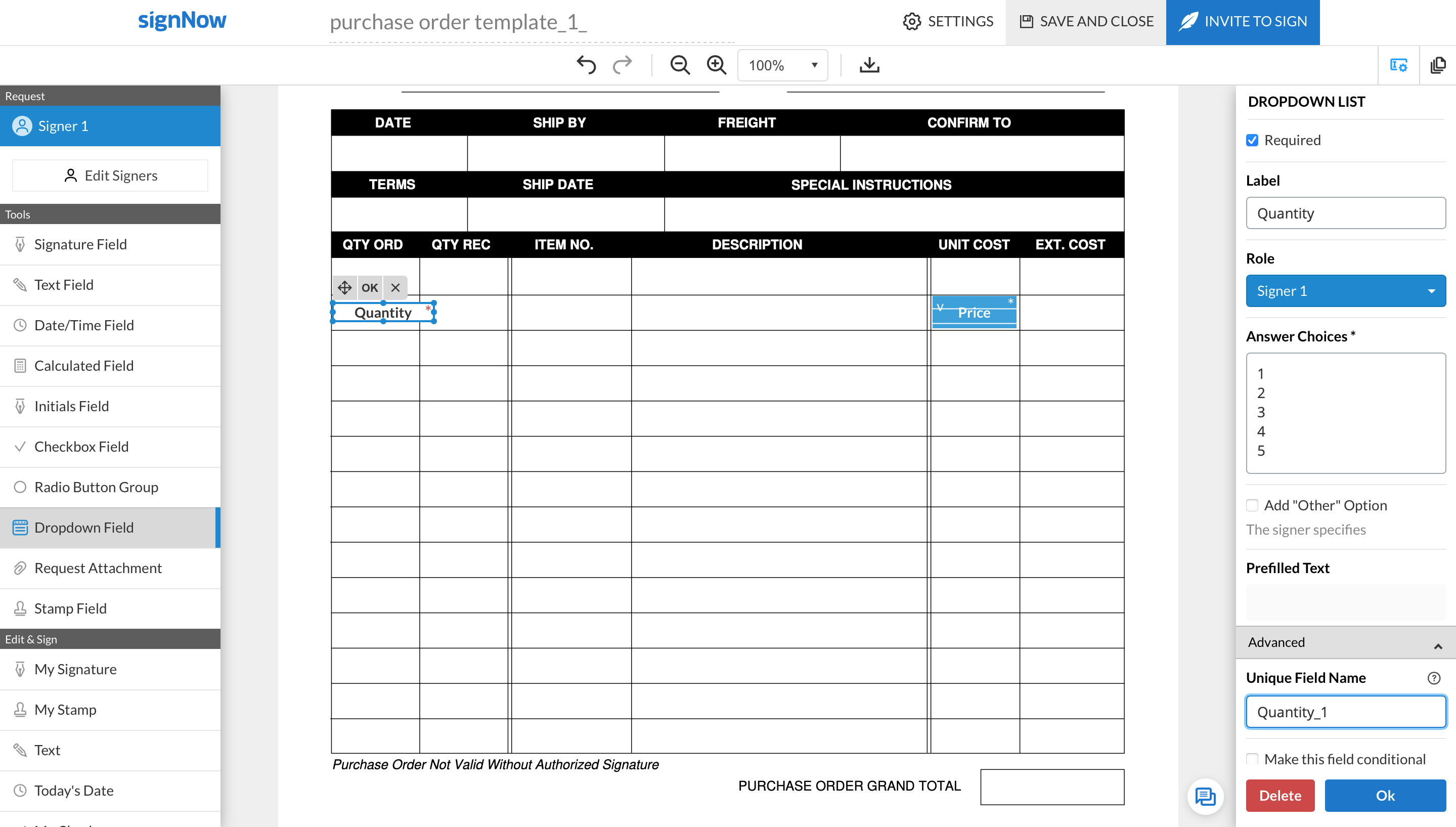
illustration-guides-remplissage

Ajouter un champ calculé

Sélectionnez Champ calculé dans la barre latérale gauche et placez-le n'importe où dans votre document. Ensuite, entrez votre formule dans la fenêtre contextuelle. Commencez à taper des accolades pour voir la liste des noms de champs uniques suggérés (ID que vous avez précédemment attribués à vos champs de saisie). Sélectionnez ceux qui doivent être calculés et insérez l'un des symboles suivants entre eux :

  • (+) pour additionner
  • (-) pour soustraire
  • (*) pour multiplier
  • (/) pour diviser

Vous pouvez également arrondir la valeur d'un champ calculé à un nombre spécifique de décimales.

Une fois que vous avez créé votre formule, cliquez sur le bouton Créer.
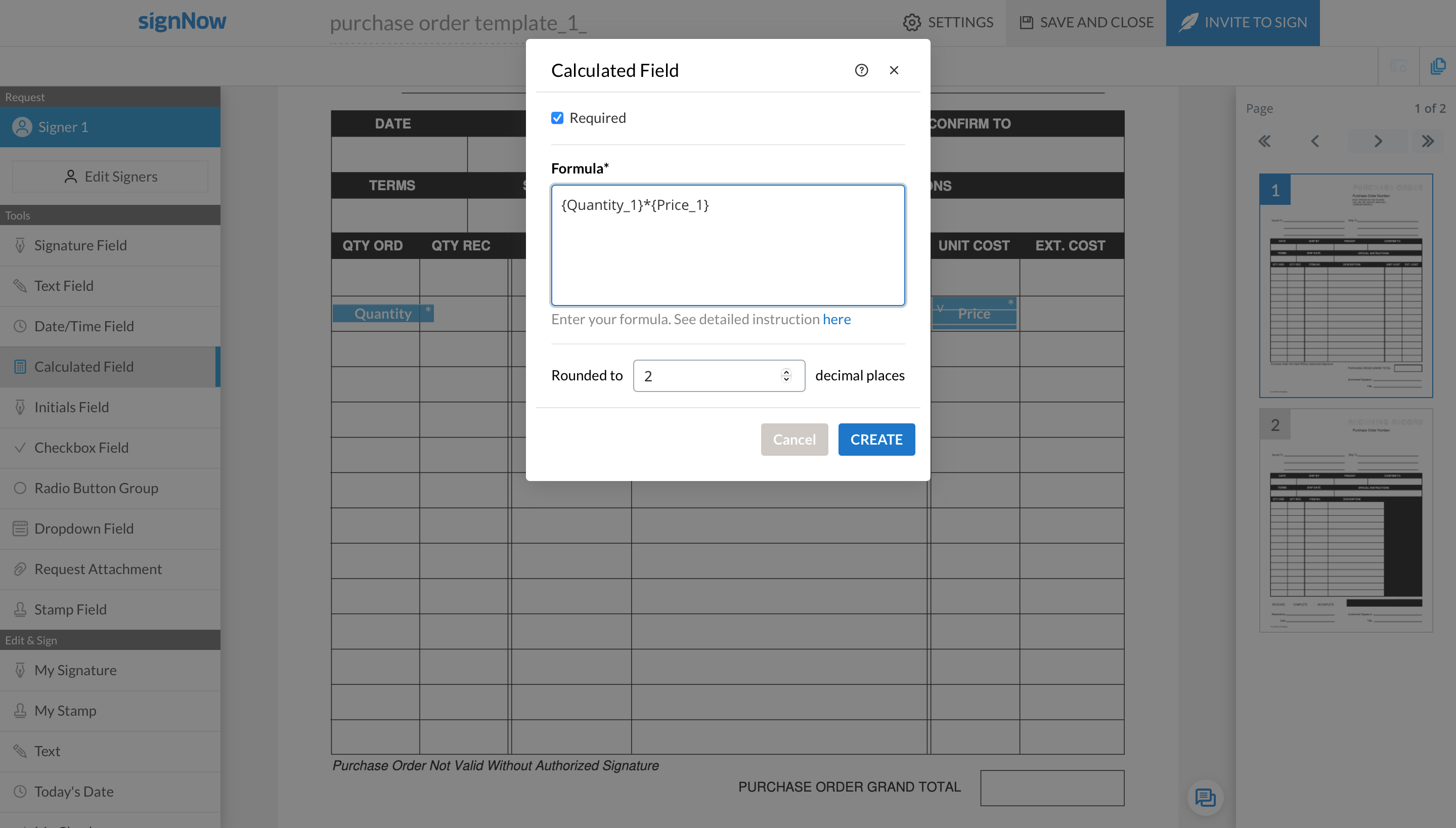
illustration-guides-remplissage

Vous pouvez également joindre une demande de paiement à votre champ calculé. Pour cela, ouvrez le menu déroulant Avancé, cochez la case Faire de ce champ de paiement, puis cliquez sur Ok. Votre champ calculé sera maintenant affiché dans le formulaire de demande de paiement.

Une fois que vous avez terminé de personnaliser votre formulaire, cliquez sur Enregistrer et Fermer.
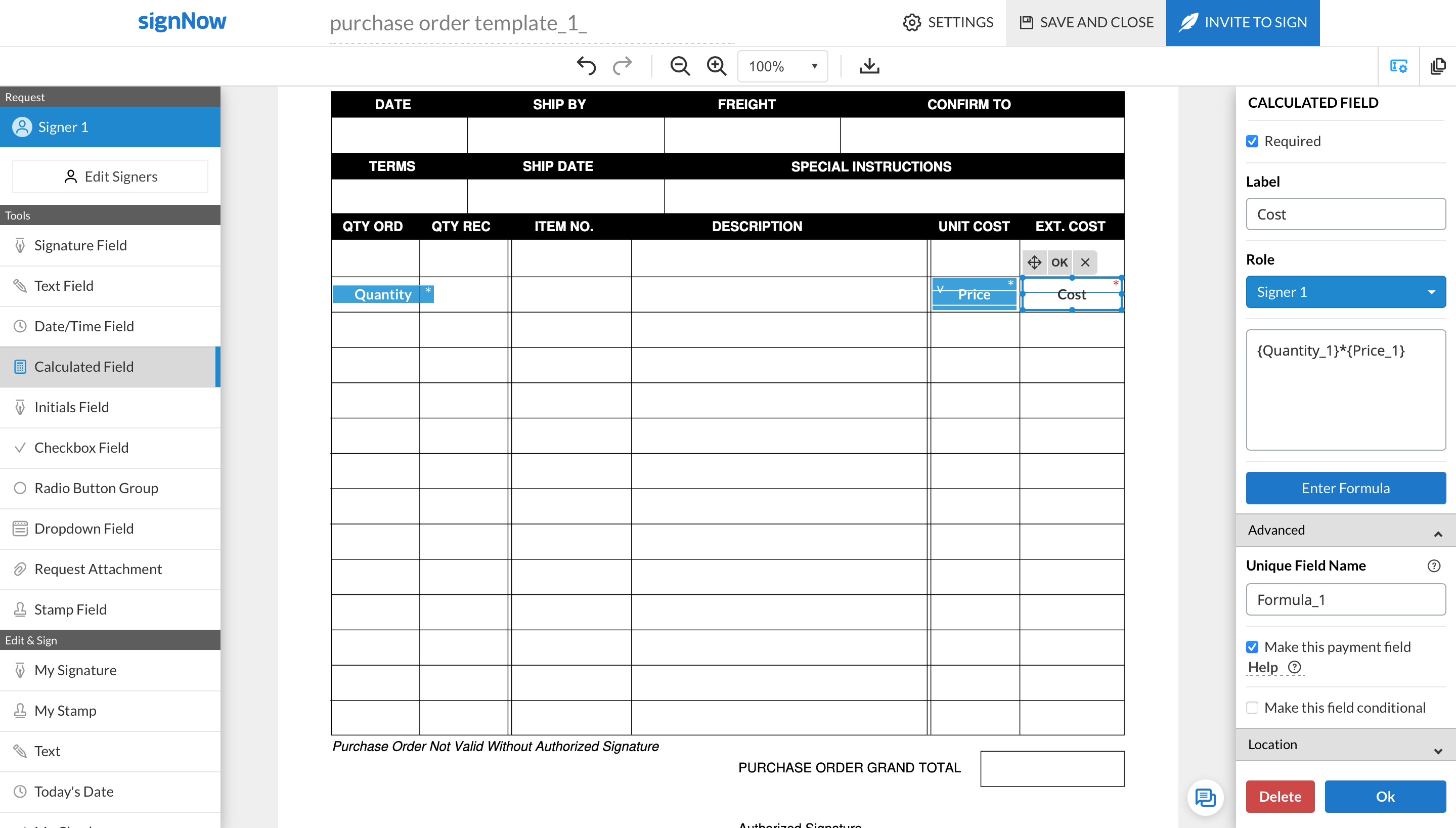
illustration-guides-remplissage

Votre champ calculé est maintenant configuré et affichera des valeurs calculées en fonction de votre formule et des valeurs ajoutées aux champs de saisie.
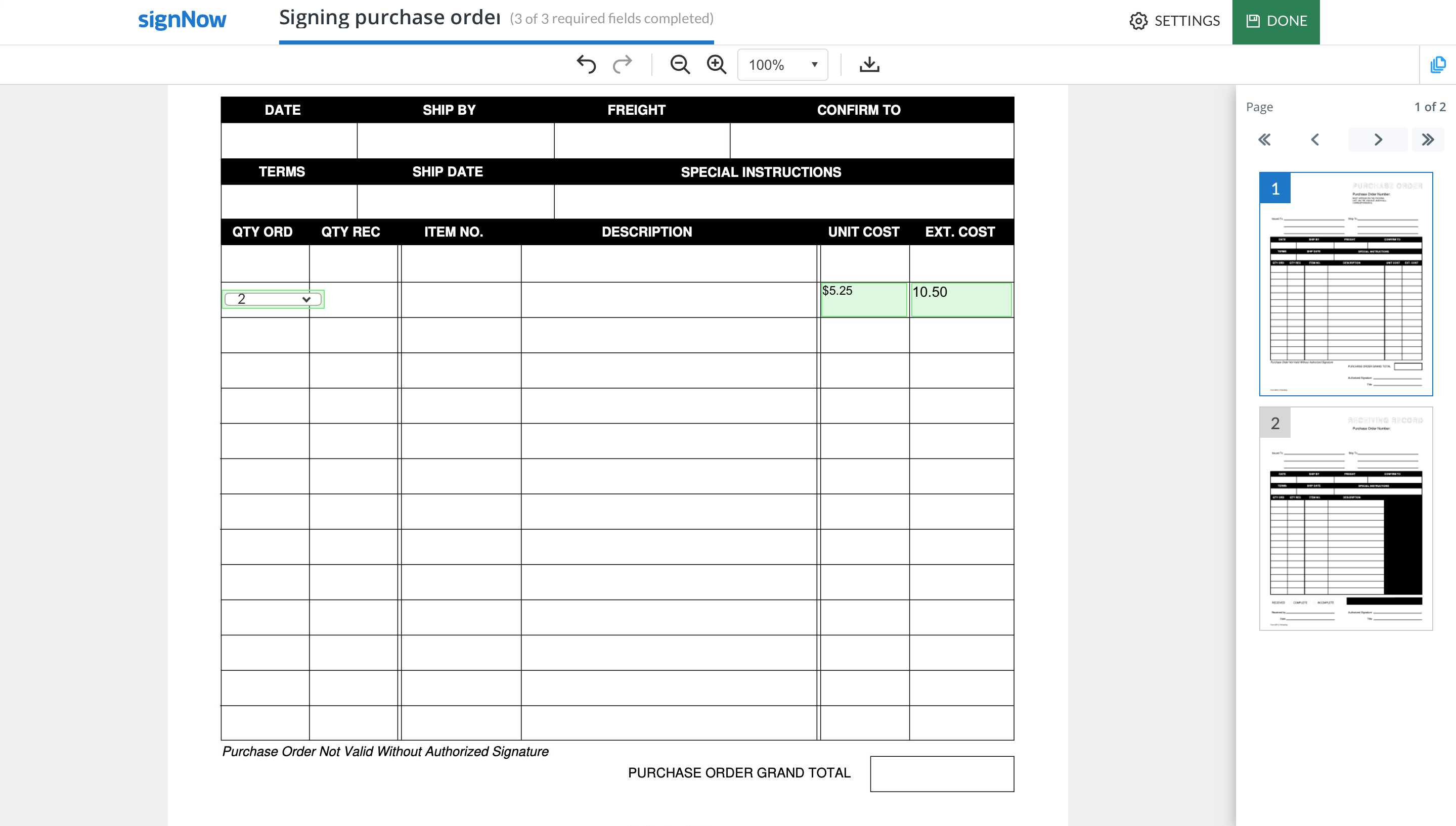
illustration-guides-remplissage

Veuillez noter que la fonctionnalité Champs calculés est disponible uniquement pour les abonnés Enterprise.


walmart logo
exonMobil logo
apple logo
comcast logo
facebook logo
FedEx logo
être prêt à en obtenir plus

Obtenez dès maintenant des signatures juridiquement contraignantes !








