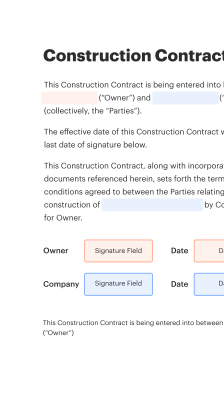
Envoyer Un Email à Soi-même Avec airSlate SignNow
What it Means to Make a Self Email
Legal validity when you make self email
Self-sending documents for signature remains legally enforceable in the United States when conducted under ESIGN and UETA; the sender’s intent, consent, and a reliable audit trail are essential elements for validity.
Common challenges when creating self emails
- Incorrect recipient setup can create duplicate signing steps and confusion in the audit trail.
- Failing to apply required authentication increases risk for later signature disputes or noncompliance.
- Missing or inconsistent document fields can lead to incomplete records and additional administrative time.
- Improper storage or retention practices may violate institutional policies like HIPAA or FERPA.
Roles involved in self-email signing
Account Administrator
Account Administrators manage account-wide settings for self-email workflows including authentication levels, retention rules, and audit log access. They configure templates, set role-based permissions, and ensure system settings align with organizational compliance requirements.
Signing User
Signing Users send documents to their own address to complete signatures, confirm form layouts, and create a verified copy. They follow prescribed authentication steps and retain signed documents according to organizational retention policies.
Typical users who make self emails
Individuals and small teams commonly use self-email workflows to sign forms quickly and keep a verified copy for internal records.
- Solo professionals sending contracts to themselves for immediate signature and archival.
- HR teams testing onboarding templates before distributing to employees across locations.
- Legal and compliance staff verifying audit trails and signature evidence before external distribution.
Larger organizations also use self-sent signatures for testing templates and capturing the originator’s signature while maintaining compliance and traceability.
Choisissez une meilleure solution
Tools that support self-email signing
Template management
Reusable templates let you standardize documents for self-signing, reducing setup time and ensuring consistent fields and placement across repeated self-email workflows.
Authentication options
Flexible signer verification methods such as email, SMS, or knowledge-based checks provide appropriate assurance levels for self-sent signatures and help meet organizational policy or regulatory needs.
Audit trail
Detailed, tamper-evident logs record every action and timestamp during a self-email transaction, preserving evidence of intent and steps for legal or compliance review.
Secure storage
Encrypted long-term storage and configurable retention settings keep signed self-email documents accessible while aligning with records management and privacy requirements.
How make self email workflows operate
-
Initiate: Sender uploads and addresses the envelope to self.
-
Authenticate: System applies chosen signer authentication.
-
Sign: User signs within secure session or email link.
-
Record: Platform stores signed document and audit trail.
Step-by-step: Make a self email and sign
-
01Upload document: Add the PDF or form to the eSignature workspace.
-
02Assign signer: Enter your own email as the recipient and set role.
-
03Add fields: Place signature, date, and required fields.
-
04Send and sign: Open the received email, complete authentication, and apply signature.
Pourquoi choisir airSlate SignNow
-
Essai gratuit de 7 jours. Choisissez le forfait dont vous avez besoin et essayez-le sans risque.
-
Tarification honnête pour des forfaits complets. airSlate SignNow propose des abonnements sans frais supplémentaires ni frais cachés lors du renouvellement.
-
Sécurité de niveau entreprise. airSlate SignNow vous aide à respecter les normes de sécurité mondiales.
Configuring a self-email workflow
| Feature | Value |
|---|---|
| Default signer authentication level | Email only |
| Automatic reminder frequency | 48 hours |
| Retention policy for signed copies | 7 years |
| Document watermarking option | Enabled |
| Audit trail export format |
Device and platform considerations for make self email
Self-email signing works across modern desktop browsers, mobile browsers, and native mobile apps, but specific features and authentication methods may vary by platform.
- Desktop browsers: Latest Chrome, Edge, Safari
- Mobile devices: iOS and Android apps
- Offline signing: Limited support offline
Test templates and authentication flows on each target device and platform before broad use to ensure consistent signing experience and retention behavior across user environments.
Industry examples of making self emails
Real Estate Closing
An agent sends closing documents to their own email to sign as the listing agent and review formatting
- Uses embedded signature fields and a time-stamped audit trail
- Ensures the file is stored with evidence of signing
Resulting in a complete, auditable closing packet ready for client delivery.
HR Onboarding
A recruiter sends an offer letter to themselves to confirm template accuracy before distribution
- Checks dynamic fields and signature placements
- Confirms authentication and retention settings match policy
Leading to consistent, compliant onboarding packets delivered to new hires.
Best practices for secure and accurate self emails
FAQs About making a self email
- Why didn’t I receive the self-email for signing
Check the recipient address for typos, verify spam or promotions folders, and confirm that outbound email sending limits have not been reached. Also verify that the platform’s delivery logs show the message as sent and inspect bounce or delivery failure details.
- Is a self-signed document legally binding
Yes, a document you send to yourself can be legally binding in the United States if the transaction demonstrates signer intent, consent, and a reliable audit trail consistent with ESIGN and UETA requirements.
- How do I add stronger verification for self-sent signatures
Enable multi-factor authentication, require SMS codes or knowledge-based verification, and configure account-level policies to enforce higher authentication for documents containing sensitive data.
- What should I do if the signature field won’t apply
Confirm the document’s field types are correct, ensure the file is not locked or corrupt, and refresh or reopen the signing session. If the issue persists, re-upload the document or convert to a supported format such as PDF.
- How long should I retain self-sent signed documents
Follow your organization’s records retention policy and any applicable legal or regulatory requirements. Many businesses retain signed agreements for several years; adjust retention settings to meet HIPAA, FERPA, or industry-specific obligations.
- Can I export the audit trail for a self-email transaction
Yes. Most platforms provide an exportable, tamper-evident audit record that includes timestamps, IP addresses, and action logs; store the exported record alongside the signed document for compliance and dispute resolution.
Quick comparison of self-email capabilities
| Feature Security and Compliance Criteria | signNow (Recommended) | DocuSign | Adobe Sign |
|---|---|---|---|
| ESIGN and UETA Legal Compliance Status | |||
| Bulk Send or Mass Self-Send Capability | |||
| API integration type | REST API | REST API | REST API |
| Mobile app availability |
Obtenez des signatures juridiquement contraignantes dès maintenant !
Regulatory and operational risks
Simplifier les flux de travail complexes
Créez, exécutez et gérez des flux de travail de toute complexité, électroniquement de pratiquement n'importe où. Les capacités évolutives de signature électronique vous permettent de partager des documents avec les bonnes personnes dans le bon ordre et de définir des rôles pour chaque destinataire. Exécutez les flux de travail de documents plus rapidement et plus facilement que jamais auparavant.
Automatiser la gestion des documents
Optimisez les processus de signature complexes avec les fonctionnalités puissantes d'airSlate SignNow pour améliorer votre entreprise. Contrôlez vos flux de signature électronique automatisés pour garantir leur fonctionnement optimal avec des notifications et rappels instantanés.
Optimiser la collaboration en équipe
Rassemblez les équipes dans un environnement sécurisé et partagé. Gérez les documents, utilisez des modèles de formulaires et des notifications pour créer une collaboration inter-organisation plus efficace. Libérez vos employés du temps consacré aux activités répétitives afin qu'ils puissent se concentrer sur des tâches précieuses et critiques pour l'entreprise.
Intégrer dans vos systèmes existants
Exécutez vos projets avec une intégration de premier ordre dans l'industrie. Collectez Salesforce, Microsoft Teams et SharePoint dans un seul flux d'entreprise. Connectez votre logiciel à un système unique pour des possibilités infinies et une productivité accrue.
Rester conforme avec une sécurité des données de premier ordre
Soyez en sécurité en sachant que vos données restent protégées par la sécurité de cryptage la plus récente. airSlate SignNow est certifié GDPR et eIDAS et vous donne une visibilité sur votre processus de signature électronique avec des pistes d'audit admissibles en cour. Configurez les permissions d'accès utilisateur et les droits pour gérer qui a accès à quoi.