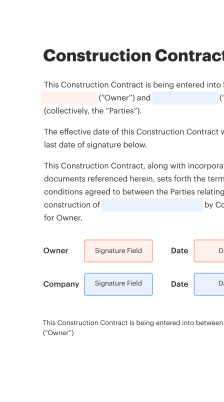
Modifier La Sortie De L'en-tête. Utilisez Des Outils De Signature électronique Qui Fonctionnent Où Vous êtes.

Solution eSignature primée

What modify header release does in document workflows

Modify header release is a document workflow control that lets authorized users edit header metadata and finalize a document before distribution or signature. The capability typically covers fields such as document title, version number, release notes, effective date, and confidentiality markings. When paired with an eSignature platform, modify header release enforces a finalization step that locks content for signers, records who changed header data, and captures the change in the audit trail for compliance and retention purposes across regulated U.S. industries.

Why modify header release matters to organizations

A controlled modify header release reduces versioning errors, clarifies document status for signers, and creates an auditable record of finalization. It supports consistent document governance and helps meet internal and regulatory requirements for signed records.

Why modify header release matters to organizations

Common challenges when managing header edits and releases

  • Unclear ownership of header changes leads to conflicting final versions and signer confusion.
  • Lack of release locks can allow post-signature edits, undermining evidentiary integrity and compliance.
  • Manual header edits are prone to human error and inconsistent naming or version schemas.
  • Insufficient logging of header changes impedes audits and increases risk during regulatory reviews.

Representative user profiles for modify header release

Contract Manager

A contract manager uses modify header release to enforce a single final version before sending for signature, ensuring that version numbers, effective dates, and confidentiality flags are accurate and recorded for audit trails and internal tracking.

HR Administrator

An HR administrator applies header edits to mark policy updates, add effective dates, and lock the released copy to prevent changes after distributing employment documents for signature and record retention.

Typical users and teams that rely on modify header release

Legal, compliance, HR, procurement, and operations teams commonly manage header edits and document releases before signature.

  • Legal counsel and contract managers controlling final terms and version numbers.
  • HR teams finalizing offer letters and employee policy documents for distribution.
  • Procurement and operations locking vendor agreements before mass signature workflows.

These groups use controlled release to maintain consistent records, reduce rework, and ensure auditable sign-off across departments.

Advanced features that enhance modify header release

Advanced controls and integrations extend the usefulness of modify header release for enterprise workflows and compliance requirements.

API hooks

Trigger release events from external systems and capture metadata automatically during automated workflows.

Pre-release approvals

Support multi-step approval chains that must complete before a release lock is applied to a document.

Template enforcement

Apply header templates to ensure standard fields are present before release and signature.

Conditional locking

Set rules that lock a document only after specific criteria are met.

Retention policies

Automate retention and disposal schedules tied to release dates and metadata values.

Reporting

Generate reports showing release activity, outstanding approvals, and audit log summaries for compliance reviews.

soyez prêt à en obtenir plus

Choisissez une meilleure solution

Core capabilities that support modify header release

Key platform features make modify header release effective, from metadata control to release locking and auditability across user roles.

Metadata editing

Structured header fields let administrators control titles, version numbers, effective dates, and confidentiality markings so every released document has consistent, searchable metadata.

Release locking

A finalization or release lock prevents further content or header edits after sign-off, ensuring the document presented for signature is preserved as the released version.

Role controls

Role-based permissions restrict who can modify headers or apply a release, enabling separation of duties and reducing the risk of unauthorized finalization.

Audit trail

Every header change and release action is recorded with user identity, timestamp, and change details to support compliance and post-execution verification.

How modify header release fits into a signature flow

The modify header release step typically precedes signature routing and integrates with version control and audit logging.

  • Drafting: Author prepares document content.
  • Header edit: Authorized user updates header metadata.
  • Release lock: System sets finalization status.
  • Signing: Document is sent for signatures.
Collecter les signatures
24x
plus rapide
Réduire les coûts de
$30
par document
Économisez jusqu'à
40h
par employé / mois

Quick steps to perform a modify header release

Follow these concise steps to edit header metadata and finalize a document for signing.

  • 01
    Open document: Load the draft in the editor.
  • 02
    Edit header: Update title, version, and date fields.
  • 03
    Set release: Apply release lock or finalization flag.
  • 04
    Record audit: Confirm the change is logged.

Detailed operational steps to use modify header release

Follow these operational tasks to configure and execute a header edit and release sequence in an eSignature platform.

01

Prepare draft:

Upload document and check content.
02

Apply header template:

Insert standardized metadata fields.
03

Authorize editor:

Assign permission to modify header.
04

Make edits:

Update title, version, dates.
05

Lock release:

Set finalization flag or seal.
06

Route for signature:

Send the released document to signers.
soyez prêt à en obtenir plus

Pourquoi choisir airSlate SignNow

  • Essai gratuit de 7 jours. Choisissez le forfait dont vous avez besoin et essayez-le sans risque.
  • Tarification honnête pour des forfaits complets. airSlate SignNow propose des abonnements sans frais supplémentaires ni frais cachés lors du renouvellement.
  • Sécurité de niveau entreprise. airSlate SignNow vous aide à respecter les normes de sécurité mondiales.
illustrations signature

Configuring modify header release in workflow settings

Set up these configuration items to ensure header edits and release actions follow your organization's policies and automation rules.

Feature Configuration
Release Approval Two-step approval
Reminder Frequency 48 hours
Versioning Mode Automatic increment
Signature Order Sequential or parallel
Access Control Role-based

Supported platforms and technical requirements

Modify header release is available on desktop and mobile clients, with key capabilities varying by platform and configuration.

  • Desktop clients: Full editor support
  • Mobile apps: Header edits supported, limited UI
  • Browser support: Modern browsers, TLS required

Ensure users run supported app versions and enable secure connections; administrators should verify permission settings and API access tokens before enabling automated release workflows for production use.

Security controls relevant to modify header release

Encryption at rest: AES-256 encryption
Encryption in transit: TLS 1.2+ connections
Access logging: Detailed event logs
Role-based access: Granular permissions
Change auditing: Immutable audit entries
Multi-factor auth: Optional MFA enforcement

Industry examples using modify header release

Practical scenarios show how a controlled header release supports compliance and efficient signature workflows across industries.

Healthcare policy update

A hospital finalizes a consent form with an updated header that notes policy version and effective date before release

  • Use of modify header release ensures consistent versioning at distribution
  • This reduces signer confusion and supports HIPAA recordkeeping

Resulting in an auditable finalized document that meets internal controls and regulatory documentation needs.

Vendor contract execution

A procurement team updates contract headers to reflect negotiated pricing and milestone dates before initiating signature collection

  • The final header marks contract version and approval signatory
  • This prevents post-execution changes and clarifies obligations for all parties

Leading to enforceable agreements with clear provenance and streamlined archiving for audits.

Best practices when using modify header release

Adopting consistent processes around header edits and releases reduces risk and improves document lifecycle management.

Define an authoritative metadata schema
Standardize header fields and naming conventions across teams so documents are consistently classified, searchable, and understandable to internal auditors and external parties.
Limit release permissions to key roles
Grant modify header release privileges only to designated approvers to maintain separation of duties and reduce accidental or unauthorized finalization.
Require final approval before release
Use an approval workflow that logs reviewer sign-off prior to applying a release lock, ensuring that legal, compliance, or management review is captured.
Retain released document snapshots
Store the released PDF or sealed copy alongside metadata and audit entries for retention and retrieval during audits or dispute resolution.

FAQs About modify header release

Answers to common questions about implementing, using, and auditing modify header release in eSignature workflows.

Feature comparison: modify header release support

A concise feature matrix showing modify header release capabilities across leading eSignature providers in the U.S. market.

Feature signNow (Recommended) DocuSign Adobe Acrobat Sign
ESIGN & UETA Compliance
Header release locking
API release control
Built-in retention rules
soyez prêt à en obtenir plus

Obtenez des signatures juridiquement contraignantes dès maintenant !

Typical retention and release timing considerations

Document retention and release windows should align with legal and operational requirements to ensure proper recordkeeping.

Retention start date:

Use release date as retention baseline.

Minimum retention period:

Follow industry-specific legal durations.

Release approval window:

Allow defined time for approver response.

Version archival schedule:

Archive superseded versions promptly.

Legal hold handling:

Suspend deletions under holds.

Risks and penalties of poor header release controls

Regulatory fines: Monetary penalties
Contract disputes: Legal exposure
Data breaches: Security incidents
Record invalidation: Signed record risk
Operational delays: Workflow rework
Reputation damage: Stakeholder loss

Pricing and plan comparison for modify header release capabilities

Pricing tiers and plan attributes vary; this table summarizes typical starting points and availability of modify header release features across vendors.

Plan / Vendor signNow (Recommended) DocuSign Adobe Acrobat Sign Dropbox Sign PandaDoc
Starting monthly price From $8 per user monthly for core plans From $10 per user monthly From $14.99 per user monthly From $15 per user monthly From $19 per user monthly
Free plan availability Limited free tier available No permanent free tier, trial only Trial available, no free tier Free tier for limited features Free trial only
API included Included on business plans API on advanced plans API available on business plans API offered on advanced plans API included on business plans
Enterprise options Custom enterprise with SSO and retention Enterprise with advanced governance Enterprise with Adobe Admin controls Enterprise with SSO and insights Enterprise with custom pricing
Document storage notes Generous cloud storage with paid tiers Storage varies by plan and region Storage included with Adobe Document Cloud Dropbox storage integrated with account Storage limits per plan, upgradeable

Comment modifier la sortie de l'en-tête gratuitement

La fonction Modifier la sortie de l'en-tête devient facilement disponible lorsque vous utilisez la plateforme complète de signature électronique airSlate SignNow. Utilisez cette solution pour votre entreprise, quel que soit le secteur dans lequel vous travaillez. La gamme de fonctionnalités proposée par airSlate SignNow convient parfaitement aux personnes qui cherchent à rendre leurs stratégies d'entreprise plus productives et à rationaliser leur flux de travail.

Soyez assuré que vos contrats seront toujours bien organisés, remplis par les parties appropriées et signés numériquement avec la signature numérique conforme à la loi ESIGN et autres exigences gouvernementales. Intégrez des champs remplissables pour rendre tout document interactif, collectez des signatures de plusieurs personnes et appliquez une authentification du destinataire pour vous assurer que le document a été reçu par la personne appropriée. Tout cela est possible lorsque vous travaillez depuis un ordinateur de bureau ou un appareil mobile pour gagner du temps et conclure des affaires importantes en déplacement.


walmart logo
exonMobil logo
apple logo
comcast logo
facebook logo
FedEx logo
être prêt à en obtenir plus

Obtenez dès maintenant des signatures juridiquement contraignantes !