Mappage intelligent
Algorithmes de correspondance automatique des colonnes réduisant le temps de configuration et limitant les erreurs humaines lors de l'importation de grands jeux de données.




L'utilisation d'un flux structuré d'importation et de génération documentaire préserve l'intégrité des enregistrements nécessaires à la validité légale ; en contexte américain, respect des cadres ESIGN et UETA garantit admissibilité et reconnaissance des signatures électroniques.

Gère les modèles d'embauche, valide les données importées et supervise les workflows d'approbation. Ce rôle prépare les fichiers source, effectue des tests d'import et s'assure que les documents générés respectent les exigences internes et réglementaires.
Configure les intégrations, les permissions et les paramètres de sécurité liés aux imports. Il s'occupe des quotas API, des sauvegardes et de la conformité technique, tout en fournissant un support pour les incidents lors des processus d'import.
Algorithmes de correspondance automatique des colonnes réduisant le temps de configuration et limitant les erreurs humaines lors de l'importation de grands jeux de données.
Import natif de fichiers CSV et XLSX avec validation de format et gestion des séparateurs pour garantir une ingestion correcte des données.
Affichage par lot des documents générés pour contrôle rapide avant envoi, ce qui facilite la correction des champs non mappés ou des valeurs incohérentes.
Templates paramétrables avec champs conditionnels pour adapter automatiquement le contenu en fonction des données importées et des cas métiers.
Enregistrements détaillés des importations avec erreurs et statuts, afin de pouvoir tracer et corriger rapidement toute anomalie.
Connexions préconfigurées aux systèmes CRM et aux espaces de stockage pour automatiser les flux d'import et réduire les interventions manuelles.
Connexion permettant d'importer des feuilles Google Sheets, de mapper automatiquement les colonnes aux champs du document et de générer des fichiers prêts à signer, réduisant les allers-retours manuels entre outils.
Intégration qui synchronise les enregistrements CRM, récupère informations clients et remplit automatiquement contrats ou propositions, ce qui rationalise le processus commercial et maintient cohérence des données.
Stockage connecté pour accéder aux modèles et sauvegarder documents générés; permet une organisation centralisée des documents importés et facilite la collaboration interne sur les templates.
Bibliothèque de templates modifiables avec champs conditionnels et règles logiques, pour générer des documents personnalisés selon les données importées sans ajustements manuels répétés.

| Setting Name | Configuration |
|---|---|
| Rappel automatique | 48 hours |
| Validation des champs | Avant génération |
| Mode de traitement | Batch journalier |
| Notifications | E‑mail activé |
Vérifiez les exigences minimales du navigateur et des applications mobiles afin d'assurer une expérience fluide lors de l'importation et de la génération de nouveaux documents.
Pour les environnements professionnels, privilégiez des connexions sécurisées et des versions d'app à jour ; cela réduit les erreurs d'importation et garantit l'intégrité des documents sur mobile, tablette et poste de travail.
Les conseillers importent des listes de clients pour générer contrats standardisés et annexes personnalisées.
Aboutissant à des délais de traitement nettement réduits et meilleure conformité.
Recruteurs importent données candidats pour produire offres d'embauche et formulaires d'intégration.
Conduisant à une intégration plus rapide des nouveaux employés et traçabilité documentaire renforcée.
| Criteria | signNow (Recommended) | DocuSign | Adobe Sign |
|---|---|---|---|
| Bulk Send | |||
| API access | REST API | REST API | REST API |
| HIPAA support | Available | Available | Available |
| Templates natifs |
7 ans
Activées
Snapshots hebdomadaires
Procédure certifiée
Archivage conforme
| Criteria | signNow (Recommended) | DocuSign | Adobe Sign | Dropbox Sign | PandaDoc |
|---|---|---|---|---|---|
| Prix de départ | $8+/user/mo | $10+/user/mo | $14+/user/mo | $12+/user/mo | $19+/user/mo |
| Essai gratuit | 30 jours | 30 jours | 30 jours | 14 jours | 14 jours |
| Plans Entreprise | Yes | Yes | Yes | Yes | Yes |
| Accès API | Available | Available | Available | Available | Available |
| Support HIPAA | Optional | Optional | Optional | Limited | Optional |
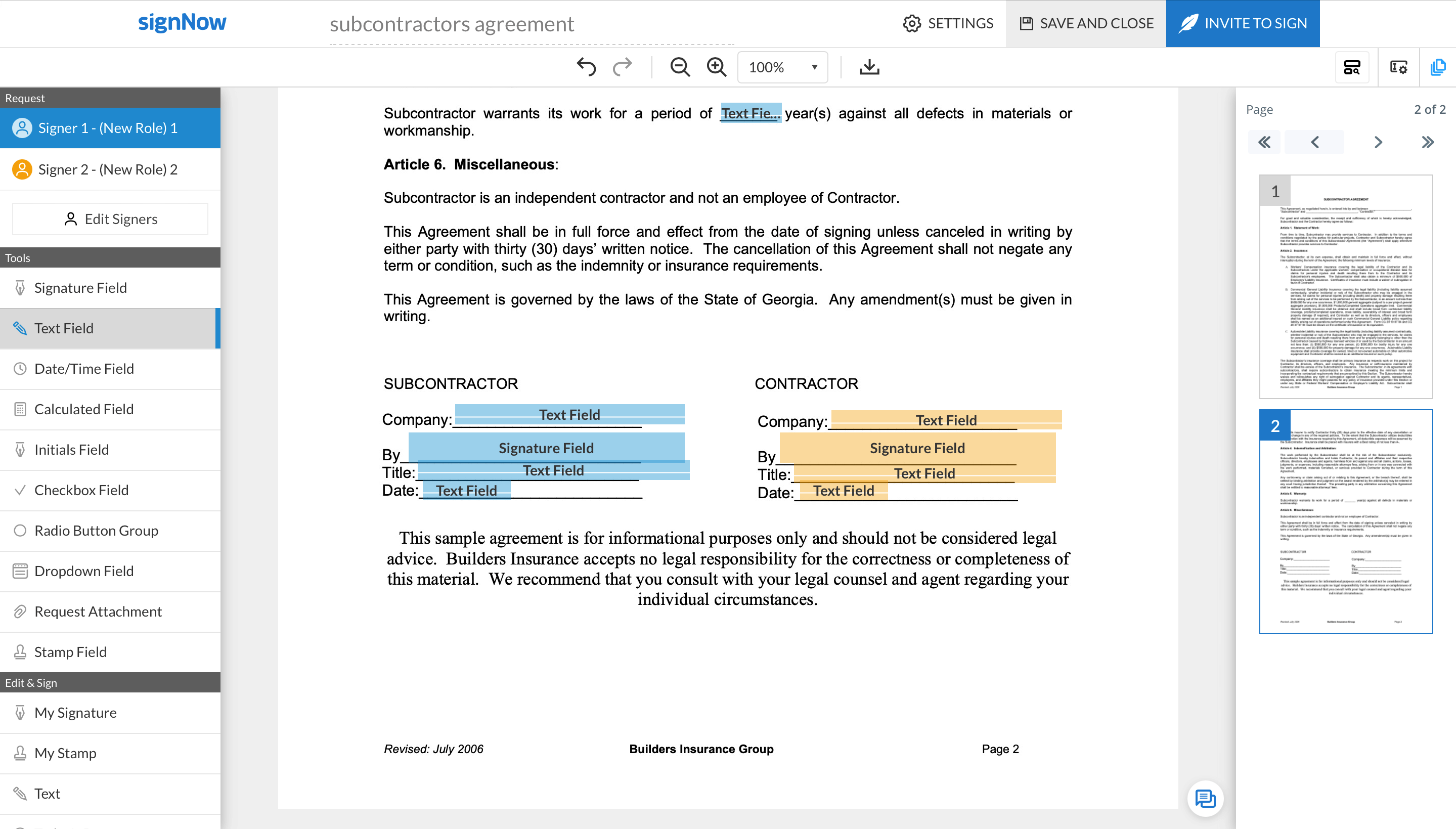
Si vous avez déjà créé un document à remplir avec plusieurs champs préconfigurés, vous pouvez facilement transférer ces champs vers un nouveau ou un document similaire en utilisant la fonction Importer des Champs.
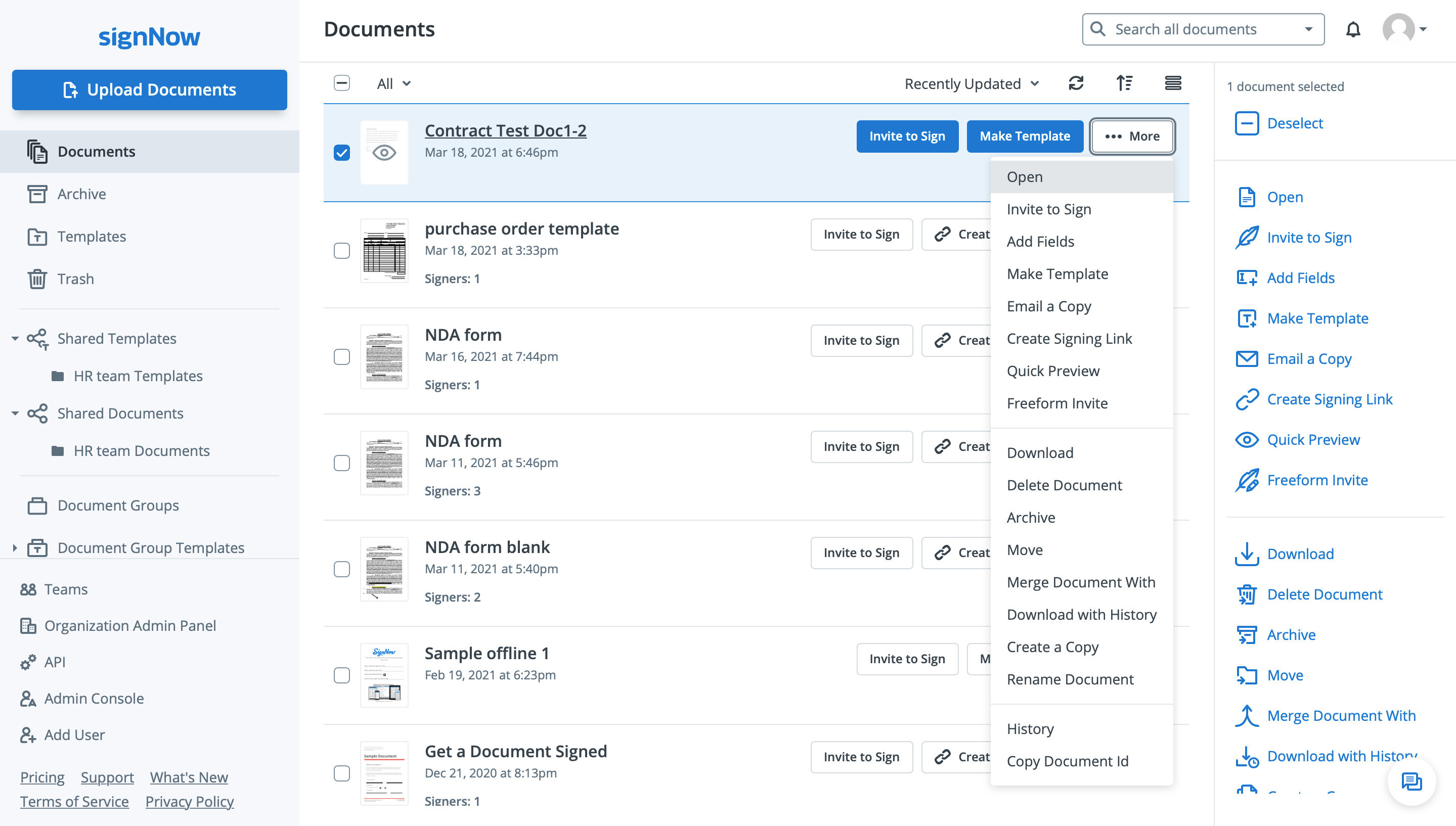
Dans l'application web airSlate SignNow, cliquez sur le bouton Importer des documents et parcourez votre appareil pour le document que vous souhaitez faire signer. Ensuite, ouvrez-le dans l'éditeur en cliquant sur Plus > Ouvrir.
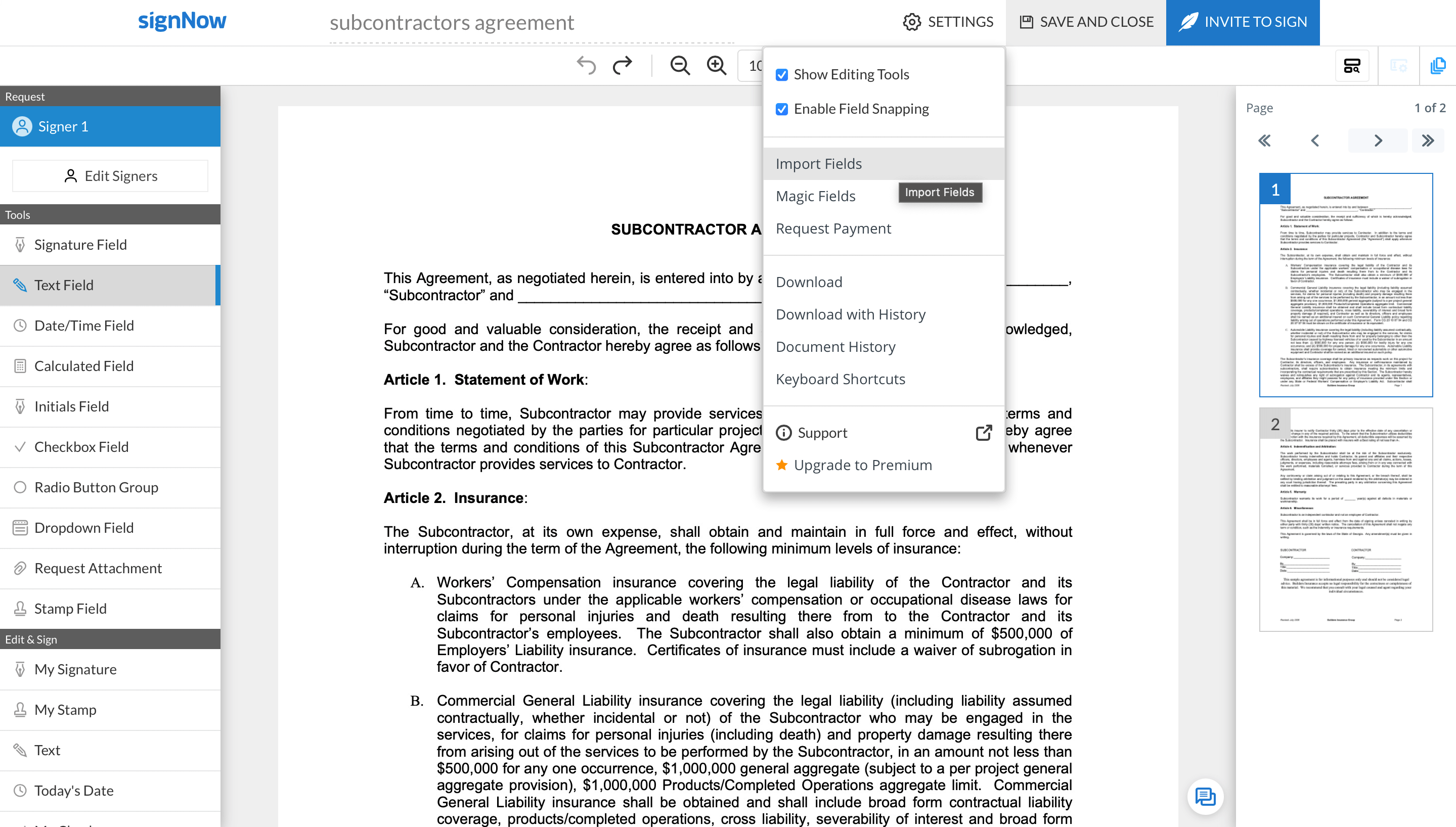
Cliquez sur le bouton Paramètres en haut de l'écran. Ensuite, sélectionnez Importer des Champs dans le menu déroulant.
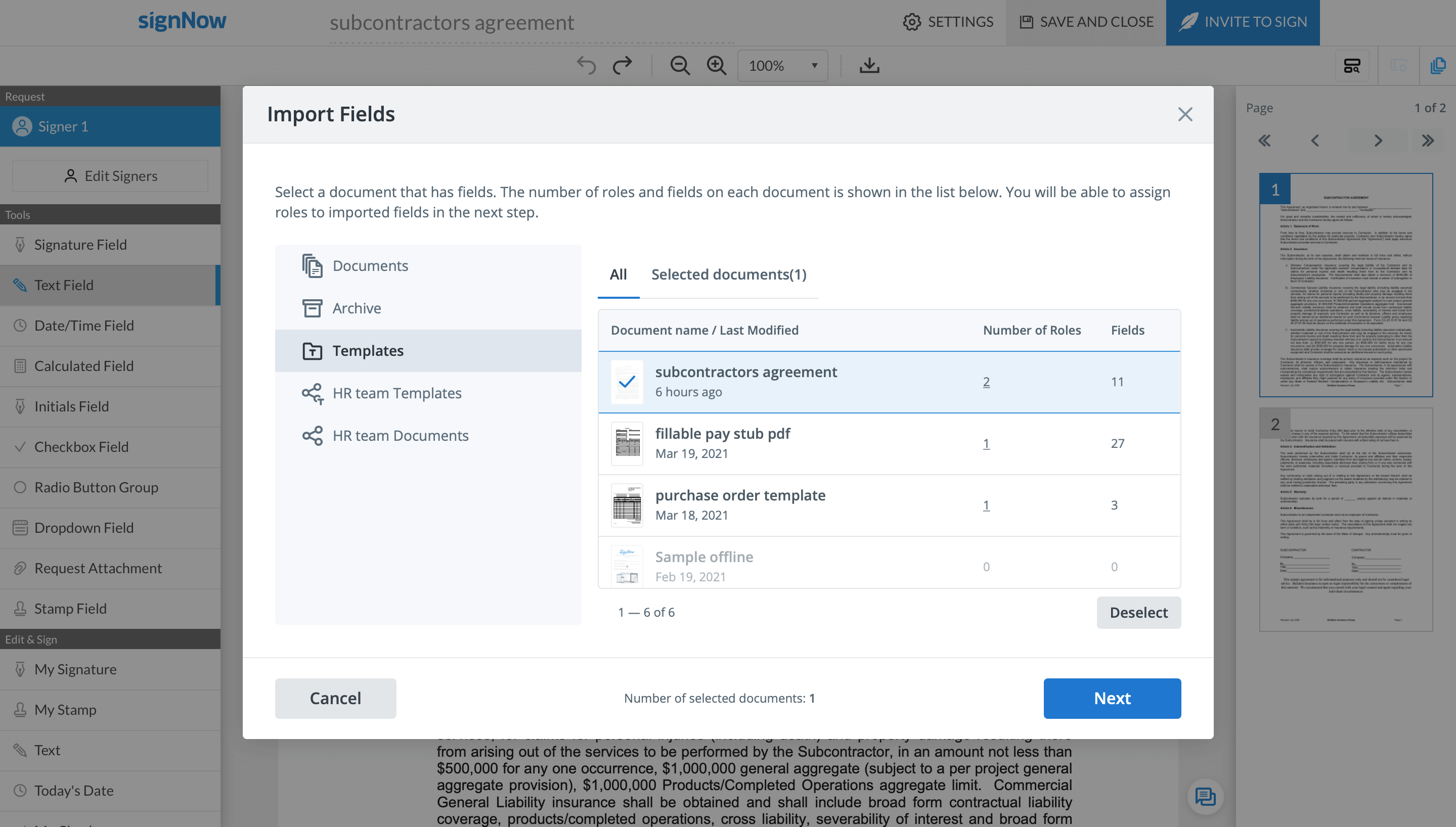
Sélectionnez un document identique ou similaire avec des champs à remplir dans l'un de vos dossiers airSlate SignNow. Vous pouvez voir le nombre de champs à remplir et les rôles de signature pour chacun de vos documents. Cliquez sur Suivant pour continuer.
Attribuez ou modifiez les rôles de signature selon vos besoins, puis cliquez sur le bouton Importer le(s) champ(s).
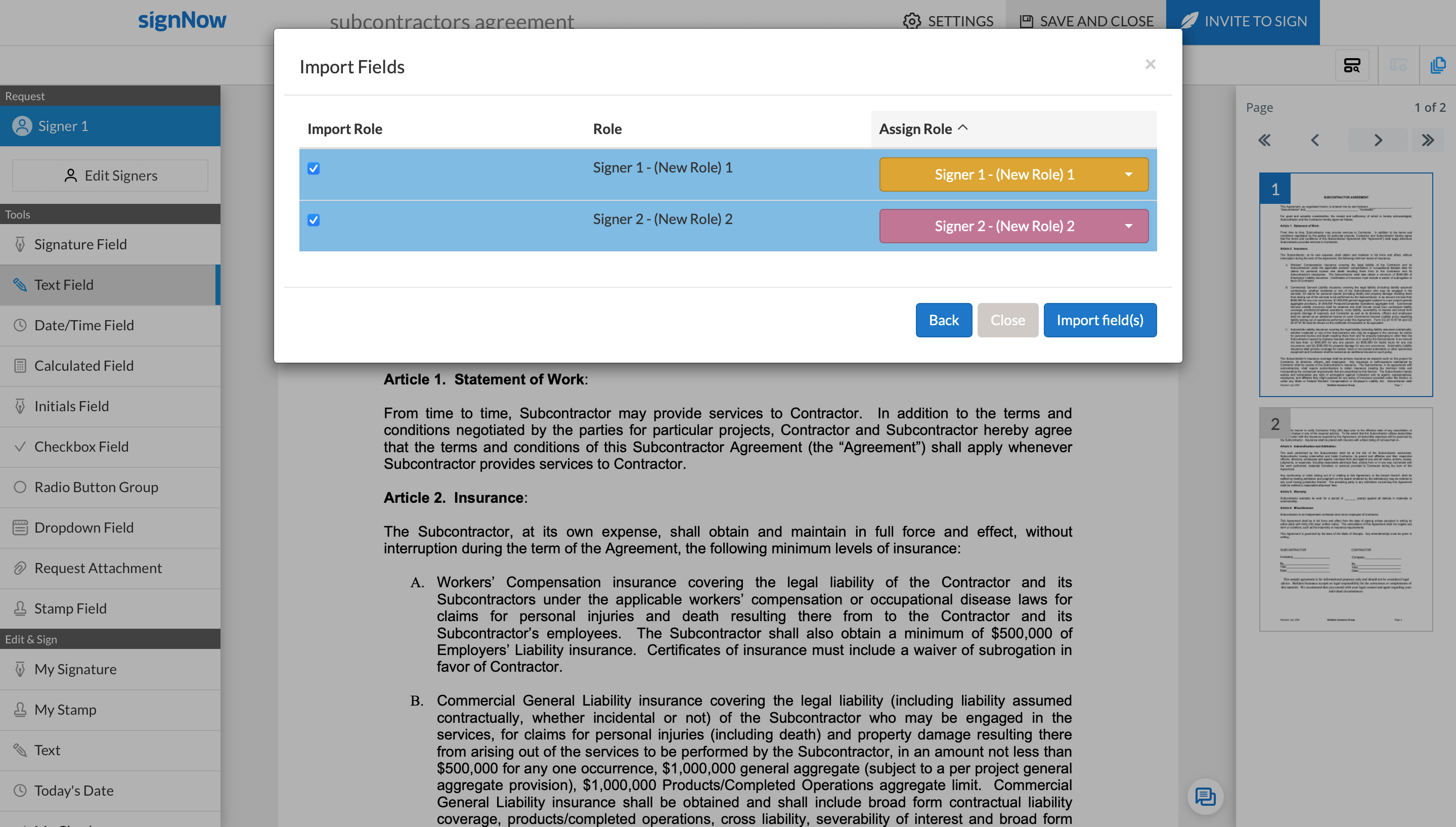
Les champs à remplir seront transférés instantanément d'un document à un autre avec leurs paramètres. Vous pouvez ensuite ajuster la taille et la position des champs importés ou modifier leurs paramètres.