Establishing secure connection…Loading editor…Preparing document…

Acquittal

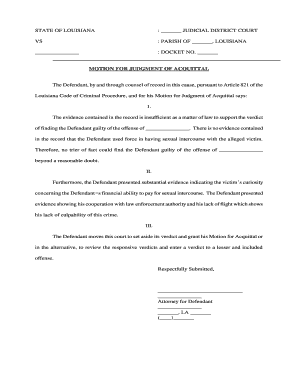
This template is fully customizable. Edit the text, fill out the fields, and send it for signature. Give it a try!
Acquittal

What an Acquittal Is and When it Applies

An acquittal is a formal statement or report that documents how allocated funds or obligations were satisfied and reconciled. Common in grant management, procurement, and internal accounting, an acquittal shows expenditures, attaches supporting receipts, and certifies that terms and conditions were met. It may be required by a funding agency, lender, or internal policy before final payment is released or a project is closed. Accurate acquittals create an auditable trail for financial controls and regulatory review while reducing the risk of repayment demands or audit findings.

Why a Clear Acquittal Matters

A well-prepared acquittal ensures compliance with funder terms, supports financial transparency, and simplifies audits. It reduces rework by documenting expenses and providing evidence required for closeout.

Why a Clear Acquittal Matters

Who Typically Prepares and Reviews Acquittals

Effective acquittal workflows coordinate preparer, approver, and archive functions to reduce audit risk and speed closeout.

  • Finance teams reconciling project budgets and preparing expense summaries for funders or internal closeout.
  • Program managers compiling supporting invoices, receipts, and narrative explanations for a completed project.
  • Grant administrators verifying compliance with award terms and submitting the acquittal to the sponsor.

Step-by-step: Completing an Acquittal

Follow these sequential steps to prepare a complete, auditable acquittal for internal or external reviewers.

  • 01
    Gather Records: Collect invoices, receipts, and bank statements tied to the project.
  • 02
    Match Expenses: Reconcile each expense against approved budget line items and grant terms.
  • 03
    Prepare Narrative: Write a concise explanation of deviations, milestones, and deliverables achieved.
  • 04
    Attach Signatures: Include authorized signatory approvals and dates for final submission.

Common questions and resolving submission issues

Answers to frequent questions about completing, signing, and submitting an acquittal.


Need help? Contact support

Core elements every professional Acquittal should include

A complete acquittal follows a consistent structure so reviewers can verify compliance quickly and accurately.

Cover Summary

A one-page executive summary of scope, total funds disbursed, remaining balance, and a clear statement that spending complies with award terms or explains exceptions.
Detailed Ledger

An itemized schedule listing each expenditure with date, vendor, invoice number, amount, and budget line to allow line-by-line reconciliation.

Supporting Files

All invoices, receipts, and proof of payment attached and labeled; ideally combined as searchable PDFs to speed auditor review.

Narrative Explanation

Concise description of project activities, deviations from the budget, and justification for any reallocated or disallowed costs.

Approval Block

Designated signature lines for preparer, approving official, and date; include printed name and title to establish authority.

Audit Trail

Record of document versions, submission timestamps, and reviewer notes to show the history of approvals and changes.

Security and compliance items to include with electronic acquittals

Encryption: AES-256 at rest; TLS 1.2/1.3 in transit
Audit Trail: Timestamps, IP, and user actions retained
BAA Availability: HIPAA BAA available where required
Regulatory Standards: SOC 2 Type II and ISO 27001 certified
Authentication: Multi-factor and advanced signer options
Access Controls: Role-based permissions and SSO

Common preparation pitfalls to avoid

  • Missing or unlabeled receipts that prevent transaction-level verification and trigger auditor requests for substitutes.
  • Totals that do not reconcile to bank statements or accounting ledgers, leading reviewers to question data integrity and require rework.
  • Using ambiguous budget categories like 'miscellaneous' without explanation, which can cause disallowed cost findings under closeout rules.
  • Unsigned or mismatched signatory names; signatures must match authorized representatives on record to be accepted by funders.

Risks and consequences of an incomplete or incorrect acquittal

Repayment Demand: Funder may require repayment of misspent funds
Audit Finding: Formal audit adjustments and exceptions
Funding Delay: Hold on future disbursements
Contract Breach: Potential contract default exposure
Reputational Impact: Damage to organizational credibility
Sanctions: Administrative penalties or debarment risk

Typical electronic submission workflow for an Acquittal

A digital workflow streamlines review, signatures, and archival while creating an audit trail for compliance.

  • Upload Documents: Sender uploads PDF files and maps fields.
  • Assign Signers: Designate preparer, approver, and reviewer with roles.
  • Authenticate: Signers verify identity via email, SMS, or stronger methods.
  • Submit & Archive: Completed packet delivered to funder and stored with audit data.

How to configure an efficient eSubmission workflow

Recommended settings and fields to include when building an online acquittal workflow.

Field Configuration
Pre-fill Project Data Use template fields to populate project name and award number
Required Attachments Make receipts and bank statements mandatory uploads
Signer Order Set sequential approvals: preparer, manager, financial approver
Authentication Strength Use email plus optional SMS or ID verification for high-value submissions

Technology and format considerations for electronic Acquittals

Validate format compatibility and retention features before finalizing your workflow to ensure long-term accessibility and audit readiness.

  • File Formats: PDF, DOCX, and searchable PDFs supported
  • Integrations: Connectors for NetSuite, Salesforce, Google Workspace
  • Compliance: BAA, SOC 2, ISO 27001 where needed

Typical timing and processing expectations

Timelines vary by funder and agency; start the acquittal process early to allow for review cycles and corrections.

Submission Window:

Often 30–90 days after project end

Funder Review:

Typical processing 2–8 weeks

Correction Cycle:

Allow 7–21 days for requested fixes

Final Closeout:

Complete within funder-specified closeout period

Record Retention Start:

Retention begins on submission date

Key milestones from preparation to closeout

A sequential milestone view helps teams track progress and ensure timely completion of the acquittal process.

01

Collect Records

Compile invoices, receipts, and ledger entries for the reporting period.

02

Draft Acquittal

Populate template fields and attach supporting documentation for reviewer inspection.

03

Internal Approval

Obtain signatures from financial approver and project manager before submission.

04

Funder Closeout

Funder reviews, may request corrections, then issues final acceptance or demand.

Typical eSignature pricing and capability comparison for Acquittal workflows

Vendor pricing and feature availability influence tool selection for signing and archiving acquittals; signNow is listed first for comparison clarity.

signNow DocuSign Adobe Sign PandaDoc HelloSign
Starting Price $8/user/mo $15/user/mo $14/user/mo $19/user/mo $15/user/mo
Free Trial 7-day free trial No data No data No data No data
Bulk Send Yes Yes Yes Yes No
Audit Trail Yes Yes Yes Yes Yes
HIPAA Compliant Yes Yes Yes No No
be ready to get more
Join over 28 million airSlate SignNow users