Establishing secure connection…Loading editor…Preparing document…

Agreement to Compromise Debt by Returning Secured Property

This template is fully customizable. Edit the text, fill out the fields, and send it for signature. Give it a try!
Agreement to Compromise Debt by Returning Secured Property

What this Agreement Is and when it applies

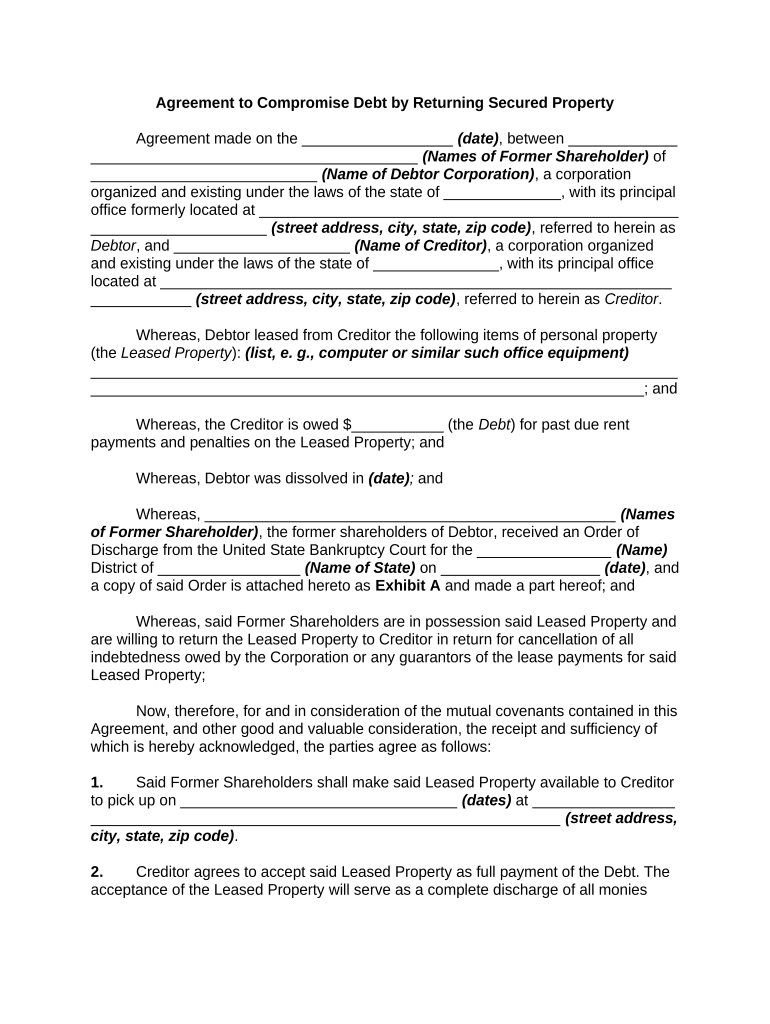
An Agreement to Compromise Debt by Returning Secured Property is a settlement contract in which a debtor agrees to return collateral to a secured creditor in full or partial satisfaction of an outstanding obligation. The document describes the secured property, specifies the amount of remaining debt forgiven or retained, sets delivery and condition expectations for returned collateral, and records any release or satisfaction of lien. It typically includes representations, warranties, default remedies, allocation of costs, and a mutual release clause to prevent future claims once obligations are met.

Why parties use this agreement

This agreement creates a clear, enforceable exchange: the debtor returns collateral and the creditor documents the debt compromise, releasing remaining obligations or agreeing to reduced liability. It reduces litigation risk, speeds resolution, and provides a written record for lien satisfaction and credit reporting.

Why parties use this agreement

Who commonly completes this agreement

Typical users include secured lenders, borrowers, and counsel involved in collateral repossession or voluntary surrender transactions.

  • Commercial lenders and banks that wish to document collateral surrender and release loan liabilities quickly.
  • Small-business owners or individual borrowers returning titled property such as vehicles or equipment to resolve defaulted loans.
  • Legal and loan-servicing teams handling lien releases, recording satisfactions, or preparing post-settlement documentation.

Each participant benefits from clear terms that define delivery, condition, consideration, and the scope of any release, minimizing disputes after the exchange is complete.

Core clauses to include for a professional agreement

A complete agreement balances factual detail, legal promises, and administrative steps so both parties know rights, timelines, and next actions.

Parties

Identify the legal names and contact details for debtor, creditor, and any servicing agent, using exact entity names as shown on government records and loan documents.
Description of Collateral

Provide detailed identifiers (VIN, serial numbers, make, model, year, location) and state the collateral's condition at surrender to avoid later disputes.

Consideration

Specify the debt amount reduced or discharged, any cash payment, and whether return of property fully satisfies the obligation or results in a deficiency balance.

Delivery and Acceptance

Set a firm surrender window, delivery method, inspection rights, and an acceptance process documenting transfer of possession and condition on a signed receipt.

Release and Lien Satisfaction

State whether creditor will execute a release or satisfaction, record lien termination, and describe timing and steps for filing public documents.

Representations and Remedies

Include basic warranties about authority to enter the agreement, and specify remedies for breach, indemnities, and any limitations on future claims.

Essential factual information to gather

Debtor Name: Exact legal name
Creditor Name: Exact legal name
Collateral ID: VIN/serial number
Outstanding Balance: Dollar amount
Surrender Date: MM/DD/YYYY
Recording County: County for filings

Step-by-step: filling, signing, and documenting the exchange

Follow an ordered workflow to reduce errors and ensure the compromise and return are effective and enforceable.

  • 01
    Prepare the draft: Assemble loan and title data
  • 02
    Negotiate terms: Agree on consideration and delivery dates
  • 03
    Execute signatures: All parties sign and notarize if required
  • 04
    Record release: File satisfaction or release with county recorder

Typical operational flow from agreement to recorded release

A clear sequence ensures property transfer, accounting, and public records reflect the compromise quickly and accurately.

  • Document Creation: Draft agreement with precise collateral and debt terms
  • Signing: Parties sign; use notarization or RON as required
  • Property Return: Debtor transfers possession per agreed method
  • Lien Satisfaction: Creditor records release and updates title records

Recommended digital workflow settings for e-completion

Configure the signing workflow to capture identity, timestamps, and an immutable audit trail while preserving a downloadable executed copy.

Field Configuration
Signer Authentication Email link plus SMS code
Signature Type Click-to-sign or drawn signature image
Notarization Option Enable RON session when required
Audit Trail Capture IP, timestamp, and action log

Digital signing and recordkeeping considerations

Choose a platform that preserves a complete audit trail, supports the required signer authentication level, and can export signed records in common formats.

  • Document Formats: PDF, DOCX supported
  • Integrations: CRM and cloud storage connectors
  • Security: Encryption in transit and at rest

Keep an executed copy in secure storage, and ensure any recorded releases are attached or linked to the signed agreement for future reference.

Typical timelines and deadlines to include

Set explicit dates and deadlines inside the agreement to avoid ambiguity about surrender, inspection, and filing obligations.

Negotiation Window:

7–30 days to finalize settlement terms

Property Surrender Deadline:

Specific date for delivery or possession transfer

Inspection Period:

Short window for creditor inspection on receipt

Release Recording:

Creditor records lien satisfaction within agreed timeframe

Final Accounting:

Date for final statement and deficiency confirmation

Key legal and financial risks to address

Residual Liability: Possible deficiency
Tax Consequences: Forgiven debt taxability
Improper Release: Recording errors risk claim
Fraud Allegations: Misrepresentation exposure
Credit Impact: Possible reporting effects
Statute Limits: Timebar for future claims

Common mistakes to avoid

  • Failing to identify collateral precisely, which can leave ambiguity about which property was surrendered and create later disputes.
  • Not documenting the exact consideration or explicitly stating whether the return fully satisfies the debt, producing surprise deficiency claims.
  • Skipping notarization or proper witness procedures where state recording requirements or third-party title offices expect an acknowledged or notarized release.
  • Neglecting to record the satisfaction promptly, which can keep public liens active and harm the debtor’s ability to transfer title.

eSignature vendor pricing and feature snapshot

Compare basic starting price, trial availability, bulk send support, audit trail presence, and HIPAA compliance across common vendors — signNow is listed first.

signNow DocuSign Adobe Sign PandaDoc HelloSign
Starting Price $8/user/mo $15/user/mo $14/user/mo $19/user/mo $15/user/mo
Free Trial Yes, 7-day trial No No Yes, limited Yes, limited
Bulk Send Yes Yes Yes Yes No
Audit Trail Yes Yes Yes Yes Yes
HIPAA Compliant Yes Yes Yes No No

Frequently asked questions about enforceability, signing, and recording

Answers address common legal and practical questions including electronic signing, recording, tax impact, and revocation concerns for this agreement.


Need help? Contact support

be ready to get more
Join over 28 million airSlate SignNow users