Establishing secure connection…Loading editor…Preparing document…

Restrictive Covenants Agreement

This template is fully customizable. Edit the text, fill out the fields, and send it for signature. Give it a try!
Restrictive Covenants Agreement

What the Restrictive Covenants Agreement Covers

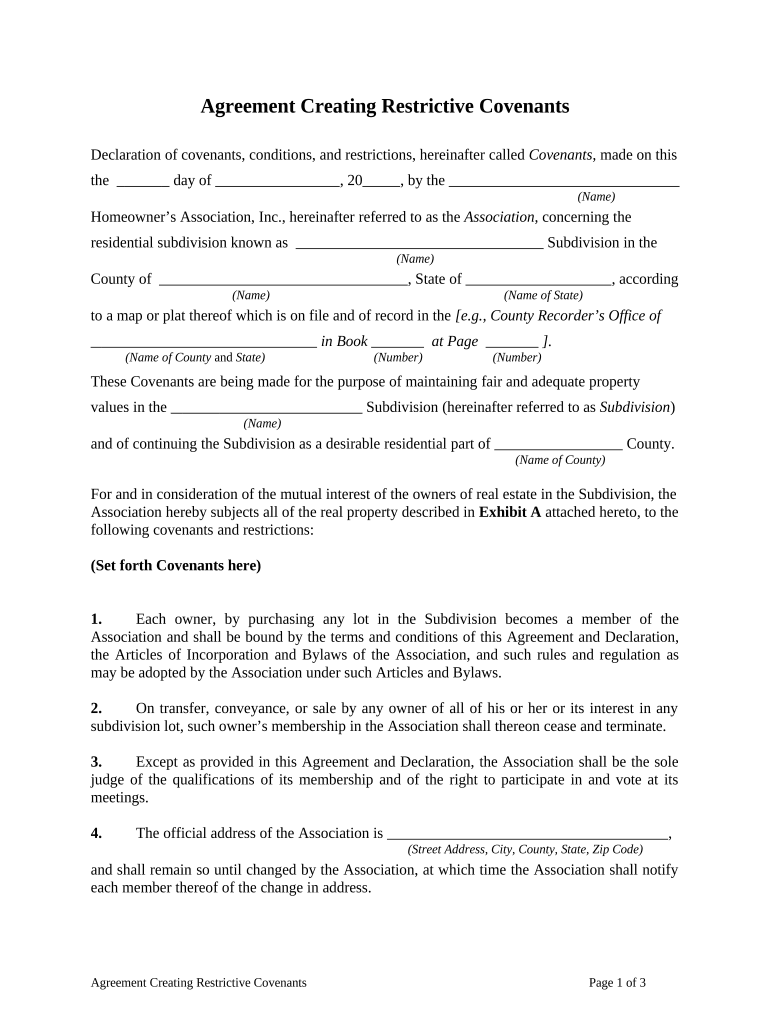
A Restrictive Covenants Agreement is a contract between an employer and an employee (or between contracting parties) that limits certain post‑employment activities, typically noncompetition, nonsolicitation, confidentiality, and non‑disparagement obligations. The agreement defines the restricted activities, geographic scope, duration, permitted work, and remedies for breach. Properly drafted restrictive covenants balance the employer’s legitimate business interests with the individual’s right to work and must align with applicable state law to be enforceable.

Why a Clear Restrictive Covenants Agreement Matters

A well‑written agreement protects trade secrets, client relationships, and workforce stability while reducing litigation risk. It clarifies obligations for all parties, supports consistent enforcement, and makes outcomes more predictable in disputes under state law.

Why a Clear Restrictive Covenants Agreement Matters

Who Typically Uses a Restrictive Covenants Agreement

Employers, in‑house counsel, HR teams, and business buyers commonly use restrictive covenants to protect confidential information and customer relationships.

  • Employers and hiring managers who need to protect proprietary processes, customer lists, or sensitive business plans from departing employees.
  • Businesses acquiring targets that require sellers and key employees to remain restricted during integration to preserve goodwill.
  • Outside counsel and HR professionals advising on enforceability, state law limits, and tailored scope for specific roles.

Use careful drafting, role‑specific scope, and legal review to improve enforceability and reduce the risk of overbroad restrictions.

Key Signatory Roles

Employer Representative

Chief HR officer or authorized corporate officer signs for the employer and confirms authority to bind the company; include title and capacity to create clear corporate authorization.

Employee or Principal

Individual signatory must sign in their legal name and include job title and date; mismatched names or unsigned signature blocks can invalidate the agreement.

Essential Security and Compliance Details

Encryption: TLS 1.2/1.3 in transit, AES‑256 at rest
Audit Trail: Timestamp, IP, action log
HIPAA BAA: Available when PHI involved
Retention: Tamper‑evident storage
Access Controls: Role-based permissions
Certifications: SOC 2 Type II, ISO 27001

Risks and Consequences of a Defective Agreement

Unenforceability: Court may void overbroad terms
Litigation Costs: Expensive disputes and defense fees
Injunction Exposure: Temporary relief can be sought
Employment Claims: Wrongful termination or wage disputes
Blue‑Pencil Risk: Court may modify rather than strike
Reputational Harm: Public disputes can damage brand

Common Drafting and Execution Mistakes

  • Using broad geographic or temporal limits unrelated to legitimate business interests, which increases the chance a court will refuse enforcement.
  • Failing to define key terms such as 'confidential information' or 'competitive business', leaving interpretation to litigation.
  • Not tailoring restrictions by role or seniority; identical covenants for junior staff and executives invite judicial scrutiny.
  • Overlooking signature authority, incorrect signer names, or unsigned signature blocks that create procedural defects in enforcement.

Core Elements to Include in Every Agreement

A professional Restrictive Covenants Agreement contains clearly labeled sections covering parties, scope, duration, geographic limits, consideration, and remedies to ensure enforceability and operational clarity.

Parties

Identify employer and individual by full legal names, business entity types, and mailing addresses to prevent ambiguity about who is bound.
Restricted Activities

Define noncompetition, nonsolicitation, and confidentiality obligations precisely, including what conduct is prohibited and examples where helpful.

Duration

Specify how long each restriction applies; use role‑based reasoning to justify length and improve enforceability.

Geographic Scope

Describe the geographic area in specific terms tied to the employer’s market or customer base rather than overly broad regions.

Consideration

State the consideration provided (employment, promotion, bonus, or separate payment) to support enforceability where required by state law.

Remedies

List available remedies including injunctive relief, monetary damages, and recovery of attorney’s fees where permitted.

Step‑by‑Step: Completing and Executing the Agreement

Follow these practical steps to prepare, review, and execute a legally defensible Restrictive Covenants Agreement.

  • 01
    Draft: Tailor scope, duration, and geographic limits to the role.
  • 02
    Review: Have counsel confirm state law compliance and consideration.
  • 03
    Sign: Collect signatures, dates, and witness/notary if required.
  • 04
    Store: Securely archive originals and signed electronic copies.

Typical Execution Workflow for Electronic Completion

Electronic workflows let parties complete the agreement remotely while retaining a complete audit trail required for later enforcement and recordkeeping.

  • Prepare Document: Upload final contract and mark signature fields.
  • Authenticate: Specify signer authentication method (email, SMS, KBA).
  • Sign Electronically: Signer reviews and applies an e‑signature.
  • Archive Record: Store signed PDF with certificate and metadata.

How to Configure a Secure Digital Workflow

Configure signer authentication, templates, and notifications to maintain a legally defensible record and consistent process across hires.

Field Configuration
Authentication Method Choose email link, SMS code, or knowledge‑based checks
Templates Use standardized templates to reduce drafting variance
Conditional Fields Show fields only when relevant to the role
Notifications Enable reminders and completion receipts for audit trail

Technical and Integration Considerations for eSigning

Choose a platform that provides strong audit trails, secure storage, and integrations with HR or contract management systems.

  • Integrations: Salesforce, NetSuite, Microsoft 365
  • File Formats: PDF, Word DOCX supported
  • Security: Encryption and SOC 2 compliance

Ensure the chosen provider supports required authentication, audit logs, and any regulatory requirements the industry may impose.

Key Dates to Track When Using the Agreement

Certain dates determine enforceability and notice rights; track effective date, execution date, notice windows, and any post‑employment limitation periods carefully.

Effective Date:

Date obligations begin; use MM/DD/YYYY format

Execution Date:

Date last party signs; evidences assent

Notice Windows:

Timeframes for giving employer notice of violations

Post‑Employment Term:

Length of noncompete or nonsolicit restrictions

Statute of Limitations:

State‑specific enforcement deadlines apply

Typical Milestones From Draft to Enforcement

A sequential view helps HR and legal teams track completion and potential enforcement actions.

01

Drafting Completed

Document finalized and internal approvals obtained

02

Execution

All parties sign and dates are recorded

03

Post‑Employment Notice

Employer monitors compliance after separation

04

Enforcement Action

Employer pursues injunctive or monetary relief if needed

Restrictive Covenants Compared to Related Contract Types

Compare common contract features to choose the right protections for your situation and to avoid unnecessary restriction breadth.

Criteria Noncompete NDA
Purpose prevent competition protect confidential information
Typical Duration months to years indefinite for trade secrets
Enforceability Risk higher scrutiny generally lower scrutiny
Remedy Focus injunctions and damages damages, injunctive relief

eSignature Vendor Comparison for Executing Restrictive Covenants

A concise comparison of common eSignature providers and feature availability to help teams evaluate electronic execution and compliance capabilities.

signNow DocuSign Adobe Sign PandaDoc HelloSign
Starting Price $8/user/mo $15/user/mo $14/user/mo $19/user/mo $15/user/mo
Free Trial 7‑day free trial Varies by plan Varies by plan Varies by plan Varies by plan
Bulk Send Yes Yes Yes Yes Varies by plan
Audit Trail Yes Yes Yes Yes Yes
HIPAA Compliant Yes Yes Yes No No
Envelope Cap No cap 100 envelopes/user/year Varies by plan Varies by plan Varies by plan

Practical Tips for Drafting and Administration

Follow these drafting and process recommendations to improve clarity and enforceability while minimizing operational friction.

Tailor Terms
Match restrictions to the employee’s duties and the employer’s legitimate business interests.
Show Consideration
Document specific consideration to support the covenant under state law where required.
Limit Scope
Prefer narrow geographic and time limits tied to actual markets and reasonable durations.
Document Changes
Record amendments centrally and have both parties sign any modifications.

Representative Use Cases and Outcomes

Examples illustrate how different organizations use restrictive covenants to protect business interests.

Small Business Hire

A startup required a one‑year nonsolicit for sales staff

  • short geographic radius limited to city
  • result: lower litigation risk and clearer post‑termination expectations for reps and managers.

Acquisition Protection

Buyer obtained twelve‑month noncompetes from key founders

  • consideration included escrowed earnout payments
  • outcome: preserved customer relationships during integration and reduced churn risk.

Frequently Asked Questions About Restrictive Covenants

Answers to common procedural, enforceability, and eSignature questions when preparing and executing a Restrictive Covenants Agreement.


Need help? Contact support

be ready to get more
Join over 28 million airSlate SignNow users