Establishing secure connection…Loading editor…Preparing document…

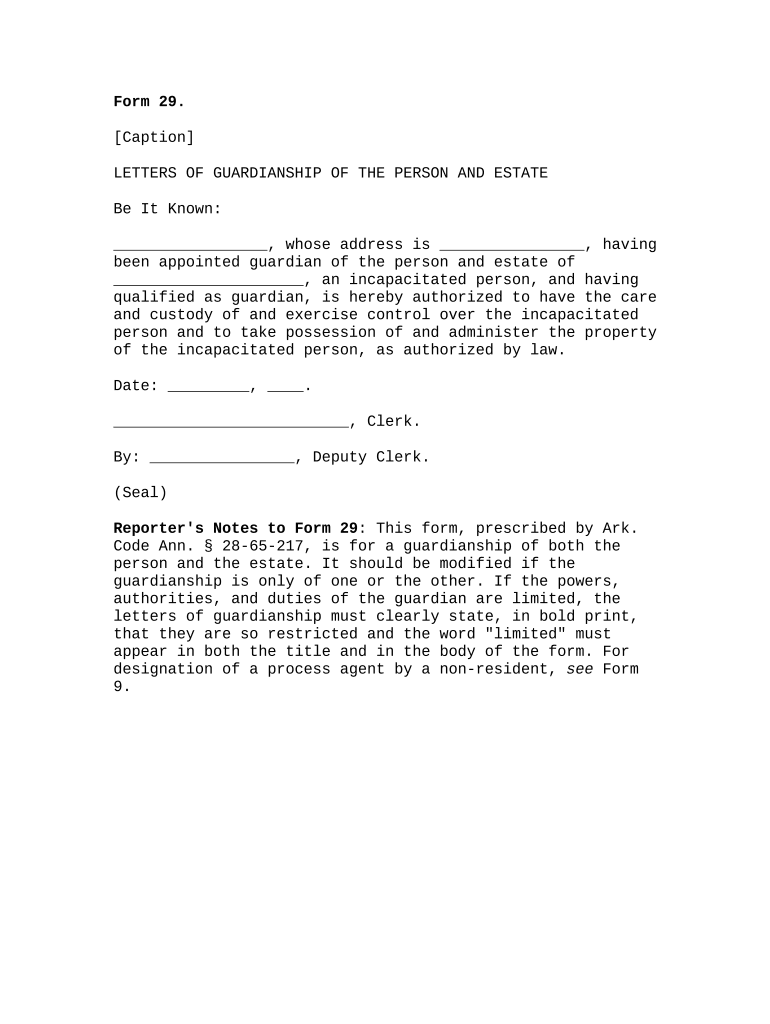
Letters of Guardianship of the Person and Estate

This template is fully customizable. Edit the text, fill out the fields, and send it for signature. Give it a try!
Letters of Guardianship of the Person and Estate

What the Letters of Guardianship of the Person and Estate Are

Letters of Guardianship of the Person and Estate are court-issued documents that formally identify an appointed guardian and define the guardian's authority over both personal care and financial matters for an incapacitated adult or minor. They are generated after a probate or guardianship hearing where the court determines incapacity and appoints a guardian. The letters serve as legal proof of authority to make medical, residential, and financial decisions, to access bank accounts, and to manage real and personal property on behalf of the ward. Agencies and third parties usually require an original or certified copy to recognize the guardian's powers.

Why These Letters Matter for Care and Asset Management

Letters of Guardianship provide clear, court-backed authority to act for a ward, reduce disputes with institutions, and consolidate responsibilities for personal and estate matters. They protect the ward by creating a legal record of appointment, and they protect third parties who accept actions taken under the guardian's authority. Properly executed letters streamline access to care, benefits, and financial accounts while establishing reporting duties to the appointing court.

Why These Letters Matter for Care and Asset Management

Who Typically Prepares and Relies on These Letters

The letters are prepared by court clerks or attorneys and used by guardians, banks, healthcare providers, and state agencies.

  • Family members and nominated guardians who obtain appointment and need proof of authority.
  • Attorneys and court staff who draft, review, and file the petition and letters.
  • Banks, insurers, and medical providers verifying authority to access accounts or make decisions.

Step-by-Step: Completing the Letters of Guardianship

Follow this sequence to prepare, sign, and submit letters so third parties will accept them without additional court contact.

  • 01
    Prepare Petition: File the guardianship petition with the appropriate probate court.
  • 02
    Attend Hearing: Present evidence of incapacity and proposed guardian to the judge.
  • 03
    Journal Entry: Obtain the court order appointing the guardian and authorizing letters.
  • 04
    Obtain Certified Letters: Request certified copies from the clerk for banks and providers.

Key Elements Included in Professional Letters of Guardianship

A complete letters package combines identification, the court order citation, explicit powers granted, reporting duties, bond details where required, and a certified clerk signature to ensure acceptance by third parties.

Guardian Identification

Full legal name, contact details, and relationship to the ward so institutions can match records to the acting party.
Ward Information

Full legal name, date of birth, and identifying details that confirm who is protected by the guardianship.

Scope of Powers

Specific authority over personal care and/or estate management, including any limitations or required court approvals.

Court Citation

Exact court name, judge, and case number so recipients can verify the order with the clerk.

Bond and Security

If required, bond amount and surety information are stated to protect the ward's estate from mismanagement.

Clerk Certification

A certified signature or seal from the court clerk making the letter an official, verifiable record.

Required Information Checklist

Ward Name: Full legal name required
Guardian Name: Full legal name required
Case Number: Court-assigned case number
Scope: Person, Estate, or both
Effective Date: MM/DD/YYYY format
Clerk Seal: Certified copy or seal

Where to File, Deliver, and Who Receives Copies

After the court issues letters, provide certified copies to institutions and retain originals for court recordkeeping and the ward's file.

  • Court Clerk: Request certified copies and maintain an official file copy.
  • Banks/Fiduciaries: Deliver certified letters to account holders and trust administrators.
  • Healthcare Providers: Provide copies to hospitals and clinics for medical decision authority.
  • Social Services: Send copies to benefits or state agencies managing public assistance.

Customizing an Online Letters of Guardianship Workflow

Configure an electronic workflow to collect signatures, verify identity, and store certified copies while preserving the court-required formality.

Signature Order Set signing sequence for guardian, attorney, and clerk
Authentication Use ID verification or SMS code per court preferences
Template Fields Pre-fill ward and case data to reduce errors
Conditional Fields Show bond fields only when the court requires them
Storage Location Save certified PDFs with audit trail and access controls

Digital Signing and eSubmission Considerations

Use an eSignature platform that supports certified PDFs, audit trails, and identity verification suitable for legal documents.

  • Accepted Formats: PDF and PDF/A required
  • Identity Proofing: Email, SMS, or stronger KBA options
  • Audit Trail: IP, timestamp, and signer log

Typical Deadlines and Filing Timeframes

Courts and jurisdictions set specific timelines for bond posting, inventories, and accountings; follow local rules to remain compliant.

Post-Appointment Bond:

Often required within 30 days of appointment (varies by state)

Initial Inventory:

Commonly due 30–90 days after appointment depending on court

Annual Accounting:

Typically required annually to the appointing court

Notice to Interested Parties:

Serve all interested parties per local rules within set days

Requests for Expansion:

Petition required for added powers or asset sales; timing per court calendar

Common Preparation Errors to Avoid

  • Mismatched names or dates between the letters and official IDs, causing institutions to refuse recognition.
  • Failing to request certified copies from the clerk, instead delivering uncertified originals that banks or agencies will not accept.
  • Overlooking bond or inventory requirements that court rules mandate, which can lead to penalties or delayed authority.
  • Using ambiguous language in the scope of authority that results in disputes or the need for supplemental court filings.

Legal Risks and Consequences of Incorrect Letters

Invalid Authority: Third parties may refuse actions without certified letters
Civil Liability: Guardian liable for mismanagement or unauthorized acts
Bond Forfeiture: Failure to post or follow bond terms can trigger forfeiture
Court Sanctions: Courts can impose sanctions for noncompliance
Delayed Care or Payments: Beneficiary services may be delayed pending verification
Criminal Exposure: Fraudulent acts may result in criminal charges

eSignature Vendor Pricing and Feature Snapshot for Guardianship Letters

Common eSignature plan features relevant to certified legal letters are shown below; signNow appears first per platform comparison conventions.

signNow DocuSign Adobe Sign PandaDoc HelloSign
Starting Price $8/user/mo $15/user/mo $14/user/mo $19/user/mo $15/user/mo
Free Trial 7-day free trial, no credit card Varies by vendor Varies by vendor Varies by vendor Varies by vendor
Bulk Send Yes (Business Premium plan) Varies by plan Varies by plan Varies by plan Varies by plan
Audit Trail Yes Yes Yes Yes Yes
HIPAA Compliant Yes (BAA available) Yes Yes No No

Real-World Use Examples

Practical scenarios show how letters facilitate access to care, assets, and legal compliance across common guardianship situations.

Estate Access

A guardian needed immediate bank access to pay medical bills

  • The court issued certified letters the same day
  • The bank accepted the certified copy and released funds after matching the ward's identifiers to the account, enabling timely medical treatment and bill payment.

Medical Decision

A hospital required formal proof of decision-making authority

  • The guardian presented certified letters and ID
  • The provider recognized the guardian, allowed care decisions, and documented the authority in the medical record, avoiding delays in treatment.

Frequently Asked Questions About Letters of Guardianship

Answers to common questions about acceptance, notarization, updating, and revocation of guardianship letters to reduce delays and compliance problems.


Need help? Contact support

be ready to get more
Join over 28 million airSlate SignNow users