Establishing secure connection…Loading editor…Preparing document…

Assignment Rights Document

This template is fully customizable. Edit the text, fill out the fields, and send it for signature. Give it a try!
Assignment Rights Document

What an Assignment Rights Document Is

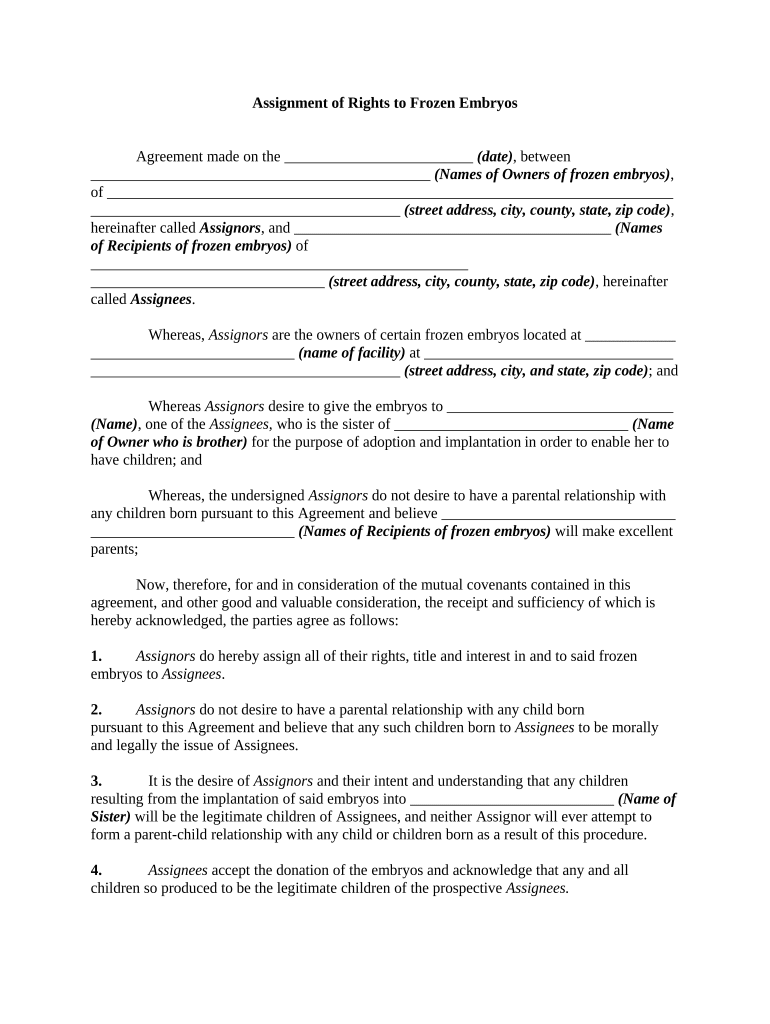
An Assignment Rights Document is a legal agreement used to transfer specified rights from one party (the assignor) to another (the assignee). It identifies the rights being assigned, the parties, the effective date, consideration, and any limits or reserved rights. Commonly used for intellectual property, contracts, and royalty streams, the document clarifies scope, duration, and governing law to avoid disputes. Properly executed, it provides clear evidence of transfer and supports enforceability in court or administrative proceedings under applicable federal and state law.

Why a Clear Assignment Matters

An Assignment Rights Document reduces ambiguity about who owns specific rights and when those rights transfer, lowering litigation risk and facilitating commercial transactions. It documents consideration, limits, and warranties that courts and counterparties rely on under ESIGN/UETA and general contract principles.

Why a Clear Assignment Matters

Who Commonly Uses Assignment Rights Documents

Professionals in legal, technology, and business roles rely on Assignment Rights Documents when transferring ownership or licensing rights.

  • In-house counsel and outside attorneys reviewing or drafting assignments for mergers, licensing, and IP transfers.
  • Startups and technology companies assigning patent, copyright, or software code rights as part of funding or sale.
  • Publishers, media firms, and content creators assigning publication, distribution, or royalty rights in contracts.

Typical Signatories and Their Roles

Assignor Counsel

The assignor is often an individual or company transferring rights; corporate counsel must confirm authority to assign, check existing license restrictions, and certify that consideration was received or documented to avoid later disputes or claims of invalid transfer.

Assignee Rep

The assignee should verify chain of title, request representations and warranties, and confirm effective date and scope to ensure the purchased or licensed rights meet business needs and are enforceable against third parties.

Core Elements to Include

Core elements of a professional Assignment Rights Document focus on clarity of transfer, scope, consideration, warranties, conditions, and dispute resolution to ensure enforceability.

Parties

Identify assignor and assignee by full legal name, entity type, and address. Include authorized signer names and capacity to confirm authority and avoid later challenges to validity of the transfer.
Assigned Rights

Describe exactly what rights are assigned (e.g., copyrights, patents, contractual rights), including registration numbers, works, contract identifiers, and any territorial or temporal limits to be transferred.

Consideration

State monetary amount, exchange of services, or other consideration; specify payment terms, timing, and whether consideration is nominal or conditional to satisfy contract formation rules and tax reporting.

Representations

Include assignor representations about ownership, authority, absence of conflicting agreements, and any known claims; include survival period, indemnification obligations, and remedies for breach.

Limitations

Specify retained rights, excluded works, sublicense rules, duration limits, territorial carve-outs, and other constraints, including moral rights where applicable, to prevent unintended transfer of broader rights.

Governing Law

Designate the state law and forum for disputes; include arbitration or venue provisions, and reference to ESIGN/UETA where electronic execution is used to ensure legal predictability.

Step-by-Step Execution Checklist

Follow these sequential steps to complete and execute an Assignment Rights Document correctly online or in person.

  • 01
    Prepare Draft: Gather contract identifiers, registrations, and prior agreements.
  • 02
    Confirm Authority: Verify assignor's authority and corporate approvals.
  • 03
    Specify Terms: Define scope, duration, territory, and consideration precisely.
  • 04
    Execute & Record: Signatures, notarization, and deliver copies to parties.

Online Workflow Settings to Use

Suggested online settings for completing and delivering an Assignment Rights Document securely and auditable compliantly.

Workflow Field or Setting Name Recommended configuration
Document Upload Options and Format Use PDF/A or DOCX; ensure template fields flattened before sending
Signature Field Placement and Required Dates Place signature, initials, and date fields for each signer
Authentication Methods and Strength Options Email link, SMS code, or KBA for higher assurance
Notifications, Audit Trail, and Archiving Settings Enable audit trail, recipient copies, and long-term storage

Typical Digital Routing for an Assignment

How the Assignment Rights Document is typically routed and executed in a digital workflow environment.

  • Upload Document: Sender uploads signed template or draft
  • Add Fields: Place signature and date fields; include notary block if needed
  • Assign Signers: Enter signer emails and signing order where applicable
  • Complete Signing: Signers authenticate, sign, and receive copies with audit trail

Platform Capabilities to Verify

Choose eSignature platform features that support authentication, audit trails, and secure storage for Assignment Rights Documents.

  • Authentication Options: Email, SMS code, KBA, or SSO
  • Audit Trail: Detailed timestamps, IPs, and action logs
  • Document Formats: Accept PDF, DOCX and keep original file

Important Dates and Deadlines to Track

Key dates to consider when preparing and filing an Assignment Rights Document, including recording or registration deadlines.

Effective Date and Execution Date:

Enter MM/DD/YYYY and have signers date signatures.

Recording or Registration Deadlines by Registry:

Record assignments when required to protect priority rights.

Consideration Payment Schedule and Due Dates:

Specify payment dates and consequences for late payment.

Survival Periods and Warranty Periods:

State how long representations survive post-closing.

Statute of Limitations and Claim Periods:

Effective date affects limitation periods under state law.

Common Preparation Pitfalls

  • Failing to describe rights precisely leads to disputes over scope, territorial limits, and whether derivative works or sublicenses were included.
  • Not confirming assignor authority or corporate approvals risks invalidation; lack of corporate resolution or missing board minutes can delay enforcement.
  • Using vague consideration language or failing to document payment terms complicates tax treatment and may trigger backup withholding if TINs are missing.
  • Skipping notarization or recording where state law or third-party contracts require it can forfeit priority rights or defeat third-party claims.

Key Legal Risks and Penalties

Invalid Transfer: Assignment voidable for lack of authority
Tax Consequences: Unclear consideration triggers IRS review
Contract Breach: Counterparty damages and rescission risk
Loss of Priority: Failure to record may reduce priority
Ineffective Third-Party: Does not bind third parties without notice
Litigation Costs: Increased legal fees and defenses

Essential Data Fields Checklist

Full Legal Name: Exact legal entity or individual's name
Effective Date: MM/DD/YYYY exact format required
Assigned Rights: List specific rights and IDs
Consideration: Dollar amount or description
Signatures: Signature and date required
Notary/Acknowledgment: Notary details if required

eSignature Vendor Comparison for Assignment Workflows

Comparison of typical eSignature pricing and feature availability relevant to executing Assignment Rights Documents securely.

signNow DocuSign Adobe Sign PandaDoc HelloSign
Starting Price $8/user/mo $15/user/mo $14/user/mo $19/user/mo $15/user/mo
Free Trial 7-day trial Varies by vendor Varies by vendor Varies by vendor Varies by vendor
Bulk Send Yes Yes Yes Yes No
Audit Trail Yes Yes Yes Yes Yes
HIPAA Compliant Yes Yes Yes No No

Practical Drafting and Execution Tips

Practical recommendations to reduce errors and improve enforceability when preparing Assignment Rights Documents and recording.

Use precise legal descriptions and identifiers
Avoid ambiguous phrases; include registration numbers, contract identifiers, and exhibit lists. Precise descriptions prevent disputes and make recording or UCC filings straightforward for third-party verification and perfection of interests.
Confirm signatory authority in writing
Obtain corporate resolutions, board minutes, or power-of-attorney documentation when an entity signs. Keep proof of authority with the agreement to counter future challenges and to support due diligence during sales or audits.
Record or register when appropriate to protect priority
For assignments affecting real property, patents, or security interests, record the assignment with the appropriate registry or file a UCC-1 financing statement. Recording establishes priority and provides public notice to third parties.
Retain originals and digital copies securely with audit trails
Keep executed originals and time-stamped digital copies with audit trails. Maintain chain-of-custody, restrict access, and store per applicable legal retention schedules to meet regulatory and evidentiary requirements.

Illustrative Use Cases

Real-world examples show how Assignment Rights Documents transfer IP, contractual rights, or revenue streams across industries.

Software Acquisition

A software startup assigned patent-pending software rights to an acquirer as part of a seed funding acquisition.

  • Included precise registration numbers and a closing date.
  • The assignment included representations, a payment schedule, and recording instructions. Clear scope and documented authority avoided post-closing disputes and allowed the buyer to exploit patents immediately while satisfying investor due diligence requirements.

Publishing Assignment

An independent author assigned publication and distribution rights to a publisher while retaining specific international translation rights.

  • Used exhibits to list works and ISBNs.
  • By enumerating titles, editions, and royalty splits, the agreement prevented ambiguity. The publisher recorded the assignment where required and the author kept a copy with notarized signatures to simplify future licensing and foreign sub-rights deals.

FAQs and Troubleshooting

Answers to frequent questions about drafting, signing, and enforcing Assignment Rights Documents in the United States.


Need help? Contact support

be ready to get more
Join over 28 million airSlate SignNow users