Establishing secure connection…Loading editor…Preparing document…

Bankruptcy Chapter 13

This template is fully customizable. Edit the text, fill out the fields, and send it for signature. Give it a try!
Bankruptcy Chapter 13

What Bankruptcy Chapter 13 Is and how it functions

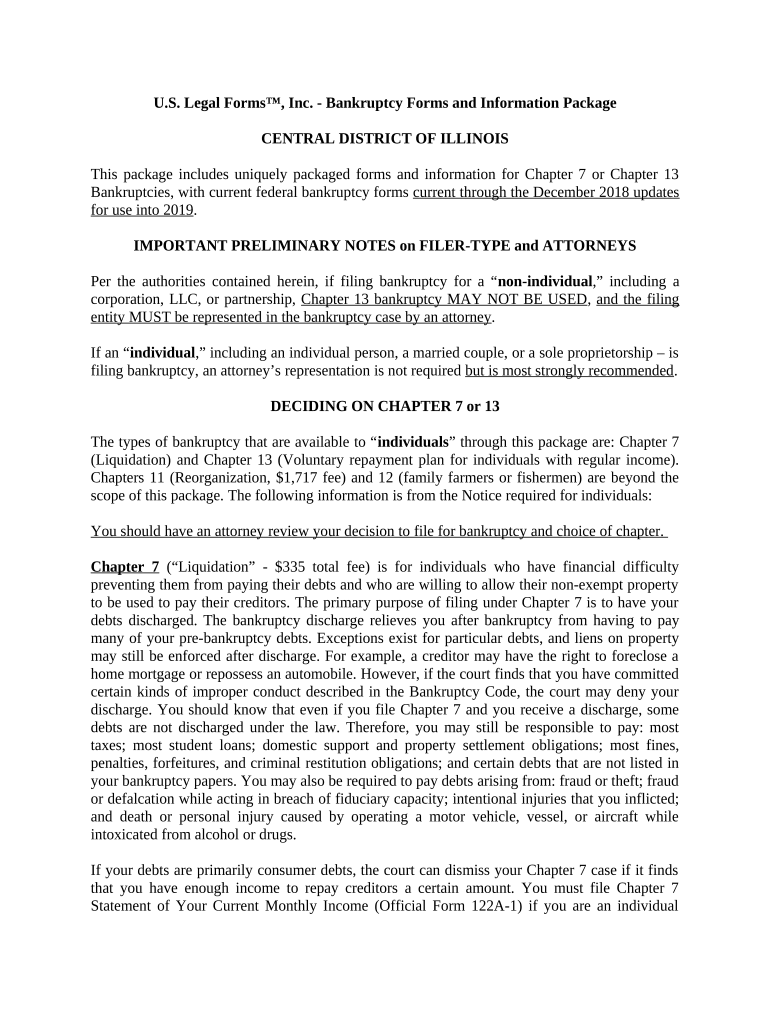
Bankruptcy Chapter 13 is a U.S. federal debt-restructuring process that enables an individual with regular income to propose a court-approved repayment plan to handle secured and unsecured debts over a three- to five-year period. Unlike Chapter 7 liquidation, Chapter 13 allows debtors to keep most property while making scheduled payments to a bankruptcy trustee who distributes funds to creditors according to the plan. The court confirms a plan after evaluating the debtor's income, expenses, priority claims, and feasibility; confirmation provides legal protection from collection actions and creates a binding framework for creditor treatment.

Why Chapter 13 matters for individuals with repayable debt

Chapter 13 can stop foreclosure, consolidate arrears into an affordable plan, and permit curing secured debt defaults while preserving assets. It provides predictability by structuring payments and a court-supervised path to debt resolution without full asset liquidation.

Why Chapter 13 matters for individuals with repayable debt

Who typically files or prepares a Chapter 13 case

Chapter 13 is most commonly used by wage-earners, small business owners, and property owners facing arrears who can demonstrate steady income.

  • Individual debtors with regular income — Those who can propose monthly payments and want to keep secured property such as a home.
  • Small business owners — Individuals whose personal debts relate to business obligations but who have ongoing revenue.
  • Debtors curing arrears — People facing imminent foreclosure or vehicle repossession seeking time-bound catch-up payments.

Creditors, trustees, and bankruptcy attorneys also complete or review Chapter 13 paperwork to protect legal rights and ensure plan compliance.

Essential parts of a complete Chapter 13 filing package

A professional Chapter 13 submission bundles court forms, supporting schedules, a repayment plan, and required verifications so the judge and trustee can evaluate feasibility, priority claims, and proposed distributions.

Voluntary Petition

Official Form 101 (Voluntary Petition) starts the case and lists the debtor, joint debtor (if any), the chapter elected, and basic case data for the court and trustee review.
Schedules

Schedules A–J list assets, liabilities, income, and monthly expenses; accurate amounts are essential because they determine disposable income available for plan payments.

Statement of Financial Affairs

Provides a chronological narrative of income, transfers, lawsuits, and financial events — courts rely on it to evaluate completeness and good faith.

Chapter 13 Plan

A detailed payment proposal that allocates monthly payments to priority debts, secured creditors, and unsecured claims over typically three to five years.

Proofs of Claim

Creditors file proofs of claim to establish amounts owed; debtors must review claims and object when figures are incorrect or unsupported.

Tax & Paystubs

Recent tax returns and several months of paystubs verify income calculations used to set plan payments and confirm filing eligibility.

Step-by-step: preparing and filing a Chapter 13 case

Follow these sequential steps to assemble documents, file, and manage the Chapter 13 process with the court and trustee.

  • 01
    Gather documents: Collect paystubs, tax returns, contracts, and creditor statements.
  • 02
    Prepare forms: Complete the petition, schedules, SOFA, and the proposed plan.
  • 03
    File with court: File electronically or in person at the bankruptcy clerk's office.
  • 04
    Attend confirmation: Attend the confirmation hearing and respond to trustee or creditor questions.

How to configure an online workflow for Chapter 13 paperwork

Set up a digital workflow to collect signatures, attachments, and verification documents in the correct order to reduce missing information and speed filing readiness.

Field Configuration
Document upload Require PDF or DOCX, max size per file set by court
Signer roles Debtor, joint debtor, attorney, trustee (view only)
Authentication Email + SMS code or ID verification for higher assurance
Audit trail Enable timestamps, IP capture, and downloadable certificate

Digital filing and eSignature platform checklist

Ensure your eSignature platform supports legal requirements, secure document storage, and evidence for court-level authentication.

  • File formats: PDF and DOCX accepted
  • Authentication: Email, SMS, or KBA
  • Audit records: Tamper-evident audit trail

For healthcare or sensitive financial records, confirm HIPAA or other applicable compliance frameworks and retain evidence for the required statutory period.

Routing a Chapter 13 submission: typical electronic flow

A clear routing sequence helps ensure required parties receive documents and that signatures are attributed correctly for court review.

  • Prepare documents: Populate forms and attach supporting evidence
  • Add signers: Assign debtor, attorney, and joint debtor fields
  • Authenticate signer: Use agreed method (email, SMS, ID check)
  • Deliver final package: Provide trustee and court with signed PDF and audit trail

Common Chapter 13 timeframes and filing deadlines

Understand court-set scheduling windows and statutory deadlines that affect confirmation, creditor claims, and required notices.

341 Meeting:

Typically scheduled 20–40 days after filing for creditor and trustee questioning.

Plan Confirmation:

Hearing usually within 45–90 days after filing, subject to trustee review.

Proofs of Claim:

Creditors generally file within 70 days of 341 meeting or as set by local rule.

Administrative Filings:

Amendments should be filed promptly to avoid objections at confirmation.

Trustee Reports:

Monthly plan payment reporting continues through plan term.

Key Chapter 13 milestones from filing to discharge

Track these numbered milestones in sequence to follow the case lifecycle and anticipate obligations and hearings.

01

File Petition

Case begins when the voluntary petition is filed and the automatic stay takes effect.

02

341 Meeting

Trustee examines the debtor’s finances and may request clarifying documents.

03

Confirm Plan

Court confirms a feasible plan after objections are resolved.

04

Completion & Discharge

Upon completion of plan payments, the court may grant discharge under applicable law.

Common mistakes to avoid when preparing Chapter 13 paperwork

  • Omitting recent paystubs or tax returns — incomplete income verification can lead to plan rejection or objection by the trustee.
  • Understating expenses or assets — inaccurate schedules can result in plan denial or allegations of bad faith.
  • Mismatched names or SSNs — inconsistencies between forms, IDs, and creditor records slow verification and creditor processing.
  • Missing creditor notices — failing to include all creditors can require plan modification or result in later claims litigation.

Consequences of errors or omissions in Chapter 13 filings

Case Dismissal: Court may dismiss for substantial noncompliance
Plan Denial: Trustee objections can prevent confirmation
Loss of Discharge: Fraud or nondisclosure may block discharge
Creditor Enforcement: Creditors can seek relief from stay
Sanctions: Court sanctions for bad-faith filings
Cost Increases: Additional attorney or trustee costs incurred

Security and compliance considerations for electronic Chapter 13 documents

Encryption: TLS 1.2/1.3 in transit; AES-256 at rest
Audit Trail: Tamper-evident logs with timestamps and IPs
HIPAA: BAA required for protected health information
ESIGN / UETA: Electronic signatures comply with ESIGN and UETA
21 CFR Part 11: Available controls for regulated FDA records
Access Controls: Role-based access and SSO options

selecting an eSignature provider for Chapter 13 documents — vendor snapshot

Common capability and pricing points for eSignature vendors. signNow is listed first per vendor-comparison conventions; check each vendor’s plan details for court admissibility and compliance features.

signNow DocuSign Adobe Sign PandaDoc HelloSign
Starting Price $8/user/mo $15/user/mo $14/user/mo $19/user/mo $15/user/mo
Free Trial 7-day trial Varies Varies Varies Varies
Bulk Send Yes Yes Yes Yes No
Audit Trail Yes Yes Yes Yes Yes
HIPAA Compliant Yes Yes Yes No No

Practical examples of common Chapter 13 scenarios

Two concise case arcs show how plan proposals resolve arrears and protect property while trustees and courts enforce compliance.

Repay Arrears to Keep Home

Debtor faces mortgage arrearage and files Chapter 13 to cure delinquency over five years and preserve the residential property.

  • Trustee reviews monthly income and confirms plan feasibility.
  • The plan consolidates arrears into trustee payments; timely plan performance prevents foreclosure and allows the homeowner to remain in place.

Catch Up Vehicle Payments

A debtor with a repossession threat proposes a three-year plan to catch up car payments while continuing ongoing payments directly.

  • Creditor files a proof of claim to assert secured interest.
  • The plan apportions funds to the secured creditor and protects the vehicle from repossession if obligations are met.

Practical tips for accurate, efficient Chapter 13 completion

Follow these pragmatic steps to reduce objections, speed confirmation, and limit additional costs when preparing your Chapter 13 case.

Verify income documentation
Attach recent paystubs and the last two years of tax returns to avoid trustee objections about income and disposable income calculations.
Double-check creditor list
List all known creditors including small or recurring obligations; omitting a creditor can lead to later contested claims.
Use consistent identifiers
Ensure names, Social Security numbers, and addresses match across all forms to avoid administrative delays.
Retain signed audit records
Keep tamper-evident signed PDFs and audit trails for court proof, particularly when documents were executed electronically.

Frequently asked questions about Bankruptcy Chapter 13

Answers to common practical and legal questions about eligibility, plan mechanics, electronic signatures, and document retention in Chapter 13 cases.


Need help? Contact support

be ready to get more
Join over 28 million airSlate SignNow users