Establishing secure connection…Loading editor…Preparing document…

Disclaimer by Beneficiary of Trust

This template is fully customizable. Edit the text, fill out the fields, and send it for signature. Give it a try!
Disclaimer by Beneficiary of Trust

What a Disclaimer by Beneficiary of Trust Is and When It Applies

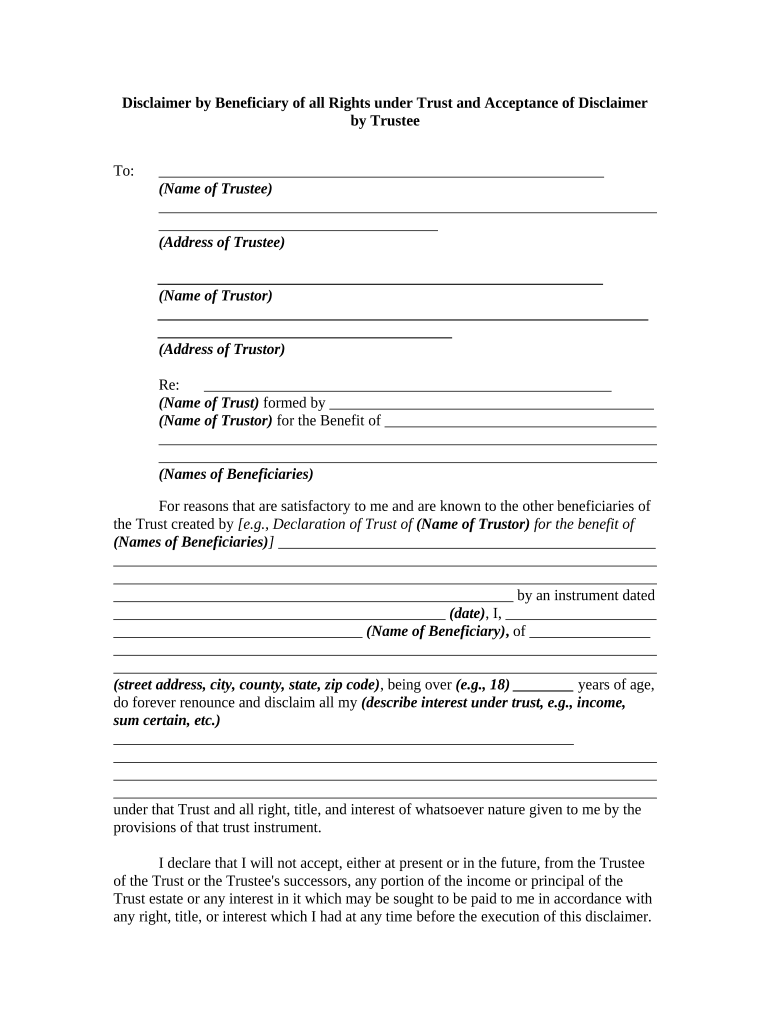
A Disclaimer by Beneficiary of Trust is a written, irrevocable statement in which a trust beneficiary formally refuses or renounces all or part of an interest in trust property. It documents that the beneficiary will not accept distributions, allowing the interest to pass to alternate beneficiaries or be treated differently for tax and estate purposes. Disclaimers are used to control distribution outcomes, address tax planning objectives, comply with trust language, or preserve eligibility for public benefits. Requirements, formality, and timing vary by jurisdiction and by whether federal tax consequences are intended.

Why a Beneficiary Might Sign a Disclaimer

A timely disclaimer can preserve preferred distribution paths, avoid unintended tax consequences, maintain eligibility for means-tested benefits, or honor the settlor’s intended disposition. It provides a formal, revocable-free record that the beneficiary did not accept property, which affects ownership, allocation, and subsequent transfers under trust and tax law.

Why a Beneficiary Might Sign a Disclaimer

Who Typically Prepares or Signs This Form

In practice, disclaimers are coordinated among beneficiaries, trustees, and counsel to ensure timing, formality, and any tax or benefit consequences are addressed.

  • Individual beneficiaries who choose to refuse all or part of distributions to alter the distribution path or tax treatment.
  • Trustees and trust administrators preparing formal records when a beneficiary declines an interest in trust property.
  • Estate and tax attorneys preparing or reviewing disclaimers to ensure compliance with trust terms and federal tax rules.

Representative Signer Profiles

Individual Beneficiary

An adult beneficiary who elects to disclaim must sign a written instrument stating the refusal and, where required, have it acknowledged or notarized; counsel often reviews tax and public-benefit implications before execution.

Estate Attorney

An attorney drafts or reviews the disclaimer language, advises on statutory timing and tax consequences, and coordinates filing or delivery to the trustee to ensure the disclaimer meets trust and state requirements.

Security, Compliance, and Delivery Considerations

Encryption: TLS 1.2/1.3 in transit
Data at Rest: AES-256 encryption at rest
HIPAA Support: BAA available where required
Audit Trail: Timestamps and signer metadata
Authentication: Email, SMS, or advanced methods
File Formats: PDF and Word DOCX support

Principal Risks of an Incorrect or Untimely Disclaimer

Invalid Disclaimer: May be void for failure to meet statutory formality
Tax Consequences: Unexpected gift or estate tax exposure
Benefit Loss: May affect public benefits eligibility
Trust Conflict: May trigger disputes among beneficiaries
Missed Deadlines: Forfeits ability to disclaim for tax purposes
Improper Acceptance: Taking control of property can nullify disclaimer

Common Preparation Mistakes to Avoid

  • Failing to confirm statutory deadline and express irrevocability, which can render the disclaimer ineffective for tax or trust distribution purposes.
  • Signing after accepting benefits or exercising control over the asset, which can be treated as acceptance and invalidate the disclaimer.
  • Using vague language that fails to identify the specific interest, property, or portion being disclaimed, causing ambiguity for the trustee.
  • Neglecting required notarization or witness formalities where state law or trust terms demand additional authentication.

Step-by-Step: Complete a Disclaimer by Beneficiary of Trust

Follow these sequential steps to prepare a clear, enforceable disclaimer and coordinate delivery with the trustee and counsel.

  • 01
    Identify interest: Describe precisely the trust property or share you disclaim.
  • 02
    State refusal: Include an explicit, irrevocable statement refusing the interest.
  • 03
    Sign and date: Sign with the full legal name and include the execution date.
  • 04
    Deliver to trustee: Provide the signed instrument to the trustee per trust rules.

Where to Send and How Delivery Works

Delivery and acceptance mechanics affect the disclaimer’s effectiveness; coordinate with the trustee and any required recording or filing processes.

  • To the Trustee: Deliver original signed instrument to the named trustee or trust administrator.
  • Tax Advisors: Notify tax counsel if tax consequences are anticipated.
  • Beneficiaries: Provide copies to alternate beneficiaries when appropriate.
  • Recordkeeping: Retain originals and provide notarized copies where requested.

Essential Elements to Include in a Professional Disclaimer

A professionally drafted disclaimer should clearly and unambiguously state the identity of the disclaiming party, the interest disclaimed, and the irrevocable nature of the refusal, plus execution and delivery details.

Beneficiary ID

Full legal name and contact information of the disclaimant, relationship to the trust, and any identifying details such as date of birth or taxpayer identification to prevent confusion.
Trust Identification

Full trust name, date of trust instrument, trustee name, and relevant trust reference so the disclaimer applies to the correct trust and instrument.

Interest Description

Precise description of the property or share disclaimed, including percentage, asset identifiers, account numbers, or legal descriptions where applicable.

Statement of Disclaimer

Clear, unambiguous language declaring that the beneficiary refuses the interest, that the disclaimer is irrevocable, and specifying the extent of the refusal.

Execution Details

Signature line, printed name, date of execution, and any required acknowledgment or witnesses to satisfy state or trust formalities.

Delivery and Acceptance

Instructions or confirmation that the instrument was delivered to the trustee and any acceptance procedures or recording requirements are completed.

How to Configure an Online Disclaimer Workflow

Set up digital fields and routing so the trustee and all relevant parties receive copies and the record is preserved.

Field Configuration
Beneficiary Name Field Mandatory text field, autofill where possible
Interest Description Field Multi-line required entry, no abbreviations
Signature Field Signer authentication required, timestamped
Routing Send to trustee then to counsel copy

Digital Execution and Technical Requirements

Ensure the chosen process meets any state notary or witness needs, and keep original signed copies or certified digital records for the retention period.

  • Authentication: Email or SMS code minimum
  • Audit Trail: IP, timestamp, and action log
  • Integrations: Cloud storage and trustee systems

Timing Rules and Typical Deadlines to Watch

Timing affects tax and trust outcomes. Confirm any statutory windows and act promptly to preserve disclaimer rights.

Tax-Related Window:

Many tax disclaimers must be made within nine months of receipt or death

Trust Instructions:

Trust instrument may set its own acceptance deadline

Notification:

Deliver to trustee as soon as possible after execution

Public Benefits:

Time-sensitive for means-tested benefit eligibility

State Variations:

Some states require quicker or additional formalities

Key Milestones from Decision to Delivery

Track these sequential milestones to ensure the disclaimer is effective and documented correctly.

01

Decision to Decline

Beneficiary confirms intent and consults counsel where necessary.

02

Draft Disclaimer

Prepare unambiguous instrument identifying trust and interest disclaimed.

03

Execution and Authentication

Sign, date, and notarize or obtain witnesses as required by law or trust.

04

Delivery and Record

Deliver original to trustee and retain certified copies for records.

Real-World Examples of Beneficiary Disclaimers

These scenarios illustrate how disclaimers are used in practice and the downstream effects for trustees and alternate beneficiaries.

Example 1

An adult child declines a life insurance payout

  • the trustee reallocates the proceeds to grandchildren per trust terms
  • the formal written disclaimer was delivered and recorded, avoiding immediate income tax and preserving Medicaid eligibility for the disclaiming beneficiary.

Example 2

A beneficiary executes a partial disclaimer of a fractional interest

  • this narrows the disclaimed share and shifts remainder to other named beneficiaries
  • counsel confirmed timing met tax statute requirements and trustee updated trust records accordingly.

Practical Tips for Accurate and Efficient Completion

Follow these best practices to reduce errors, avoid disputes, and ensure enforceability.

Consult Counsel Early
Engage estate or tax counsel before signing to assess tax effects and public benefit implications.
Use Precise Language
Avoid ambiguous terms; identify the trust, instrument date, and exact property being disclaimed.
Confirm Formalities
Check whether notarization, witnesses, or recording are required in the relevant jurisdiction.
Preserve Originals
Deliver the original to the trustee and keep certified copies securely for retention periods.

Frequently Asked Questions About Disclaimers by Beneficiary of Trust

Answers to common questions about enforceability, timing, signing authority, and electronic execution.


Need help? Contact support

eSignature Vendor Pricing and Feature Snapshot

Basic pricing and feature availability for common eSignature platforms; signNow is listed first per comparative conventions.

signNow DocuSign Adobe Sign PandaDoc HelloSign
Starting Price $8/user/mo $15/user/mo $14/user/mo $19/user/mo $15/user/mo
Free Trial 7-day free trial No No Yes, limited Yes, limited
Bulk Send Yes Yes Yes Yes No
Audit Trail Yes Yes Yes Yes Yes
Envelope Cap No envelope cap 100 envelopes/user/year Varies by plan Varies by plan Varies by plan
be ready to get more
Join over 28 million airSlate SignNow users