Establishing secure connection…Loading editor…Preparing document…

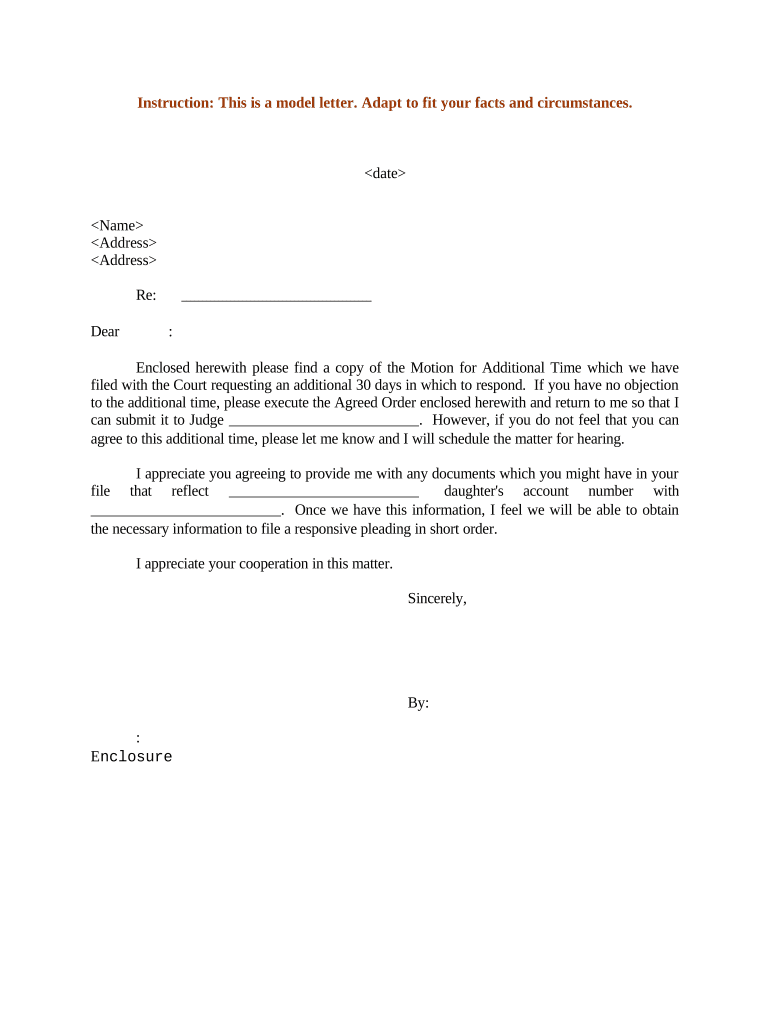
Letter Requesting Additional Time

This template is fully customizable. Edit the text, fill out the fields, and send it for signature. Give it a try!
Letter Requesting Additional Time

What a Letter Requesting Additional Time Is and When to Use It

A Letter Requesting Additional Time is a formal written request asking a recipient—such as a creditor, contracting party, government agency, or opposing counsel—to extend a deadline or postponement date. The letter explains the reason for the delay, specifies the new requested deadline, and attaches supporting documents when relevant. It creates a clear record of the request, helps manage expectations, and can prevent default, late fees, or procedural sanctions when submitted promptly and in an appropriate format.

Why a Clear, Documented Extension Request Matters

A well-drafted request establishes intent and creates a reproducible record that can be relied on by both parties. Under U.S. e-signature frameworks (ESIGN and UETA), an electronically signed extension request can be legally enforceable when it meets the intent, consent, attribution, and retention tests.

Why a Clear, Documented Extension Request Matters

Who Typically Sends or Receives These Requests

Organizations and individuals use extension requests across legal, financial, healthcare, and real estate contexts to avoid penalties and preserve rights.

  • Contract managers and procurement teams requesting delivery or performance date changes during project delays.
  • Taxpayers or accountants asking payers or tax authorities for additional time to assemble forms or payments.
  • Patients or providers seeking extra time to submit medical records or insurance documentation.

Use a documented, dated letter and keep copies of any responses to support compliance or future dispute resolution.

Essential Components to Include in the Letter

A professional extension request should be concise, factual, and include specific dates, contact information, and any evidence supporting the need for extra time.

Recipient Identification

Provide the recipient's full name, title, organization, and mailing or email address so the request reaches the correct decision-maker and is traceable.
Clear Request

State the exact extension sought (new deadline in MM/DD/YYYY) and whether the extension is partial, full, or conditional on certain actions.

Reason for Delay

Explain the reason succinctly and honestly; include objective details such as illness, supply-chain delay, or document backlog to justify the extension.

Supporting Documents

Attach or reference evidence (medical note, shipping confirmation, court schedule) and explain how the documents substantiate the request.

Proposed Cure

Offer a mitigation plan or interim actions (partial payment schedule, interim deliverable) that demonstrates good faith and reduces recipient risk.

Signature and Date

Include the requester’s printed name, title, signature (electronic or handwritten), and the date to validate the communication.

Step-by-Step: How to Prepare and Send the Letter

Follow these sequential steps to prepare a professional extension request and confirm receipt.

  • 01
    Draft Letter: Write a concise letter stating the request, reason, and proposed new date.
  • 02
    Gather Evidence: Attach supporting documents and list them in the letter.
  • 03
    Select Delivery Method: Choose certified mail, tracked courier, or secure e-mail depending on formality.
  • 04
    Retain Proof: Keep signed copies, delivery receipts, and any recipient acknowledgments.

How to Configure an Online Extension Request Workflow

When digitizing the letter, configure fields and routing so data is complete and approvals are auditable.

Field Configuration
Requester Info Required; auto-fill from user profile
Recipient Info Required; validate email or mailing address
Attachments Optional; file size limit and accepted types
Signature Required; eSignature with audit trail

Delivery Options and Technical Considerations

Choose a delivery channel that matches the notice's legal importance and the recipient’s preferences.

  • Email: Fast, auditable
  • Certified Mail: High proof value
  • eSignature: Legally binding

For critical extensions, combine an electronic signed letter with certified mail or a delivery receipt to maximize proof of notice and reduce dispute risk.

Typical Routing for an Electronic Extension Request

A standard eSubmission route ensures the right people review and approve the request before sending to the final recipient.

  • Initiator: Uploads letter and supporting files
  • Internal Reviewer: Verifies facts and authority
  • Approver: Signs or authorizes the extension
  • Final Delivery: Sent to recipient with proof of delivery

Key Timing Items to Track

Track these dates so your request is timely and preserves any statutory or contractual rights.

Submission Deadline:

Submit the request before the original due date when possible

Acknowledgment Window:

Allow 5–10 business days for recipient response

Interim Obligations:

Note any required interim actions during extension

Final New Deadline:

Record the agreed new date in MM/DD/YYYY

Record Retention:

Retain request and response per retention policy

Milestones From Draft to Enforceable Extension

Track the milestone sequence to convert a request into an enforceable agreement.

01

Draft Completion

Letter text finalized and supporting documents attached

02

Internal Approval

Authorized signatory signs or approves the request

03

Recipient Delivery

Letter delivered using agreed channel with delivery proof

04

Recipient Response

Acceptance, counteroffer, or denial recorded

Common Mistakes to Avoid

  • Vague requests without a specific new deadline that invite denial or delay.
  • Failing to attach or reference supporting evidence that substantiates the need for an extension.
  • Sending to the wrong recipient or an unauthorized contact, causing processing delays.
  • Not keeping copies of the sent request, delivery receipts, and any responses for the record.

Potential Consequences of an Incorrect or Late Request

Contractual Default: Potential breach or liquidated damages
Late Fees: Additional charges assessed
Regulatory Risk: For filings, penalties may apply
Loss of Rights: Forfeiture of appeal or remedy
Tax Penalties: Backup withholding triggers
Evidentiary Gap: No proof of timely notice

Required Data Points to Collect and Store

Requester: Full legal name
Recipient: Name and contact info
Original Deadline: MM/DD/YYYY
Requested Extension: New MM/DD/YYYY
Reason: Brief factual statement
Attachments: Supporting documents list

Realistic Use Cases for an Extension Request

Two common scenarios show how a focused letter can prevent penalties or unnecessary escalation.

Commercial Lease Extension

A tenant requests a 30-day extension due to delayed fit-out approvals

  • Landlord reviews permits and delivery dates
  • The parties document the extension and avoid a default notice by recording the acceptance in writing.

Tax Document Delay

An accountant requests extra time to collect 1099s for a client

  • The payer provides partial confirmations
  • The taxpayer files for an extension and retains the request as proof of due diligence.

Who Can Legally Sign or Submit the Request

Authorized Signatory

An officer or person with delegated authority may sign on behalf of an organization. Include evidence of signing authority when the recipient requires corporate authorization.

Individual Requester

For personal obligations, the account holder or individual named in the agreement should sign; third-party requests should include written authorization.

Practical Tips for Faster Approvals

These tips reduce friction and increase the chance of a timely, favorable response.

Be Specific and Concise
State the exact new date and reason in the first paragraph so decision-makers can quickly assess and act without seeking clarifying information.
Provide Verifiable Support
Attach clear, dated evidence such as invoices, medical notes, or tracking records to substantiate the delay and show good faith.
Offer Mitigation
Propose interim measures or partial performance to reduce recipient risk and make the request more acceptable.
Record Proof of Delivery
Use certified mail, delivery receipt, or an auditable eSignature workflow and retain confirmation in your file.

Comparing eSignature Options for Sending and Signing Extension Requests

Pricing and feature differences matter when you need audit trails, HIPAA compliance, or bulk sending for high-volume requests.

signNow DocuSign Adobe Sign PandaDoc HelloSign
Starting Price $8/user/mo $15/user/mo $14/user/mo $19/user/mo $15/user/mo
Free Trial 7-day free trial Varies Varies Varies Varies
Bulk Send Yes Yes Yes Yes Yes
Audit Trail Yes Yes Yes Yes Yes
HIPAA Compliant Yes Yes Yes No No

Frequently Asked Questions About Extension Letters

Answers to common questions about format, legality, and evidence when requesting additional time.


Need help? Contact support

be ready to get more
Join over 28 million airSlate SignNow users