Establishing secure connection…Loading editor…Preparing document…

Bilateral Contract

This template is fully customizable. Edit the text, fill out the fields, and send it for signature. Give it a try!
Bilateral Contract

What a Bilateral Contract Is and How It Works

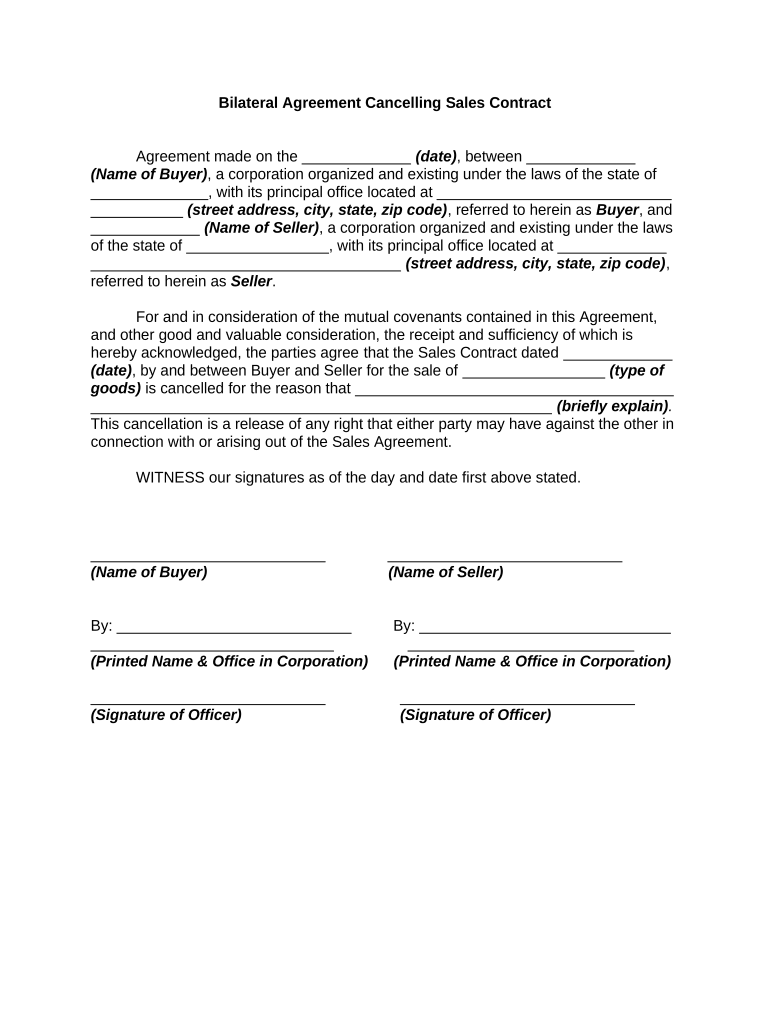
A bilateral contract is a mutual agreement in which each party makes a promise to the other and both parties are bound when the promises are exchanged. Typical commercial bilateral contracts cover services, supply of goods, leases, consulting engagements, and sales agreements. The document establishes each party's obligations, consideration exchanged, performance timelines, termination conditions, and remedies for breach. In the United States bilateral contracts are enforceable under common law and state contract law, with electronic signatures recognized under the ESIGN Act (15 U.S.C. ch. 96) and UETA where adopted.

Why a Clear Bilateral Contract Matters

A well-drafted bilateral contract reduces ambiguity about obligations, timing, and payment, lowering litigation risk and improving enforceability. Clear terms help teams execute reliably, allow accurate recordkeeping for audits, and support electronic signature workflows that meet ESIGN and UETA standards.

Why a Clear Bilateral Contract Matters

Common users and situations for Bilateral Contracts

Organizations and individuals use bilateral contracts whenever two parties exchange mutual promises — common in services, procurement, real estate leases, and vendor relationships.

  • Small businesses and contractors negotiating services and payment terms for short- to medium-term engagements.
  • Legal and procurement teams formalizing vendor obligations, deliveries, and acceptance criteria.
  • Real estate and property managers creating leases or occupancy agreements with mutual duties.

Who typically signs a Bilateral Contract

Company Executive

CEO, COO, or authorized officer who has corporate authority to bind the business. The signer should be listed with title and corporate capacity to avoid disputes over authority.

Independent Contractor

Individual or firm principal who accepts mutual obligations. Provide legal name, business name if applicable, and contact information to ensure attribution and enforceability.

Core elements to include in a professional Bilateral Contract

Including standard clauses reduces enforceability issues and makes the contract operationally useful for both parties, auditors, and courts.

Parties

Identify full legal names, business entity types, and addresses for each contracting party to ensure correct attribution and service of notices.
Consideration

Specify amounts, currency, payment schedule, invoicing procedures, and any retainers or holdbacks so consideration is demonstrable and collectible.

Scope of Work

Describe deliverables, acceptance criteria, milestones, and responsibilities to limit disputes about performance and scope creep.

Term and Termination

Define effective date, duration, renewal terms, and specific termination events including notice periods and cure rights.

Liability & Remedies

Allocate risk through indemnities, limitation of liability, and liquidated damages if appropriate, balancing enforceability and commercial practicality.

Governing Law

Name the state law that governs interpretation and dispute resolution and include venue or arbitration specifics when desired.

Step-by-step: completing a Bilateral Contract

Follow this sequence to prepare, review, and execute a bilateral contract cleanly and consistently.

  • 01
    Prepare Draft: Assemble parties, scope, payment, and key terms before internal review to avoid iterative revisions.
  • 02
    Internal Approval: Obtain legal and finance sign-off on risk, pricing, and payment terms prior to sending to counterparty.
  • 03
    Execution Method: Choose electronic signing or wet-ink notarized signing based on parties' needs and any statutory exceptions.
  • 04
    Record and Distribute: Store the fully executed contract in a secure repository and provide copies to each signer and relevant teams.

Typical online signing flow for a Bilateral Contract

Digital execution follows a predictable workflow that preserves attribution and audit trail details required for enforceability.

  • Upload Document: Sender uploads final PDF or DOCX to the signing platform.
  • Place Fields: Insert signature, date, and initial fields and assign signers.
  • Authenticate Signers: Choose authentication: email link, SMS code, or stronger methods if required.
  • Finalize: Signer completes form; platform records timestamp, IP, and audit trail.

Configuring a reliable eSignature workflow for this contract

Use these workflow settings to preserve consent, attribution, and a retrievable record consistent with ESIGN and UETA.

Field Configuration
Signature Field Required; signer attribution captured
Authentication Email link or SMS code; KBA if needed
Audit Trail Enable full action log and timestamping
Retention Store PDF + audit trail for reproductions

eSubmission and platform integration considerations

Choose a platform that supports a clear audit trail, preferred signer authentication, and required integrations.

  • Integrations: Salesforce, NetSuite, Microsoft 365
  • File Formats: PDF, DOCX, HTML supported
  • Security: TLS and AES encryption

Representative eSignature vendor comparison for executing bilateral contracts

Compare basic commercial plan attributes relevant to contract execution, auditability, and compliance. Signer and enterprise needs determine the appropriate tier.

signNow DocuSign Adobe Sign PandaDoc HelloSign
Starting Price $8/user/mo $15/user/mo $14/user/mo $19/user/mo $15/user/mo
Free Trial 7-day trial Varies by plan Varies by plan Varies by plan Varies by plan
Bulk Send Yes Yes Yes Yes No
Audit Trail Yes Yes Yes Yes Yes
HIPAA Compliant Yes Yes Yes No No

Security and compliance elements to verify

In-Transit Encryption: TLS 1.2/1.3
At-Rest Encryption: AES-256
Certifications: SOC 2 Type II available
Healthcare: HIPAA (BAA required)
Regulatory: 21 CFR Part 11 supported
Privacy: GDPR and CCPA compliance

Key risks and common legal consequences

Incorrect Tax Forms: 1099 penalties $60–$330 per form (IRC §6721)
I-9 Noncompliance: Violations $281–$2,789 per error (8 CFR §274a.2)
Missing Signatures: May render agreement unenforceable
Unauthorized signer: Contract voidable for lack of authority
Improper eConsent: Consumer-facing records require ESIGN disclosure (15 U.S.C. §7001)
Data Breach: Potential regulatory fines and remediation costs

Frequent mistakes when preparing a Bilateral Contract

  • Using informal or abbreviated party names that do not match formation documents, causing ambiguity in enforcement and payment.
  • Failing to describe consideration precisely; vague payment terms lead to disputes and collection challenges.
  • Skipping internal approvals for pricing and liability clauses, increasing exposure to unauthorized commitments.
  • Neglecting required consumer eConsent or specific statutory disclosures for regulated transactions under ESIGN.

Practical examples of bilateral contracts in common scenarios

Two short case examples showing how bilateral contracts are used across typical industries.

Real Estate Lease

A property manager and tenant agree on rent and term

  • Landlord delivers possession, tenant pays monthly rent
  • The signed lease includes maintenance responsibilities and is retained for the full lease term plus 3 years for audit purposes.

Services Agreement

A consultant and small business define deliverables and milestone payments

  • Consultant provides work per schedule, client pays upon acceptance
  • The contract includes an acceptance process and limitation of liability to reduce dispute risk.

Tips for accurate and efficient Bilateral Contract completion

Adopt these best practices to reduce rework, accelerate execution, and preserve enforceability.

Standardize Templates
Use approved templates to ensure consistent clauses, reduce legal review time, and limit negotiation on low-risk items.
Confirm Authority
Verify signer authority and record the capacity line to prevent later challenges on corporate power to contract.
Use Clear Dates
Always use MM/DD/YYYY in date fields and align effective, delivery, and payment dates to avoid timeline gaps.
Preserve Audit Trail
Retain signed PDF plus audit log capturing signer identity, IP, and timestamp for reproducibility.

Time-sensitive items to track after execution

Monitor these deadlines to maintain compliance, enforce rights, and avoid penalty exposure.

Effective Date:

The date obligations and warranties begin; confirmed in signature block

Payment Milestones:

Due dates for invoices and milestone payments

Notice Periods:

Timing required for termination, cure, or breach notices

Record Retention:

Retention start tied to execution or final performance

Renewal Deadlines:

Automatic renewal notice windows and opt-out timing

Key processing stages from draft to stored execution

A sequential view of milestones helps teams coordinate approvals, signing, and archival.

01

Draft and Review

Create draft, circulate to legal and finance for review

02

Approval

Obtain required internal sign-offs and clearance

03

Execution

Send for signatures and verify authentication

04

Archive

Store final signed copies and audit trail securely

Frequently asked questions about Bilateral Contracts

Answers to common execution, validity, and eSignature questions encountered by users preparing bilateral contracts.


Need help? Contact support

be ready to get more
Join over 28 million airSlate SignNow users