Establishing secure connection…Loading editor…Preparing document…

Buy Sell Agreement

This template is fully customizable. Edit the text, fill out the fields, and send it for signature. Give it a try!
Buy Sell Agreement

What a Buy Sell Agreement Is and When It Applies

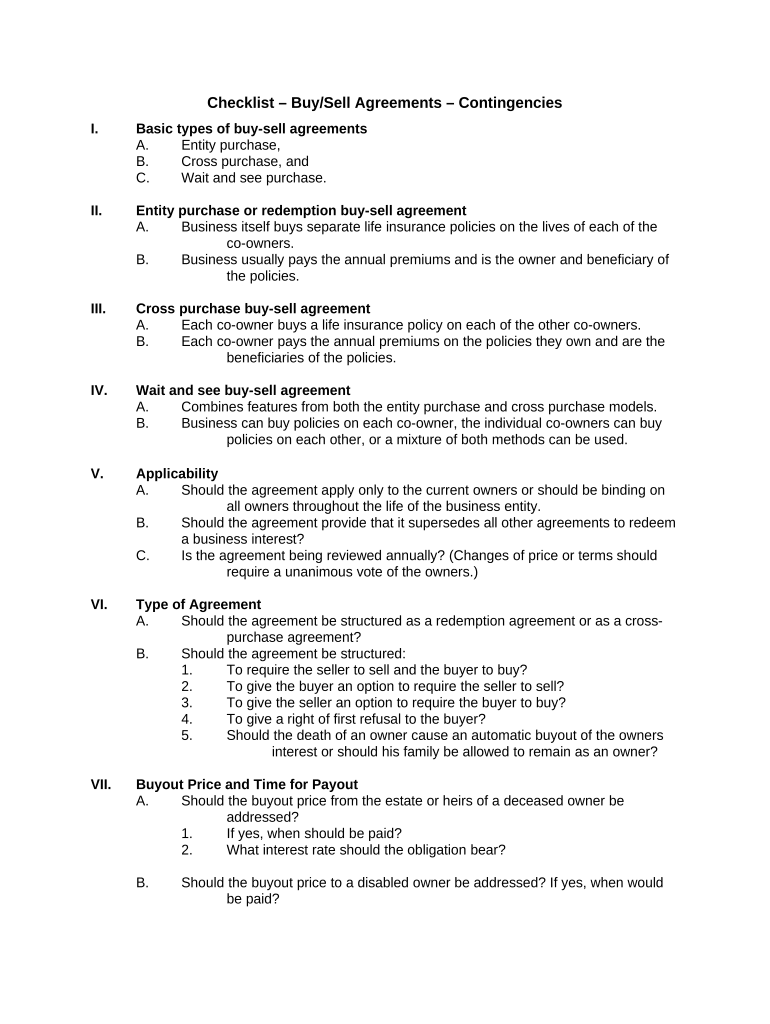
A Buy Sell Agreement is a legally binding contract among business owners that defines how ownership interests are transferred when a triggering event occurs. It sets valuation methods, purchase terms, funding mechanisms, and restrictions on transfer. Typical triggers include death, disability, retirement, bankruptcy, or voluntary sale. Properly drafted, the agreement preserves continuity, reduces disputes among successors or remaining owners, and clarifies tax and funding consequences for the business and its stakeholders.

Why a Clear Buy Sell Agreement Matters

A Buy Sell Agreement creates predictable outcomes for ownership changes, preserves business continuity, and reduces litigation risk by establishing valuation, funding, and transfer rules in advance.

Why a Clear Buy Sell Agreement Matters

Who Typically Prepares and Signs This Agreement

The agreement is used by owners of closely held companies, their advisors, and institutional stakeholders when planning ownership transitions.

  • Business owners and partners — Co-owners use it to define buyout triggers and purchase funding.
  • Investors and shareholders — Investors ensure orderly transfers that protect minority and majority interests.
  • Lenders and banks — Lenders may require agreements to protect collateral and streamline ownership changes.

Roles That Sign or Approve the Agreement

Owner / Partner

An owner or equity partner signs to commit their shares and accept the buyout mechanism. They should confirm valuation clauses, funding sources, and noncompete or restriction provisions before signing; inconsistent personal estate planning may affect enforceability.

Corporate Counsel

Counsel reviews governing law, tax allocation, funding language, and amendment processes. They advise on statutory formalities, state-specific notarization or witness needs, and integration with entity documents such as operating agreements or bylaws.

Essential Information to Include

Party Legal Names: Exact entity and individual names
Effective Date: MM/DD/YYYY effective date
Purchase Price: Agreed amount or formula
Valuation Method: Appraisal or formula description
Trigger Events: List of qualifying occurrences
Signatures: All parties' dated signatures

Key Risks from Incomplete or Incorrect Agreements

Funding Failure: Buyer unable to pay
Tax Consequences: Unclear tax treatment for parties
Valuation Disputes: Ambiguous appraisal procedures
Restrictive Covenants: Overbroad or unenforceable limits
Missing Signatures: Potential invalidation risk
State Noncompliance: Witness/notary rules overlooked

Common Preparation Mistakes to Avoid

  • Failing to specify a clear valuation method, leaving 'market value' undefined and inviting litigation.
  • Not aligning the buy‑sell with corporate documents such as the operating agreement or bylaws, creating contradictory terms.
  • Neglecting to fund the buyout (life insurance, sinking fund, or escrow), which can leave creditors exposed.
  • Forgetting state-specific notarization or witness requirements, which can impair enforceability in probate or court.

How to Complete a Buy Sell Agreement Step by Step

Follow a structured process: gather details, select valuation and funding, set triggers, obtain signatures and authentication.

  • 01
    Collect Parties: List full legal names and entity types for all owners.
  • 02
    Choose Valuation: Pick a formula, appraisal method, or agreed fixed price.
  • 03
    Define Funding: Specify life insurance, escrow, or installment terms.
  • 04
    Execute Document: Sign, date, and complete any required notarization.

Typical Buy Sell Execution Flow

A standard workflow moves from drafting through approval, signing, and record retention, with triggers enforced when events occur.

  • Draft Agreement: Prepare initial draft aligned with entity documents.
  • Review & Revise: Owners and advisors review valuation and funding.
  • Sign Parties: All owners sign; include witnesses or notary if required.
  • Store Record: Retain executed copy and audit trail securely.

Core Components of a Professional Buy Sell Agreement

A comprehensive agreement covers triggers, valuation, purchase mechanics, restrictions, governance after transfer, and dispute resolution to minimize ambiguity.

Trigger Events

Clear list of events that require or permit a buyout, such as death, disability, retirement, bankruptcy, or voluntary sale.
Valuation Process

Specify formula, appraisal procedures, valuation date, and tie-breaker methods to avoid disputes over price.

Funding Mechanism

Describe how purchases are paid: insurance proceeds, escrow, promissory note, installment schedule, or third‑party financing.

Transfer Restrictions

Include rights of first refusal, buyback obligations, and any noncompete or confidentiality terms limiting post‑transfer activity.

Governance After Transfer

Address changes to board seats, voting rights, and management control following ownership transfers.

Dispute Resolution

Designate arbitration or jurisdiction, venue, and governing law to streamline enforcement and minimize court delays.

Configuring a Digital Workflow for Execution

Set up fields, authentication, and routing in your signing platform to ensure proper signer order, verification, and recordkeeping.

Field | Configuration Type | Required | Conditional
Authentication Email link, SMS code, or advanced signer authentication
Signing Order Specify sequential or parallel signer sequence
Conditional Fields Show or hide fields based on responses
Notifications Email reminders and completion confirmations

Technical Options for eSigning and Storage

Choose a platform that supports required authentication, preserves an audit trail, and exports standard document formats.

  • Integrations: Salesforce, NetSuite, Google Workspace, and others
  • File Formats: PDF, DOCX, and archivable PDF/A output
  • Security: TLS in transit and AES-256 at rest

eSignature Vendor Comparison for Buy Sell Agreement Execution

Compare baseline pricing and core capabilities for eSignature vendors commonly used to execute legal agreements; signNow is listed first for parity in the table.

signNow DocuSign Adobe Sign PandaDoc HelloSign
Starting Price $8/user/mo $15/user/mo $14/user/mo $19/user/mo $15/user/mo
Free Trial 7-day free trial, no credit card required Varies by plan Varies by plan Varies by plan Varies by plan
Bulk Send Yes Yes Yes Yes No
Audit Trail Yes Yes Yes Yes Yes
HIPAA Compliant Yes Yes Yes No No
Envelope Cap No envelope cap 100 envelopes/user/year Varies by plan Varies by plan Varies by plan

Timing Considerations and Common Deadlines

Set internal deadlines for valuation, notice, funding, and filing to ensure triggers are met and rights are preserved under the agreement.

Notice Period:

Specify how many days' notice is required before a voluntary buyout or sale.

Valuation Deadline:

Set a clear date for valuation to avoid disputes about valuation timing.

Funding Schedule:

Define payment dates for lump sum or installment buyouts.

Insurance Claim Timing:

Align life or disability insurance claim deadlines with buyout funding needs.

Record Filing:

File amendments or notices with the state or corporate records within specified days.

Key Milestones in Agreement Lifecycle

Track milestones from negotiation to closing to ensure each stage completes before the next begins.

01

Negotiation

Agree on valuation, triggers, and funding before drafting the final document.

02

Execution

All parties sign; complete notarization or witness steps required by law.

03

Funding

Secure insurance, escrow, or payment arrangements to ensure buyout liquidity.

04

Ownership Transfer

Deliver instruments, update corporate records, and record necessary filings.

Real-World Examples of Buy Sell Agreement Use

Two practical scenarios illustrate how buyouts and funding mechanisms are applied across business types.

Family Manufacturing Business

A second-generation manufacturer used a fixed-formula valuation to reduce conflict at succession

  • Funding was set by life insurance and an installment note to ease cash flow
  • The result preserved operations and provided clear tax planning, but required careful alignment with estate plans and company bylaws to avoid probate complications.

Medical Practice Transition

A multi-physician practice adopted a buyout triggered by retirement or disability

  • Valuation tied to normalized EBITDA and patient panel metrics
  • They added HIPAA-compliant transition procedures and client handoff rules to reduce business disruption and preserve patient continuity during ownership changes.

Frequently Asked Questions About Buy Sell Agreements

Answers to common legal and practical questions about enforceability, notarization, valuation disputes, and updating agreements.


Need help? Contact support

be ready to get more
Join over 28 million airSlate SignNow users