Authority
Reference the specific bylaw, membership agreement clause, or board resolution authorizing removal; identify the body or officer making the decision and the date it was adopted.
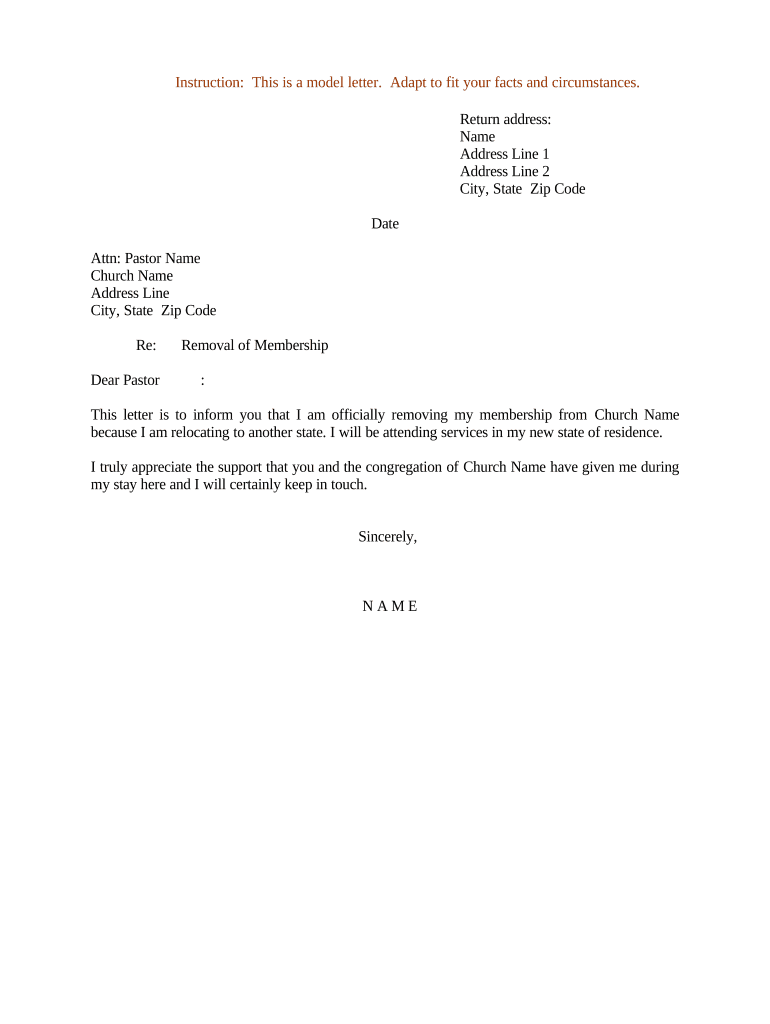
A precise Letter of Membership Removal reduces dispute risk, creates an auditable record, and clarifies next steps for both the organization and the removed member.

Organizations and people who commonly handle removal letters include governance officers, membership managers, and legal counsel.
Clear role separation—administration issues the notice, legal reviews when disputes are likely—reduces procedural errors and preserves record integrity.
Responsible for preparing and issuing the notice, maintaining the membership ledger, and recording the effective date and disposition. Typically drafts the letter based on board resolution and follows internal procedures for delivery and retention.
Provides legal review when removals may be contested or implicate contractual or statutory rights. Advises on bylaw compliance, appeal process language, and any required notarization or witness procedures under state law.
Reference the specific bylaw, membership agreement clause, or board resolution authorizing removal; identify the body or officer making the decision and the date it was adopted.
Provide a concise factual statement of the conduct or basis for removal (policy violations, non-payment, resignation, criminal conviction), avoiding inflammatory language and sticking to verifiable facts.
State the exact effective date using MM/DD/YYYY format so entitlement, access rights, and dues obligations are clear from that date forward.
Describe any internal appeal process, timelines to request review, and the decision maker for appeals; include how appeals must be submitted and any supporting evidence required.
List practical effects (loss of voting rights, access termination, removal of credentials) and any continuing obligations such as confidentiality or return of property.
State who to contact for questions, where the notice will be filed in the organization’s records, and whether the letter will be retained in membership files.
| Field | Configuration |
|---|---|
| Template | Create a reusable template with authority, reason, and signature fields pre-populated. |
| Signature Type | Choose e-signature with audit trail; require signer authentication as needed. |
| Approval Routing | Set sequential approvals: admin → counsel → board officer. |
| Storage Destination | Archive signed letters in secure records with retention metadata. |
Decide whether the organization uses physical delivery, email, or an eSignature platform for notices based on bylaws and evidence needs.
Choose the method required by governing documents; if multiple channels are allowed, use one that provides the strongest verifiable evidence.
Date letter is sent; use MM/DD/YYYY format.
Commonly 14–30 days to request appeal or submit evidence.
When rights terminate; may be immediate or after the response window expires.
Update membership records within 10 business days of effectiveness.
Specify final date to appeal, calculated from notice issuance.
Board votes or officer decision recorded in meeting minutes.
Draft and legal-review the removal letter and supporting facts.
Send via approved method and capture proof of service.
Update membership records and archive supporting documentation.
| signNow | DocuSign | Adobe Sign | PandaDoc | HelloSign | |
|---|---|---|---|---|---|
| Starting Price | $8/user/mo | $15/user/mo | $14/user/mo | $19/user/mo | $15/user/mo |
| Free Trial | 7-day free trial | Varies by plan | Varies by plan | Varies by plan | Varies by plan |
| Bulk Send | Yes (Business Premium) | Yes | Yes | Yes | No |
| Audit Trail | Yes | Yes | Yes | Yes | Yes |
| HIPAA Compliant | Yes | Yes | Yes | No | No |
| Envelope Cap | No cap | 100 envelopes/user/year | Varies by plan | Varies by plan | Varies by plan |
Tim Martin used online document execution to manage tenant and membership paperwork efficiently
John Butler highlighted responsiveness and API integration for document handling