Establishing secure connection…Loading editor…Preparing document…

Letter Closing Estate

This template is fully customizable. Edit the text, fill out the fields, and send it for signature. Give it a try!
Letter Closing Estate

What a Letter Closing Estate Is and When it’s Used

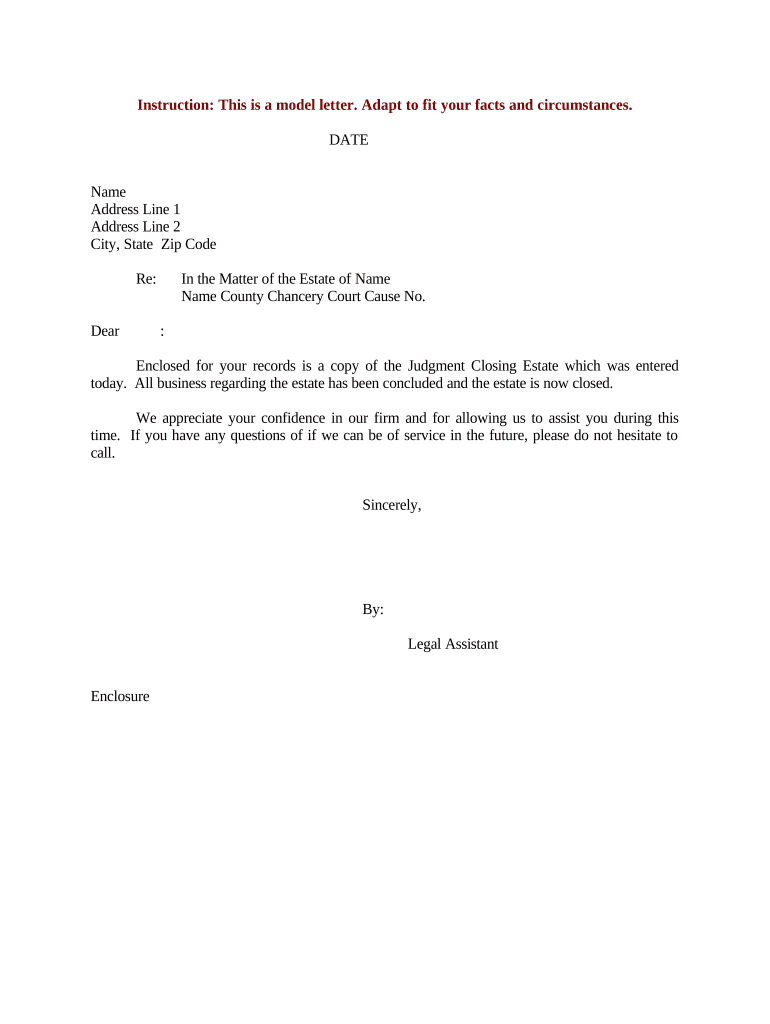
A Letter Closing Estate is a formal written notice prepared by an executor, personal representative, or estate attorney that documents final distributions, closures of accounts, and completion of administrative tasks required to close a decedent’s estate. It summarizes actions taken, identifies remaining obligations (tax filings, creditor notices, deed transfers), and provides recipients with contact and signature details. The letter supports probate records and can accompany accounting exhibits, receipts, and releases required by beneficiaries, courts, or financial institutions when concluding estate administration.

Why a Clear Closing Letter Matters

A concise Letter Closing Estate creates an auditable record of final actions, reduces disputes, and helps beneficiaries and institutions confirm that assets were distributed and obligations satisfied under the will or intestacy rules.

Why a Clear Closing Letter Matters

Who Typically Prepares and Receives This Letter

Executors, probate attorneys, trustees, and authorized agents commonly prepare Letter Closing Estate documents to finalize estate administration and notify interested parties.

  • Individual executors managing a personal estate who need to document final distributions and creditor resolutions.
  • Probate or estate attorneys coordinating filings, receipts, and beneficiary releases across multiple jurisdictions.
  • Financial institutions and title companies receiving formal closing confirmation to release accounts or remove liens.

Step-by-Step: Completing a Letter Closing Estate

Follow these core steps to produce a clear, legally useful closing letter that aligns with probate records and institutional requirements.

  • 01
    Gather Records: Collect probate orders, account statements, and receipts for attachments.
  • 02
    Draft Summary: Describe distributions, creditors paid, and remaining obligations concisely.
  • 03
    Attach Proofs: Include receipts, releases, and court letters as exhibits.
  • 04
    Sign and Date: Executor signs with printed name, title, and date to establish authority.

Key Components to Include in a Professional Closing Letter

A structured letter reduces follow-up requests. Include identity and authority details, an itemized distribution schedule, references to probate case numbers, and a clear signature block with contact information.

Estate Identity

Full legal estate name, probate case number, and county of probate to link the letter to official court records and filings.
Executor Authority

Reference letters testamentary or appointment order by date and court to demonstrate signatory authority to distribute estate assets.

Asset Summary

Line-item list of assets transferred or paid, showing recipient names, amounts, and identifying numbers for bank or title processing.

Creditor Resolution

Statement of creditor claims paid or pending with reference to attached payment receipts or release documents.

Attachments

Exhibit list of supporting documents such as receipts, releases, deeds, and final accounting schedules for recipient verification.

Signature Block

Executor or attorney signature, printed name, title, mailing address, phone, and date to enable verification and follow-up.

Required Information and Standard Fields

Estate Name: Full legal name
Probate Case: Court name and case number
Executor Details: Name and authority reference
Distribution List: Recipient names and amounts
Attachments: Exhibit identifiers
Signature: Signed and dated

How to Configure an Online Closing Letter Workflow

Use a consistent digital workflow to collect signatures, attach exhibits, and preserve an audit trail for probate or institutional review.

Field Configuration
Executor Signature Required, date field paired
Attachment Upload Mandatory for receipts and releases
Signer Authentication Email or SMS code recommended
Audit Trail Enable timestamps and IP capture

Digital Signing and Delivery Options

The letter can be completed and signed electronically, then delivered to banks, title companies, or beneficiaries while preserving an audit trail.

  • File Formats: PDF and DOCX supported
  • Integrations: Salesforce, NetSuite, Microsoft 365
  • Authentication: Email, SMS, or advanced methods

Common Distribution Methods for a Closing Letter

Select the delivery method based on recipient requirements: banks and title companies often need notarized originals or certified electronic copies.

  • Email Delivery: Send signed PDF to institutional contacts with attachments.
  • Secure Portal: Upload to firm or client portal for controlled access.
  • Registered Mail: Use for original signed hard copies where required.
  • In-Person Filing: Deliver to court clerk or title company when originals are mandated.

Timelines and Typical Deadlines to Watch

Deadlines depend on probate schedule, tax filings, and creditor claim periods; track filing dates and statutory response windows to avoid penalties or contested claims.

Estate Tax Filings:

Federal estate return deadlines depend on federal rules and extensions

Notice to Creditors:

State-specific statutory notice periods apply; verify local probate code

Beneficiary Accounting:

Provide final accounting within court-ordered deadlines

Deed Transfers:

Record deeds promptly per county recording schedules

Document Retention:

Keep records for statutory retention periods after closing

Common Mistakes to Avoid When Preparing the Letter

  • Using informal or incomplete recipient identifiers that cause banks or title companies to reject the letter or request clarification.
  • Failing to attach supporting receipts and releases, which can prolong probate closure or delay distribution of funds.
  • Mismatching executor name with court appointment documents, resulting in additional verification steps or rejection.
  • Omitting the probate case number or court reference, which makes it difficult for institutions to associate the letter with the correct file.

Penalties and Practical Risks of an Incorrect Closing Letter

Distribution Delay: Incorrect letters can delay beneficiary payments
Creditor Claims: Incomplete notices may reopen creditor windows
Title Issues: Missing deed details can block recording
Tax Exposure: Errors may trigger IRS inquiries
Court Rejection: Nonconforming filings may be rejected
Increased Costs: Corrections add legal and administrative fees

eSignature Vendor Comparison for Executing a Closing Letter

Common eSignature vendors vary by price model, bulk send features, and HIPAA or advanced compliance needs; signNow is shown first for side-by-side comparison.

signNow DocuSign Adobe Sign PandaDoc HelloSign
Starting Price $8/user/mo $15/user/mo $14/user/mo $19/user/mo $15/user/mo
Free Trial 7-day free trial Yes Yes Yes Yes
Bulk Send Yes Yes Yes Yes No
Audit Trail Yes Yes Yes Yes Yes
HIPAA Compliant Yes Yes Yes No No

Who Has Authority to Sign the Letter

Executor

An executor appointed by the probate court signs to confirm distributions and account closures. Include the court reference and date of appointment to validate authority in institutional reviews.

Estate Attorney

An attorney of record may sign when acting under express authority or power of attorney for the executor; include a clear statement of representation and attach the power of attorney if required.

Real-World Examples of How Closing Letters Are Used

These examples show typical outcomes when a Letter Closing Estate is used with proper documentation and signatures.

Probate Closure Example

An executor summarized final distributions for beneficiaries and attached receipts

  • The title company accepted the attached deed and release
  • The estate closed without additional court motions after the documentation matched probate records.

Bank Account Release

A bank required a signed closing letter plus certified court order

  • The executor provided both electronically with notarization
  • Funds were released after the bank verified the court reference and signatures.

Frequently Asked Questions About Letter Closing Estate

Answers address typical execution, notarization, signature authority, and recordkeeping questions most executors and attorneys encounter.


Need help? Contact support

be ready to get more
Join over 28 million airSlate SignNow users