Establishing secure connection…Loading editor…Preparing document…

Court Answer Template

This template is fully customizable. Edit the text, fill out the fields, and send it for signature. Give it a try!
Court Answer Template

What a Court Answer Template Is and When it's Used

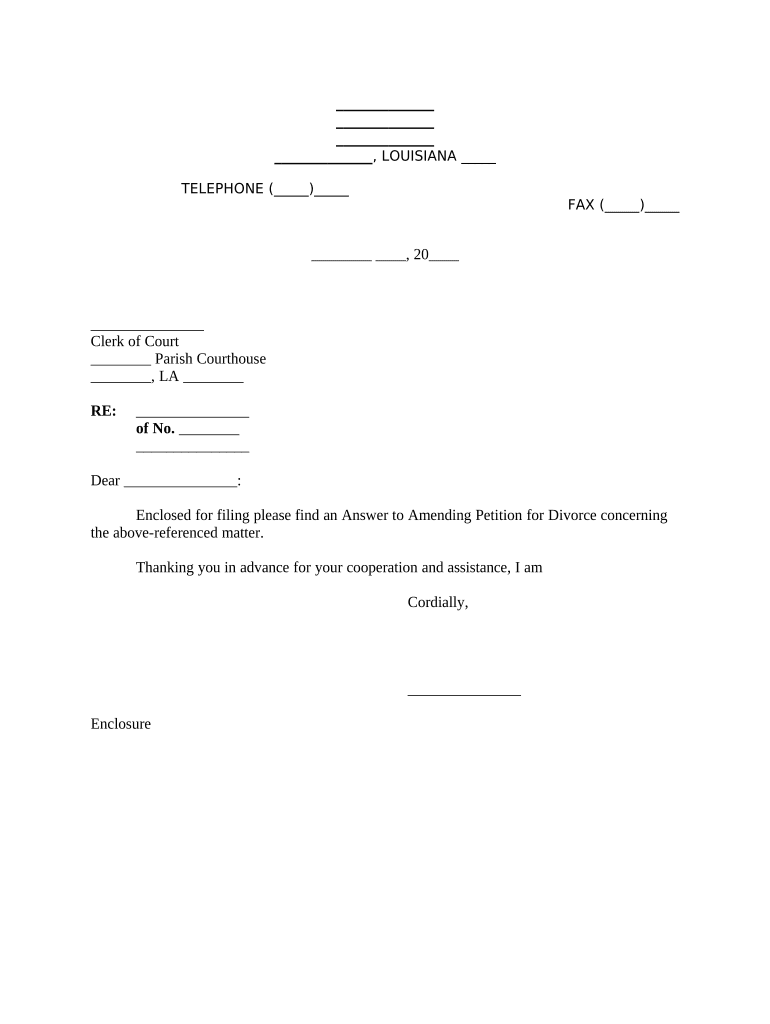
A Court Answer Template is a standardized document used by defendants or respondents to respond formally to a civil complaint, petition, or other pleading filed in court. It sets out admissions, denials, affirmative defenses, and any counterclaims, and it provides the respondent's contact and counsel information. Using a template helps ensure required elements are present, reduces drafting errors, and speeds filing. The template can be adapted for state or federal procedure, altered to add jurisdiction-specific verbiage, and used as the basis for e-filing or notarized verification where courts require an oath or sworn statement.

Why a Clear Template Matters for Court Responses

A well-constructed Court Answer Template reduces filing errors, clarifies legal positions, and preserves procedural defenses. It helps meet formatting and content expectations of clerks and opposing parties while supporting consistent case management across multiple matters.

Why a Clear Template Matters for Court Responses

Who Typically Completes a Court Answer Template

Courts, litigants, and counsel use Court Answer Templates to prepare responsive pleadings quickly and consistently.

  • Solo practitioners and small firms who need repeatable, defensible pleadings drafted efficiently.
  • In-house legal teams managing multiple claims who require consistent language across similar matters.
  • Pro se litigants who need guidance on structure, required sections, and procedural timing.

Essential Sections to Include in the Template

Include standardized, clearly labeled sections so every answer contains the elements courts expect and opposing counsel can locate key responses quickly.

Caption

Court name, case number, party names, and title of the pleading must match the complaint exactly to avoid clerical rejection.
Admissions and Denials

Numbered responses matching each paragraph of the complaint, stating whether each allegation is admitted, denied, or lacks sufficient information to admit or deny.

Affirmative Defenses

List concise affirmative defenses such as statute of limitations, failure to state a claim, payment, or accord and satisfaction where applicable.

Counterclaims and Crossclaims

Include separately numbered counterclaims or crossclaims with factual allegations and requested relief if asserting claims against the plaintiff or co-defendants.

Signature Block

Typed name, bar number (if attorney), address, telephone, email, and a signature line with date for the signer or counsel.

Certificate of Service

Statement describing how and when the answer was served on opposing counsel, with the recipient's contact information and service date.

Stepwise Process to Complete and File an Answer

Follow a consistent sequence to prepare, verify, and file the answer so deadlines are met and procedural requirements satisfied.

  • 01
    Review the Complaint: Read every allegation and note paragraphs requiring specific responses.
  • 02
    Draft Numbered Responses: Match numbering and provide admissions, denials, or lack of information.
  • 03
    Add Defenses and Claims: Include affirmative defenses and any counterclaims with supporting facts.
  • 04
    Sign and Serve: Sign, date, and file or e-file; serve opposing parties per local rules.

Typical Workflow from Draft to Filed Answer

This four-stage workflow outlines who does what from drafting through filing so roles and timing are clear.

  • Draft: Prepare the answer using the template and case facts.
  • Review: Attorney or party reviews for legal sufficiency and accuracy.
  • Sign: Sign electronically or wet-ink if required by jurisdiction.
  • File: Submit via court e-filing or clerk's office according to rules.

Setting Up an Online Template for Reuse

Configure these fields and settings when you build a reusable, court-ready template for multiple matters.

Field Configuration
Caption Variables Make court name and case number auto-fillable fields
Conditional Responses Show affirmative defense fields only if selected
Signature Authentication Require email plus optional SMS verification
E-Filing Export Generate PDF/A or court-required format automatically

Technical Considerations for Digital Completion and Filing

Ensure platform compatibility with court e-filing formats, signer authentication, and document retention policies before adopting digital workflows.

  • File Formats: PDF, DOCX, PDF/A
  • Integrations: Salesforce, NetSuite, Google Workspace
  • Authentication: Email, SMS, or advanced ID checks

Vendor Pricing and Feature Snapshot for eSignature Support

Compare starting prices and core features relevant to filing and signing legal pleadings; signNow appears first per vendor comparison rules.

signNow DocuSign Adobe Sign PandaDoc HelloSign
Starting Price $8/user/mo $15/user/mo $14/user/mo $19/user/mo $15/user/mo
Free Trial 7-day free trial Varies Varies Varies Varies
Bulk Send Yes (Business Premium) Yes Yes Yes No
Envelope Cap No cap 100 envelopes/user/year No cap No cap No cap
HIPAA Compliant Yes Yes Yes No No

Security and Compliance Considerations for Electronic Answers

Encryption in Transit: TLS 1.2/1.3 required
Encryption at Rest: AES-256 storage
Privacy Frameworks: GDPR and CCPA compliance
Regulated Records: HIPAA BAA available
Audit Trails: Comprehensive signed-event logs
Certifications: SOC 2 Type II and ISO 27001

Consequences of an Incomplete or Untimely Answer

Default Judgment: Court may enter judgment for plaintiff
Sanctions: Monetary or case-management sanctions possible
Waived Defenses: Certain defenses may be lost
Service Defects: Improper service can void filings
Perjury Risk: False verifications may trigger penalties
Late Filing Fees: Clerks may impose fees or rejections

Common Pitfalls When Preparing a Court Answer

  • Missing the precise deadline for filing an answer is the most common error and can lead to default judgments or emergency motions to set aside defaults.
  • Failing to number responses to match complaint paragraphs creates ambiguity and may invite requests for clarification or motions to strike.
  • Using vague language in affirmative defenses without factual support can cause courts to dismiss those defenses as conclusory under motion practice.
  • Incorrect service or certificate of service details often lead to disputes about timeliness and may require refiling or additional proof of service.

Practical Tips for Accurate and Efficient Answers

Adopt these practices to reduce errors, streamline review, and preserve defenses.

Use a Numbered Response Structure
Number each answer to correspond to the complaint paragraph and state the response succinctly; this preserves clarity and reduces later motion practice over ambiguous responses.
Limit Admissions to What You Can Prove
Admit only facts supported by records or testimony; use 'lack sufficient information' for items requiring investigation to avoid inadvertent admissions.
Document Service Carefully
Keep receipts, email delivery confirmations, or e-filing acknowledgements and accurately state the method and date in the certificate of service.
Maintain a Review Log
Track who drafted and reviewed the answer, dates of each action, and versions to support malpractice defense and case chronology if disputes arise.

Illustrative Use Cases for a Court Answer Template

These two practical examples show how a template adapts to different fact patterns and speeds filing while maintaining legal sufficiency.

Tenant Eviction Response

A tenant uses the template to respond to a summary eviction complaint with numbered denials and habitability defenses.

  • Template highlights required local procedural language for eviction notices.
  • The tenant files a timely answer with certificate of service, preserving defenses and avoiding default while scheduling discovery and settlement discussions.

Business Contract Dispute

A small business answers breach of contract allegations and asserts six affirmative defenses tailored to contract performance and offset.

  • The template captures counterclaim space and signature block for authorized signatory.
  • Counsel adapts the template, e-files the answer, and attaches exhibits, reducing drafting time and ensuring the case proceeds on the merits.

Frequently Asked Questions About Using a Court Answer Template

Answers to common questions about timing, signatures, electronic submission, and verification when preparing a court answer.


Need help? Contact support

Key Deadlines and Timing Considerations

Keep these timing rules in mind when preparing an answer; local rules and the summons control the exact due date.

Federal Civil:

21 days after service (FRCP 12(a)(1))

State Court Typical:

Usually 20–30 days after service; check local rules

Counterclaim Response:

Often same period as original answer; verify local practice

Motion Response Deadlines:

Shorter deadlines may apply for motion practice—review court scheduling order

Extension Requests:

File stipulated or ex parte extensions before deadline when possible

be ready to get more
Join over 28 million airSlate SignNow users