Caption
Court name, case number, party names, and document title formatted to local rules; essential for clerk acceptance and indexing.
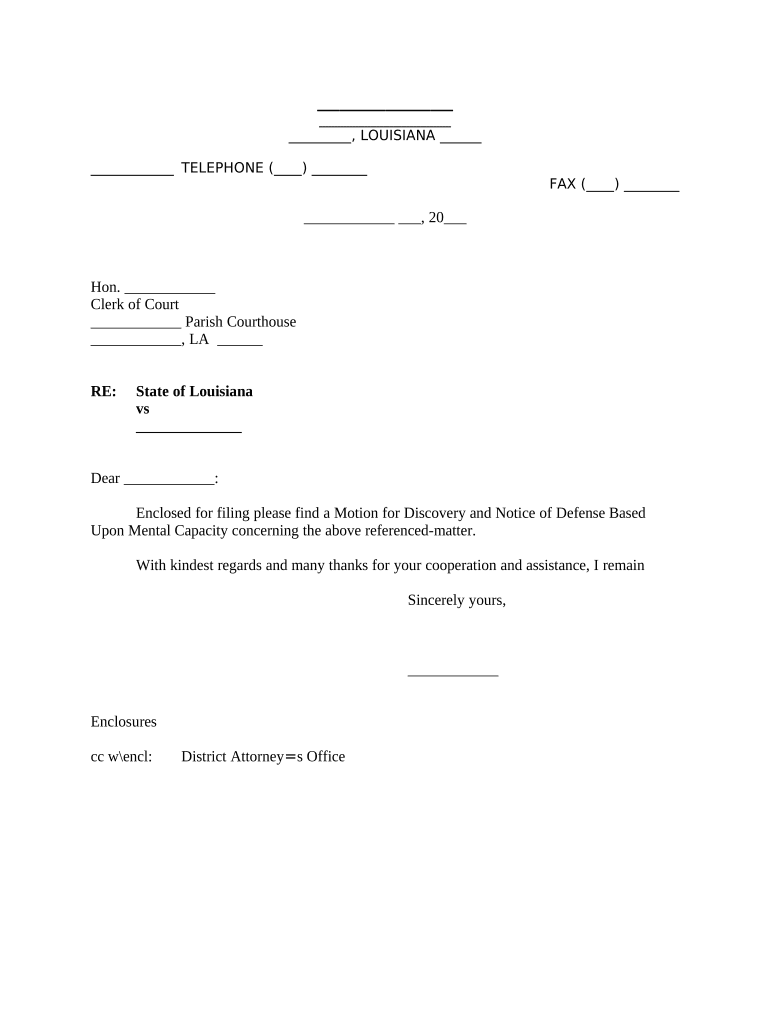
A well-prepared motion reduces risk of rejection, shortens adjudication time, and preserves relief options under court rules and statutes.

Motions are prepared and filed by litigators, in-house counsel, paralegals, and self-represented parties whenever judicial action is required.
The attorney of record signs motions, certifies compliance with local meet-and-confer rules where required, and files under the firm’s or client’s electronic filing account. Attorneys must include bar number and contact information and are responsible for service and accuracy of representations to the court.
Paralegals often assemble exhibits, run e-filing checks, and execute filing steps under attorney supervision. They ensure formatting, exhibit labeling, and certificate of service are complete before submission to the court's e-filing system.
Court name, case number, party names, and document title formatted to local rules; essential for clerk acceptance and indexing.
A concise, specific statement of the exact order or relief sought, including statutory or rule authority supporting the request.
Chronological, objective facts tied to exhibits and citations; avoid argument in the facts section unless permitted by local practice.
Issue-focused analysis with supporting statutes and case law, organized by headings and limited to page limits set by local rules.
A ready-to-sign order with clear operative language and blanks filled; many courts require upload of a separate proposed order file.
Statement showing how and when parties were served (e-service, mail, or hand) consistent with court rules and local e-filing requirements.
| Field | Configuration |
|---|---|
| Authentication | Email link, SMS code, or KBA depending on court and sensitivity |
| Document Format | PDF/A preferred; include separate proposed order file |
| Audit Trail | Enable IP, timestamp, and signer actions |
| Storage | Encrypted storage (AES-256) with access controls |
Courts and e-filing vendors accept signed PDFs, but check the court’s acceptable formats and authentication expectations before submission.
Typically 21 days after service (Fed. R. Civ. P. 12(a)).
Frequently 14 days after the response, subject to local rules.
Motion timing often tied to close of discovery per local schedule.
File as early as practicable; cite calendaring conflicts with dates.
Follow strict notice and certification requirements set by the court.
Attorney finalizes motion and supporting exhibits for filing.
Court accepts the filing and assigns a docket entry number.
Proof of service filed per court rules after e-filing.
Judge hears argument or rules on papers; proposed order is entered if granted.
| signNow | DocuSign | Adobe Sign | PandaDoc | HelloSign | |
|---|---|---|---|---|---|
| Starting Price | $8/user/mo | $15/user/mo | $14/user/mo | $19/user/mo | $15/user/mo |
| Free Trial | 7-day free trial | Varies | Varies | Varies | Varies |
| Bulk Send | Yes | Yes | Yes | Yes | Yes |
| Audit Trail | Yes | Yes | Yes | Yes | Yes |
| HIPAA Compliant | Yes | Yes | Yes | No | No |
| Envelope Cap | No cap | 100 envelopes/user/year | Varies by plan | Varies by plan | Varies by plan |
| Criteria | Court Filing Motion | Affidavit |
|---|---|---|
| Purpose | request judicial action | sworn factual statement |
| Signature Type | attorney signature | notarized or sworn signature |
| Typical Filing | e-filed with proposed order | attached as exhibit |
| Deadline Sensitivity | high | moderate |
Submit as searchable PDF/A with embedded bookmarks and cover page.
Provide judge-ready order as separate PDF; include editable text if permitted.
Label and upload exhibits sequentially; include an exhibit index in the motion.
File as standalone PDF showing service method and date.
A litigation team prepared a motion to compel discovery using a standardized template and exhibit index.
A solo attorney filed an ex parte temporary restraining order using a checklist and proposed order.