Establishing secure connection…Loading editor…Preparing document…

Letter in Support of Trust Contestant

This template is fully customizable. Edit the text, fill out the fields, and send it for signature. Give it a try!
Letter in Support of Trust Contestant

What a Letter in Support of Trust Contestant Is

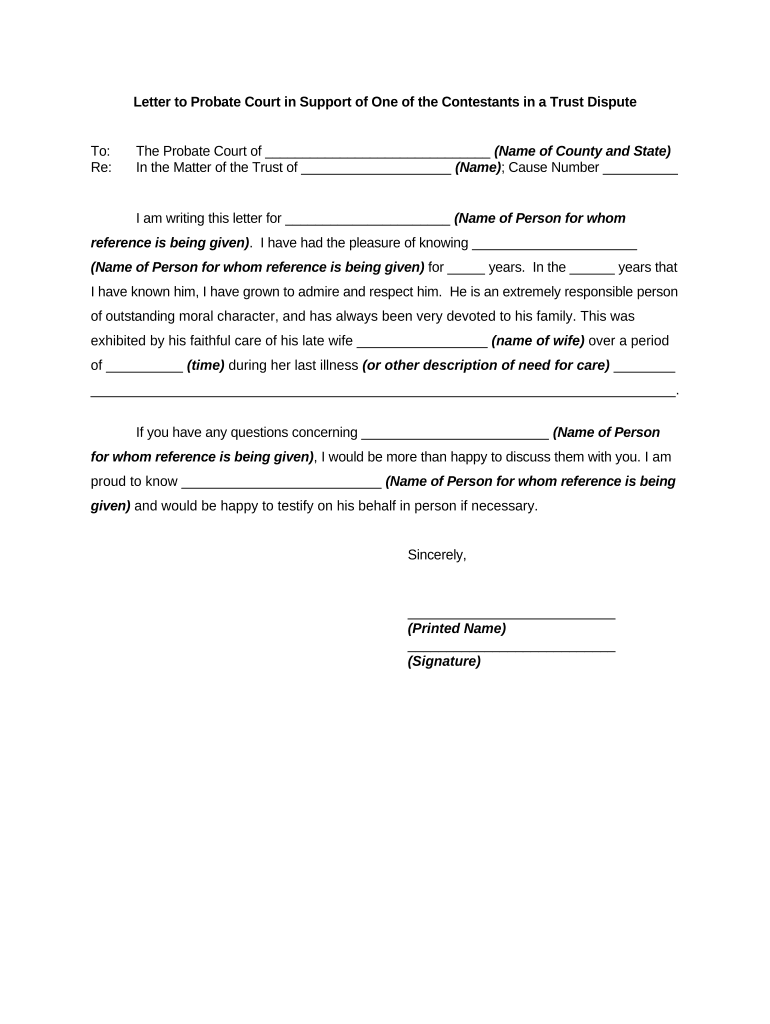
Letter in Support of Trust Contestant is a concise, written statement submitted to a probate or trust administration proceeding that supports a named individual's standing to contest a trust instrument or to act as a contestant. It explains the writer's relationship to the parties, observed facts or reasons for contesting (capacity, undue influence, or mistake), and any relevant timelines or documents. The letter is used by attorneys, beneficiaries, or interested parties to provide context and evidence to the court or to counsel during pre-filing negotiations.

Why this Letter Matters in Trust Disputes

A Letter in Support of Trust Contestant clarifies factual observations, documents critical dates, and communicates the writer's perspective on capacity, undue influence, or fraud. It helps counsel and the court evaluate the merits of a challenge and can expedite settlement or case triage.

Why this Letter Matters in Trust Disputes

Who Prepares and Relies on This Letter

Typical users who prepare or submit this letter include attorneys, beneficiaries, trustees, and close family members with direct knowledge of relevant events.

  • Attorneys drafting pleadings or evaluating case merits on behalf of contesting parties.
  • Beneficiaries seeking to document observations about the decedent's capacity or third-party conduct.
  • Witnesses or family members providing factual recollections, dates, and corroborating contacts.

Representative Author Profiles

Beneficiary

A named beneficiary with direct observations about the settlor's health, decision-making, or interactions with potential influencers. Provides firsthand details on conversations, medical appointments, and changes in behavior that may support claims of diminished capacity or undue influence.

Attorney

An estate litigation attorney who reviews documentary evidence, evaluates statutory deadlines, and drafts pleadings. Uses the letter to assemble chronology, request records, and advise whether filings meet jurisdictional standards such as statute of limitations or forum requirements.

Core Elements That Make the Letter Persuasive

Essential elements make a Letter in Support of Trust Contestant persuasive and admissible: factual chronology, supporting exhibits, clear allegations, signer credibility, jurisdictional compliance, and proper authentication.

Chronology

Provide a concise, dated timeline of events relevant to the contest, with specific dates and locations. Chronology helps counsel establish materiality, pattern, and plausibility when combined with documents and witness statements.
Exhibits

Attach labeled exhibits such as medical records, bank statements, emails, and affidavits. Ensure each exhibit is referenced in the letter and include page ranges or exhibit numbers to ease review and admissibility.

Clear Allegation

State the specific legal basis for contest (e.g., lack of capacity, undue influence, mistake) with factual examples. Avoid conclusory or speculative language; focus on observable conduct and time-stamped evidence.

Signer Credibility

Describe the author's relationship to the settlor, their basis for knowledge, and any relevant professional or personal contact. Credibility details increase weight of statements during evidentiary review.

Jurisdiction

Confirm governing law, venue, filing deadlines, and whether the letter conforms to local probate rules. Missing jurisdictional statements can lead to procedural dismissal or delay.

Authentication

Include signature, date, and notary or witness acknowledgment if required. If relying on electronic delivery, describe authentication methods and retention of audit trails to support admissibility.

Step-by-Step: Prepare the Letter

Follow this step-by-step process to prepare a clear, admissible Letter in Support of Trust Contestant.

  • 01
    Gather Facts: Collect dates, communications, and witness names.
  • 02
    Attach Evidence: Include copies of records and correspondence.
  • 03
    State Basis: Explain capacity, undue influence, or mistake succinctly.
  • 04
    Sign & Date: Sign, date, and notarize if required by jurisdiction.

How to Configure an Online Document Workflow

Set up a clear, auditable workflow when preparing and e-signing the letter to preserve chain-of-custody and authenticity.

Field Configuration
Document upload PDF or DOCX with embedded exhibit placeholders.
Signature type Choose audit-trail eSign or notarized wet signature as required.
Authentication Use email plus SMS or ID verification for sensitive records.
Retention settings Enable full audit trail retention for legal discovery.

From Draft to Use: Typical Letter Workflow

The letter moves from evidence collection to drafting, review, and submission or use in settlement negotiations.

  • Collect: Assemble documents, dates, and witness contacts.
  • Draft: Write clear facts, avoid legal argument overflow.
  • Review: Counsel verifies legal sufficiency and timing.
  • Submit: File with counsel or present during mediation.

Technical Considerations for Digital Preparation and Delivery

Choose file formats and integrations that maintain authenticity and allow easy exhibit attachment.

  • Integrations: Supports Salesforce, NetSuite, Microsoft 365, Google Workspace.
  • Formats: Accepts PDF, DOCX, and exportable signed PDFs.
  • Authentication: Email, SMS, ID verification, and audit trail options.

Required Information Checklist

Settlor Details: Full legal name and date of birth
Trust Identification: Trust name, effective date, and trustee
Contestant Details: Name, contact information, relationship
Allegations Summary: Capacity, undue influence, or fraud specifics
Supporting Evidence: Medical records, emails, witness statements
Signature Block: Printed name, signature, and date

Common Pitfalls to Avoid

  • Including hearsay without foundation can weaken admissibility and prompt evidentiary objections in court.
  • Vague timelines or unspecific dates reduce the letter's utility for counsel and complicate subpoena requests.
  • Overstating legal conclusions rather than stating observed facts can expose the author to credibility challenges.
  • Failing to preserve original documents or metadata risks loss of key proof during discovery and undermines claims.

Timing Considerations and Deadlines

Timing matters: preserve evidence immediately, consult counsel on state filing deadlines, and note that procedural rules vary across probate courts.

Preserve Evidence Promptly:

Collect records and metadata as soon as concerns arise to avoid spoliation issues.

Check Filing Deadlines:

State statutes of limitations and probate timetables differ; verify with counsel.

Serve Interested Parties:

Many jurisdictions require prompt notice or service after filing a contest.

Notarization Timing:

If notarization is required, schedule before submitting to court or counsel.

Settlement Windows:

Early exchange of letters can prompt mediation or records production before formal filing.

Key Milestones from First Concern to Resolution

A sequential view of milestones helps track preparation progress and legal readiness before formal contest filings.

01

Initial Assessment

Determine facts, parties, and whether contest grounds likely exist.

02

Evidence Collection

Gather documents, medical records, and witness contact information.

03

Draft & Review

Prepare the letter and have counsel review for legal sufficiency.

04

File or Negotiate

File a petition or use the letter to pursue settlement or records production.

eSignature Pricing and Feature Comparison for Letter Preparation

Basic pricing and feature availability across common eSignature providers. signNow is listed first as the comparative baseline.

signNow DocuSign Adobe Sign PandaDoc HelloSign
Starting Price $8/user/mo $15/user/mo $14/user/mo $19/user/mo $15/user/mo
Free Trial Yes, 7-day trial No No Yes, limited Yes, limited
Bulk Send Yes Yes Yes Yes No
Audit Trail Yes Yes Yes Yes Yes
HIPAA Compliant Yes Yes Yes No No
Envelope Cap No cap 100 envelopes/user/year Varies by plan Varies by plan Varies by plan

Frequently Asked Questions and Practical Answers

Answers to common questions about form content, authentication, admissibility, and handling sensitive records in trust contest situations.


Need help? Contact support

be ready to get more
Join over 28 million airSlate SignNow users