Establishing secure connection…Loading editor…Preparing document…

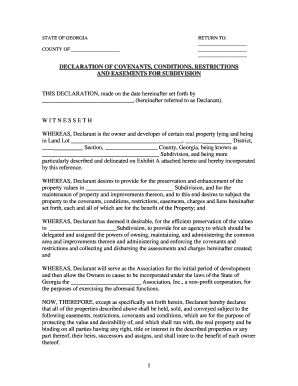
Covenants and Restrictions Sample

This template is fully customizable. Edit the text, fill out the fields, and send it for signature. Give it a try!
Covenants and Restrictions Sample

What the Covenants and Restrictions Sample Is

The Covenants and Restrictions Sample is a model written instrument that defines permitted uses, obligations, and limitations for real property within a controlled community, subdivision, or development. It typically sets standards for property maintenance, architectural controls, use restrictions, assessments, enforcement remedies and dispute resolution procedures. The sample serves as a starting point for prepared CC&Rs (covenants, conditions, and restrictions), enabling drafters, homeowners associations, developers, and counsel to adapt language for state law, recording requirements, and project-specific governance. Use requires review for local recording and statutory conformity.

Why a Clear Sample Matters for Risk and Enforceability

A professionally drafted Covenants and Restrictions Sample clarifies property rights, reduces later disputes, and improves enforceability by providing precise definitions, remedies, and administrative procedures aligned with applicable state law and recording practices.

Why a Clear Sample Matters for Risk and Enforceability

Who Typically Uses a Covenants and Restrictions Sample

The sample is used by a mix of creators and recipients who need a clear, adaptable framework for community rules and legal recording.

  • Developers and builders who prepare governing documents during subdivision formation, often with attorney oversight.
  • Homeowners associations (board members and managers) who enforce standards and need consistent amendment procedures.
  • Real estate attorneys and title professionals who review recording language and advise on state-specific formalities.

Each user should adapt the sample to local recording requirements, state property law, and any lender or municipal conditions before execution and filing.

Primary Signers and Roles

Developer — Authorized Officer

The developer or its authorized officer signs on formation to impose covenants. Legal counsel should confirm corporate authority and attach any corporate resolutions or execution certificates to ensure recording acceptance.

Association Representative

The homeowners association president or managing agent signs amendments or enforcement acknowledgements. Signatory capacity must be documented (by-laws, board minutes, or corporate filings) to validate authority under state recording rules.

Core Components to Include in a Professional Sample

A robust Covenants and Restrictions Sample contains defined terms, permitted and prohibited uses, maintenance obligations, architectural control procedures, assessment and lien mechanisms, dispute resolution, amendment rules, severability, and recording language tailored to state requirements.

Definitions

Precise definitions for terms such as 'Association', 'Lot', 'Common Area', and 'Owner' reduce ambiguity and control interpretation in enforcement or litigation.
Use Restrictions

Specific prohibitions and permissions (e.g., commercial use limits, signage, vehicle storage, short-term rentals) help maintain uniform community standards and anticipate modern uses.

Architectural Controls

Describe ARC (architectural review committee) procedures, submission timelines, approval criteria, and reasonable denial grounds to ensure consistent review.

Assessments & Liens

Spell out assessment calculation, due dates, late fees, collection process and lien priority to protect association revenue and enable enforcement.

Enforcement & Remedies

Include notice requirements, cure periods, fines, injunctive relief, and ability to recover collection costs and attorney fees for robust enforcement.

Amendment & Term

State the vote threshold and procedures for amendments, duration of the covenants, any automatic renewals, and survival clauses for key provisions.

Step-by-Step: How to Complete and Prepare the Sample for Recording

Use this sequential checklist to prepare the Covenants and Restrictions Sample for execution and recording with minimal rework and highest acceptance likelihood.

  • 01
    Review Existing Documents: Compare with plat, prior CC&Rs, and title exceptions
  • 02
    Customize Provisions: Adapt use restrictions, assessments, and ARC rules to project specifics
  • 03
    Obtain Approvals: Get developer sign-off and board resolutions as required
  • 04
    Execute and Notarize: Sign, date, and complete any notary acknowledgements before recording

Configuring a Digital Workflow for the Sample

A simple e-sign and filing workflow reduces turnaround while preserving auditability and record copies for all parties.

Field Configuration
Upload Document PDF or DOCX
Assign Roles Developer | Association | Witness
Authentication Email + SMS or ID verification
Recording Prep Flatten signed PDF; include acknowledgement

Digital Signing and eSubmission Considerations

Use an e-signature platform that supports legal audit trails, PDF export and notarization workflows when preparing the sample for electronic execution and recording.

  • Document Formats: PDF, DOCX supported
  • Authentication Options: Email link, SMS code, ID proofing
  • Integrations: Title or record management systems

Ensure the chosen platform can produce a tamper-evident signed PDF with an audit trail and supports optional remote online notarization or in-person notarization attachments.

Typical Electronic Execution Flow

A reliable signing flow ensures clear attribution and a preserved record for recording offices and stakeholders.

  • Prepare: Upload sample and place signature and initial fields
  • Invite Signers: Add signers, order and role assignments
  • Authenticate: Use email, SMS, or stronger identity proofing
  • Finalize: Generate signed PDF and store the audit trail

Timing Considerations and Recording Windows

Timely execution and recording prevent priority disputes and ensure lien and covenant efficacy; check local recorder office cutoff times and processing schedules.

Execution Date:

Sign and notarize before the intended effective date

Recording Lead Time:

Allow 1–5 business days for county recording queues

Mortgagee Review:

Provide lenders with draft language early to identify objections

Public Notice:

Recording creates public constructive notice upon acceptance

Amendment Deadlines:

Follow any vote or notice windows stated in the sample

Key Milestones from Draft to Recorded Covenant

Track these numbered milestones to move from draft to recorded instrument without procedural gaps.

01

Draft Finalization

Complete legal and title review of sample language

02

Approval & Resolution

Obtain board or developer authorization documents

03

Execution & Notarization

Signatures obtained, notary acknowledgements completed

04

Recording

Submit to county recorder and confirm acceptance

Common Preparation Pitfalls to Avoid

  • Using ambiguous definitions that invite conflicting interpretations and litigation.
  • Failing to verify signatory authority or attach corporate resolutions for developers.
  • Omitting recording references to plats or prior instruments that create indexing errors.
  • Neglecting lender or municipal consent requirements that can block recording or enforcement.

Risks and Consequences of Incorrect or Incomplete Samples

Recording Rejection: Incomplete acknowledgements can cause county recorder rejection
Enforceability Gaps: Vague remedies or missing lien language weakens collection rights
Title Exceptions: Conflicting prior instruments can create exceptions in title policies
Increased Litigation: Unclear standards often lead to costly disputes
Delay Costs: Recording delays can postpone closings and assessments
Regulatory Noncompliance: Failure to follow local statutes may limit remedy availability

How Covenants and Restrictions Differ from Related Documents

Compare CC&Rs with similar instruments to pick the correct template and avoid duplication of obligations.

Instrument Covenants & Restrictions Declaration of Restrictions
Primary Use recorded deed restriction recorded governing instrument
Typical Parties developer/association developer/association
Enforceable As Lien
Amendment Threshold supermajority needed often similar threshold

Comparison: eSignature Platforms for Executing and Storing CC&R Documents

This vendor comparison highlights basic pricing and common feature availability to help evaluate e-sign platforms for executing and distributing Covenants and Restrictions.

signNow DocuSign Adobe Sign PandaDoc HelloSign
Starting Price $8/user/mo $15/user/mo $14/user/mo $19/user/mo $15/user/mo
Free Trial 7-day free trial Varies Varies Varies Varies
Bulk Send Yes Yes Yes Yes No
Audit Trail Yes Yes Yes Yes Yes
HIPAA Compliant Yes Yes Yes No No

Real-World Examples of How Samples Are Used

These scenarios show common adaptations and outcomes when using a Covenants and Restrictions Sample.

New Subdivision Launch

Developer finalizes CC&Rs before plat recording

  • Includes ARC rules and assessment schedule
  • The recorded instrument provided clear notice to buyers and streamlined title insurance issuance, reducing closing delays and lender objections.

Association Amendment

HOA uses the sample to draft an amendment

  • Follows voted amendment thresholds and notices
  • Properly documented resolutions and recorded amendment preserved enforcement rights and avoided later title exceptions.

Practical Tips for Accurate and Efficient Completion

Follow these best practices to minimize rework, recording rejection, and enforcement ambiguity.

Use Precise Language
Avoid vague terms; define ambiguous words and tie duties to measurable standards to reduce disputes and inconsistent enforcement.
Coordinate with Title
Provide drafts early to title companies and lenders to surface objections and reconcile exceptions before recording.
Document Authority
Attach corporate resolutions or board minutes that evidence the signatory's authority to bind the developer or association.
Preserve Originals
Keep executed originals and create tamper-evident electronic copies with audit trails for long-term access and probative value.

Frequently Asked Questions About the Covenants and Restrictions Sample

Answers to common questions about adapting, executing, and recording the sample and typical issues that arise during implementation.


Need help? Contact support

be ready to get more
Join over 28 million airSlate SignNow users