Establishing secure connection…Loading editor…Preparing document…

C.R.C.P. 16.1 Pretrial Timeline

This template is fully customizable. Edit the text, fill out the fields, and send it for signature. Give it a try!
C.R.C.P. 16.1 Pretrial Timeline

What the C.R.C.P. 16.1 Pretrial Timeline Is

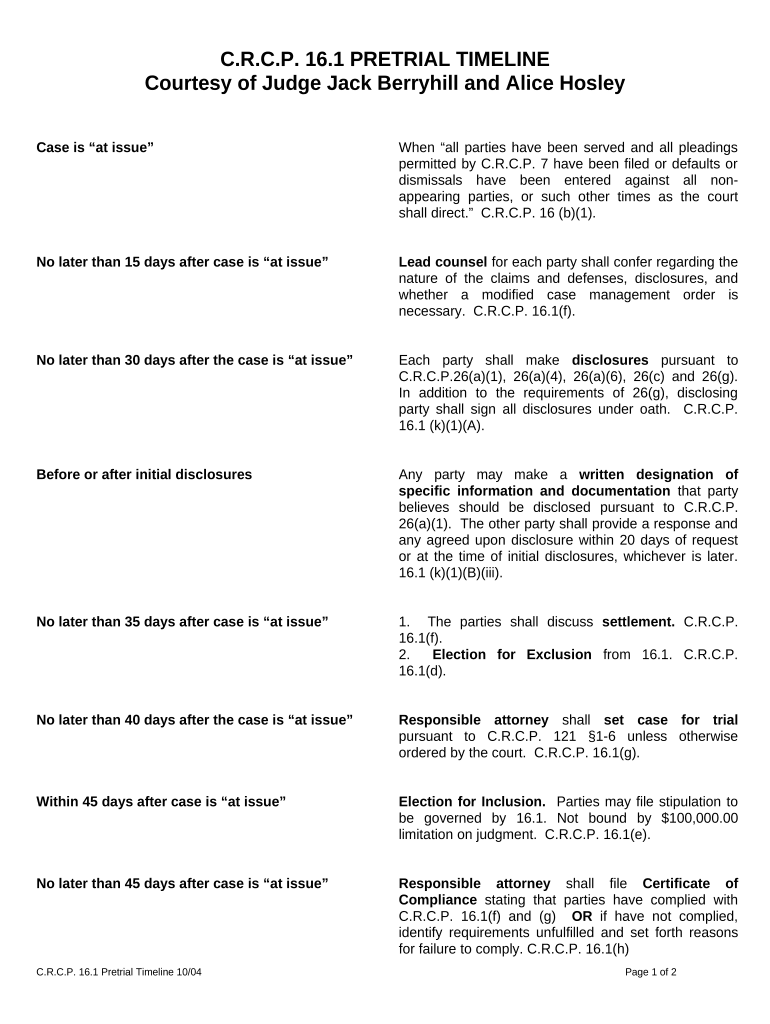
C.R.C.P. 16.1 Pretrial Timeline is a Colorado civil procedure tool that organizes pretrial obligations, disclosures, and scheduling proposals for a case. The timeline documents witness lists, exhibit inventories, discovery status, anticipated motions, and estimated trial length so parties and the court can evaluate readiness. By submitting a clear timeline before the final pretrial conference, counsel helps the court narrow issues, manage the calendar, and reduce surprise evidence or scheduling disputes. The timeline is a working roadmap used to coordinate remaining work toward trial.

Why a Complete C.R.C.P. 16.1 Timeline Matters

A well-prepared timeline clarifies deadlines and disclosures, reduces continuances, and helps the court manage trial resources efficiently.

Why a Complete C.R.C.P. 16.1 Timeline Matters

Who Prepares and Uses the Timeline

The timeline is usually prepared by counsel and submitted jointly when possible; the court uses it to set or confirm scheduling.

  • Plaintiff counsel — drafts initial timeline and coordinates disclosures with opposing counsel.
  • Defense counsel — reviews, revises, and confirms objections or alternative scheduling proposals.
  • Judicial staff and mediators — rely on the timeline to assess readiness and calendar trials appropriately.

Courts often expect accurate timelines at the pretrial conference; incomplete or late timelines can affect rulings on motions and trial dates.

Core Elements to Include in Every C.R.C.P. 16.1 Timeline

A professional timeline addresses the central items courts expect and presents them in a clear, verifiable format to reduce disputes and streamline the pretrial phase.

Case Caption

Complete court name, case number, and party names exactly as they appear on filings to ensure the timeline is associated with the correct file.
Scheduling Deadlines

List discovery cutoff, expert disclosure dates, dispositive motion deadlines, and any court-ordered hearings so the court can track remaining milestones.

Witness List

Provide names, subject areas, and whether a witness is retained or rebuttal; identify expert witnesses and the dates of their reports.

Exhibit Inventory

Attach or list key exhibits, bates ranges if available, and note evidentiary objections or admissibility issues for the court to consider.

Motions and Issues

Identify pending or anticipated dispositive and evidentiary motions, with expected filing dates and whether hearings are requested.

Trial Estimate

Give a realistic estimate of trial length, anticipated number of witnesses, and days requested to help the court schedule efficiently.

Step-by-Step: Preparing and Submitting the Timeline

Follow these steps to assemble a complete timeline that meets court expectations and coordinates party obligations before the pretrial conference.

  • 01
    Assemble Case Data: Collect pleadings, prior orders, and the current scheduling order.
  • 02
    Draft Timeline: Populate fields with exact dates, witness information, and exhibit lists.
  • 03
    Meet and Confer: Exchange the draft with opposing counsel and attempt to resolve disagreements.
  • 04
    File and Serve: File any required timeline with the court and serve opposing counsel per local rules.

Workflow: From Draft to Court Review

The timeline moves from counsel drafting to court review; each step should be documented and preserved for the case record.

  • Drafting: Counsel compiles disclosures and milestone dates into the timeline template.
  • Internal Review: Team members verify dates, exhibits, and witness availability for accuracy.
  • Opposing Counsel: Draft is shared for meet-and-confer and revisions where appropriate.
  • Court Submission: Final timeline is filed and uploaded to the court docket per local filing rules.

Digital Workflow Settings to Track Timeline Tasks

Configure your case management or eSign system to automate reminders, version control, and service confirmation when handling the timeline.

Field Configuration
Auto-Reminders Set reminders for disclosure and motion deadlines
Versioning Enable version control for revised timelines
Service Tracking Record proof of service or email confirmations
Access Control Restrict editing to assigned counsel and case managers

Technical Requirements for Electronic Timelines

Courts accept timelines in several digital formats; confirm the court's local rules for efiling and acceptable file types before submitting.

  • File Formats: PDF or court-prescribed efiling formats are preferred for readability and stability.
  • Integrations: Common integrations include Salesforce, Microsoft 365, NetSuite, and Google Workspace for document storage.
  • Authentication: Use secure signer authentication and retain audit trails when timelines require signatures.

Maintain a clean PDF master copy, preserve metadata and audit logs, and retain copies consistent with court and regulatory recordkeeping requirements.

Common Timeline Deadlines to Note

Timelines typically enumerate deadlines for initial disclosures, expert reports, discovery completion, dispositive motions, and the pretrial conference.

Initial Disclosures:

State when mandatory initial disclosures were or will be exchanged.

Expert Reports:

Provide dates for disclosure of retained and rebuttal expert reports.

Discovery Cutoff:

Record the court-ordered discovery completion date.

Dispositive Motions:

List filing and hearing deadlines for summary judgment or dismissal motions.

Pretrial Conference:

Specify the court's scheduled conference date and any required submissions.

Key Milestones from Scheduling to Trial

A sequenced view of milestones helps teams allocate resources and identify critical path items that could delay trial readiness.

01

Scheduling Conference

Court issues or confirms the case schedule and baseline deadlines.

02

Discovery Phase

Written and deposition discovery occurs before the cutoff date.

03

Summary Judgment Window

Dispositive motions are filed and decided during this phase.

04

Pretrial Preparation

Parties exchange final exhibit lists and witness orders ahead of trial.

Common Mistakes to Avoid When Preparing the Timeline

  • Leaving dates vague or using relative phrasing such as 'within two weeks' instead of MM/DD/YYYY can cause misunderstanding and missed deadlines.
  • Failing to coordinate expert deadlines with opposing counsel often results in late disclosures and exclusion of expert testimony.
  • Not updating the timeline after court orders or agreement changes leads to stale information and contested scheduling at conference.
  • Neglecting to attach or reference exhibit bates ranges creates delays during evidentiary discussions and trial preparation.

Consequences of an Incorrect or Late Timeline

Continuance Risk: Court may grant new dates.
Evidence Exclusion: Late disclosures can lead to exclusion of witnesses or exhibits.
Monetary Sanctions: Court may impose fees or cost-shifting.
Adverse Rulings: Motions may be denied for procedural defects.
Reputation: Counsel credibility can be harmed.
Default Risk: Serious filing failures can escalate to default judgments.

Required Information and Core Fields

Case Caption: Court, case number, parties
Dates: Deadlines in MM/DD/YYYY format
Witnesses: Names and subject matter
Exhibits: List or attachment reference
Motions: Pending or expected motions
Signature: Counsel signature and date

eSignature Vendor Snapshot for Timeline Execution

Common vendor features and starting prices for eSignature platforms used to prepare, sign, and share court timelines; verify vendor details before purchase.

signNow DocuSign Adobe Sign PandaDoc HelloSign
Starting Price $8/user/mo $15/user/mo $14/user/mo $19/user/mo $15/user/mo
Free Trial Yes, 7-day free trial No No Yes, limited Yes, limited
Bulk Send Yes Yes Yes Yes No
Audit Trail Yes Yes Yes Yes Yes

Frequently Asked Questions About the C.R.C.P. 16.1 Pretrial Timeline

Answers to common questions about preparing, filing, and correcting timelines under C.R.C.P. 16.1 and related local practice.


Need help? Contact support

be ready to get more
Join over 28 million airSlate SignNow users