Establishing secure connection…Loading editor…Preparing document…

Criminal Record Policy

This template is fully customizable. Edit the text, fill out the fields, and send it for signature. Give it a try!
Criminal Record Policy

What a Criminal Record Policy Is and When It Applies

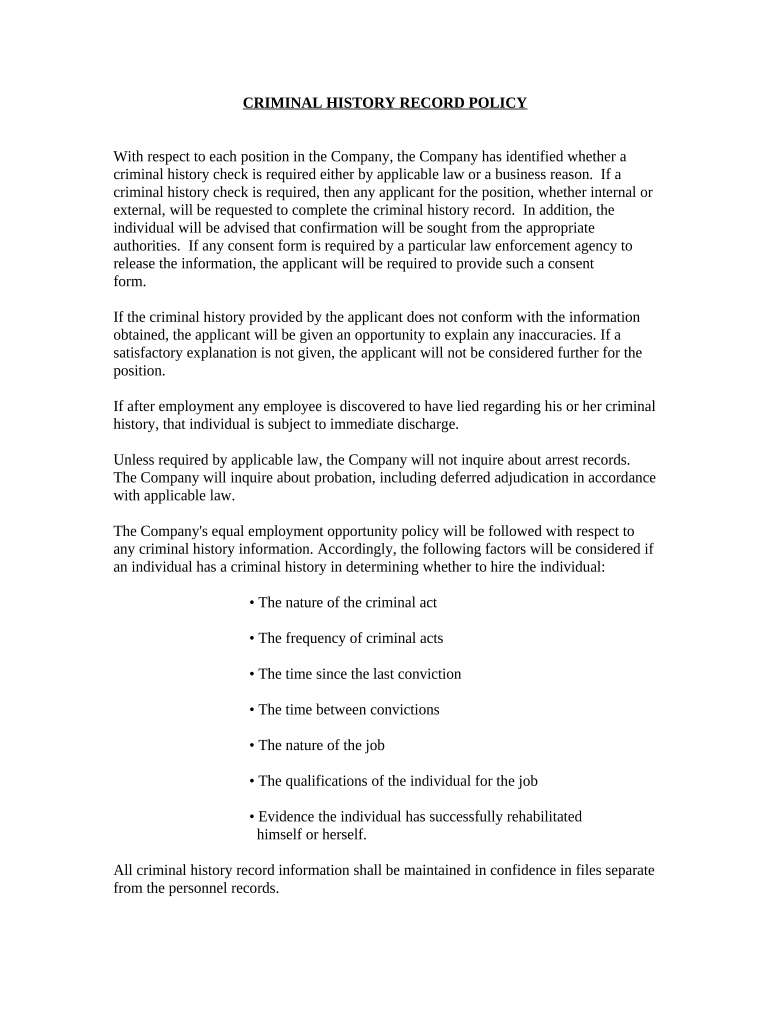
A Criminal Record Policy is an organizational rule set that governs how criminal history information is collected, evaluated, and used in employment, licensing, contracting, or admission decisions. It defines permitted background checks, required disclosures to applicants, decision criteria, and procedures for adverse action. The policy describes compliant screening methods, data sources, retention rules, and notice requirements so that staff and applicants understand rights, timelines, and legal constraints.

Why a Clear Criminal Record Policy Matters

A written policy reduces inconsistent decisions, limits legal risk, and supports fair, documented screening practices while preserving program integrity and regulatory compliance.

Why a Clear Criminal Record Policy Matters

Who Drafts, Uses, or Must Follow This Policy

Employers, licensing boards, educational institutions, and contractors commonly adopt a Criminal Record Policy to guide background checks and decisions.

  • Human resources teams and hiring managers responsible for applicant screening and compliance with employment laws.
  • Regulatory or licensing staff who determine fitness for licensure or certification under statutory rules.
  • Legal and compliance teams who review policy language for fair-chance laws and adverse-action procedures.

Having a single, accessible policy ensures consistent application across departments and provides a documented basis for compliance reviews and audits.

Step-by-Step: Implementing or Applying the Policy

Follow this concise workflow to apply the policy consistently across candidate and applicant cases.

  • 01
    Prepare Request: Confirm lawful basis and obtain signed applicant consent.
  • 02
    Order Check: Use certified consumer reporting agency or approved source.
  • 03
    Evaluate Record: Compare results to policy criteria and time limits.
  • 04
    Adverse Action: Provide pre-adverse notice, waiting period, and right to dispute.

Required Data Elements for the Policy

Applicant Identity: Full legal name
Consent Record: Signed consent date
Search Scope: Types and sources checked
Decision Basis: Policy criteria referenced
Adverse Notices: Pre- and final notice text
Retention Log: Storage location and retention

Common Preparation and Implementation Challenges

  • Failing to align policy with state 'ban-the-box' or fair-chance laws creates exposure and may invalidate adverse actions.
  • Using inconsistent sourcing or non-certified background vendors undermines accuracy and increases dispute rates.
  • Overly broad disqualifiers without mitigation steps can lead to claims of disparate impact or discrimination.
  • Inadequate documentation of consent, notices, and retention increases regulatory and litigation risk.

Penalties and Risks from an Incorrect Policy

Regulatory Fines: Civil penalties for I-9 or reporting violations
Adverse-Action Exposure: FCRA claims and statutory damages
Discrimination Risk: Disparate impact investigations
Reputational Harm: Public disclosure of unfair practices
Operational Delays: Hiring slowdowns due to disputes
Retention Failures: Violations of recordkeeping rules

Where and How Screening Results Are Processed

Background checks run through approved channels and follow a standard routing for review and action.

  • Order Placement: Authorized staff submit checks through vendor portal.
  • Report Delivery: Agency returns report to HR or compliance.
  • Decision Review: Designated reviewer applies policy criteria.
  • Record Retention: Store final documents in secure records system.

Configure an Online Screening Workflow

Set up a repeatable digital workflow to collect consent, order checks, and capture audit logs for each case.

Field Configuration
Consent Capture Require signed consent before ordering
Vendor Selection Choose certified consumer reporting agency
Reviewer Role Assign HR or compliance reviewer
Audit Trail Log IP, timestamp, and actions

Digital Signing and Secure Distribution Options

Online tools can collect consent, capture signatures, and provide an auditable trail for each screening step.

  • Document Formats: PDF, DOCX supported
  • Integrations: HRIS and ATS connectors
  • Authentication: Email, SMS, or advanced methods

Choose a platform that supports secure storage, role-based access, and a clear audit trail to meet FCRA and state disclosure requirements.

Key Timelines and Deadlines to Track

Maintain a calendar of required notices and statutory time limits to ensure compliance with background-check rules and adverse-action windows.

Pre-Adverse Notice Period:

Allow a reasonable opportunity to dispute before final action

Final Adverse Notice:

Issue final notice with rights and contact information

I-9 Retention:

Keep I-9 for 3 years after hire or 1 year after termination (8 CFR §274a.2)

Record Retention:

Retain background check records per policy and regulation

FCRA Dispute Response:

Respond to consumer disputes within required agency timelines

Core Elements of a Professional Criminal Record Policy

A robust policy includes specific, enforceable elements that guide screening, decisions, and recordkeeping.

Scope

Defines who and what roles are covered by screening and clarifies pre-offer or post-offer application.
Permitted Searches

Specifies search types and approved vendors, including whether fingerprint-based or national database checks are used.

Decision Rules

Lists disqualifying offenses, lookback periods, and mitigation factors for individualized assessment.

Disclosure Process

Details pre-adverse disclosures, model language, and final adverse-action notices required under FCRA.

Privacy Controls

Specifies access controls, encryption, and limited distribution consistent with privacy laws.

Recordkeeping

Sets retention periods, secure storage, and deletion procedures tied to regulatory obligations.

How Criminal Record Policy Differs from Related Documents

Compare the Criminal Record Policy to adjacent documents to avoid duplication and ensure correct placement of responsibilities.

Document Type Policy Consent Form
Purpose operational rules applicant authorization
Required Signature no (policy owners only) yes (applicant)
Retention long-term per dispute timelines
Legal Basis employment law fcra and consent rules

Selected eSignature Platform Comparison for Policy Workflows

Typical platform features and price points influence ongoing cost and functionality for digital consent, notices, and secure recordkeeping.

signNow DocuSign Adobe Sign PandaDoc HelloSign
Starting Price $8/user/mo $15/user/mo $14/user/mo $19/user/mo $15/user/mo
Free Trial 7-day free trial Varies by plan Varies by plan Varies by plan Varies by plan
Bulk Send Yes Yes Yes Yes No
HIPAA Compliant Yes Yes Yes No No
Envelope Cap No cap 100 envelopes/user/year Varies by plan Varies by plan Varies by plan

Frequently Asked Questions About Criminal Record Policies

Answers to common questions about legality, notices, recordkeeping, and practical administration of Criminal Record Policies.


Need help? Contact support

be ready to get more
Join over 28 million airSlate SignNow users