Establishing secure connection…Loading editor…Preparing document…

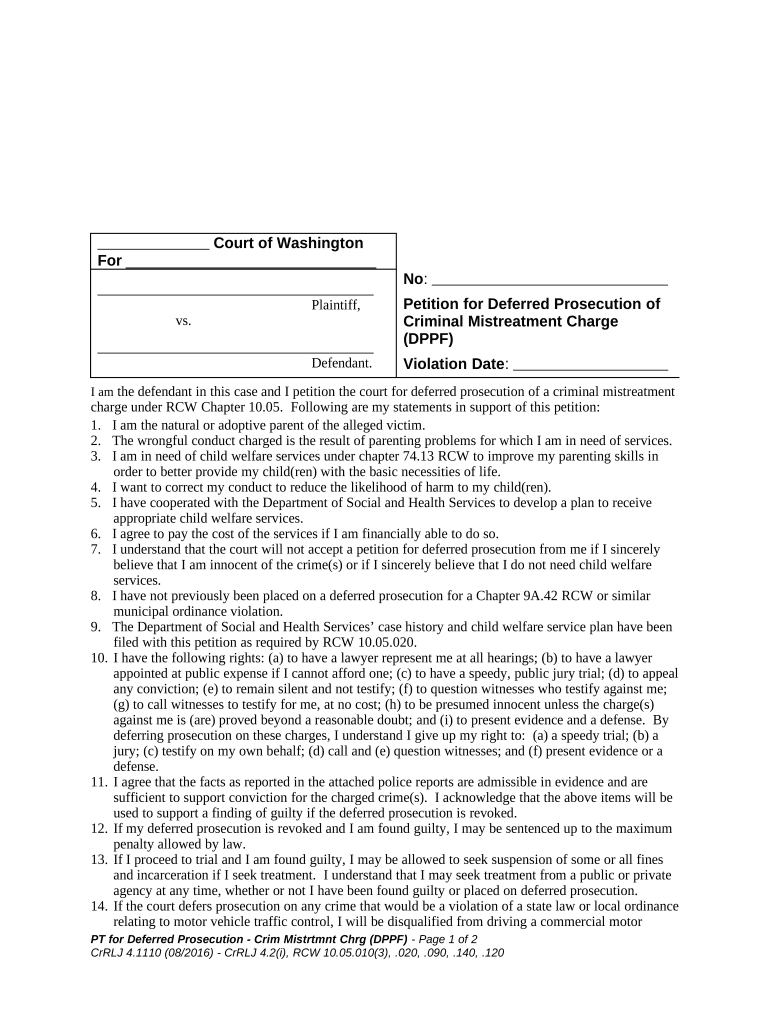
Deferred Prosecution Contract

This template is fully customizable. Edit the text, fill out the fields, and send it for signature. Give it a try!
Deferred Prosecution Contract

What a Deferred Prosecution Contract Is and where it fits

A Deferred Prosecution Contract is a formal agreement between a prosecutor and a natural person or organization under which the prosecutor agrees to defer criminal charges for a specified period in exchange for the defendant's compliance with defined obligations. Typical obligations include remediation steps, restitution, corporate compliance program enhancements, reporting requirements, and monitorship. If the defendant satisfies the contract terms, prosecution may be dismissed; if the defendant fails to comply, the prosecutor may reinstate charges. These agreements are used in federal and state enforcement contexts and often include reporting, audits, and negotiated penalties.

Why organizations and counsel use a Deferred Prosecution Contract

The contract allows regulated entities and individuals to resolve allegations without an immediate criminal conviction by committing to remediation, oversight, and restitution. It preserves the prosecutor’s option to prosecute if terms are breached while enabling the defendant to avoid trial, limit legal exposure, and implement corrective measures under court or prosecutor supervision.

Why organizations and counsel use a Deferred Prosecution Contract

Who typically prepares, signs, and manages these contracts

Common users include public prosecutors, defense counsel, corporate legal and compliance teams, and senior executives who must accept and implement contract terms.

  • Prosecutors and government counsel responsible for charging decisions and negotiating performance milestones.
  • Corporate legal and compliance teams that draft remediation plans, update policies, and track reporting obligations.
  • Defense counsel and company executives who negotiate terms, approve admissions or certifications, and sign on behalf of the entity.

Core components to include in a professional Deferred Prosecution Contract

A complete contract defines the parties, factual basis, obligations, monitoring, remedies, and conditions for dismissal or reinstatement of charges.

Parties

Identify the prosecutor (office or agency) and the defendant (individual or legal entity), including legal entity type and authorized signatory with capacity stated.
Factual Basis

A concise statement of the allegations or conduct giving rise to the agreement and any admissions or stipulated facts required by the prosecutor.

Obligations

Specific remediation, reporting, restitution amounts, policy changes, training, and deadlines the defendant must meet to remain in compliance.

Monitoring

Mechanics for compliance verification: independent monitor, periodic reports, audits, and standards for acceptable documentation and access.

Remedies

Consequences for breach such as reinstatement of charges, additional fines, or stipulated penalties, and procedures for dispute resolution.

Termination

Clear criteria for dismissal of charges at successful completion and any record retention or public disclosure obligations thereafter.

Security and compliance features to protect contract integrity

Encryption: AES-256 at rest; TLS 1.2/1.3 in transit
Audit Trail: Immutable log: timestamps, IP, signer actions
Access Controls: Role-based permissions and SSO/SAML
BAA Available: HIPAA BAA offered when required
Certifications: SOC 2 Type II, ISO 27001 attestations
Multi-Factor Auth: Optional 2FA and advanced signer authentication

Step-by-step: complete a Deferred Prosecution Contract

Follow these core steps from drafting through signature to reduce errors and ensure enforceability.

  • 01
    Prepare draft: Assemble factual recitation, proposed obligations, and timelines.
  • 02
    Negotiate terms: Exchange redlines with prosecutor; clarify monitorship and reporting details.
  • 03
    Finalize approvals: Obtain corporate board or authorized officer signoff and legal review.
  • 04
    Execute and retain: Sign, notarize (if required), distribute copies, and archive per retention rules.

Typical online workflow settings for electronic completion

Configure signing order, authentication, notifications, and retention before sending the agreement for signature.

Field Configuration
Signer Order Sequential or parallel signer sequence, as negotiated
Authentication Email link, SMS code, or stronger KBA for high-risk signers
Notifications Automatic reminders and final signed packet distribution
Record Retention Specify archival location and retention period

How electronic completion commonly works

A standard 4-step e-signing flow minimizes friction while preserving evidentiary value.

  • Draft: Create the agreement and mark signature/initial/date fields.
  • Authenticate: Choose signer verification method appropriate to risk.
  • Sign: Signers execute electronically while audit trail records actions.
  • Archive: Store final PDF and audit certificate in secure repository.

Common timelines and deadline expectations

Key dates should be explicit: remediation deadlines, reporting cadence, and monitoring term all affect compliance assessments.

Remediation Deadlines:

Specific corrective actions due within 30–180 days typically.

Reporting Cadence:

Monthly or quarterly reports to prosecutor or monitor are common.

Monitoring Period:

Monitoring often lasts 12–36 months depending on case severity.

Payment Schedules:

Restitution or fines due per agreed milestones.

Breach Cure Window:

Some agreements include a 10–30 day cure period before reinstatement.

Common preparation and execution mistakes to avoid

  • Using inconsistent party names or signatory titles, which can create capacity disputes and delay enforcement.
  • Failing to define measurable compliance metrics or deliverables, leaving obligations open to differing interpretations.
  • Neglecting authentication strength for e-signatures in high-risk matters, which can impair evidentiary value.
  • Overlooking record retention and audit preservation requirements, resulting in evidentiary gaps during review.

Immediate risks and penalties from errors or noncompliance

Reinstated Charges: Resumption of criminal prosecution
Civil Liability: Concurrent civil suits or regulatory penalties
Contract Void: Court or prosecutor may void agreement
Monetary Fines: Additional fines or agreed penalties
Reputational Harm: Public disclosure and loss of trust
Operational Costs: Extended monitorship and compliance costs

eSignature vendor pricing and capability snapshot relevant to contract execution

This table summarizes common pricing and feature differences across popular eSignature vendors to inform platform selection for secure contract execution.

signNow DocuSign Adobe Sign PandaDoc HelloSign
Starting Price $8/user/mo $15/user/mo $14/user/mo $19/user/mo $15/user/mo
Free Trial 7-day trial Varies by vendor Varies by vendor Varies by vendor Varies by vendor
Bulk Send Yes (Business Premium) Yes Yes Yes No
Audit Trail Yes Yes Yes Yes Yes
HIPAA Compliant Yes Yes Yes No No
Envelope Cap No cap 100 envelopes/user/year Varies by plan Varies by plan Varies by plan

Frequently asked questions about completing and validating the contract

Answers to common execution, e-signature, notarization, and retention questions for Deferred Prosecution Contracts.


Need help? Contact support

be ready to get more
Join over 28 million airSlate SignNow users