Demolition Contract for Contractor Florida
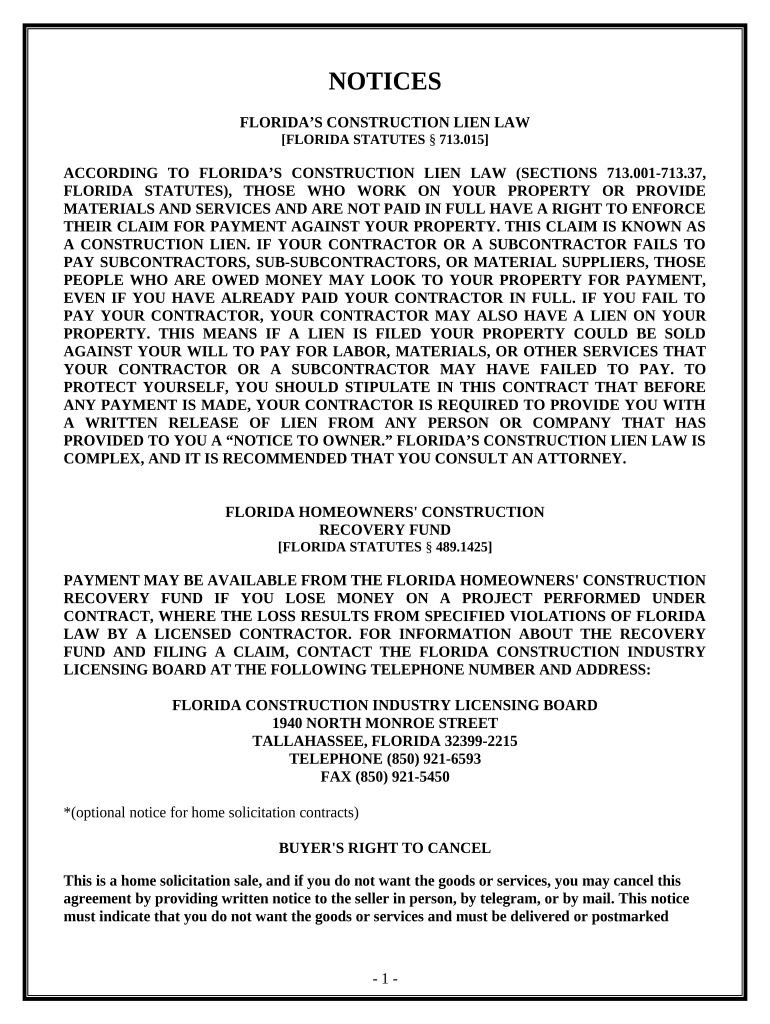
What the Demolition Contract for Contractor Florida Is
Why a Clear Demolition Contract Matters
A well-drafted Demolition Contract reduces disputes, clarifies payment timing and responsibilities for permits and hazardous materials, and documents acceptance criteria for completed work. It protects both parties by assigning risk, specifying insurance and indemnity limits, and establishing procedures for change orders and delays.

Who Typically Prepares and Signs This Contract
Typical users prepare, review, and sign demolition contracts to allocate responsibilities and protect project stakeholders.
- General contractors and demolition subcontractors who perform structure removal and coordinate site safety and disposal
- Property owners, developers, and asset managers who require documented scope, price, and completion criteria
- Permitting agents, environmental consultants, and insurers involved in compliance, testing, and coverage verification
Parties often include attorneys, local permit expeditors, or construction managers to confirm compliance with Florida statutory and local-code requirements before execution.
Representative Signers
General Contractor
A licensed demolition contractor in Florida responsible for execution, site safety, permits, waste disposal plans, and subcontractor management. The contractor must provide proof of insurance, license number, and a schedule of work. The contract should state change order procedures and consequences for delays.
Property Owner
An individual or business entity that owns the demolition site and authorizes work. The owner provides access, pays agreed amounts per the payment schedule, secures title-related requirements, and often must confirm removal of liens via lien waiver language upon final payment.
Step-by-Step: Filling Out the Demolition Contract
-
01Gather Documents: Collect license, insurance certificates, and permits before entry.
-
02Define Scope: Write a clear description with exclusions and salvage terms.
-
03Set Payment: Agree deposit, milestone payments, retainage, and invoicing.
-
04Sign and Verify: Obtain signatures, notarization if required, and distribute copies.
How Execution and Delivery Typically Work
-
Draft Agreement: Prepare contract with all exhibits and permit lists.
-
Review and Revise: Parties confirm scope, schedule, insurance, and price.
-
Sign and Authenticate: Signatures collected electronically or on paper; notarize if required.
-
Distribute Copies: Each party retains executed copies for project records.
Typical Digital Workflow Settings for Online Completion
| Field | Configuration |
|---|---|
| Authentication Method | Email + SMS code or ID verification |
| Template Variables | License, permit numbers, and insurance fields |
| Conditional Fields | Show hazardous-material protocols when selected |
| Delivery Options | Signed PDF with audit trail to all parties |
Digital Signing and Submission Considerations
Choose a signing platform that supports required authentication, attachment types, and integrations for permits and records.
- Document Formats: PDF and DOCX supported for contracts and exhibits
- Integrations: Connectors for Procore, Box, Google Workspace, and NetSuite
- Authentication: Options for SMS codes, ID proofing, and two-factor
Verify the platform provides an audit trail, exportable signed PDFs, and any compliance controls required by project owners or local authorities.
Key Dates and Timing to Include in the Contract
Permit Approval Deadline:
State permit or local building permit must be obtained before work starts
Work Start Date:
Date when contractor may begin demolition activities on site
Completion Date:
Final completion date for debris removal and site stabilization
Payment Milestones:
Dates tied to permit, halfway completion, and final inspection
Lien Waiver Submission:
Final waivers and releases delivered upon final payment
Project Milestones from Contract to Closeout
Contract Execution
Agreement signed and deposit paid; permits applied for
Pre-Demolition Inspections
Asbestos, lead, or structural surveys completed and approved
Active Demolition
Demolition performed under safety and environmental controls
Final Cleanup and Acceptance
Site cleared, inspections passed, final payment released
Common Pitfalls to Avoid When Preparing the Contract
- Unclear scope descriptions that omit salvage rights and utilities disconnection leading to disputes and change orders
- Failing to confirm contractor licensing and insurance limits, which can leave owners exposed to liability claims and uninsured loss
- Assuming permits are included without specifying responsibility and timelines, causing project delays and cost overruns
- Using vague payment terms and retainage conditions that create ambiguity over final payment and lien waiver timing
Key Risks and Potential Consequences
eSignature Vendor Comparison for Demolition Contracts
| signNow | DocuSign | Adobe Sign | PandaDoc | HelloSign | |
|---|---|---|---|---|---|
| Starting Price | $8/user/mo | $15/user/mo | $14/user/mo | $19/user/mo | $15/user/mo |
| Free Trial | 7-day free trial | Varies | Varies | Varies | Varies |
| Bulk Send | Yes (Premium) | Yes | Yes | Yes | Yes |
| Audit Trail | Yes | Yes | Yes | Yes | Yes |
| HIPAA Compliant | Yes | Yes | Yes | No | No |
| Envelope Cap | No cap | 100 envelopes/user/yr | Varies | Varies | Varies |
Practical Examples of Contract Use
Commercial Site Redevelopment
A developer hired a licensed contractor for phased demolition
- contractor provided insurance and asbestos abatement plan
- the contract tied milestone payments to permit sign-offs and final municipal inspection, limiting owner exposure and clarifying payment release.
Single-Family House Demolition
A homeowner contracted for removal and site grading
- contractor supplied county permit and debris disposal receipts
- final payment released after county inspection and recorded lien waiver, ensuring clear title for resale.
Frequently Asked Questions About the Demolition Contract for Contractor Florida
-
Are electronic signatures legally binding?
Yes. Electronic signatures are legally enforceable under the ESIGN Act (15 U.S.C. ch. 96) and UETA in most states if intent, consent, attribution, and record retention requirements are met.
-
Does Florida require notarization or witnesses?
Florida often requires notarization for certain record types and two witnesses for some instruments; confirm local requirements and whether a notarized acknowledgment supports lien waiver enforcement.
-
What if a party's name is incorrect?
An incorrect party name can compromise enforceability and title work. Correct via amendment signed by both parties or re-execute the contract with accurate legal names.
-
Can I use remote online notarization (RON)?
Many states permit RON with identity-proofing and audio-video records. Confirm Florida and local county acceptance and preserve RON session records per notary rules.
-
How do I cancel or revoke the contract?
Follow the contract's termination and cure provisions. If unilateral cancellation is contemplated, check change-order and notice clauses to avoid breach claims.
-
How long should I keep signed contracts?
Retain signed contracts through the project life and for at least 3–7 years post-completion depending on dispute, tax, or regulatory considerations and applicable federal or state rules.