Establishing secure connection…Loading editor…Preparing document…

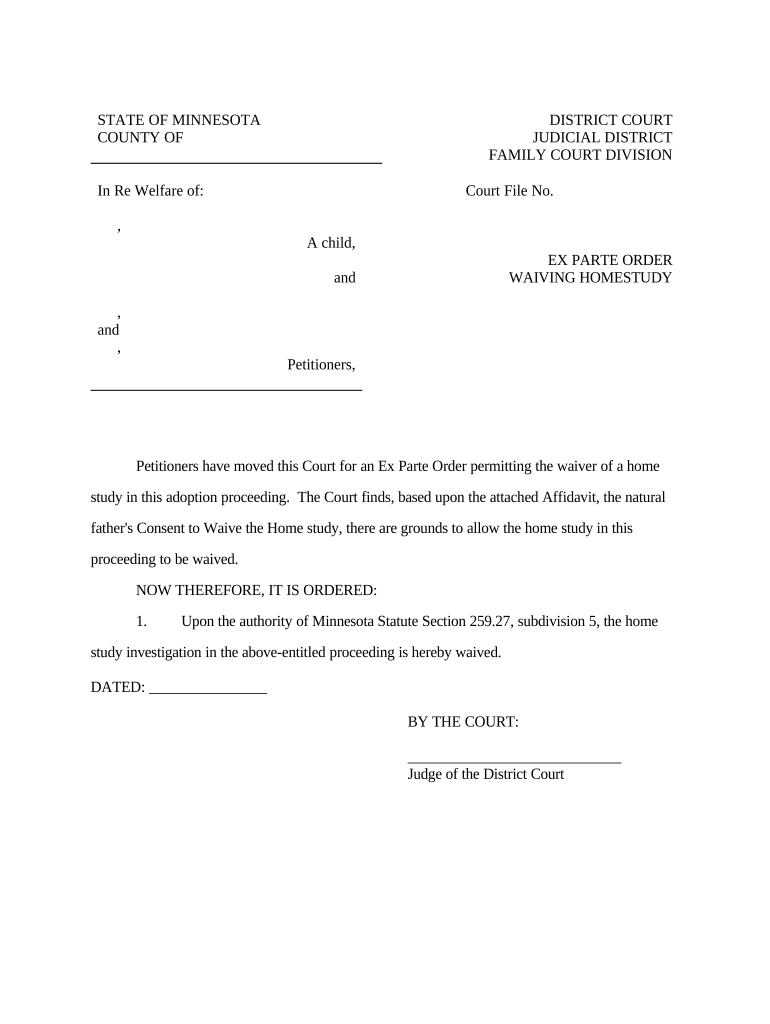
Ex Parte Order Minnesota

This template is fully customizable. Edit the text, fill out the fields, and send it for signature. Give it a try!
Ex Parte Order Minnesota

What an Ex Parte Order in Minnesota Is and When It Applies

An Ex Parte Order in Minnesota is a court-issued temporary order entered without requiring notice to the opposing party when immediate relief is necessary to prevent irreparable harm. Common contexts include emergency protection orders, temporary restraining orders, and urgent injunctions. The petitioner typically files an affidavit or verified complaint showing imminent risk, and the judge decides based on the sworn facts and applicable statute or court rule. Because these orders are provisional, they usually include a prompt follow-up hearing where affected parties can be heard and the court decides whether to continue, modify, or dissolve the order.

Why Ex Parte Orders Matter for Urgent Legal Relief

Ex parte orders provide an expedited mechanism to secure immediate protection or preserve the status quo when delay would cause harm. They allow courts to act quickly based on sworn evidence, while preserving the respondent’s right to a prompt contested hearing.

Why Ex Parte Orders Matter for Urgent Legal Relief

Who Typically Prepares or Requests an Ex Parte Order

The filing party must satisfy the court’s emergency standards and be prepared to present corroborating evidence at a follow-up hearing.

  • Private Attorneys preparing emergency motions for clients and drafting supporting affidavits for judicial review.
  • Public Defenders or Prosecutors seeking immediate orders in criminal or protective contexts.
  • Self-represented litigants who must carefully document facts and follow court procedural rules.

Who Has Authority to Sign or Request the Order

Petitioner Attorney

An attorney of record may sign the verified petition and supporting affidavit, certify the facts under oath, and submit the ex parte motion on behalf of a client; accuracy and completeness affect the court’s willingness to grant immediate relief.

Presiding Judge

A judge or judicial officer has the authority to sign and enter the ex parte order following review; the order’s scope and duration are determined by judicial discretion within statutory and rule-based limits.

Core Elements Found in a Professionally Drafted Ex Parte Order

A complete ex parte petition and order package organizes factual assertions, legal basis, and an express temporary remedy so the court can evaluate emergency relief quickly.

Caption

Court name, case number, party names and counsel identification; required for proper docketing and service.
Verified Affidavit

Sworn factual statement describing the imminent harm, supporting evidence, and why notice cannot be given before entry of relief.

Legal Basis

Citation of statutes, rules, or case law authorizing ex parte relief and the specific standard the court should apply.

Requested Relief

Clear, specific temporary remedies sought (stay, restraint, possession, protective provisions) with start and end points.

Duration

Plain statement of how long the order will remain in effect and conditions for a follow-up hearing or extension.

Service Instructions

Direction on how and when the order must be served on the respondent and related notice requirements for the return hearing.

Essential Filing and Security Details to Include

Case Number: Court docket ID
Filing Party: Petitioner name
Affiant Identity: Signer role
Relief Sought: Specific remedy
Hearing Date: Return hearing
Service Method: How served

Step-by-Step: How to Prepare and File an Ex Parte Request

Follow a clear sequence to ensure the court has the information needed to evaluate emergency relief and to preserve enforceability.

  • 01
    Draft Petition: Describe emergency facts clearly and cite statutory authority.
  • 02
    Attach Affidavit: Include sworn statements and exhibits supporting imminent harm.
  • 03
    Submit to Court: File electronically or deliver to clerk per local rules.
  • 04
    Judge Review: Court reviews papers and may enter temporary relief.

How to Set Up an Online Filing and eSubmission Workflow

Configure digital workflow fields and authentication to match court filing and local rules when using an eSignature or eFiling platform.

Field Configuration
Document Upload PDF/A preferred; include exhibits as separate attachments
Signature Type Use signer audit trail; consider advanced auth if required
Authentication Email + SMS code or KBA per court rule
Service Notice Automated email and certified mail if required

Digital Submission and eSignature Considerations

Platforms with secure audit trails, tamper-evident documents, and configurable signer authentication align best with judicial expectations for electronic ex parte filings.

  • File Formats: PDF preferred
  • Authentication: Email + code
  • Audit Trail: IP and timestamp

Typical Electronic Filing Flow for an Ex Parte Request

A standard eFiling or eSubmission flow prepares documents, obtains signatures, files with the clerk, and triggers service on the respondent.

  • Prepare Documents: Assemble petition, affidavit, and exhibits.
  • Place Signature Fields: Add signature and date fields for affiant and counsel.
  • Authenticate Signer: Use required verification method per court rule.
  • File Electronically: Submit to court e-filing portal or clerk.

Timing Expectations and Typical Deadlines

Ex parte orders are time-sensitive; courts generally require prompt follow-up hearings and swift service on the respondent.

Immediate Review:

Judge may act same day or within 24–72 hours

Return Hearing:

Usually scheduled within 7–14 days

Service Window:

Order must be served promptly after entry

Motion to Dissolve:

Respondent may seek early hearing to vacate order

Extension Requests:

File supported motion before expiration

Penalties and Risks from Errors or Misstatements

Denial of Relief: Court may refuse emergency order
Sanctions: Potential court sanctions for misuse
Contempt: Violating an order risks contempt
Perjury Exposure: False sworn statements may lead to charges
Service Failures: Improper service can invalidate relief
Delay Costs: Loss of timely protection or remedy

Common Pitfalls to Avoid When Preparing an Ex Parte Package

  • Failing to include specific, time-stamped facts that demonstrate imminent harm can lead to denial of the request.
  • Omitting required exhibits or attachments (police reports, medical records) weakens the factual record for emergency relief.
  • Using vague or conclusory language instead of concrete events and dates undermines credibility with the court.
  • Not verifying local court rules for filing, service, or format leads to avoidable procedural rejections.

Practical Tips for Accurate and Efficient Completion

Follow consistent practices that reduce errors, speed review, and improve enforceability of temporary orders.

Use Verified Facts
Provide specific dates, times, locations, and corroborating documents. Courts look for concrete evidence rather than general allegations.
Follow Local Rules
Check the specific court’s local rules for ex parte filings, required forms, page limits, and e-filing procedures to avoid rejection.
Preserve Proof of Service
Document how and when the order was served; affidavits of service or certified mail receipts prevent disputes about notice.
Prepare for Hearing
Anticipate respondent arguments and assemble exhibits and witness statements for the return hearing to support continuation of relief.

Illustrative Use Cases for Ex Parte Orders

Practical scenarios show how ex parte orders function across common legal contexts and what immediate evidence is typically persuasive.

Family Law Emergency

A petitioner alleges immediate domestic violence and lacks time to notify the respondent.

  • Court issues a temporary protection order after reviewing sworn affidavit.
  • At the return hearing, the petitioner presents police reports and medical records to seek extension of protective measures.

Business Injunction

A company seeks to prevent imminent disclosure of trade secrets to a competitor.

  • Ex parte injunctive relief is requested with narrowly tailored restrictions.
  • The court grants temporary restraint pending expedited hearing where evidence of irreparable economic harm is examined.

Comparing eSignature Vendor Pricing and Key Features

For eSubmission and secure signing of court papers, compare starting price, trial availability, bulk send, audit trails, HIPAA support, and envelope caps across providers.

signNow DocuSign Adobe Sign PandaDoc HelloSign
Starting Price $8/user/mo $15/user/mo $14/user/mo $19/user/mo $15/user/mo
Free Trial 7-day free trial Varies by plan Varies by plan Varies by plan Varies by plan
Bulk Send Yes Yes Yes Yes No
Audit Trail Yes Yes Yes Yes Yes
HIPAA Compliant Yes Yes Yes No No
Envelope Cap No cap 100 envelopes/user/year Varies by plan Varies by plan Varies by plan

Frequently Asked Questions About Ex Parte Orders in Minnesota

Answers to common practical questions about preparing, filing, serving, and defending ex parte orders in Minnesota court contexts.


Need help? Contact support

be ready to get more
Join over 28 million airSlate SignNow users