Establishing secure connection…Loading editor…Preparing document…

Executor With Will

This template is fully customizable. Edit the text, fill out the fields, and send it for signature. Give it a try!
Executor With Will

What an Executor With Will document does and when it’s used

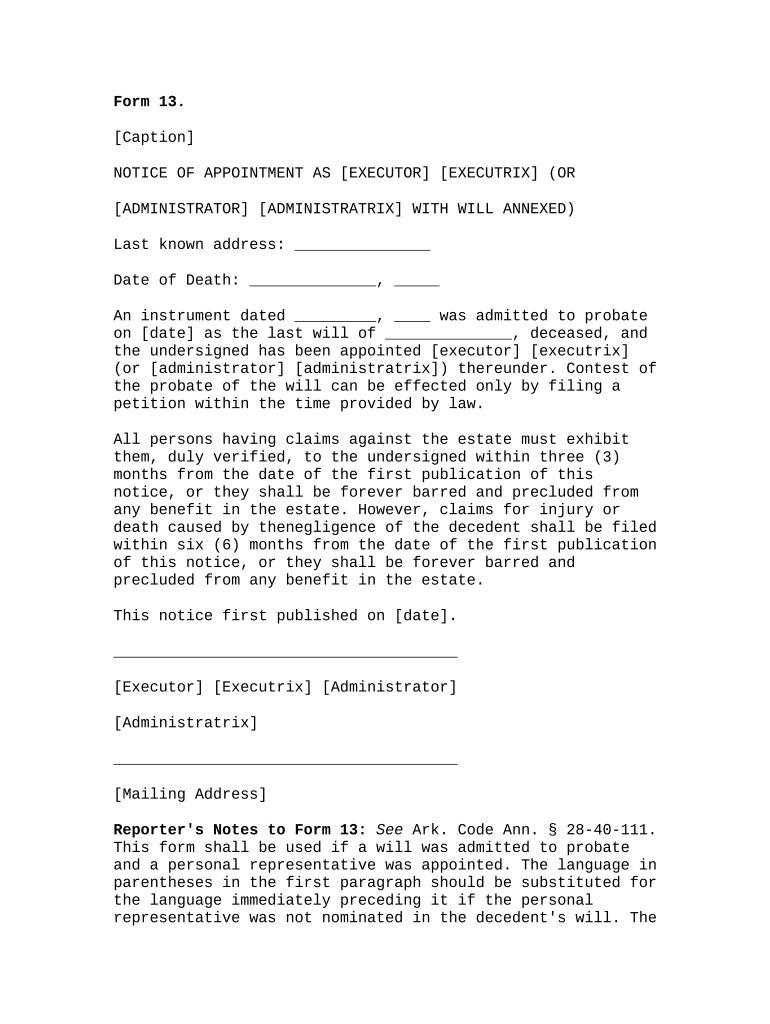
An Executor With Will document identifies the person appointed to act as executor when a decedent’s valid will exists and probate is opened. It typically accompanies the original will and provides the executor’s contact details, scope of authority, and procedural steps for estate administration. Because wills and testamentary instruments are commonly excluded from electronic-signature statutes, the Executor With Will form is often completed with original signatures, witnesses, and notarization to meet state probate requirements and to facilitate court acceptance.

Why a clear Executor With Will matters for estate administration

A properly completed Executor With Will clarifies who has authority to collect assets, pay liabilities, and distribute property under the will, reducing disputes and delays during probate. It centralizes key contact details and documents needed by courts, financial institutions, and service providers.

Why a clear Executor With Will matters for estate administration

Who prepares or relies on an Executor With Will

The form reduces friction between estate stakeholders by recording authority, contact data, and supporting documents required for probate.

  • Executors and personal representatives responsible for administering the estate and communicating with the probate court and creditors.
  • Estate attorneys and probate clerks who need a clear record of appointment and authority for filings and fiduciary actions.
  • Family members and beneficiaries who use the document to confirm the executor’s authority and the distribution plan under the will.

Core elements to include in a professional Executor With Will

A complete form groups identity details, statutory authority, administrative duties, and execution mechanics so courts and third parties can rely on the record during probate and asset transfers.

Appointment

Name the executor precisely, using full legal name and any suffixes so courts can match records without ambiguity.
Authority

Specify the scope of powers (collect assets, pay debts, sell property) and reference any limiting clauses from the will.

Inventory

Provide or reference an estate inventory and account of major assets to support initial filings and bond calculations.

Distribution

Summarize primary distribution instructions from the will and note contingent beneficiaries or conditions.

Alternates

Name alternate executors and their contact details to avoid administrator gaps if the primary cannot serve.

Execution

Include signature blocks, witness language, notary acknowledgement, and any self-proving affidavit instructions required by the state.

Required information and fields at a glance

Decedent Name: Full legal name
Executor Name: Full legal name
Contact Information: Address, phone, email
Date of Death: MM/DD/YYYY
Estate Inventory: Summary of major assets
Signatures: Executor, witnesses, notary

Step-by-step: completing the Executor With Will

Follow these practical steps to prepare a court-ready Executor With Will document and supporting files.

  • 01
    Gather documents: Collect the original will, death certificate, and asset records.
  • 02
    Enter identities: Record decedent and executor full legal names and addresses.
  • 03
    Attach inventory: Include an initial asset list and account balances where known.
  • 04
    Sign and notarize: Execute with required witnesses and notary or obtain a self-proving affidavit.

Where to file or send the completed document

The destination depends on the stage of probate and recipient needs; use the correct office to avoid processing delays.

  • Probate court: File the original will and petition with the county probate clerk.
  • Estate attorney: Provide copies for legal review and initial filings.
  • Financial institutions: Send certified copies to banks and title companies to transfer assets.
  • Creditors: Publish notice or mail claims per state rules.

Digital submission and platform compatibility

Confirm the receiving institution’s policy before e-submitting; some authorities still require original signed documents or notarized hard copies.

  • File formats: PDF/A and DOCX are commonly accepted
  • Identity tools: Use SMS, email OTP, or ID verification where required
  • Integrations: Salesforce, NetSuite, Microsoft 365, Google Workspace

Key timelines and tax-related deadlines to track

Executors should prioritize statutory filing dates for tax returns and time-sensitive probate tasks to limit penalties and preserve estate value.

Probate petition filing:

Varies by state; typically within weeks to months after death

Inventory deadline:

State-specific; often 30–120 days after appointment

Form 706 (estate tax):

Due nine months after death (extension possible)

Final income tax return:

File Form 1040 by normal deadline (e.g., April 15)

Creditor claims period:

State statutes set claim windows—monitor publication and notice dates

Common mistakes to avoid when preparing the form

  • Using initials or informal names that do not match legal identification documents.
  • Failing to attach the original will or certified death certificate required by the court.
  • Skipping the self-proving affidavit where allowed, which can force witnesses to testify at probate.
  • Ignoring state-specific witness or notarization rules and submitting an improperly executed document.

Consequences of incomplete or incorrect Executor With Will filings

Invalid execution: Will may be rejected
Probate delay: Administration timeline extended
Fiduciary breach: Potential personal liability
Tax penalties: Late estate or income penalties
Creditor claims: Unresolved debts reduce distributions
Contested estate: Increased legal costs and litigation

Notarization and witness steps: who must sign and how

Follow a consistent authentication sequence to ensure the document meets probate and bank acceptance standards.

01

Confirm witness eligibility

Witnesses must be competent adults and not disqualified by statute

02

Execute in presence

Have the decedent or executor sign in witnesses’ presence where required

03

Complete witness blocks

Witnesses print names, sign, and date the form

04

Obtain notary acknowledgement

Notary verifies identity and adds official stamp where necessary

05

Consider self-proving affidavit

Attach notarized affidavit to reduce witness testimony at probate

06

Remote notarization check

Verify state RON rules before using remote notary services

07

Retain original documents

Keep signed originals for probate clerk review

08

Record notarization

Preserve notary journal or RON recording as required

Supporting documents commonly submitted with the Executor With Will

Attach these documents to streamline acceptance by courts and third parties when opening probate or handling asset transfers.

Death Certificate

Certified copy to evidence the decedent’s death for probate and account freezes

Original Will

Submit the original signed will; copies are typically insufficient for initial probate

Asset Schedules

Bank statements, deeds, and account numbers to support inventory and valuations

Creditor Notices

Proof of required creditor notices or published notices per state law

Frequently asked questions about Executor With Will forms

Answers to common concerns about execution, notarization, electronic signatures, and probate requirements.


Need help? Contact support

be ready to get more
Join over 28 million airSlate SignNow users