Establishing secure connection…Loading editor…Preparing document…

First Amendment

This template is fully customizable. Edit the text, fill out the fields, and send it for signature. Give it a try!
First Amendment

What a First Amendment is and when it’s used

The First Amendment to an agreement is a written instrument that changes specific terms of an existing contract without replacing the original document. It identifies the original agreement by title and date, lists the precise clauses being modified, and states the effective date of the amendment. First Amendments preserve the underlying contract’s structure while updating obligations, payment terms, schedules, or parties. They normally include a clear amendment clause, any substituted language, reference to exhibits if needed, and signature blocks for all parties to evidence mutual consent and execution.

Why you should document changes with a First Amendment

Using a First Amendment creates an auditable record of agreed changes, preserves the original contract history, and reduces ambiguity about which terms govern. It avoids re-signing the entire agreement while confirming mutual consent and helps demonstrate intent for later enforcement or audit purposes.

Why you should document changes with a First Amendment

Who typically prepares and approves First Amendments

Typical users who prepare or approve First Amendments include attorneys, contract managers, and business leaders managing change to existing agreements.

  • In-house counsel ensuring legal consistency across amended provisions and interpretations
  • Contract administrators tracking version history and updating centralized contract repositories
  • Real estate brokers and lenders when amendments affect title, liens, or financing terms

Common signatory roles and responsibilities

General Counsel

Reviews amendment language for legal risk, confirms signatory authority, and ensures the amendment aligns with corporate approval policies and prior contract terms before execution.

Contract Manager

Maintains the contract record, updates the contract repository with the amendment, tracks renewal and notice dates, and notifies stakeholders of operational changes arising from the amendment.

Key parts of a professionally drafted First Amendment

A clear structure reduces disputes: identify the original contract, state what changes, provide the exact replacement language, set the effective date, attach related exhibits, and include signature blocks.

Title

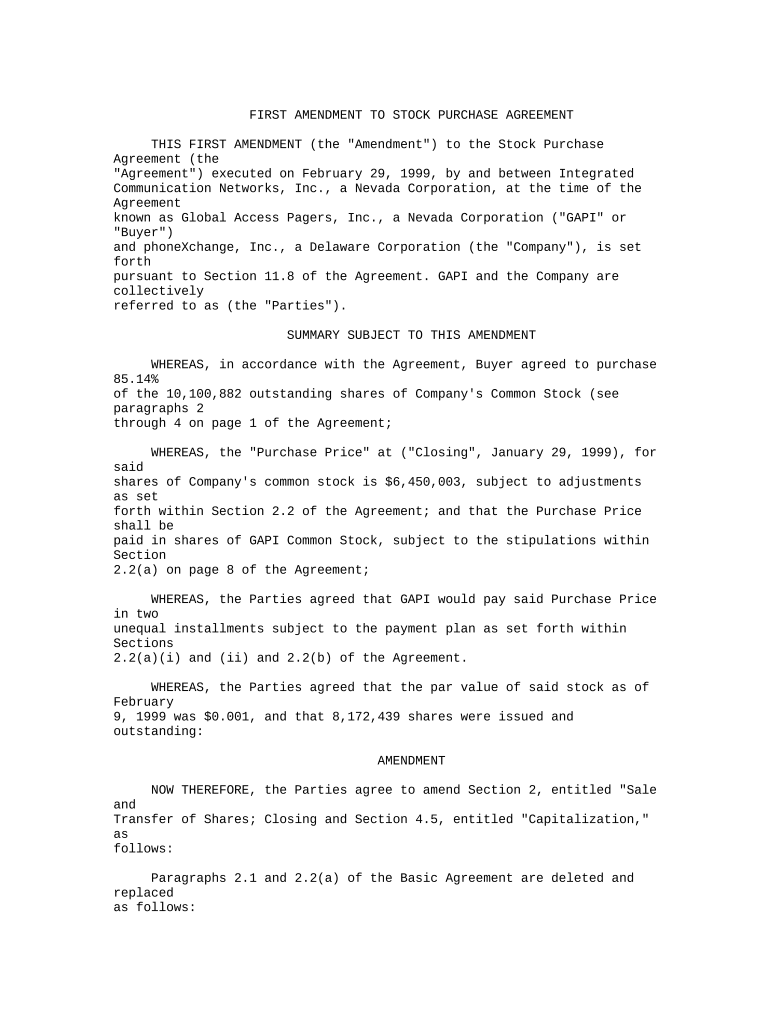
State 'First Amendment to [Agreement Name]' and reference the original agreement date and parties to avoid ambiguity about which contract is amended.
Recitals

Briefly explain the background and authority for the amendment so readers understand why the changes are necessary and that both parties consent.

Amendment Clause

Specify the exact sections being changed and provide the new text verbatim; use strike-through/underline in redlines and clean copy in the operative text.

Effective Date

State the effective date explicitly (MM/DD/YYYY) or describe conditions that trigger effectiveness, such as third-party approvals or funding.

Exhibits

Attach any revised schedules, pricing exhibits, or work statements and reference them by exhibit number so they are part of the amendment.

Signature Blocks

Provide printed name, title, date, and signature lines for each party; verify signatory authority and include witness/notary if required.

Step-by-step: draft and execute a First Amendment

Follow a clear process from identifying the need to recording the executed amendment to ensure legal effect and proper distribution.

  • 01
    Identify Changes: Mark the exact provisions and the reason for change.
  • 02
    Draft Amendment: Prepare replacement text and a clean, final amendment document.
  • 03
    Obtain Approvals: Get required internal or board approvals before signing.
  • 04
    Execute & Distribute: Collect signatures, distribute copies, and update contract records.

Typical digital workflow settings for completing an amendment

Configure a simple approval and signing workflow that tracks versions, records approvals, and stores the executed amendment with the original agreement.

Field Configuration
Drafting Tool Use tracked changes and produce clean final text for signature
Approval Order Legal review followed by business approver before signature
Signature Method Use ESIGN-compliant eSignature or notarized wet signature as required
Storage Location Save executed amendment with the master contract in repository

Where to send the amendment and how to record it

A First Amendment is usually exchanged between contracting parties, stored in the contract repository, and recorded only if it affects recorded interests.

  • Send to Parties: Deliver executed copies to all signatories and counsel
  • Update Records: Add amendment to central contract management system
  • Notify Third Parties: Inform lenders or assignees if amendment affects their rights
  • Record Publicly: Record with county clerk only if it alters recorded real property interests

Digital signing and system compatibility

Use eSignature platforms that support audit trails, standard file formats, and common integrations for reliable execution.

  • File Formats: PDF, DOCX supported
  • Integrations: Salesforce, NetSuite, Google Workspace
  • Authentication: Email, SMS, or advanced methods

How eSignature vendors compare for executing First Amendments

Choose a provider that supports enforceable eSignatures, audit trails, and the authentication level required for your amendment; summary pricing and features below.

signNow DocuSign Adobe Sign PandaDoc HelloSign
Starting Price $8/user/mo $15/user/mo $14/user/mo $19/user/mo $15/user/mo
Free Trial 7-day free trial Varies by plan Varies by plan Varies by plan Varies by plan
Bulk Send Yes Yes Yes Yes Limited
Audit Trail Yes Yes Yes Yes Yes
HIPAA Compliant Yes Yes Yes No No

Security and compliance features to look for

Encryption: AES-256 at rest; TLS 1.2/1.3 in transit
Audit Trail: Complete timestamps, IP, and action history
Certifications: SOC 2 Type II; ISO 27001 available
HIPAA Support: BAA available for protected health information
Authentication: Email, SMS, KBA, or advanced methods
Accessibility: WCAG 2.0 Level AA compliant

Key risks if a First Amendment is incorrect

Unenforceable Amendment: Court may refuse enforcement
Contract Breach Claims: Increased litigation risk
Tax Consequences: Incorrect reporting obligations
Third-Party Exposure: Lenders may assert defaults
Invalid Signatures: Signatures lacking authority
Recording Errors: Public record inconsistency

Common drafting mistakes to avoid

  • Failing to reference the original agreement by exact title and date, which can create ambiguity about applicability and intent
  • Using vague or broad language instead of providing precise replacement text for the amended provisions, increasing litigation risk
  • Not confirming signatory authority or corporate approvals before execution, which can render the amendment voidable
  • Failing to record or notify affected third parties (lenders, assignees, regulatory bodies) when their rights are impacted

Practical tips for accurate and efficient amendment completion

Adopt standardized templates, require legal review, and use a reliable eSignature platform to reduce errors and accelerate execution.

Use clear references
Always cite the original agreement by exact title and date and identify the parties to avoid misapplication of the amendment.
Provide clean and redline copies
Deliver both a redline showing changes and a clean final version to minimize disputes about what language governs.
Confirm authority
Obtain written confirmation that signatories have authority under corporate bylaws or power of attorney before execution.
Update repositories
Store the executed amendment alongside the master agreement in your contract management system and notify stakeholders.

Real-world examples of First Amendments in practice

Below are excerpts illustrating how organizations used a First Amendment to update agreements without redoing the entire contract.

Optica Ventures LLC

A small investment firm needed to extend a services schedule by six months and adjust payment timing

  • The amendment specified new dates and payment milestones
  • The executed amendment preserved the original agreement, avoided renegotiation of unrelated terms, and allowed accounting to record liability under the updated schedule while keeping the master contract intact.

Xerox

A multinational adjusted invoicing and integration timelines with a reseller to reflect implementation delays

  • The amendment replaced two schedule paragraphs and added an exhibit
  • The clear amendment language and signature from authorized executives prevented disputes, enabled updated billing, and maintained continuity of service obligations across jurisdictions.

Frequently asked questions about First Amendments

Answers to common execution, enforceability, and electronic signing questions for First Amendments in U.S. contracts.


Need help? Contact support

be ready to get more
Join over 28 million airSlate SignNow users