Establishing secure connection…Loading editor…Preparing document…

Georgia Life Estate

This template is fully customizable. Edit the text, fill out the fields, and send it for signature. Give it a try!
Georgia Life Estate

What a Georgia Life Estate Is

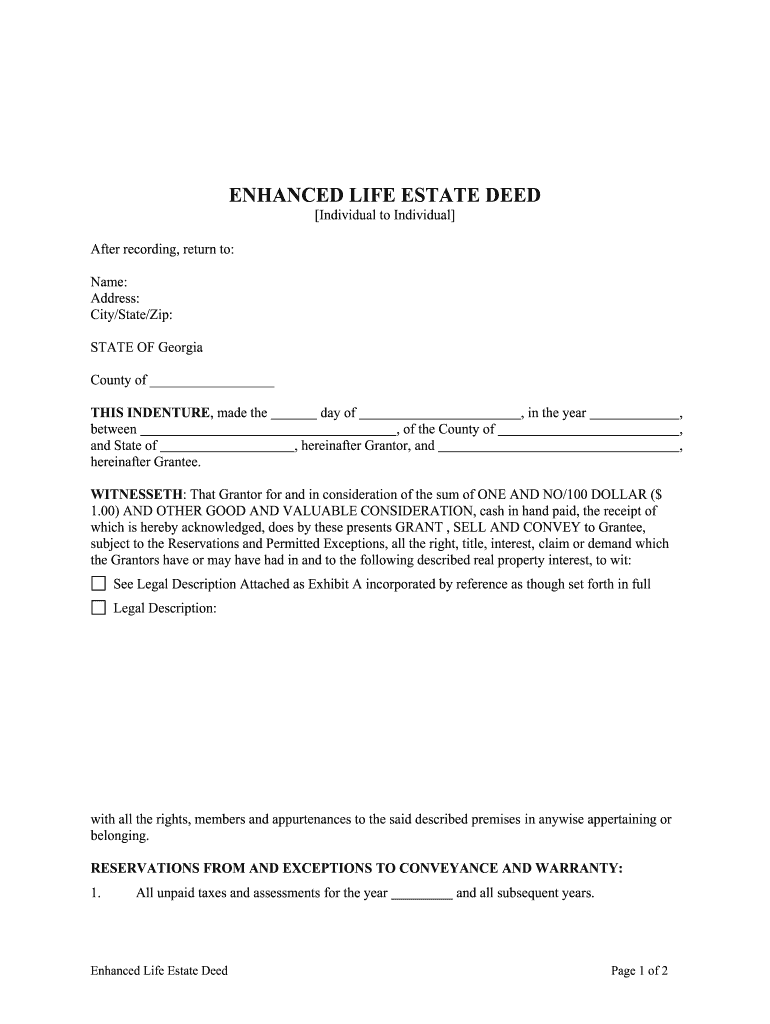
A Georgia Life Estate is a legal conveyance that grants an individual (the life tenant) the right to use and occupy real property for the duration of their life while preserving future ownership for one or more remaindermen. Typically executed as a deed, the life estate specifies the life tenant’s rights, responsibilities, and any limitations, and names the remainder beneficiaries who receive fee simple title upon the life tenant’s death. It is commonly used for estate planning to avoid probate, protect survivorship interests, and provide continued occupancy for the life tenant.

Why a Life Estate May Be Useful in Georgia

A Georgia Life Estate clarifies property succession, can reduce probate costs, and allows a designated person to live in the property for life while preserving the remainder interest for heirs. It also sets terms for maintenance, taxes, and transfer restrictions during the life tenant’s occupancy.

Why a Life Estate May Be Useful in Georgia

Who Typically Prepares or Signs a Life Estate Deed

Typical creators include attorneys, real estate professionals, fiduciaries, and homeowners arranging estate succession and occupancy rights.

  • Estate planning attorneys drafting deeds and remainder clauses for clients seeking to avoid probate.
  • Homeowners conveying life tenancy to a spouse or parent while preserving property for children.
  • Trustees or fiduciaries managing transfers to meet Medicaid planning or long‑term care goals.

Core Elements to Include in a Georgia Life Estate

Core elements of a Georgia Life Estate deed define parties, estate type, reserved powers, remainder beneficiaries, conditions, and recording instructions for enforceability and future transfer.

Parties

Identify the grantor, the life tenant, and the remaindermen; include full legal names and capacity, and specify whether any co-owners retain concurrent interests and provide contact addresses for recording and future notices.
Estate Type

State that the conveyance creates a life estate in the named life tenant, describe whether it is a conventional life estate or includes a retained power of termination or reversionary interest.

Remainder

Name the remaindermen and specify the interest they receive at the life tenant’s death, including any survivorship conditions or contingent beneficiary language and whether title vests immediately or requires probate steps.

Rights

Describe the life tenant’s rights and limits—use, possession, rental income, improvements, and liability for taxes, insurance, and ordinary maintenance obligations. Also specify whether the tenant may mortgage or transfer their life interest.

Restrictions

List any conditions, restrictions, or reserved powers such as prohibition on sale, limitations on alterations, rights to relocate, or conditions that terminate the life estate.

Recording

Include legal description, county recording information, notary acknowledgment, and any affidavit needed to satisfy county title examiners for acceptance and future conveyancing. Also provide parcel ID and recording fee instructions.

Required Information and Fields

Grantor Name: Enter full legal name exactly as on government ID.
Life Tenant: Full name and contact address.
Remaindermen: Names, relationships, and distribution shares.
Property Description: Legal description and parcel ID
Effective Date: Enter as MM/DD/YYYY format
Notarization: Notary acknowledgment and signature required.

Step-by-Step: Prepare and Record a Georgia Life Estate

Follow these steps to prepare and record a Georgia life estate deed accurately and in compliance with county recording rules.

  • 01
    Draft: Prepare deed language specifying life estate and remainder disposition.
  • 02
    Review: Have an attorney review conveyance and tax or Medicaid impacts.
  • 03
    Sign: All grantors sign before notary with proper identification present.
  • 04
    Record: File the deed with county clerk and pay recording fees.

How to Configure an Online Signing Workflow

Configure online workflows to place fields, set signer order, and collect notarization or acknowledgment evidence where required.

Field Configuration
Signature field assignment and requirement Assign to grantor and require date field.
Notary acknowledgment block details and log Include notary name, commission, and seal image if required.
Signer identity verification method and level Choose email, SMS code, or knowledge-based authentication.
Recording package export settings for county Export as certified PDF/A with audit trail attached.

Where to Send and How the Filing Flow Works

Typical filing flow for a Georgia life estate deed includes execution, notarization, recording, and delivery of copies to beneficiaries and title holder records.

  • Execute: Sign before notary and date the document.
  • Notarize: Obtain notary acknowledgment or RON session as permitted by law.
  • Record: Submit to county recorder in the county where property is located.
  • Distribute: Provide recorded copies to life tenant, remaindermen, and your attorney.

Digital Signing and eSubmission Essentials

Digital signing and eSubmission require supported file formats, signer authentication, and compatible county acceptance policies.

  • File formats: Use PDF or PDF/A for recording.
  • Authentication: Email, SMS, or stronger methods as needed.
  • Integrations: Supports cloud storage and title systems.

Timing Considerations and Deadlines

Deadlines and timing affect recording, tax reporting, and eligibility for public benefits; plan execution and recording promptly to avoid lapses or unintended consequences.

Recording window:

Record in county where property sits as soon as possible after notarization.

Tax reporting impact:

Conveyances can affect property tax assessments and basis for capital gains.

Medicaid lookback:

Transfers may trigger Medicaid lookback rules; timing affects eligibility.

Estate step-up:

Life estate can alter basis and step-up calculations at death.

Notary commission:

Ensure notary commission is active on date of notarization.

Key Milestones from Draft to Recorded Deed

Key milestones from drafting to final recording help track required actions and responsible parties throughout the Georgia life estate process.

01

Draft executed deed

Prepare and execute deed language with grantor signatures and dates before notary.

02

Notary acknowledgment

Obtain required notarial acknowledgment or RON recording and attach certificate.

03

County recording

Submit deed to county recorder and secure recorded instrument with book and page.

04

Deliver copies

Provide recorded copies to life tenant, remaindermen, and title insurer or attorney.

Common Preparation Errors to Avoid

  • Failing to use the precise recorded legal description or relying on a street address can cause the county recorder to reject the deed and delay title transfer.
  • Not obtaining a proper notarization, or misdating the notary acknowledgment, is a frequent cause of recording rejection and creates downstream title insurance complications.
  • Using ambiguous beneficiary language or failing to specify survivorship terms can result in intestacy disputes and expensive probate litigation.
  • Attempting to mortgage or encumber the property without clarifying whether the life tenant may pledge their life interest can create liens affecting remaindermen rights.

Penalties and Risks of an Incorrect Life Estate Deed

Recording Rejection: Deed rejected and delayed title transfer
Tax Consequences: May change basis and trigger gains
Medicaid Risk: Potential penalty period under lookback
Creditor Claims: Life interest may be reached by creditors
Title Insurance: Failure to record harms insurability
Litigation Risk: Ambiguities invite probate disputes

Practical Examples of Georgia Life Estate Use

Real-world examples illustrate why parties choose a Georgia life estate and practical outcomes for beneficiaries and life tenants.

Martin Family

An elderly homeowner granted a life estate to a spouse while naming adult children as remaindermen to preserve family ownership.

  • Surviving spouse retained occupancy rights and responsibilities.
  • At the spouse’s death the property passed to the children without probate, simplifying estate administration; the family recorded the deed promptly, and clear remainder language avoided disputes or title insurer objections.

Medicaid Planning

A daughter conveyed a life estate to her elderly mother while reserving remainder to the family trust as part of Medicaid planning consultations.

  • Professional review reduced transfer penalty risk.
  • Legal counsel advised timing and alternatives, documented intent, and coordinated recording so the transfer complied with state rules and reduced the chance of an adverse Medicaid penalty or disqualification.

Comparing eSignature Plans Relevant to Georgia Life Estate Documents

Typical eSignature plans compared for handling a Georgia life estate deed—note starting price, trial availability, bulk send, audit trail, and HIPAA support differences.

signNow DocuSign Adobe Sign PandaDoc HelloSign
Starting Price $8/user/mo $15/user/mo $14/user/mo $19/user/mo $15/user/mo
Free Trial 7-day free trial Varies by plan Varies by plan Yes, limited Yes, limited
Bulk Send Yes Yes Yes Yes No
Audit Trail Yes Yes Yes Yes Yes
HIPAA Compliant Yes Yes Yes No No

Frequently Asked Questions About Georgia Life Estate Deeds

Answers to common questions about preparing, signing, notarizing, and recording a Georgia life estate deed, and how electronic options intersect with state rules.


Need help? Contact support

be ready to get more
Join over 28 million airSlate SignNow users