Voluntary Petition
The signed petition (Official Form 101) opening the case; includes debtor identity and basic case type information required by the federal court.
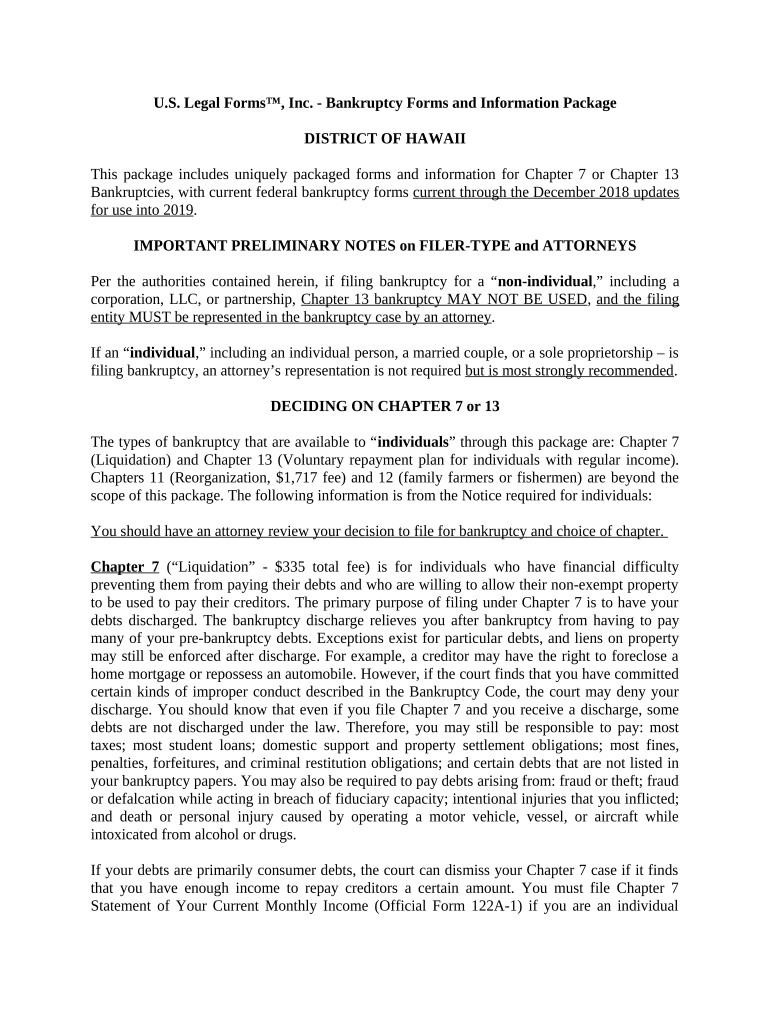
A complete and accurate bankruptcy submission reduces delays, avoids dismissal or sanctions, and ensures creditors and the trustee can evaluate the estate efficiently. Precise documents protect the filer from avoidable errors such as incomplete schedules, incorrect exemption claims, or missing signature attestations under penalty of perjury.

Debtors, bankruptcy attorneys, trustees, and court clerks are the primary parties who prepare, verify, and file bankruptcy petitions and supporting schedules.
Non-lawyer preparers (petition preparers) have specific disclosure and compensation limits; courts may require attorney involvement for complex estates.
The signed petition (Official Form 101) opening the case; includes debtor identity and basic case type information required by the federal court.
Official Schedules A–J list assets, secured and unsecured creditors, exemptions, income, and monthly expenses; accuracy determines treatment of claims and discharge eligibility.
Official statements provide historical financial context, transfers, and pending litigation which trustees and creditors review for preference or fraudulent transfer issues.
Means test documentation supports Chapter 7 eligibility or shows disposable income under Chapter 13; miscalculation can lead to dismissal or conversion.
For Chapter 13 cases, a proposed repayment plan with payment schedule, duration, and priority claim treatment must be filed promptly and comply with local requirements.
A complete, correctly formatted creditor matrix is required for notice distribution; missing or wrong addresses cause service defects and can delay the case.
| File Naming Standard | Use clear names: Petition.pdf | SchedA.pdf |
|---|---|
| Combine Attachments | Merge exhibits per court instructions |
| PDF Compatibility | Use searchable PDF/A where possible |
| Signature Placement | Reserve signature block per Official Forms |
| Document Index | Include table listing included forms |
Ensure the platform you use supports secure e-signing, audit trails, and the file formats required by the bankruptcy clerk and CM/ECF system.
Many law firms and courts accept electronically signed documents when they meet ESIGN/UETA standards; verify local bankruptcy court practice and e-filing rules before using remote e-signature methods.
Held about 20–40 days after filing.
Bar date set by court notice for creditors.
Trustee or creditor must timely object following notice.
Chapter 13 confirmation hearing follows plan filing timetable.
Discharge timing varies by chapter and compliance.
The interface is simple and easy-to-use for our team; more importantly, it is just as easy for our customers.
I can process and execute all of these documents online with 100% compliance and built-in security.