Establishing secure connection…Loading editor…Preparing document…

Indemnity Agreement Regarding Lost Bill of Lading

This template is fully customizable. Edit the text, fill out the fields, and send it for signature. Give it a try!
Indemnity Agreement Regarding Lost Bill of Lading

What an Indemnity Agreement Regarding Lost Bill of Lading Is

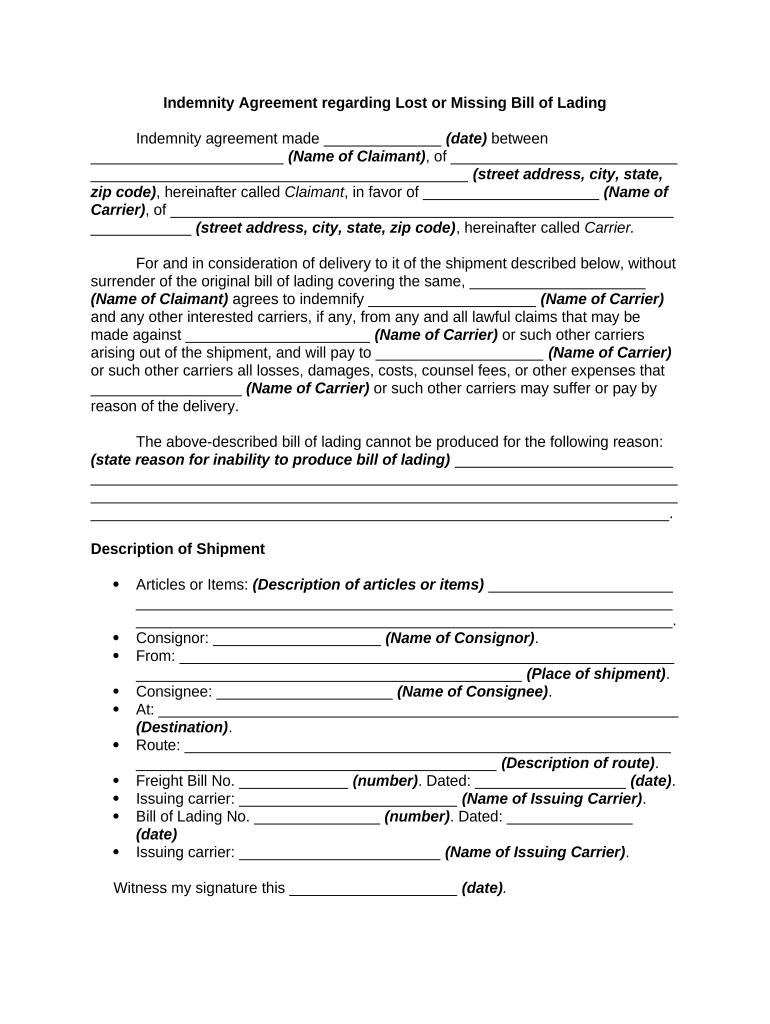
An Indemnity Agreement Regarding Lost Bill of Lading is a written promise by one party (the indemnitor) to hold another party (typically a carrier, freight forwarder, or consignee) harmless from losses arising when the original bill of lading is lost, destroyed, or unavailable. The agreement typically covers claims, costs, legal fees, and liabilities tied to delivery or release of cargo without presentation of the original document of title. Because bills of lading can be negotiable documents of title, replacement and indemnity procedures often require specific contractual language, supporting evidence of shipment, and sometimes bond or security to protect the carrier.

Why this Agreement Matters for Risk Allocation

The agreement protects carriers and third parties from exposure when cargo is released without the original bill of lading, and it preserves the rights of owners and consignees by documenting who will bear financial responsibility for claims or losses.

Why this Agreement Matters for Risk Allocation

Who Commonly Uses a Lost Bill of Lading Indemnity

Parties involved in international and domestic shipping commonly use these agreements when the original document cannot be produced but cargo must move or be released.

  • Carriers and freight forwarders needing protection before releasing cargo to a consignee.
  • Importers and exporters seeking to receive goods despite missing original paperwork.
  • Banks or insurers requiring clear transfer of liability when a negotiable BOL is absent.

The agreement clarifies financial responsibility, reduces litigation risk, and creates an evidentiary record for claims, insurance, and customs purposes.

Representative Signatories and Reviewers

Logistics Manager

A logistics manager signs or requests the indemnity to permit release of freight; they must ensure shipment identifiers, carrier details, and consignee authority match internal records and bills of lading.

Trade Attorney

A trade or maritime attorney reviews indemnity language to confirm enforceability, adequate security, and that indemnitors understand limitations and covenants before countersigning on behalf of a corporate party.

Essential Data and Security Notes for the Agreement

Party Names: Full legal entity names
Shipment IDs: Bill of Lading number
Cargo Description: Goods and packaging
Indemnity Scope: Claims and costs covered
Collateral: Bond or security terms
Signatures: Authorized signatory details

Primary Risks from an Incorrect or Incomplete Agreement

Financial exposure: Uncapped liabilities
Fraud risk: Invalid claims accepted
Delivery disputes: Unauthorized release
Insurance denial: Coverage disputes
Regulatory noncompliance: Customs penalties
Litigation costs: High legal fees

Common Preparation Pitfalls to Avoid

  • Using vague indemnity language that fails to specify covered losses, time limits, or caps, which can render the agreement ineffective in litigation.
  • Failing to match party names and registration details to government records, risking enforcement problems and bank or insurer refusal to accept the agreement.
  • Releasing cargo before obtaining required collateral or a signed agreement, exposing carriers to third-party claims from the true owner.
  • Skipping verification of consignee authority or identity, increasing the chance of wrongful release to an unauthorized party.

Step-by-Step: How to Complete the Indemnity Agreement

Follow this sequence to prepare, verify, and execute a clear indemnity when the original bill of lading is missing.

  • 01
    Assemble documents: Collect shipment records, booking confirmation, and any commercial invoices.
  • 02
    Identify parties: Enter exact legal names and addresses for indemnitor and indemnitee.
  • 03
    Set scope: Specify covered claims, limits, and time period for indemnity.
  • 04
    Sign and secure: Obtain authorized signatures and any bond or collateral required.

How the Replacement and Release Process Typically Flows

A concise operational view of who does what from loss discovery to cargo release, useful for internal workflows.

  • Loss reported: Notify carrier and document missing original BOL.
  • Request indemnity: Carrier requests indemnity agreement and supporting evidence.
  • Provide security: Indemnitor supplies bond, deposit, or insurance confirmation.
  • Carrier releases cargo: Carrier releases goods and retains indemnity on file.

Key Elements Every Professional Indemnity Agreement Should Include

A robust indemnity balances protection for the carrier with clear obligations for the indemnitor; include defined terms, scope, security, and execution details.

Parties

Identify indemnitor, indemnitee, and any guarantors with legal addresses and registration details to ensure enforceability and clarity.
Bill of Lading Details

Include BOL number, vessel/voyage, container numbers, marks and numbers, and shipment dates to tie the indemnity to the specific cargo.

Indemnity Clause

Define covered losses, third-party claims, defense costs, and whether liability is capped or unlimited to avoid ambiguity.

Security and Bond

State required collateral, bond amount, or escrow conditions and how funds are to be held or released following claim resolution.

Representations

Include warranties about authority to enter the agreement and that the indemnitor is not aware of encumbrances on the cargo.

Execution Details

Specify signature blocks, dates, notarization or witness needs, and whether electronic signatures are permitted and under which authentication methods.

Practical Tips for Accurate and Efficient Completion

Use clear procedures and document checks to reduce release errors and disputes.

Confirm identity and authority
Verify the indemnitor’s legal existence and that the signer is authorized to bind the entity; obtain corporate resolutions for large-value shipments when applicable.
Attach corroborating shipment records
Include booking confirmations, commercial invoices, packing lists, and messages that demonstrate chain of custody and support the indemnity.
Define time limits and notice procedures
Specify claim notice windows and dispute resolution steps to avoid indefinite liability and to streamline claim handling.
Document the security provided
Record bond numbers, escrow account details, or insurance endorsements and retain proof of funds or policy coverage.

Typical Timelines and When to Act

Timely action reduces exposure; follow these common timing checkpoints when a bill of lading is lost.

Immediate notice:

Report loss to carrier and stakeholders within 24–72 hours when discovered.

Indemnity requested:

Carrier typically requests signed indemnity before release — immediate response recommended.

Security posted:

Provide bond or collateral as required before goods are released.

Claims window:

Preserve evidence and notify insurers promptly; delayed notice can impair coverage.

Document retention:

Keep executed indemnities and supporting records for required retention periods.

eSignature Provider Comparison for Executing Indemnities

Common eSignature plan criteria matter for indemnities: price, trial availability, bulk send, audit trail, and HIPAA support. signNow is listed first per vendor comparison rules.

signNow DocuSign Adobe Sign PandaDoc HelloSign
Starting Price $8/user/mo $15/user/mo $14/user/mo $19/user/mo $15/user/mo
Free Trial 7-day free trial Varies by plan Varies by plan Varies by plan Varies by plan
Bulk Send Yes Yes Yes Yes No
Audit Trail Yes Yes Yes Yes Yes
HIPAA Compliant Yes Yes Yes No No

Frequently Asked Questions — Execution, Validity, and Issues

Answers to common practical questions about enforceability, electronic signing, and what to include when you lack the original bill of lading.


Need help? Contact support

be ready to get more
Join over 28 million airSlate SignNow users