Establishing secure connection…Loading editor…Preparing document…

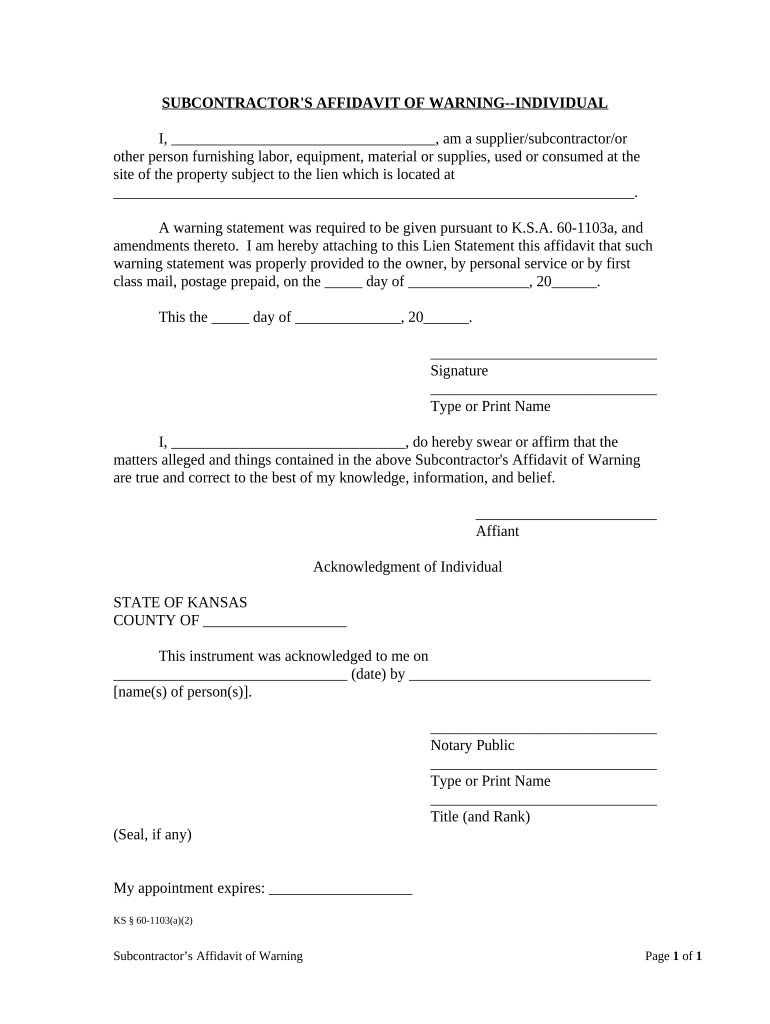
Kansas Affidavit Form

This template is fully customizable. Edit the text, fill out the fields, and send it for signature. Give it a try!
Kansas Affidavit Form

What the Kansas Affidavit Form Is and When It’s Used

The Kansas Affidavit Form is a sworn written statement used in Kansas to present facts under oath for administrative, legal, or transactional purposes. It records a declarant’s factual assertions and is typically signed in the presence of a notary public to create a notarized acknowledgement or jurat. Common contexts include property matters, identity confirmations, proof of service, and court filings where an affidavit provides factual support. Although formats vary by purpose, the form must clearly identify the declarant, state the facts, include a signature and date, and contain the notary block when notarization is required.

Why a Proper Kansas Affidavit Matters

A correctly completed affidavit establishes a sworn record that courts, government agencies, and private parties rely on for factual determinations. Proper form and notarization reduce the risk of rejection, evidentiary challenges, or allegations of perjury, and they help ensure the affidavit satisfies both state and federal standards for admissible sworn statements.

Why a Proper Kansas Affidavit Matters

Who Commonly Prepares and Signs This Affidavit

The exact preparer and signatory depend on the affidavit’s purpose: parties provide facts, attorneys may draft, and a notary authenticates the signature when required.

  • Private individuals providing sworn statements about identity, service, or possession.
  • Attorneys and legal staff preparing evidence for court or administrative hearings.
  • Businesses and title companies verifying transaction facts for real estate or closing records.

Step-by-Step: Completing a Kansas Affidavit

Follow these steps in order to prepare, sign, and submit a Kansas Affidavit to minimize errors and processing delays.

  • 01
    Prepare Draft: Assemble facts, supporting documents, and identify the declarant.
  • 02
    Complete Fields: Enter names, dates, addresses, and numbered factual statements.
  • 03
    Sign Before Notary: Sign in presence of notary for jurat or acknowledgement as required.
  • 04
    Submit or File: Send the notarized affidavit to the recipient or file with the appropriate office.

Typical Processing Flow for an Affidavit

The affidavit lifecycle includes preparation, notarization, routing, and retention. Each step affects enforceability and recordkeeping.

  • Drafting: Create factual statements and attach supporting exhibits.
  • Notarization: Complete jurat or acknowledgement in notary presence.
  • Delivery: Transmit the original or certified copy to the requesting party.
  • Retention: Store per regulatory and internal retention schedules.

Using Digital Tools and eSignature for Affidavits

Verify recipient acceptance of e-signed or RON- notarized affidavits before using digital methods to avoid rejection.

  • Document Format: PDF or DOCX accepted for electronic workflows.
  • eSignature Standards: Must meet ESIGN and UETA validity tests.
  • Notarization Support: Remote Online Notarization (RON) if state and notary permit.

Required Data Elements on the Kansas Affidavit

Declarant Name: Full legal name required.
Address: Street, city, state, ZIP.
Facts: Numbered, first‑hand statements.
Date: MM/DD/YYYY format.
Signature: Original signature required.
Notary Block: Jurat or acknowledgement present.

Key Risks and Possible Legal Consequences

Perjury Risk: False statements may trigger perjury charges.
Rejection Risk: Missing notarization can void acceptance.
Delay Risk: Inaccurate names cause processing delays.
Evidentiary Risk: Unspecific facts weaken probative value.
Privacy Risk: Sensitive data requires HIPAA caution.
Record Risk: Improper retention violates regulations.

Practical Tips for a Correct and Efficient Affidavit

Use these practices to reduce errors, speed acceptance, and preserve evidentiary value.

Write First‑Hand Facts
Limit content to what you personally observed or know; avoid hearsay unless clearly attributed.
Use Plain Language
Number facts, keep sentences short, and avoid legalese that can obscure the point.
Verify Identity
Bring government ID to the notary and ensure the name matches the signature block exactly.
Keep Originals
Retain signed originals or certified copies per retention requirements and for future verification.

Core Elements to Include in a Professional Kansas Affidavit

A professional affidavit is structured, concise, and includes the elements that support admissibility and credibility.

Caption

Case or matter identifier and recipient to clarify context and intended use.
Declarant Identification

Full name, address, and any relevant title or relationship to the matter.

Statement of Facts

Numbered factual statements limited to first‑hand knowledge and dated where applicable.

Exhibits

Attach labeled exhibits referenced in the facts; mark each exhibit for clarity.

Signature Block

Declarant signature, printed name, and date; indicate whether signed under penalty of perjury.

Notarial Section

Appropriate jurat or acknowledgement completed by a commissioned notary public.

eSignature Pricing & Capability Snapshot for Filing Affidavits

Compare common vendor pricing and capability items relevant to electronically preparing and signing affidavits; signNow appears first for reference.

signNow DocuSign Adobe Sign PandaDoc HelloSign
Starting Price $8/user/mo $15/user/mo $14/user/mo $19/user/mo $15/user/mo
Free Trial 7-day free trial Varies by plan Varies by plan Varies by plan Varies by plan
Bulk Send Yes Yes Yes Yes No
Audit Trail Yes Yes Yes Yes Yes
Envelope Cap No envelope cap 100 envelopes/user/year Varies Varies Varies

Frequently Asked Questions About the Kansas Affidavit Form

Answers to common questions about validity, notarization, e-signing, and recordkeeping for Kansas affidavits.


Need help? Contact support

be ready to get more
Join over 28 million airSlate SignNow users