Establishing secure connection…Loading editor…Preparing document…

Kansas Renunciation and Disclaimer of Property

This template is fully customizable. Edit the text, fill out the fields, and send it for signature. Give it a try!
Kansas Renunciation and Disclaimer of Property

What the Kansas Renunciation and Disclaimer of Property Is

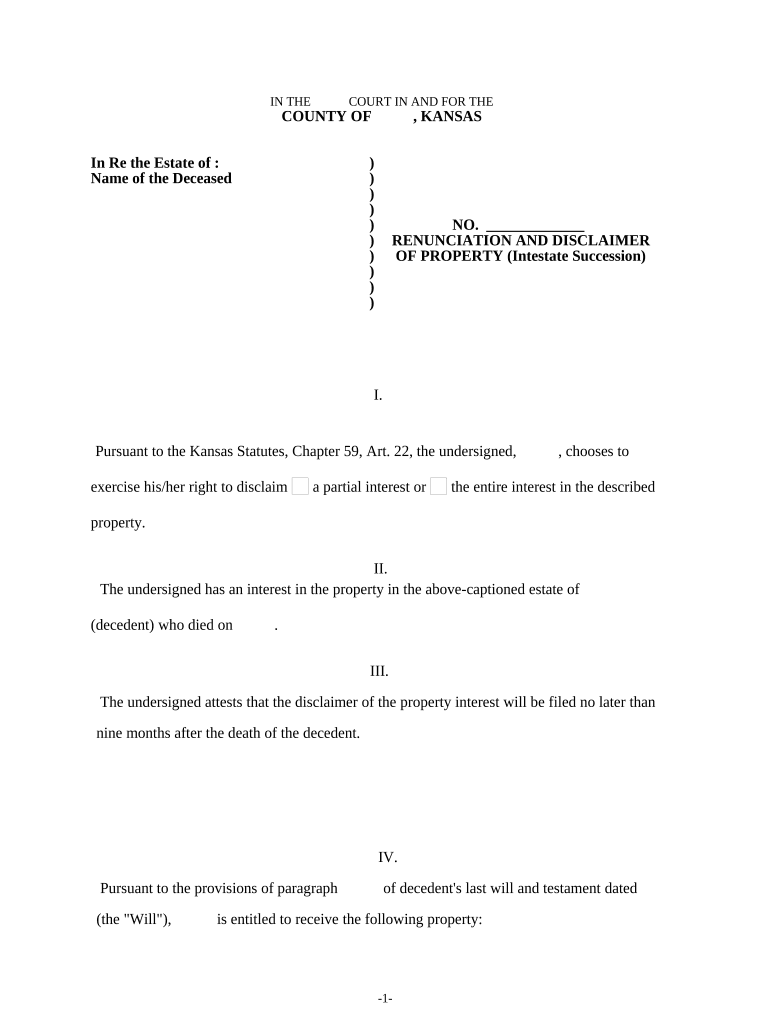
The Kansas Renunciation and Disclaimer of Property is a legal instrument used by an heir, devisee, or beneficiary to formally refuse, disclaim, or renounce an interest in real or personal property that would otherwise pass to them under a will or by intestacy. It clarifies that the disclaimed interest is treated as though the disclaimant predeceased the decedent for distribution purposes, and it helps prevent unintended transfers or tax consequences. The form must meet Kansas probate requirements to be effective and may require signature, notarization, or filing with the probate court.

Why a Clear Renunciation or Disclaimer Matters

Use this document to remove an unwanted property interest from your estate plan, avoid administration delays, and clarify distribution among remaining beneficiaries. A correctly executed renunciation can reduce probate disputes and simplify asset allocation while potentially affecting tax reporting and creditor claims.

Why a Clear Renunciation or Disclaimer Matters

Who Typically Prepares or Signs This Form

Heirs, beneficiaries, personal representatives, estate attorneys, and title or closing agents commonly prepare or handle Kansas Renunciation and Disclaimer of Property forms.

  • Heirs who prefer property pass to other beneficiaries instead of accepting inheritance.
  • Estate attorneys filing formal renunciations during probate to clarify distribution.
  • Title companies clearing chain of title before closing to avoid later claims.

Step-by-Step: Completing a Kansas Renunciation or Disclaimer

Follow these steps to complete, validate, and record a renunciation or disclaimer under Kansas probate procedures.

  • 01
    Prepare Document: Fill all required fields and attach property description.
  • 02
    Sign and Notarize: Signer signs before notary or otherwise follows Kansas rules.
  • 03
    File or Deliver: Submit to probate court or deliver to personal representative.
  • 04
    Retain Copies: Keep originals and provide certified copies to title or tax authorities.

How the Process Works from Drafting to Recording

Process overview: creation, signature, authentication, and routing for recording or probate filing in Kansas jurisdiction.

  • Draft: Complete form with legal description and parties.
  • Authenticate: Notarize or use acceptable e-authentication per ESIGN/UETA.
  • Deliver: Provide to executor, personal representative, or file with court.
  • Record: Record or include in probate record where required.

Setting Up an Electronic Workflow for Renunciations

Set up an electronic workflow for secure signing, notarization, and distribution using eSignature tools and audit trails.

Field Configuration
Authentication and verification method choose one Email link + optional SMS OTP; KBA for high-value cases.
Signer role order and routing rules Specify primary heir, alternate beneficiaries, then executor.
Document fields and conditional logic Use conditional fields to hide irrelevant sections and validate inputs.
Notary and witness procedure steps Attach notary block, capture journal entry, and store A/V record if RON used.
Retention and audit trail settings Enable immutable audit trail and retain signed PDF for required retention period.

Platform and Format Requirements for Electronic Completion

Use a platform that supports secure e-signing, notarization workflows, and audit trails compatible with Kansas probate requirements.

  • Formats: PDF, DOCX, fillable forms.
  • Integrations: Connect to title, court, and document management.
  • Authentication: Email, SMS, KBA, or SSO options.

Essential Components of a Professional Renunciation or Disclaimer

Key parts of a professional Kansas Renunciation and Disclaimer of Property form improve clarity, enforceability, and acceptance by probate courts and title companies.

Parties

Identify the disclaimant, decedent, and all affected beneficiaries with full legal names and mailing addresses. Accurate party identification prevents disputes and ensures proper reallocation of interests.
Property Details

Provide a precise legal description for real property or account identifiers for personal property. Include parcel numbers, deeds, and recording references to aid title verification and court acceptance.

Statement of Renunciation

Clear, unambiguous language that the signer irrevocably disclaims the identified interest. Avoid conditional or ambiguous phrasing that could render the document ineffective.

Consideration and Effect

Note whether the renunciation is voluntary, not for consideration, or made in favor of alternate beneficiaries; specify the legal effect on distribution and tax reporting.

Notarization Block

Include a notary acknowledgment and any witness lines required by statute. If using RON, indicate retention and access of the A/V session for compliance.

Filing Instructions

Explain whether the document should be filed with probate court, recorded, or delivered to the personal representative and provide county-specific steps where known.

Security, Compliance, and Technical Requirements

Signature Standards: ESIGN and UETA recognized.
Encryption: TLS 1.2/1.3 in transit; AES-256 at rest.
Audit Trail: Immutable log with timestamps and IPs.
HIPAA: BAA required for PHI handling.
Document Formats: PDF and DOCX supported.
Access Controls: Role-based access and SSO options.

Penalties and Risks of an Incorrect Renunciation

Invalid Disclaimer: May be rejected by probate court.
Tax Consequences: Potential gift or income tax impacts.
Creditor Claims: Creditors may still assert claims.
Delay in Distribution: Administration may be prolonged.
Name Mismatches: Can void or delay acceptance.
Improper Notarization: Unsigned or improper notary invalidates form.

Common Preparation Pitfalls

  • Failing to include a precise legal description leads to ambiguity that title companies or courts may reject, requiring re-execution or supplemental affidavits.
  • Using conditional or vague renunciation language can create interpretation disputes and allow beneficiaries to challenge whether the disclaimer was voluntary and irrevocable.
  • Neglecting to verify county-specific filing rules or court requirements for probate recordation increases risk of procedural rejection and delay in estate administration.
  • Relying on a scanned signature without evidence of signer intent or authentication can weaken enforceability under ESIGN and permit later contest.

Timing Considerations and Deadlines

Key timing considerations for executing and filing renunciations or disclaimers in Kansas and associated probate steps.

Date of execution and effectiveness:

Date signer signs; effective date matters for distribution.

Probate filing deadline and county rules:

File with court per local rules to ensure acceptance.

Tax reporting obligations and deadlines:

May affect estate tax or beneficiary reporting timelines.

Recording, deed, and title actions:

If recording required, follow county clerk procedures promptly.

Revocation rights and statutory limits:

Check statute for revocation limits; some disclaimers are irrevocable.

Key Milestones in Processing a Renunciation

Numbered milestones from signing through probate acceptance and recording where applicable in Kansas county-specific courts.

01

Draft Complete

Form completed with property details and parties identified.

02

Notarization

Signer appears before notary or uses approved RON process.

03

Deliver to Executor

Provide original to personal representative and file as needed.

04

Record/Accept

Court or title records the renunciation or notes it in estate file.

Examples: How Renunciations and Disclaimers Operate in Practice

Real-world examples show how renunciations and disclaimers resolve estate and title issues in practice effectively.

Property Passing

A beneficiary declined a residential parcel inherited through intestacy to allow siblings to assume title without sale.

  • Renunciation executed, notarized, and recorded locally.
  • Recording the renunciation prevented a forced sale, simplified title transfer for mortgage refinancing, avoided a probate contest by clarifying distribution among remaining heirs, and reduced closing delays and costs.

Tax Clarification

An heir renounced a monetary bequest to avoid surprise income tax obligations and direct the payment to a charitable remainder.

  • Attorney review recommended the formal disclaimer.
  • The disclaimer documented intent, preserved the estate's tax positions, provided documentation acceptable to the IRS and state tax authorities when reporting returns, and avoided costly audits or amendments later.

Best Practices to Improve Acceptance and Minimize Risk

Practical, state-aware tips to complete credible, court-acceptable renunciations and disclaimers in Kansas and reduce processing friction.

Confirm statutory acceptance and format
Verify Kansas probate rules for renunciations and disclaimers, including required acknowledgments, witnesses, or recording. Obtain county clerk or probate court guidance before filing to avoid procedural rejection and rework and delays.
Use clear, irrevocable language
Draft an unambiguous statement that the signer irrevocably and voluntarily disclaims the interest. Avoid conditional phrasing, explain consequences, and have counsel review to confirm legal sufficiency for probate and tax purposes.
Obtain proper authentication
Complete notarization or RON procedures per Kansas acceptance, and capture any required audio-video recording, notary journal entries, and identity-proofing steps. Strong authentication reduces later disputes over signer identity or intent.
Preserve originals and certificates
Retain the original signed and notarized document, certified copies, and the platform's audit trail PDF. Store A/V RON sessions and notarization logs per retention rules to support probate acceptance and defend against challenges.

eSignature Pricing and Capabilities Comparison

Compare typical pricing and capability differences among popular eSignature providers for handling Kansas Renunciation and Disclaimer of Property documents.

signNow DocuSign Adobe Sign PandaDoc HelloSign
Starting Price $8/user/mo $15/user/mo $14/user/mo $19/user/mo $15/user/mo
Free Trial 7-day free trial Varies by vendor Varies by vendor Varies by vendor Varies by vendor
Bulk Send Yes Yes Yes Yes No
Audit Trail Yes Yes Yes Yes Yes
HIPAA Compliant Yes Yes Yes No No
Envelope Cap No cap 100 envelopes/user/year Varies by plan Varies by plan Varies by plan

FAQs About the Kansas Renunciation and Disclaimer of Property

Answers to common questions about completion, signing, notarization, and filing for Kansas renunciations and disclaimers.


Need help? Contact support

be ready to get more
Join over 28 million airSlate SignNow users