Establishing secure connection…Loading editor…Preparing document…

Land Easement

This template is fully customizable. Edit the text, fill out the fields, and send it for signature. Give it a try!
Land Easement

What a Land Easement Is and how it functions

A land easement is a legal right that allows one party limited use of another party’s real property for a specific purpose without transferring ownership. Common easements include rights-of-way for utilities or access, conservation or preservation easements, and ingress/egress for adjacent parcels. Easements are typically documented in writing, signed by the grantor, and recorded with the county recorder or land records office to provide notice to subsequent buyers. The document should specify scope, duration, maintenance responsibilities, and any restrictions on the easement holder’s use.

Why documenting a Land Easement matters

A clear written easement creates enforceable rights, reduces boundary disputes, preserves property value, and provides notice to future owners, improving predictability for land use and development.

Why documenting a Land Easement matters

Who typically prepares and signs a Land Easement

Each participant should confirm authority to sign, proper legal descriptions, and recording procedures before execution.

  • Property owners and grantors: Owners who create easements to permit specific uses without selling land.
  • Utility and infrastructure companies: Entities that obtain long-term access rights for lines, pipes, or cables.
  • Local governments and conservation groups: Agencies or NGOs that secure access, trails, or preservation restrictions.

Essential elements every professional Land Easement should include

A well-drafted easement balances clarity and enforceability: identify parties, describe the area precisely, state permitted uses, set duration, assign responsibilities, and define dispute resolution.

Party identification

Full legal names and entity types for grantor and grantee, including capacity (owner, trustee, municipality) and contact information for notices.
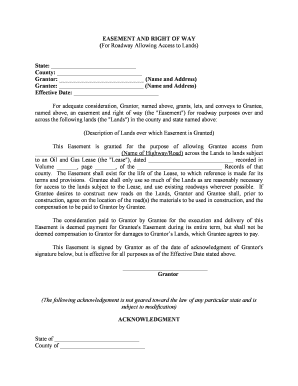
Legal description

Precise legal description or recorded plat citation and, when appropriate, an exhibit map showing easement boundaries, bearings, and measurements.

Scope of use

Specific permitted activities (access, utilities, maintenance) plus clear prohibitions to prevent ambiguity about allowed operations.

Duration and termination

Fixed term, perpetual status, or conditional end events; procedures for termination, abandonment, or release of the easement.

Maintenance and liability

Who repairs or maintains improvements, insurance requirements, indemnity language, and responsibility for taxes or permits.

Recording and notice

Obligation to record the instrument within a specified timeframe and the county office where recording will occur.

Required factual elements and metadata

Grantor: Name of owner granting easement
Grantee: Name of easement holder
Property ID: Parcel number or legal description
Easement area: Dimensions or exhibit reference
Effective date: MM/DD/YYYY effective date
Recording county: County where instrument recorded

Step-by-step: how to complete a Land Easement form

Follow these steps in order to prepare a recordable easement that avoids common defects and recording rejections.

  • 01
    Confirm authority: Verify grantor owns the property and has authority to grant the easement.
  • 02
    Create legal description: Use recorded deed language or a survey-based description for accuracy.
  • 03
    Define terms: Specify scope, duration, maintenance, and access hours if needed.
  • 04
    Sign and notarize: Execute signatures before a notary and record promptly.

Configure an online easement workflow

Set up routing, required fields, and authentication to match your recording and internal approval requirements.

Field Configuration
Legal description field Required multiline text; attach survey exhibit
Signature fields Place signer fields with date stamps and notary block
Authentication Use email or SMS code; consider ID verification for remote notarization
Recording party Assign responsibility to record with county clerk

Where to send and file the signed easement

After execution, follow recording and distribution steps to protect title and notify stakeholders.

  • County recorder: Record original instrument in the county where the property sits.
  • Easement holder: Provide recorded copy to grantee for their records.
  • Title company: Send to title insurer to update title report and policy.
  • Internal file: Retain a certified copy in property and legal files.

Digital signing and technical considerations

Ensure the platform provides tamper-evident PDFs and an audit trail suitable for county recording and future title review.

  • File formats: PDF and DOCX supported
  • Integrations: Connects with title and cloud systems
  • Authentication: Email, SMS, or advanced ID checks

eSignature vendor snapshot for Land Easement workflows

Platform costs and compliance features vary; the table compares starting prices and core capabilities relevant to property instruments.

signNow DocuSign Adobe Sign PandaDoc HelloSign
Starting Price $8/user/mo $15/user/mo $14/user/mo $19/user/mo $15/user/mo
Free Trial 7-day free trial Verify Verify Verify Verify
Bulk Send Yes Yes Yes Yes No
Audit Trail Yes Yes Yes Yes Yes
HIPAA Compliant Yes Yes Yes No No

How to download, store, and share the executed easement

Preserve originals and maintain accessible electronic copies in standard formats for title review and transfer.

Save as PDF

Export a tamper-evident, certified PDF/A that includes the audit trail and signature timestamps for recording and title company use.

Native copy

Keep the original signed paper document or a certified scanned copy with notary stamp for legal archiving.

Cloud storage

Store in an encrypted cloud repository with access controls and versioning to support audits and chain-of-title inquiries.

Distribution

Send recorded copies to the grantee, title insurer, and any mortgagees to update their records and insurance files.

Common drafting and processing pitfalls to avoid

  • Ambiguous descriptions: failing to use a precise legal description or exhibit can create overlapping rights and boundary disputes.
  • Improper authority: having a person sign without corporate resolution, trustee authority, or recorded ownership verification can void the grant.
  • Incomplete recording: delaying or misfiling the recorded instrument can leave the easement unprotected against later purchasers.
  • Unclear maintenance terms: omitting responsibility for repairs or access hours leads to disputes and potential litigation.

Legal risks and consequences of a defective easement

Recording rejection: Delay in title protection
Clouded title: Potential litigation risk
Tax issues: Incorrect reporting consequences
Contract disputes: Costly enforcement actions
Insurance denial: Coverage or claim issues
Loss of use: Easement unenforceable

Real-world examples of eSigned property instruments

These short case notes show how digital signing is used to complete property-related documents efficiently and securely.

Tim Martin, Martin Properties

Many of our property forms are completed online to meet deadlines and owners’ needs.

  • Rapid mobile or offline signing on sites.
  • I can process and execute all of these documents online with 100% compliance and built-in security. Whether on mobile or working offline, I can get forms back to their necessary parties efficiently.

Dan Rotelli, BIS

Enterprise compliance was a key consideration for property instruments.

  • We prioritized SOC 2 controls and auditability.
  • We felt most comfortable given SOC 2 certification and strict focus on ESIGN and UETA act compliance, which supports our internal policies for land records and vendor management.

Who typically signs and what their roles mean

Grantor — Property Owner

The grantor is the registered owner who conveys the easement interest. Their signature must match recorded title and often requires corporate or trustee authorization for entities.

Grantee — Easement Holder

The grantee is the individual or entity receiving the right. Grantee signature acknowledges acceptance, and recorded contact details establish enforcement channels and notice procedures.

Notarization and witness execution flow for recording

Follow these authentication steps to ensure the instrument is accepted for recording and enforceable in the relevant jurisdiction.

01

Prepare document

Complete all blanks and attach survey exhibits before signing.

02

Confirm signers

Verify each signer’s identity and authority to execute the easement.

03

Arrange notary

Sign in presence of a notary for acknowledgment or jurat as required.

04

Obtain witnesses

Where required, have witnesses sign and provide their contact information.

05

Notary journal

Notary records the act in the journal per state rules.

06

Execute multiple originals

Prepare the number of originals the county requires and parties request.

07

Record promptly

Submit originals to the county recorder for indexing and return.

08

Distribute copies

Send recorded copies to the grantee, title insurer, and lender if applicable.

FAQs and practical answers about Land Easements

Answers to frequent questions about drafting, signing, recording, and correcting land easements.


Need help? Contact support

be ready to get more
Join over 28 million airSlate SignNow users