Establishing secure connection…Loading editor…Preparing document…

Washington Waiver of Lawyer by Parent/Guardian/Custodian

This template is fully customizable. Edit the text, fill out the fields, and send it for signature. Give it a try!
Washington Waiver of Lawyer by Parent/Guardian/Custodian

What the Washington Waiver of Lawyer by Parent/Guardian/Custodian Is

The Washington Waiver of Lawyer by Parent/Guardian/Custodian is a written declaration used when a minor or legally incapacitated person will appear or act in a legal proceeding without independent counsel and the parent, guardian, or custodian formally relinquishes the right to an attorney for that minor or ward. The form records that the adult understands the implications, has considered legal advice if required, and consents to the minor or ward proceeding without counsel. It is typically used in family court, juvenile matters, school discipline appeals, and limited civil actions involving minors.

Why a Signed Waiver Matters in Washington Proceedings

A written waiver creates a clear record that the parent, guardian, or custodian knowingly permitted the minor or ward to proceed without counsel, reducing ambiguity at hearings and helping the court assess voluntariness and fitness to proceed.

Why a Signed Waiver Matters in Washington Proceedings

Who Typically Prepares and Signs This Waiver

Courts will evaluate the waiver alongside the minor’s age, maturity, and the stakes of the matter; a signed form does not automatically replace the court’s duty to ensure fairness.

  • Parents or legal guardians who are responsible for the minor’s welfare and decision-making in legal matters.
  • Custodians or court-appointed caretakers charged with care of a minor or incapacitated person.
  • Court clerks or attorneys preparing forms at the request of a parent, guardian, or custodian.

Common Parties and Their Roles

Parent — Signer

A parent who signs acknowledges they understand the legal consequences and that the child will act without a retained attorney. The statement should show informed consent and identify the specific proceedings involved.

Court — Decision Maker

The judge or magistrate evaluates the waiver for voluntariness and adequacy, and may decline to accept it if the court believes the minor needs representation for due process or best-interests reasons.

Essential Data Elements on the Waiver

Minor Name: Full legal name of the minor or ward.
Parent/Guardian Name: Full legal name of the adult signing the waiver.
Proceeding: Case caption or description of the legal matter.
Statement of Waiver: Explicit language that attorney representation is being waived.
Signatures: Signature and printed name of signer and date.
Notary/Verification: Notary block or court verification if required.

Risks and Legal Consequences to Consider

Loss of Counsel Rights: May forfeit court-appointed or privately retained counsel in this matter.
Appeal Limitations: Voluntary waiver can affect later claims that process was unfair.
Court Rejection: Judge may refuse the waiver and require counsel for best-interest reasons.
Incomplete Form: Missing information can render the waiver invalid or cause delays.
Conflict of Interest: Guardian interests may conflict with the minor’s—court scrutiny increases.
Emergency Situations: Waiver may be reviewed more strictly where liberty or custody is at stake.

Common Pitfalls to Avoid

  • Using vague language that fails to identify the specific proceeding and scope of the waiver.
  • Failing to include identifying details (case number, court) that link the waiver to a matter.
  • Omitting a signature date or signer printed name, undermining the document’s authenticity.
  • Notary or witness requirements left unfulfilled where state or local rules demand them.

Step-by-Step: Completing the Washington Waiver Form

Follow these steps to prepare a clear, court-ready waiver signed by a parent, guardian, or custodian.

  • 01
    1. Identify the case: Enter court name, case number, and short caption.
  • 02
    2. Name parties: Provide the full legal names of the minor and signer.
  • 03
    3. State waiver terms: Use precise language indicating counsel is being waived for the named matter.
  • 04
    4. Sign and verify: Signer dates and signs; add notary or witness if required.

How the Waiver Moves Through the Court Process

A typical routing sequence ensures the waiver becomes part of the official case record.

  • Prepare Document: Draft and verify all identification and waiver language.
  • Sign and Notarize: Signer executes; notary or witness completes authentication if needed.
  • File with Clerk: Submit the executed waiver to the court clerk for inclusion in the case file.
  • Judge Review: Court reviews voluntariness and may accept or reject the waiver.

Key Parts to Include in a Professional Waiver

A well-drafted waiver is concise, identifies parties and proceedings, documents informed consent, and includes appropriate authentication to satisfy court requirements.

Caption

Court name and case number to link the waiver to the specific matter and docket.
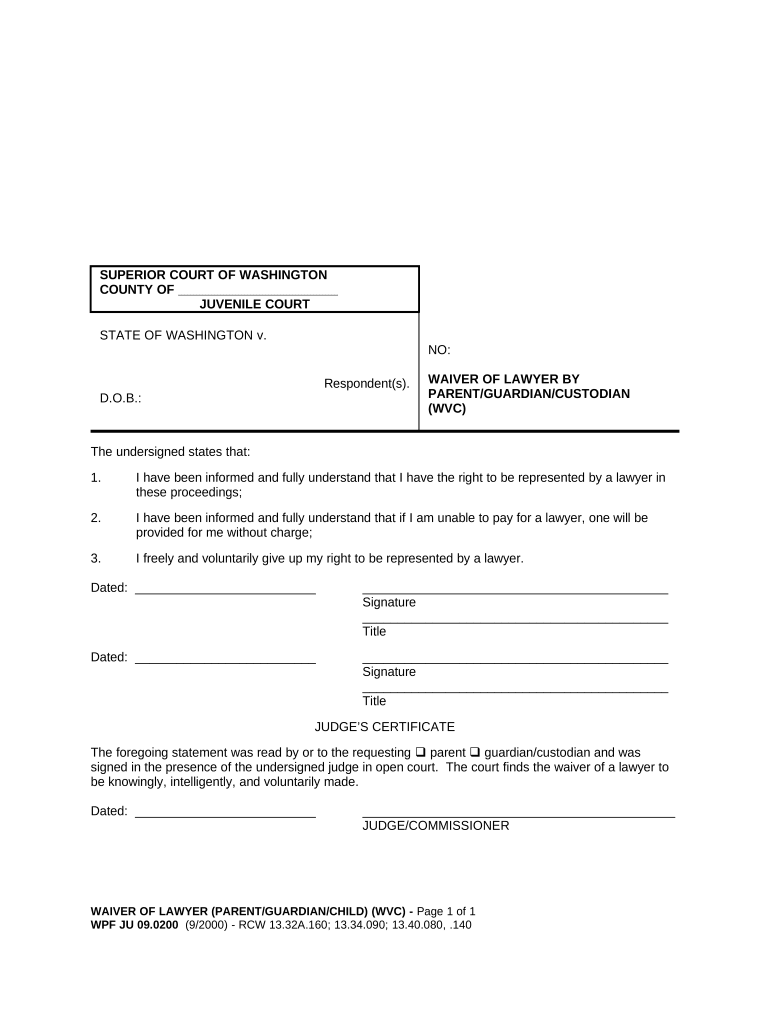
Identification

Full legal names and relationships (parent, guardian, custodian) to verify authority.

Waiver Language

Clear, unambiguous statement that the signer waives the right to counsel for the named minor or ward.

Acknowledgment

Statement that signer understands consequences and voluntariness of the choice.

Signature Block

Printed name, signature, and date; include address and contact information where requested.

Authentication

Notary acknowledgement or witness attestation consistent with state or local court rules.

Practical Tips for Accurate and Efficient Completion

Follow these best practices to reduce delays and increase the likelihood the court accepts the waiver.

Use precise references
Reference the court, case number, and hearing date to avoid ambiguity and administrative rejection.
Confirm signer authority
Verify the signer is a legal parent, guardian, or custodian; attach guardianship orders if applicable.
Record voluntariness
Include a short attestation that the signer had an opportunity to consult counsel before waiving rights.
Meet authentication rules
Follow notary, witness, or court-specific authentication procedures to prevent later evidentiary issues.

Timing Considerations and Court Deadlines

Timely filing and authentication are essential. Courts may set deadlines for submitting waivers before hearings or status conferences.

Pre-Hearing Filing:

File before scheduled hearings when the court requires advance notice.

Same-Day Submission:

Some courts accept waivers at the hearing but may question voluntariness if signed that day.

Amendments:

Submit any corrections promptly; courts may require a new signed document rather than edits.

Retention by Parties:

Keep original executed copy; the clerk retains a court file copy as part of the record.

Review Requests:

If court asks for proof of consultation with counsel, provide supporting documentation promptly.

eSignature Provider Comparison for Executing the Waiver (signNow Listed First)

Typical plan features and starting prices for common eSignature providers used to collect and store executed waivers and related documents.

signNow DocuSign Adobe Sign PandaDoc HelloSign
Starting Price $8/user/mo $15/user/mo $14/user/mo $19/user/mo $15/user/mo
Free Trial 7-day trial Varies by plan Varies by plan Varies by plan Varies by plan
Bulk Send Yes Yes Yes Yes No
Audit Trail Yes Yes Yes Yes Yes
HIPAA Compliant Yes Yes Yes No No

Frequently Asked Questions About the Washington Waiver

Answers to common questions about validity, notarization, court acceptance, and recordkeeping for parent/guardian/custodian waivers in Washington and comparable jurisdictions.


Need help? Contact support

be ready to get more
Join over 28 million airSlate SignNow users