Introductory Clause
Identifies the testator, declares intent to create a will, and states revocation of prior wills or codicils to avoid conflicting instruments.
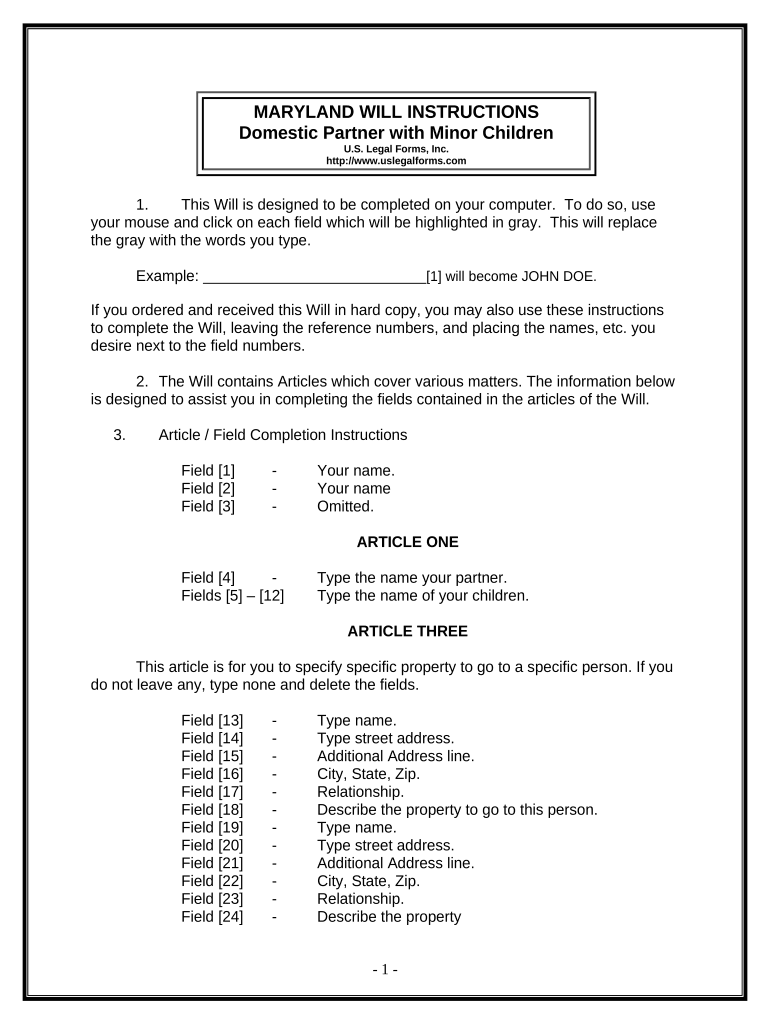
A properly completed Legal Will Form reduces probate ambiguity, clarifies beneficiary intent, and designates fiduciaries to manage your estate. Clear terms can reduce disputes and speed distribution under state probate procedures, while naming alternates and backups preserves continuity of estate administration.

Selecting the right preparer and following state signing rules helps ensure the will is admitted to probate and enforced as written.
The person creating the will. Must be of legal age and possess testamentary capacity; capacity rules require understanding the nature and effect of the will and the extent of property being disposed.
Witnesses attest to the testator's signature and mental capacity; an executor is named to administer the estate. Some states allow self-proving affidavits to avoid witness testimony during probate.
Identifies the testator, declares intent to create a will, and states revocation of prior wills or codicils to avoid conflicting instruments.
Specifies beneficiaries and the assets or percentages to be distributed; includes contingent beneficiaries and direction for indivisible assets.
Names the executor and alternates, with powers to settle debts, file tax returns, and distribute assets under state law.
Appoints guardians for minor children and alternate guardians to ensure continuity of care if primary guardians predecease the testator.
Addresses remaining assets not specifically distributed, preventing partial intestacy and filling gaps in the disposition scheme.
Includes testator signature, dated execution, witness attestations, and any notary acknowledgement or self-proving affidavit required by state law.
| Field | Configuration |
|---|---|
| Signer Authentication | Use multi-factor or identity-proofing aligned with state RON rules |
| Witness Sequence | Ensure witnesses view the same session and attest contemporaneously |
| Audio/Video Record | Retain A/V session per state retention (if required for RON) |
| Self-Proving Affidavit | Attach notarized affidavit when state law permits to avoid witness testimony at probate |
Ensure technical choices align with the governing state’s execution rules to maximize probate admissibility.
Enter MM/DD/YYYY; effective at death for asset disposition
Witnesses should sign during the same session to avoid attestation issues
Execute at signing if available to remove witness testimony requirement later
New wills should expressly revoke prior wills to prevent competing instruments
File with the local probate court after death; statutes of limitations for will contests vary by state
Finalize language and list assets prior to execution.
Sign with witnesses and notarize or self-prove if allowed.
Place original in a known, protected location accessible to the executor.
Executor files the will with probate court after the testator’s death.
A parent used a straightforward will to name guardians for minor children and a trusted executor
An individual created a will that poured assets into a revocable trust to avoid partial intestacy
| signNow | DocuSign | Adobe Sign | PandaDoc | HelloSign | |
|---|---|---|---|---|---|
| Starting Price | $8/user/mo | $15/user/mo | $14/user/mo | $19/user/mo | $15/user/mo |
| Free Trial | Yes, 7-day trial | Varies by vendor | Varies by vendor | Varies by vendor | Varies by vendor |
| Bulk Send | Yes (Business Premium) | Yes | Yes | Yes | No |
| Audit Trail | Yes | Yes | Yes | Yes | Yes |
| HIPAA Compliant | Yes (BAA available) | Yes | Yes | No | No |