Event Title
A short descriptive name (for example, 'Maria's Going-Away Party') so recipients immediately recognize the purpose of the invitation.
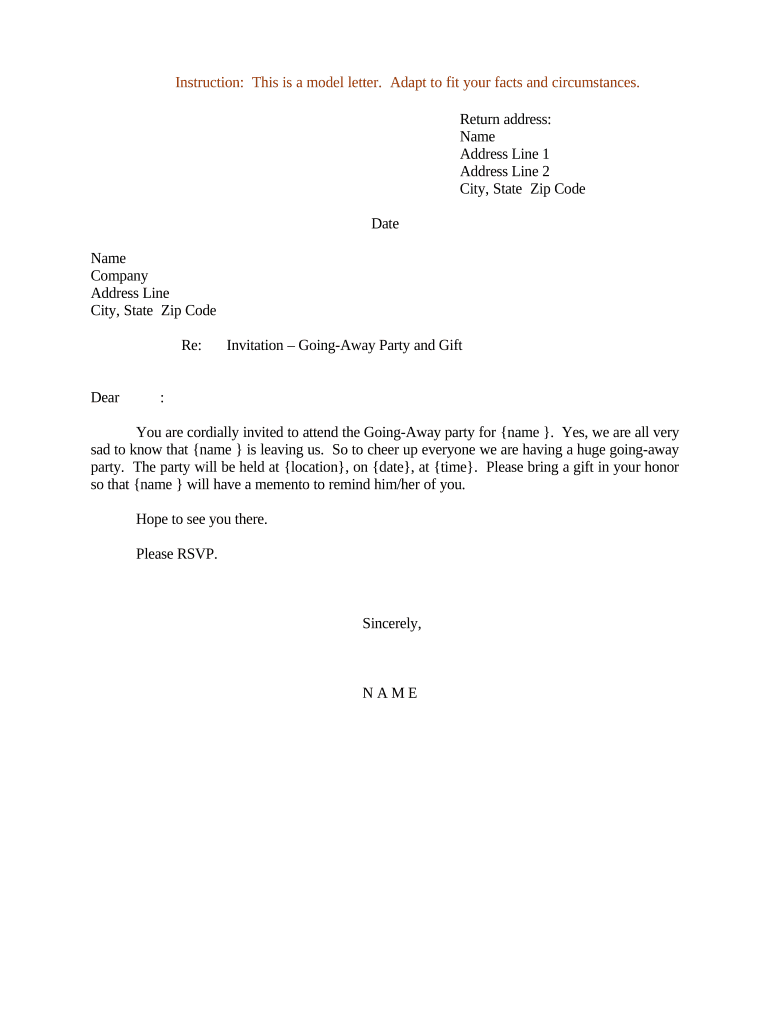
A well-written invitation reduces confusion, improves RSVP response rates, and helps hosts coordinate venue, catering, and guest accommodations. It establishes tone and accessibility expectations for attendees while documenting key event details for follow-up and recordkeeping.

Hosts across personal and professional settings prepare going-away invitations to coordinate guest lists and logistics.
The tone and formality vary by audience: personal letters are informal, while workplace invitations are brief and professional.
A professional or volunteer organizer who drafts the invitation, coordinates logistics, and manages RSVPs. They often include venue details, accessibility notes, and a deadline for responses to ensure accurate headcount and vendor coordination.
A manager or team representative who composes a workplace going-away letter on behalf of colleagues. The document typically mentions work-related highlights, official send-off schedule, and guidance on group gifts or voluntary contributions.
A short descriptive name (for example, 'Maria's Going-Away Party') so recipients immediately recognize the purpose of the invitation.
Provide the full date and start/end times in MM/DD/YYYY and 12-hour or 24-hour format to prevent scheduling misunderstandings.
Include full street address, venue name, and room or entrance instructions; add public transit options and parking notes where applicable.
State a clear RSVP deadline, contact name, preferred method (email, phone, form), and how to indicate guest count or dietary needs.
Indicate dress code (casual, business casual, formal) and any guest restrictions or expected conduct relevant to the event setting.
Mention whether gifts are optional, if children are welcome, and include accommodations or accessibility details as needed.
Use tools that export stable, accessible file types and integrate with your calendar and guest-tracking systems.
Select platforms that match your privacy needs and offer clear access controls; confirm recipients can open your chosen file types.
2–4 weeks for casual events; 6–8 weeks for larger gatherings.
Typically 7–14 days before the event to finalize numbers.
Caterers and venues may require final counts 3–7 days prior.
Send one reminder 3–5 days before RSVP deadline.
Communicate changes immediately by email and calendar update.
A manager sends a brief team invitation highlighting recognition and time.
A neighbor sends a casual card inviting nearby families to an informal backyard send-off.
Export an immutable PDF to preserve layout and prevent accidental edits; PDFs are widely shareable and suitable for email attachments and printing.
Store a DOCX or source file for last-minute edits or variant messages; maintain naming conventions with version dates for clarity.
Include an .ics file or calendar link with the invitation so recipients can add the event to Google, Outlook, or Apple calendars.
Archive sent invitations and RSVP records in cloud storage for at least one year to reconcile expenses and vendor billing if needed.
| signNow | DocuSign | Adobe Sign | PandaDoc | HelloSign | |
|---|---|---|---|---|---|
| Starting Price | $8/user/mo | $15/user/mo | $14/user/mo | $19/user/mo | $15/user/mo |
| Free Trial | 7-day free trial | Varies by region | Varies by plan | Varies by plan | Varies by plan |
| Bulk Send | Yes | Yes | Yes | Yes | No |
| Audit Trail | Yes | Yes | Yes | Yes | Yes |
| HIPAA Compliant | Yes | Yes | Yes | No | No |
| Envelope Cap | No cap | 100 envelopes/user/year | Varies by plan | Varies by plan | Varies by plan |