Establishing secure connection…Loading editor…Preparing document…

Life Estate

This template is fully customizable. Edit the text, fill out the fields, and send it for signature. Give it a try!
Life Estate

What a Life Estate Is and how it operates

A Life Estate is a property interest that gives one person (the life tenant) the right to possess, use, and derive benefit from real property for the duration of that person's life, after which ownership passes to one or more remaindermen. It is created by deed, will, or trust instrument and must be drafted to specify the life tenant's rights, the identity of remainder beneficiaries, and any limitations on use. A properly recorded life estate can avoid probate for the remainder interest, but it can affect taxes, mortgage rights, and eligibility for means-tested benefits such as Medicaid.

Why people choose a Life Estate

A Life Estate provides a clear legal path to let someone live in or use property while preserving future ownership for beneficiaries, often simplifying post-death transfer and limiting probate involvement.

Why people choose a Life Estate

Who commonly creates or completes a Life Estate

Legal and financial professionals, property owners planning transfers, and families coordinating succession commonly use Life Estates to manage real property interests.

  • Individual homeowners planning transfers to heirs without immediate sale or relocation
  • Estate attorneys and trust officers drafting transfer instruments and advising clients
  • Financial advisors and eldercare planners coordinating asset preservation and benefit eligibility

Use varies by goals: probate avoidance, continuity of occupancy, tax planning, or Medicaid planning, and each use requires tailored drafting and local compliance.

Step-by-step: completing a Life Estate deed

Follow these sequential steps to prepare, execute, and record a Life Estate deed correctly.

  • 01
    Prepare draft: Draft deed naming life tenant and remainderman.
  • 02
    Review with counsel: Confirm tax, Medicaid, and mortgage consequences.
  • 03
    Sign and notarize: Execute before a notary or via RON where allowed.
  • 04
    Record deed: Submit to county recorder in property county.

Frequently asked questions about Life Estates

Answers to common legal and practical questions about creating, recording, and managing Life Estates in the United States.


Need help? Contact support

Core elements included in a professional Life Estate deed

A proper deed sets out rights, limitations, and future ownership clearly to reduce ambiguity and litigation risk.

Granting Clause

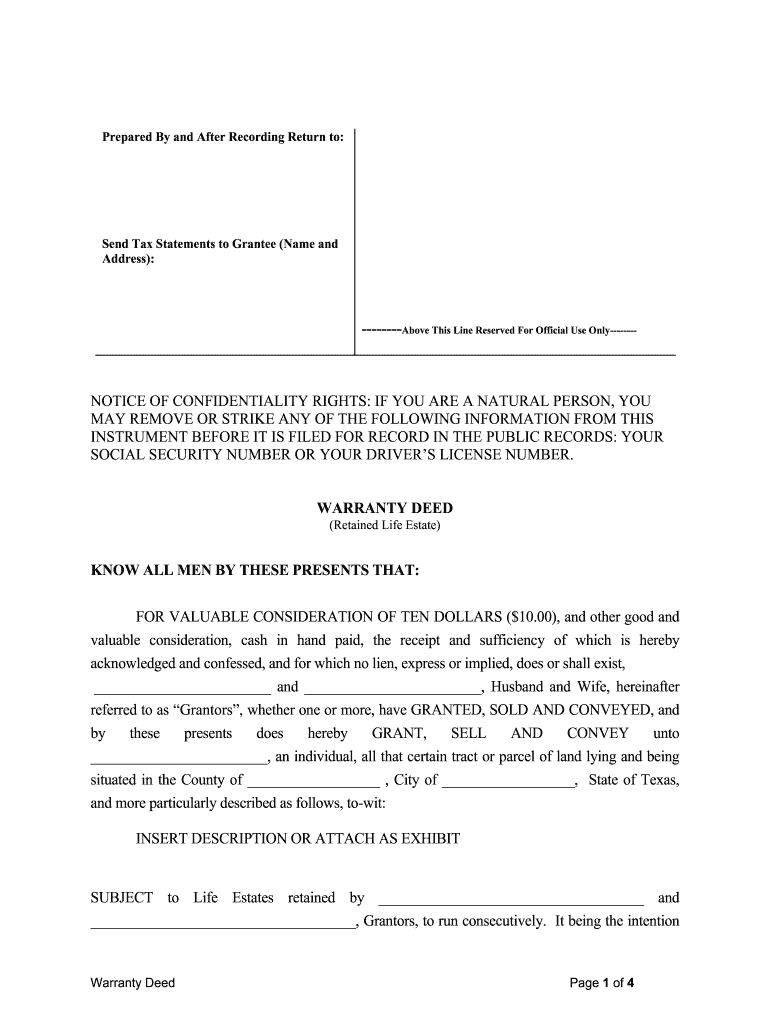
A clause that conveys a life interest to the named life tenant and specifies the remainderman who will receive the property upon the life tenant’s death.
Identification

Precise identification of grantor, life tenant, and remainderman, including full legal names and, where applicable, entity identifiers.

Property Description

The deed must contain the complete legal description or parcel number as recorded, not just a mailing address, to be effective in recording.

Limitations and Duties

Express statements about maintenance, payment of taxes, insurance, and prohibitions on waste to clarify responsibilities and preserve value.

Notary Acknowledgement

A state-compliant notary block or RON acknowledgement that meets local requirements for recording and authentication.

Recording Instructions

Clear instructions about where to record the deed and any request for return of stamped copies to a specified address.

Essential data fields required on a Life Estate deed

Grantor Name: Full legal name
Life Tenant: Full legal name
Remainderman: Full legal name(s)
Legal Description: Parcel or deed text
Notary Block: State-compliant acknowledgement
Recording County: County name and return address

Primary risks and legal consequences to consider

Probate Exposure: Improper drafting may still trigger probate
Medicaid Penalty: Transfers may affect eligibility
Tax Liability: Gift or capital gains consequences possible
Mortgage Default: Lender consent may be required
Title Disputes: Ambiguities invite litigation
Creditor Claims: Creditors can pursue interests attached to property

Common mistakes to avoid when preparing a Life Estate

  • Using a street address instead of the recorded legal description, which can cause a recording rejection or uncertain conveyance.
  • Failing to obtain a lender’s consent when an existing mortgage contains a due-on-sale clause or prohibits transfers.
  • Not recording the deed promptly, leaving the remainder interest subject to intervening bona fide purchaser claims.
  • Neglecting to address maintenance, taxes, and insurance obligations, which often triggers disputes between life tenant and remainderman.

Where to sign, notarize, and file a Life Estate deed

A Life Estate deed requires signing in accordance with state notary or RON rules, then submission to the county recorder where the property is located.

  • Execution: Grantor signs before a notary or approved RON provider.
  • Notary Acknowledgement: Notary completes acknowledgement block per state law.
  • County Recording: Record at the county recorder in the property's county.
  • Distribute Copies: Provide stamped copies to remaindermen and mortgagee.

Digital execution workflow settings to consider

Configure document settings to meet legal, authentication, and recording needs before e-execution or remote notarization.

Field Configuration
Signature Authentication Email, SMS code, or KBA as required
Notarization Option In-person notary or RON where permitted
Recording Step Prepare cover sheet and recording fee
Copy Distribution Automatic return to parties and escrow

Technical and platform considerations for e-signing or RON

Ensure the platform supports required authentication, file formats, and integration with county recording workflows before completing e-execution.

  • File Types: PDF, DOCX supported
  • Integrations: Salesforce, NetSuite, Google Workspace
  • Authentication: SMS, KBA, or advanced 2FA

Choose a platform that provides tamper-evident signed PDFs, audit trails, optional RON support where state law permits, and secure storage to preserve evidentiary value for recording and future title reviews.

Timing considerations and statutory windows

Some timing events affect legal effectiveness, benefits eligibility, and recording priority—plan steps accordingly.

Effective Date:

Deed states effective date; recording gives notice.

Recommended Recording Window:

Record promptly; within 30 days reduces third-party risk.

Medicaid Lookback:

Five-year federal lookback affects eligibility for long-term care.

Property Tax Reassessment:

State rules vary; reassessment may follow transfer.

Title Insurance Update:

Notify insurer after recording to update coverage.

Key milestones from drafting to final transfer

Track these sequential milestones to confirm the Life Estate is valid, recorded, and communicated to interested parties.

01

Draft and Review

Attorney drafts deed and reviews implications for taxes and benefits.

02

Execution and Notarization

Grantor signs before notary or via permitted RON process.

03

Recording Submission

Submit deed and fees to county recorder for indexing.

04

Post-Recording Tasks

Deliver stamped copies and update insurance and tax records.

Practical scenarios illustrating Life Estate use

Two typical use cases show how Life Estates meet different family and planning objectives.

Case Study 1

An aging owner kept occupancy while leaving the remainder to children to avoid probate and provide continuity of residence.

  • The life tenant retained day-to-day control and paid taxes and upkeep.
  • After recording, the remainder interest passed automatically at death; family avoided probate, though Medicaid implications required prior planning and an attorney's review.

Case Study 2

A homeowner transferred a vacation property into a Life Estate to secure grandchildren’s future ownership without immediate sale.

  • The deed specified usage rules and maintenance responsibilities.
  • Clear drafting avoided disputes over rental income and ensured the property stayed within the family while the life tenant preserved use until death.

Best practices to ensure a legally effective Life Estate

Follow these practices to reduce legal risk and ensure clear, enforceable results.

Consult qualified counsel
Have an attorney review for tax, Medicaid, and mortgage implications to avoid unintended consequences.
Use exact legal descriptions
Copy the property description from the existing deed to prevent recording rejections and title issues.
Record promptly
Record the deed to provide public notice and protect remaindermen against subsequent purchasers.
Address maintenance and costs
Specify who pays taxes, insurance, and major repairs to avoid conflict between life tenant and remainderman.

eSignature vendor pricing and feature snapshot relevant to Life Estate workflows

Comparing key vendor pricing and feature availability helps choose a platform that supports notarization, audit trails, and secure storage for deed workflows.

signNow DocuSign Adobe Sign PandaDoc HelloSign
Starting Price $8/user/mo $15/user/mo $14/user/mo $19/user/mo $15/user/mo
Free Trial Yes, 7-day free trial Varies by vendor Varies by vendor Varies by vendor Varies by vendor
Bulk Send Yes Yes Yes Yes Varies
Audit Trail Yes Yes Yes Yes Yes
Envelope Cap No cap 100 envelopes/user/year Varies Varies Varies
be ready to get more
Join over 28 million airSlate SignNow users